
So you’re here after hearing that dropshipping is dead and that you should look into other ways to start an e-commerce business.
Well, I don’t blame you. After all, there’s a lot of negativity around dropshipping, but it’s mostly hype, and the reality is far different from what people would have you believe.
Let me break down the truth around the death of dropshipping, and whether it’s a business model you should still consider for yourself.
Is Dropshipping Currently Dead?
No, dropshipping is not dead, but it has evolved from being what many labeled a “get-rich-overnight” business to a professional, niche-focused business opportunity.
Although the old method of selling random products from AliExpress is no longer viable, dropshipping is experiencing significant growth.
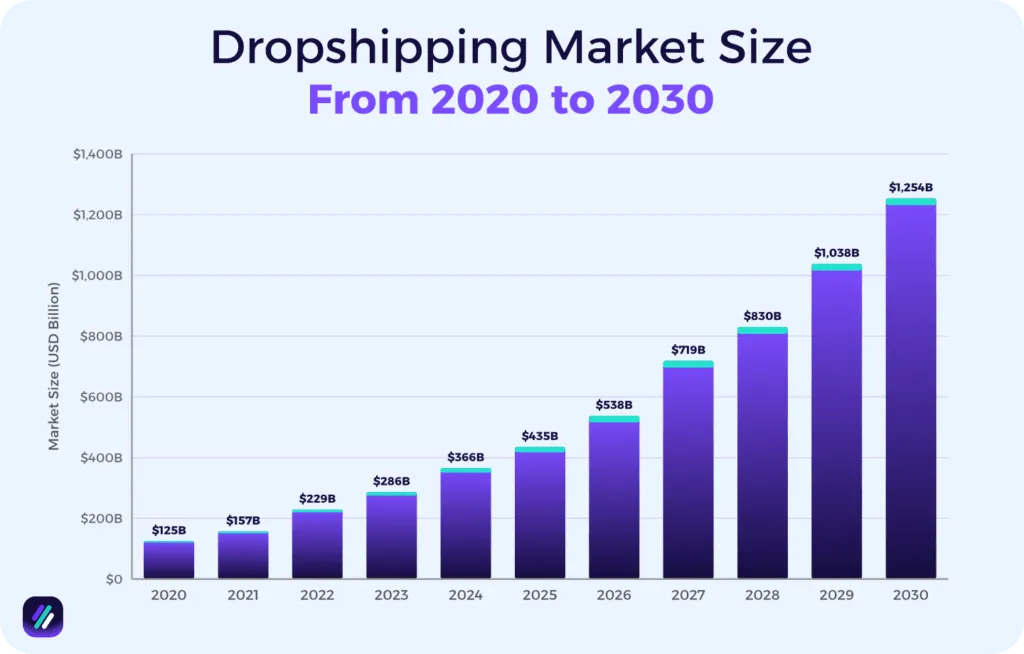
For example, analysts project that the dropshipping market will be valued at around $1.25 trillion in 2030, whereas it was in the $120 billion range in 2020.
That is exponential growth for a business people consider to be outdated and dying with every passing year.
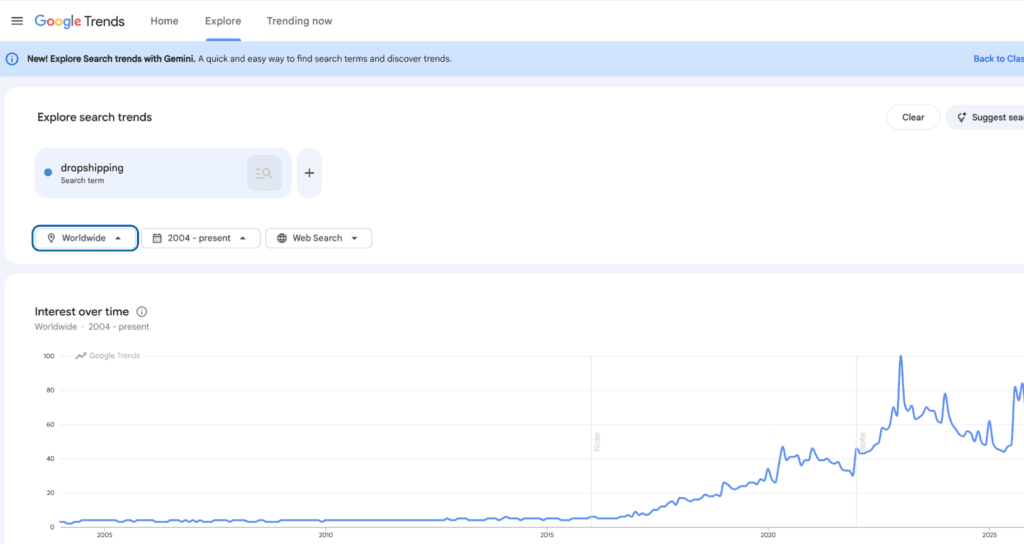
The search interest in dropshipping has also been rising since 2015. Despite a few dips along the way, the overall trend has been positive and shows that more and more people are interested in starting this type of business.
The search volume of dropshipping-related terms also shows that there’s no such decline in how many people want to learn about this business.
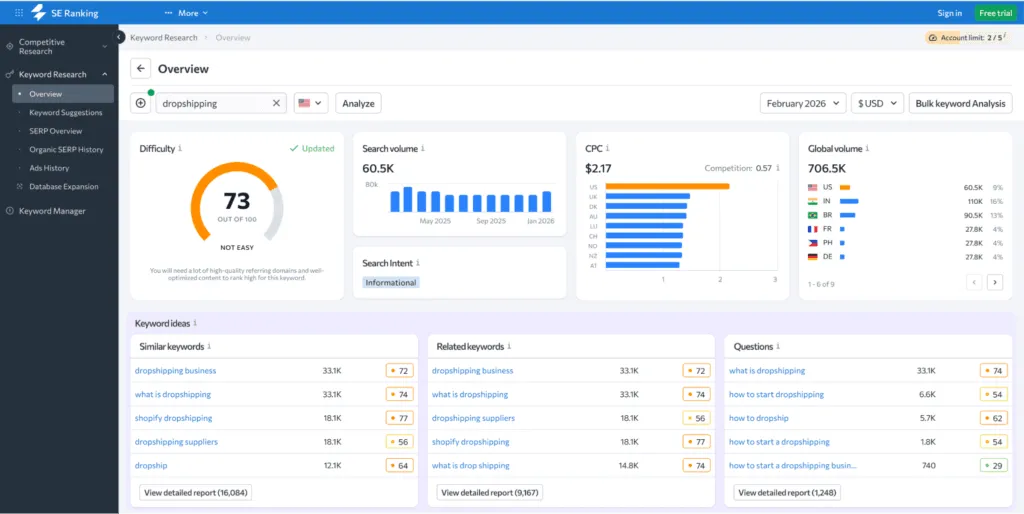
Whether you consider dropshipping on Shopify or want to learn where to find dropshipping suppliers, there’s information out there, and more and more of it is being published to satisfy people’s curiosity.
Overall, dropshipping is not dead. Based on the data we have, including market projections, search volume is growing, and more and more e-commerce businesses are using the dropshipping model for some of their products to increase revenue.
Why It’s “Dead” for Some, But Thriving for Others
The concept of dropshipping being dead for some while thriving for others comes down to adaptability.
People who failed to adapt to modern methods and strategies consider dropshipping a dead case. These individuals often stick to finding cheap products on AliExpress, creating a generic Shopify store, and running basic ads.
Now imagine a market with hundreds of stores vying for consumer attention. Why would anyone want to visit a store that has generic stock photos and no differentiation?
Thriving dropshippers don’t sell cheap AliExpress gadgets. Rather, they build brands around a niche and partner with suppliers who have warehouses near the location of their customers.
Successful dropshippers also deal in products that provide good margins, such as furniture pieces or fitness equipment. They also utilize modern tools such as ZIK Analytics and Spocket to streamline dropshipping product research, fulfillment, and automate operations.
Misconceptions and Myths About Why Dropshipping is Dying
The belief that dropshipping is dying and will soon become obsolete mostly comes from the misconceptions people have about this model of business.
Here I will share with you the most common misconceptions that you can find all around the internet, such as on Reddit, YouTube, and other places where those who failed come to complain:
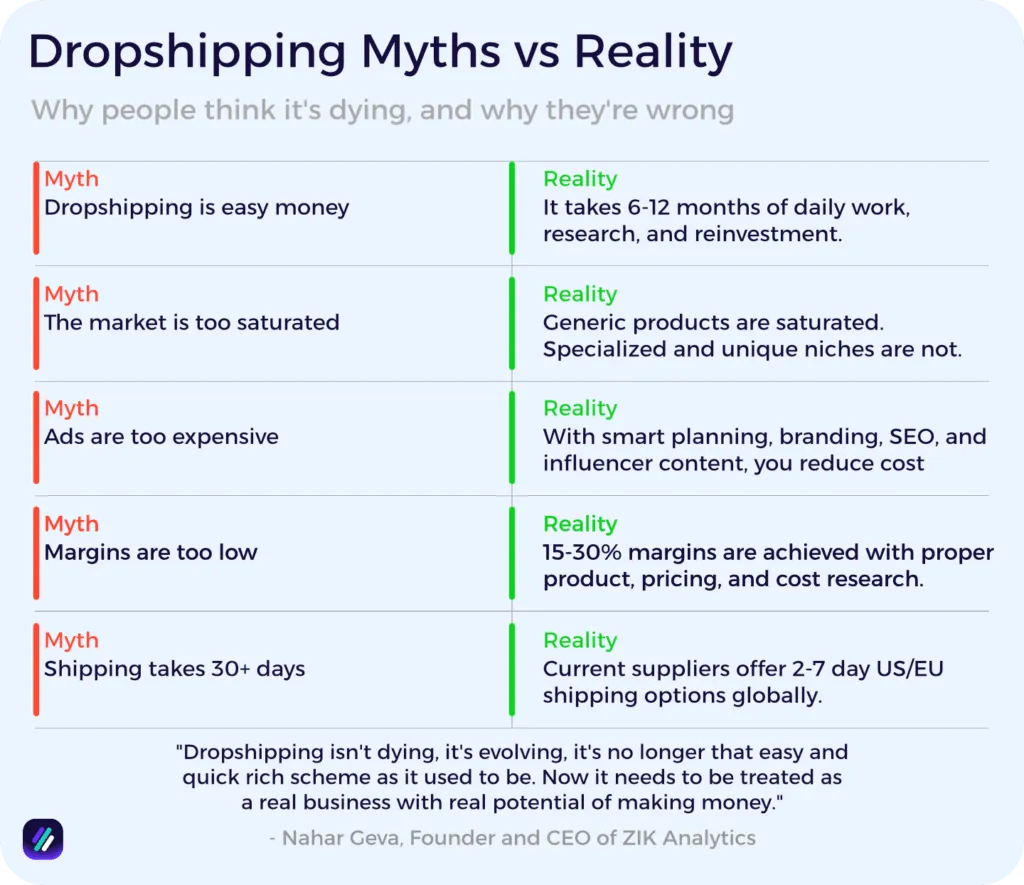
Dropshipping Is Passive or Easy Money
One of the biggest myths around dropshipping is that it can generate passive income. In other words, people expect that they can set up a store in a day, run a few ads, and watch cash roll in while they sleep.
The reality is that building a dropshipping business requires consistent, daily effort where you are doing product research, managing supplier partnerships, and overseeing customer support.
Most dropshipping stores take 6-12 months to get to a point where they can start reinvesting in their business. As such, dropshipping isn’t easy money and takes intense work to get right.
Related: How to Start a Dropshipping Business With No Money
The Market Is Too Saturated
Since dropshipping has a low barrier to entry, people think that every dropshipping niche is saturated and it’s impossible to make sales.
The truth is that generic, low-quality items (like cheap electronics from AliExpress) are overcrowded rather than the overall market.
If you focus on high-ticket, specialized products, you can enjoy a healthier market where people aren’t complaining about prices or making dropshipping returns.
Advertising Costs Are Too High
It’s true that ad costs on platforms like TikTok and Facebook have increased in recent years. However, there are ways to lower your CPC and increase your ROI from these campaigns.
Create a trustworthy brand that stops visitors mid-scroll and gets them clicking on your ads. You can do this by combining paid ads with authentic content, SEO, and influencer marketing to manage customer acquisition costs.
Profit Margins Are Too Low or Unsustainable
Another common belief is that dropshipping margins are too thin to build a real business. While margins are generally lower compared to holding your own inventory, that does not mean you can not make money.
Successful dropshippers often target 15% to 30% margins by focusing on unique, high-demand products rather than generic items everyone else is selling according to ZIK Analytics own data.
The issue usually comes down to ignoring hidden costs like app and payment processing fees. If you account for those from the start and price your dropshipping products right, you can still come out ahead.
Long Shipping Times Make Dropshipping Unviable
Many people also think that dropshipping requires long shipping times of 15-45 days from China. However, modern dropshipping uses local US/EU warehouses or premium, fast-tracked shipping lines.
And even AliExpress and Alibaba nowadays provide fast shipping, such as their 5-Day Global shipping program.
Specialized suppliers on platforms like CJ dropshipping or Spocket provide 2-7 day shipping. This significantly reduces delivery times and allows you to somewhat match the customer experience of major retailers.
Tariffs and Trade Wars Will Kill Dropshipping
This myth comes from all the headlines about tariffs making e-commerce harder. And while tariffs have raised costs on Chinese goods, they have not killed dropshipping.
The global dropshipping market is still projected to hit $476 billion by the end of 2026, growing over 20% annually. So reports of its death are exaggerated.
What tariffs have done is raise the bar. The days of throwing up a general store and shipping cheap products from China with minimal effort are over. Margins are tighter, and you have to be smarter about sourcing.
But dropshippers are adapting. Many are shifting to high-ticket items where the margins can absorb extra costs. Others are working with domestic suppliers or using third-party logistics to speed up shipping and sidestep some tariff issues. Building an actual brand has also become more important than ever.
Suppliers Do Not Work With New Stores
Many people have the idea that established suppliers hesitate to work with new dropshipping stores.
Although some high-end luxury drosphipping suppliers have specific requirements, the vast majority of suppliers care more about your potential to sell their products than your years in business.
If you present your store professionally and demonstrate good vision for marketing and sales, it’s highly likely that most suppliers will agree to partner with your business. Many suppliers appreciate hungry, driven entrepreneurs who can focus on growing their niche brand and generating loyalty for their business.
Pro tip: Register your business first so that suppliers know they are dealing with a legitimate entity. In the US, for example, an EIN is needed to demonstrate that you are legally incorporated and serious about doing an online business.
How to Stand Out from the Crowd and Be Successful in Dropshipping
Now that we’ve put the myths aside, let’s go over the steps you can take to be successful in the dropshipping field.
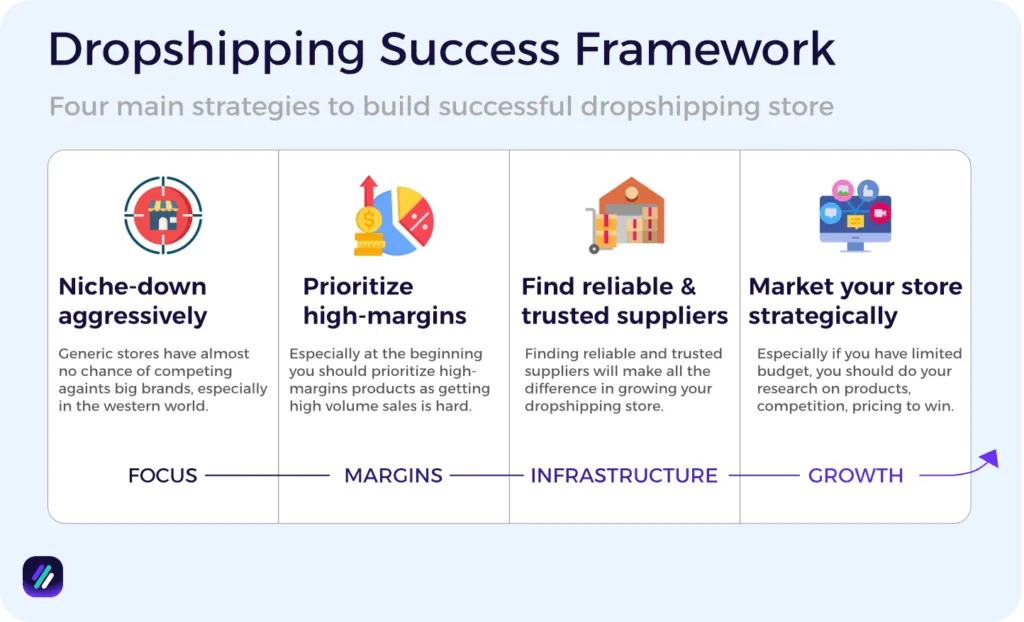
Niche Down Aggressively
Gone are the days when you could create a general store and market it via ads to generate sales for your business. Today, dropshipping success requires the creation of a highly specialized store that resonates with consumers in a specific niche.
Consider areas where items solve a specific problem, such as ergonomic home office furniture or specialized pet supplies. Niche down aggressively to avoid cutthroat competition and target customers who are less price-sensitive.
Prioritize High-Ticket Products
High-ticket products refer to items priced in the $100-$500 range.
Most dropshippers don’t prioritize selling such items because they’ve been traditionally taught to focus on phone cases and other low-ticket items. But selling high-ticket products reduces the number of sales you need to make to be profitable.
One thing to keep in mind is that consumers thoroughly research high-ticket items before making a purchase. As such, you have to focus on conveying their value rather than building campaigns to drive impulse purchases. This can be done via content marketing and recording high-quality footage that reveals the different use cases of the items.
Work With Reliable, Authorized Suppliers
Your choice of suppliers can make or break your dropshipping business. Ideally, you should partner with local vendors who offer fast shipping and better quality control than Chinese-only suppliers. Ordering a sample is always a great way to test shipping speed and product quality before placing a large order with the company.
If you plan on dropshipping luxury or branded products, search for authorized distributors of known brands. Platforms like Shopify Collective and Syncee work great for connecting with other brands, or you can use DropCommerce for a selection of US-based curated items.
Market Strategically
If your 2026 dropshipping marketing strategy is based on Facebook ads, you might as well forgo the idea of being successful with dropshipping. That’s because generic ads are overdone, and the audience needs a fresh dose of campaigns that speak to their interests.
One tip is to build topical authority by creating niche-specific educational content. You can start by answering deal industry questions on platforms like Reddit or specialized blogs. Many dropshippers also partner with micro-influencers and have them run ads through their account rather than the brand’s, which significantly boosts trust in their products.
The Future of Dropshipping
Based on the developments in and around the e-commerce space, here’s how dropshipping is likely to unfold in the next few years:
- AI Marketing: AI tools will power the majority of the campaigns run by dropshipping stores as times change. You’ll be able to write ad copy (there’s now a thing called ChatGPT dropshipping) and generate UGC-style videos at a fraction of the cost using these tools. AI dropshipping tools will also make things quick when it comes to optimizing ad targeting, leading to a higher ROI.
- Subscription-Based Models: Dropshipping is gradually shifting from a transactional business model to one that drives recurring revenue for merchants. Curation of products enables sellers to boost customer lifetime value as subscribers typically spend more over time.
- Accessible Payment Options: E-commerce software now increasingly supports local payment options and integrates multi-currency checkouts to increase conversion rates. Dropshippers will also find one-click mobile wallets like Apple Pay and Shop Pay to be a standard expectation as they look to reduce friction in the upcoming years.
- Buy Now Pay Later Schemes: BNPL schemes empower customers to make larger purchases and increase the average order value for store owners. Expect these schemes to take center stage as dropshippers attempt to reduce the sticker shock of premium, high-ticket items like furniture and coffee machines.
- Tariffization of Suppliers: Rising import costs mean more dropshippers will move away from China-only sourcing and opt for suppliers with local hubs in the US or EU. I also anticipate that a large number of sellers will shift to DDP (Delivered Duty Paid) agreements to make sure there are no hidden costs for the end consumer.
- Social Media Content Machine: Social media content supported by influencer campaigns will be central to how dropshippers market their offerings in the near future. Tools like Creatify and Tagshop AI will further make it easy to create engaging user-generated content and enable consistent branding for the store.
- Social Media Shops: More and more dropshippers are expected to take advantage of native in-app checkouts on platforms like TikTok Shop and Facebook Shops. These enable users to shop products directly in their feeds while using behavioral signals like comments and watch time to predict their needs upfront.
ZIK Analytics Removes Uncertainty in Your Dropshipping Journey
Dropshipping is far from dead and is, in fact, growing and expected to further increase in valuation. However, the market has been flooded with options, and finding the right products and suppliers takes more research than it used to.
ZIK Analytics has many tools to support you in your dropshipping journey, including:
- Shopify Product Explorer shows you which products are selling across Shopify stores with real sales data. Search keywords and filter by sales to identify winning products, then see estimated revenue and upload dates to understand how long items have been performing.
- Search AliExpress by Image lets you find matching suppliers on AliExpress by uploading a product photo. See pricing, shipping options, and seller ratings so you can source the right products from the right suppliers.
- Search Alibaba by Image connects you with Alibaba suppliers for bulk sourcing and private label options. Compare supplier pricing and MOQs to find the best fit for your store.
You can also use the Shopify Sales Tracker to monitor successful stores and the AdSpy Tool to see which ads are driving sales in your niche.
Get your ZIK Analytics trial today and make your dropshipping journey easier with tools that show you exactly what to sell and where to source it.
Frequently Asked Questions on Dropshipping is Dead
In this section, I’ll answer the questions people frequently ask about whether dropshipping is dead as a business.
Is drop shipping really dead?
No, dropshipping is not dead. However, the traditional model of selling cheap and generic items definitely is. Dropshipping in recent years has evolved into a highly competitive, brand-focused business. You now need to provide faster shipping, along with offering high-quality products and creating a genuine brand, to find success as a dropshipper.
Why do 90% of dropshippers fail?
90% of dropshippers fail because they rely on suppliers without streamlined logistics, leading to long shipping times and customer dissatisfaction. Many also fail because they end up choosing a saturated niche where high competition forces them to command low prices. Plus, many new dropshippers lack proper business, financial, and branding skills to build a sustainable business and often see their strategies fall apart in the first few months.
Is dropshipping pointless?
Dropshipping can feel pointless when you choose a niche that’s highly saturated, making it harder to carve out space for your business. It can also feel difficult to scale when you rely on slow international suppliers and aren’t able to keep marketing and advertising costs under check. Niching down by focusing on a passionate, specific audience and using reliable suppliers with fast shipping options can give purpose to your dropshipping journey.
Is Shopify still a thing in 2026?
Yes, Shopify is still dominant as an ecommerce platform in 2026. According to the latest stats, it handles around 30% of US e-commerce and has evolved from a simple website builder to an intelligent commerce operating system. Shopify has also integrated AI into its workflows to help users automate tasks like product description generation and customer support. Dropshippers can also use AI to design their store and analyze customer data instead of relying on third-party tools that come with the risk of privacy theft.