
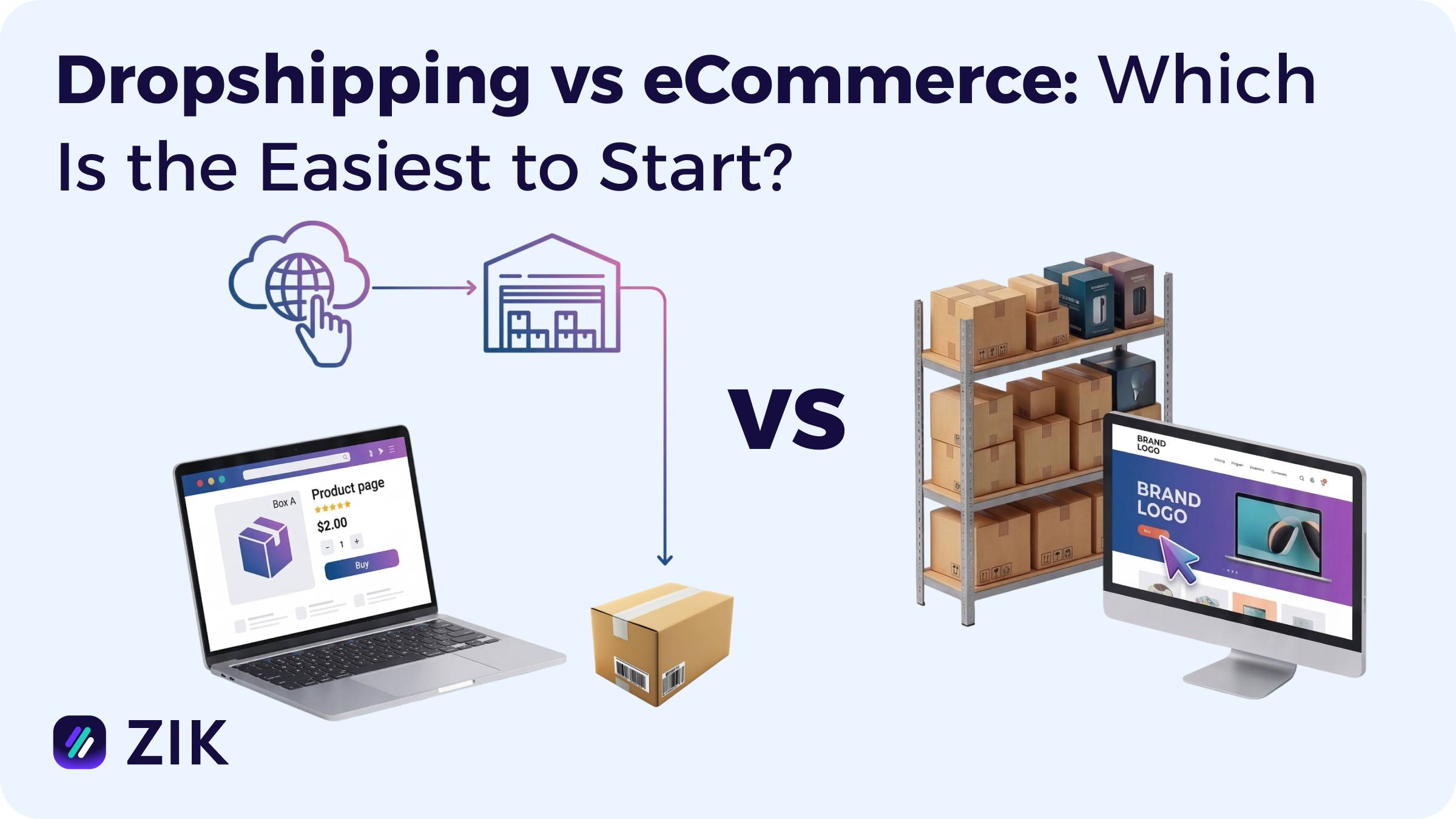
So you’re looking to start an online business but aren’t sure whether to go with dropshipping or traditional e-commerce.
I understand the appeal of both. ecommerce gives you more control over product quality and the customer experience. Dropshipping costs much less to get started, and you don’t face the risk of dealing with unsold inventory.
So, which one is easier to start, dropshipping vs ecommerce? In this post, I break down the pros and cons of both business models and tell you exactly which one makes more sense depending on your current situation.
With the e-commerce market expected to hit $83.62 trillion and dropshipping already accounting for 27% of all online sales, there’s never been a better time to figure out which path is right for you.
What is eCommerce?
Ecommerce is a business model of buying and selling profitable products online. It involves purchasing items in bulk from wholesalers and listing them on your own store or marketplace.
Ecommerce lets you set your own prices and build a brand around your products. It also gives you full control over the customer experience from the moment they land in your store to the day their order arrives.
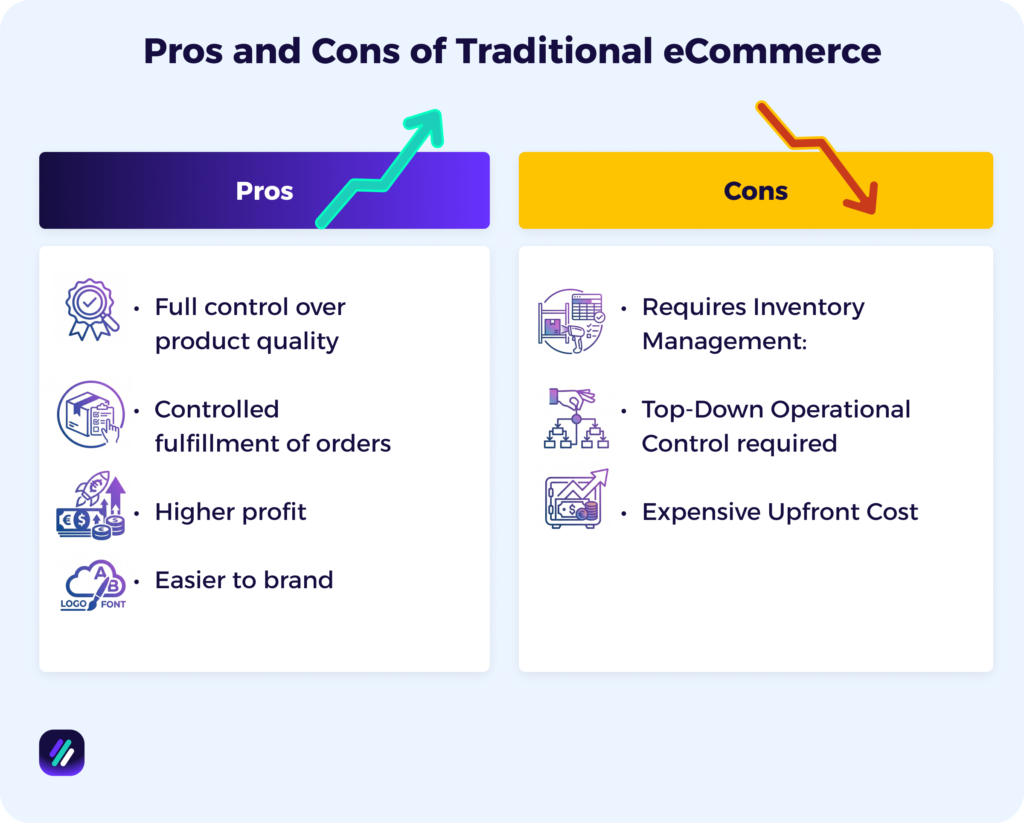
Pros of Traditional eCommerce
- Full control over product quality: Since you possess the inventory, you can inspect the products and ensure they meet your standards before shipping them. This can significantly reduce customer complaints and make people leave positive reviews about your store.
- Controlled fulfillment of orders: You can decide which carrier or shipping method works best for each order. E-commerce also helps you add branded packaging and personalized touches that make the delivery experience feel more intentional.
- Higher profit: Wholesale buying gives you the advantage of keeping costs low and enjoying higher markups, typically 40-80% gross margins depending on product type. You can reinvest those margins into ecommerce marketing or growing your product range over time.
- Easier to brand: You own most of the assets in traditional e-commerce, from your store design to your packaging. That means you can build a consistent identity across every touchpoint and define how customers perceive your brand from day one.
Cons of Traditional eCommerce
- Requires Inventory Management: Traditional e-commerce forces you to buy and manage stock. That comes with risks such as your cash being tied up in products and incurring losses from potential theft and damage of inventory, where annual carrying costs hit 20-30% of inventory value, reports suggest.
- Top-Down Operational Control required: E-commerce requires you to be on top of everything from inventory and shipping to staff and quality control. That means you need to stay vigilant at all times and can be held accountable if any part of the operation falls short.
- Expensive Upfront Cost: Everything you need to set up an e-commerce business is costly. To give you an idea, buying a bulk lot of inventory can cost hundreds to thousands of dollars. According to upmetrics, a good budget will range from $12,479-$39,800.
What is Dropshipping?
Dropshipping is a retail fulfillment method where you sell products online and a third-party supplier handles the rest.
It’s different from traditional e-commerce since you don’t physically hold any inventory or manage a warehouse. Instead, you list products in your store, and when a customer places an order, the supplier ships it directly to them on your behalf.
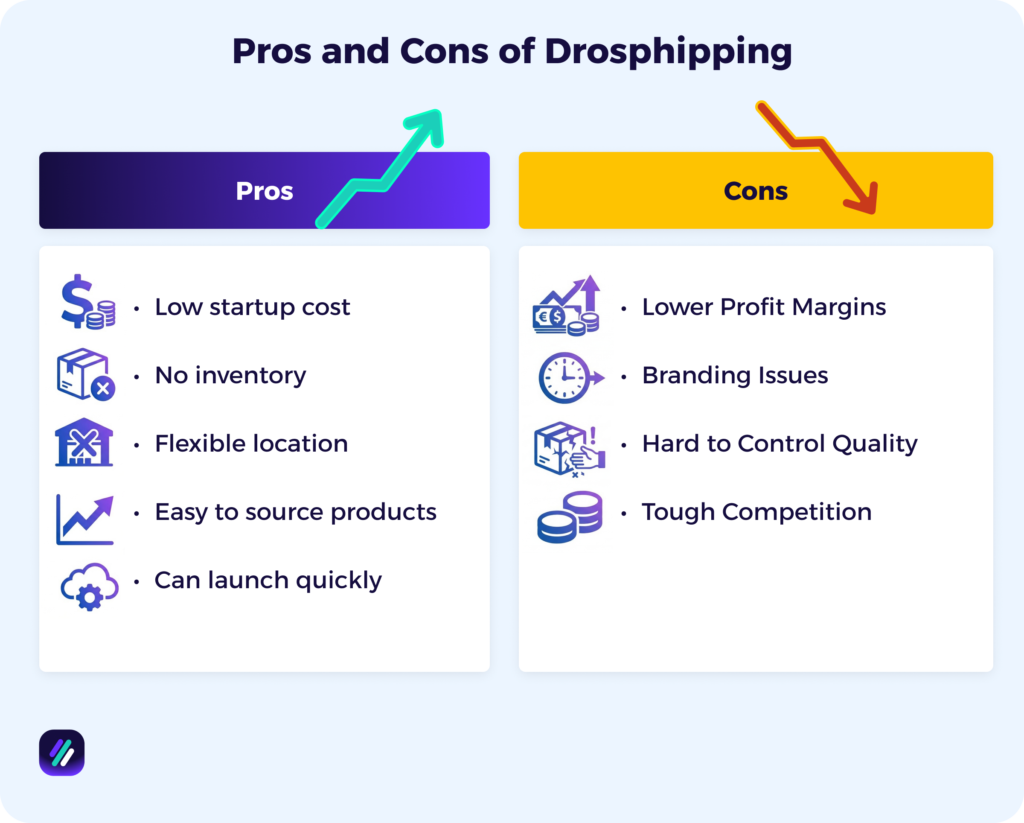
Pros of Dropshipping
Dropshipping offers many advantages and can be a great business model for those who execute it right:
- Low startup cost: Dropshipping doesn’t require a large upfront investment. You can start with less than $500, with most of those funds going toward store setup, design, and dropshipping marketing. Of course, you will have to do many things by yourself.
- No inventory: You don’t need to worry about storing or shipping products since a third party handles all of that. This reduces your upfront costs and makes it much easier to get started.
- Flexible location: You can run your store from any location in the world as long as you have an internet connection. Sell and manage everything from a coffee shop, your couch, or anywhere else you feel like working.
- Easy to source products: You do not need to manufacture items yourself or commit to buying bulk inventory upfront. Instead, you can utilize specialized e-commerce platforms and online marketplaces to instantly connect with thousands of suppliers to add products to your store.
- Can launch quickly: Since your supplier handles inventory and fulfillment, there’s nothing stopping you from getting your store live within days or even hours. You can start selling almost immediately and jump on trending products while the opportunity is still fresh.
Cons of Dropshipping
There are also a few drawbacks aspiring dropshippers should know about:
- Lower Profit Margins: Because dropshippers do not purchase inventory in bulk, they often pay higher per-unit costs than traditional ecommerce merchants. This makes it difficult to generate substantial profit without high sales volumes. See dropshipping vs wholesale.
- Branding Issues: Dropshipping makes it difficult to build a unique brand identity, as the products sold are often generic and not exclusive to the seller. The business model also offers limited opportunities for branding and personal touches that improve brand recall.
- Hard to Control Quality: Since you never physically handle the product, you cannot personally inspect items for defects. This increases the risk of reputation damage if the supplier sends the wrong or incorrect item to the customer.
- Tough Competition: Because it’s so easy to start a dropshipping business, there’s a ton of competition in the field. That means you may need to undercut your price or come up with a unique strategy to thrive in the field.
Core Differences Between eCommerce and Dropshipping
Here are the areas where dropshipping and ecommerce tend to differ from each other:
| Difference | eCommerce | Dropshipping |
| Inventory management | You buy, store, and manage your own stock. | Supplier holds and ships stock directly to customers. |
| Initial investment | High upfront costs for inventory and warehousing. | Low startup costs. You pay only after a customer orders. |
| Profit margins | Higher margins (40–60%) from bulk wholesale pricing. | Thinner margins (10–30%) buying near-retail prices. |
| Product quality control | You inspect items before they ship. | You rely entirely on the supplier’s standards. |
| Shipping and fulfillment | Full control over packaging and branding. | Products ship in generic supplier packaging. |
| Growth profile | Scaling needs more storage and bigger inventory budgets. | Easy to scale without changing how your business runs. |
Inventory management
With e-commerce, you are responsible for buying, storing, and managing your own inventory. This requires finding warehouse space where you can keep and fulfill orders yourself. You get full control over the supply chain and product quality, but face the risk of overstocking or running out of stock.
In dropshipping, inventory management is outsourced entirely to third-party suppliers. You don’t hold any stock and simply create an online store to sell the product. When a customer places an order, their details are passed to the supplier, who packs and ships the item directly to them.
This makes dropshipping a more hands-off way to run an e-commerce business. However, you become dependent on your supplier’s stock levels and fulfillment quality. That’s why choosing a reliable supplier is crucial for keeping customers happy and your store running smoothly
Initial investment
Traditional e-commerce requires a significant amount of money upfront to buy inventory in bulk. It also requires you to arrange warehouse space and manage your own fulfillment. Packaging comes with its own costs too, and all of this adds up before you’ve made a single sale.
In contrast, dropshipping requires less initial capital as you only pay for the product after a customer places an order. You do need funds to set up a store and market your business, but it’s far less than what you require with traditional e-commerce to get things going.
So while a traditional e-commerce business may cost thousands to set up, dropshipping can be started on a much smaller budget. You can even start a dropshipping business with no money if you leverage free trials, organic traffic, and platforms that don’t charge upfront fees.
Profit margins
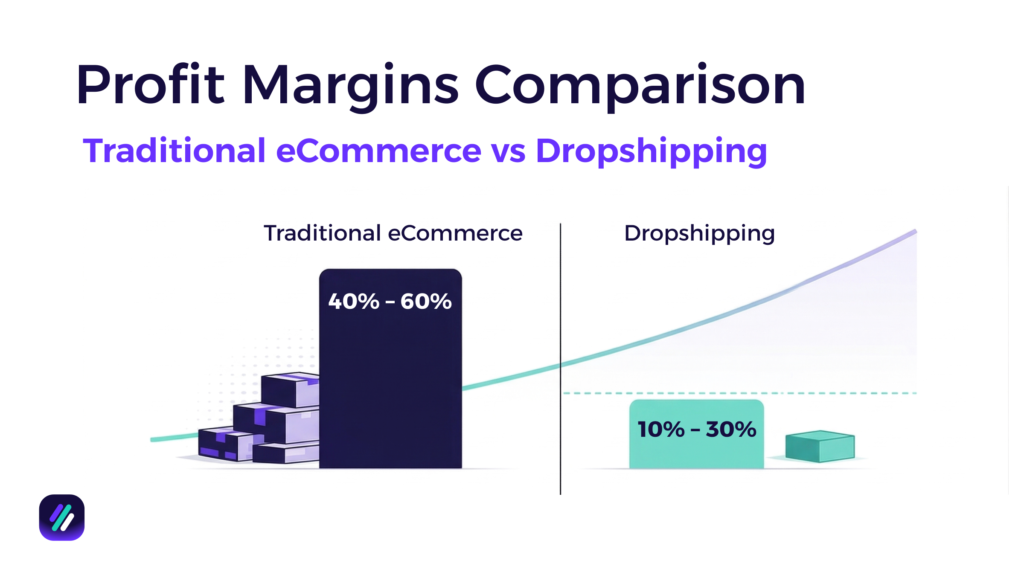
E-commerce typically offers higher margins because you buy inventory in bulk at wholesale prices, bringing down your per-unit costs. You also have full control over pricing and can adjust it based on demand and competition.
Dropshipping has thinner margins as you mostly buy single units at near-retail prices, leaving little to no space for a meaningful markup. But the risk of losing money on unsold inventory is essentially eliminated since you only pay for a product after someone has already bought it.
Typically, e-commerce margins sit between 40 and 60%, whereas dropshipping averages around 10 to 30% depending on the product and supplier.
Product quality control
Traditional e-commerce gives you full control over product quality since you can physically inspect items before they reach the customer. You know exactly what you’re sending out, which makes it easier to maintain a consistent experience and build a brand people trust.
Dropshipping offers limited quality control as you mostly rely on the supplier’s standards to fulfill orders. Of course there are ways to check and control the quality of the suppliers’ products, but it adds to the complexity and cost of running a dropshipping store.
If the supplier uses poor packaging or ships a defective item, there’s not much you can do since the product never passes through your hands.
Shipping and fulfillment
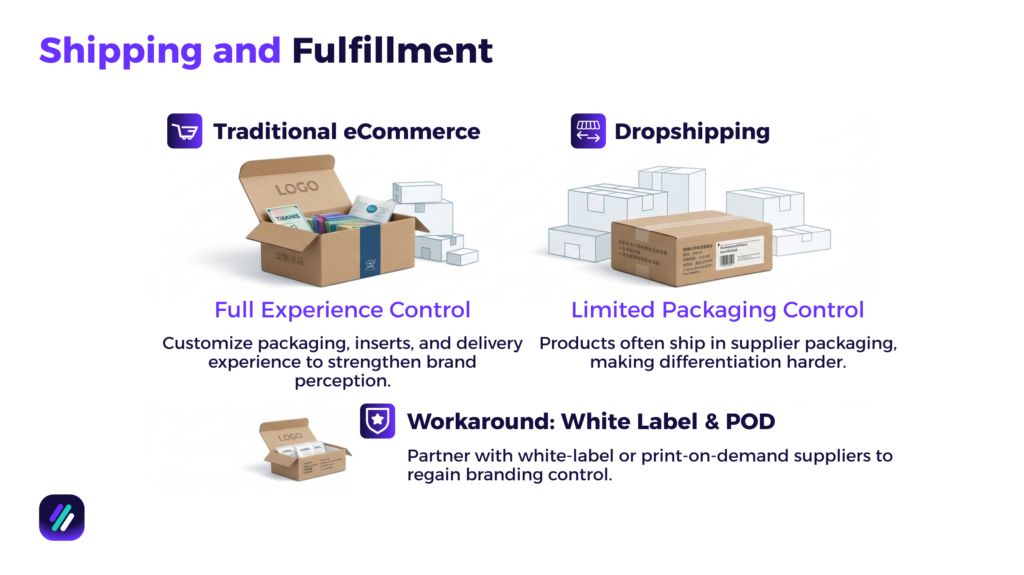
Traditional e-commerce gives you full control over the entire customer experience. You can customize your packaging, add ecomerce branding inserts, and include personal touches like thank you cards or samples that leave a lasting impression.
Dropshipping makes branding harder since products typically arrive in generic supplier packaging. When you’re selling the same items as dozens of other stores, there’s little in the product itself that sets you apart. Your brand ends up living mostly in how you market your products or deal with customers.
That said, you can still build an identity by working with white-label or print-on-demand suppliers. Look for suppliers who offer custom packaging and private labeling so you can create an experience that feels like your own.
Grab your Shopify dropshipping eBook and find winning suppliers fast!Growth profile
Traditional e-commerce can be slow to scale since every stage of growth brings new operational demands. For example, if you want to add new products, you need to arrange for additional storage and budget for a larger inventory purchase upfront.
Dropshipping is much easier to scale since you’re not tied to any inventory. You can add new products, test various dropshipping niches, or bring on more suppliers without changing much about how your business runs.
Should you Choose Dropshipping over traditional Ecommerce?
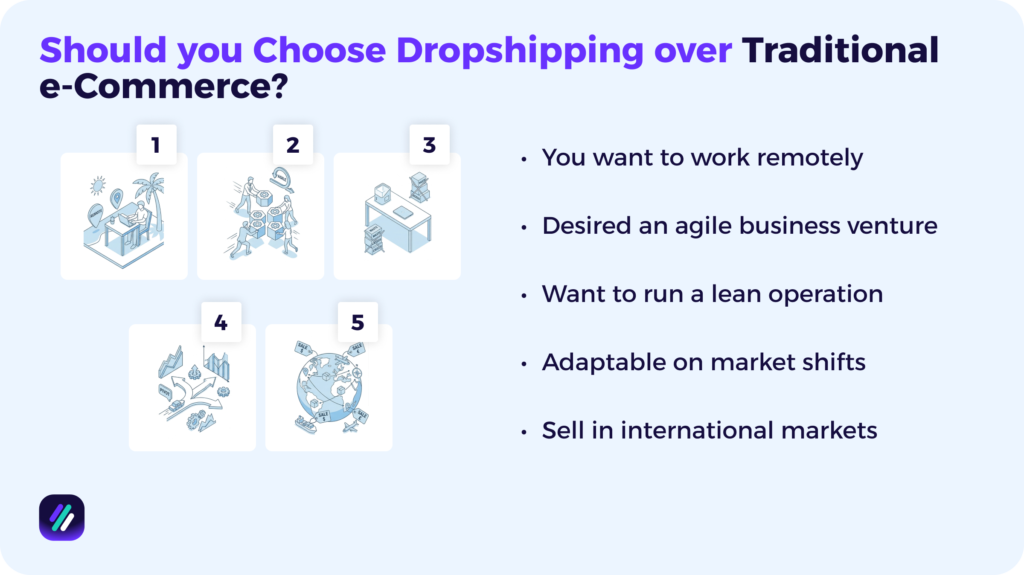
Still wondering whether you should pick dropshipping or ecommerce? Assessing your situation and resources, plus the level of flexibility you require, can help you make an informed decision.
Ideally, you should choose dropshipping when:
- You want to work remotely: Since you’re not managing a warehouse or handling stock, you can run your entire store from a laptop. It’s one of the few business models that works just as well from a café in Bali as it does from your home office.
- Desired an agile business venture: Dropshipping lets you add or remove products quickly based on what’s selling. If a product stops performing, you’re not stuck with a garage full of unsold stock.
- Want to run a lean operation: Independent entrepreneurs prefer keeping costs and complexity low. Dropshipping gives you that by removing the need for warehousing, staff, and upfront inventory so you can run the whole business yourself.
- Adaptable on market shifts: Without inventory tying you down, you can test new items and jump on trending ecommerce products quickly. Traditional e-commerce simply doesn’t offer that flexibility.
- Sell in international markets: Since your suppliers handle fulfillment, shipping to customers in different countries is simpler. You can enter new markets without setting up local warehouses or dealing with cross-border logistics yourself.
And traditional ecommerce when:
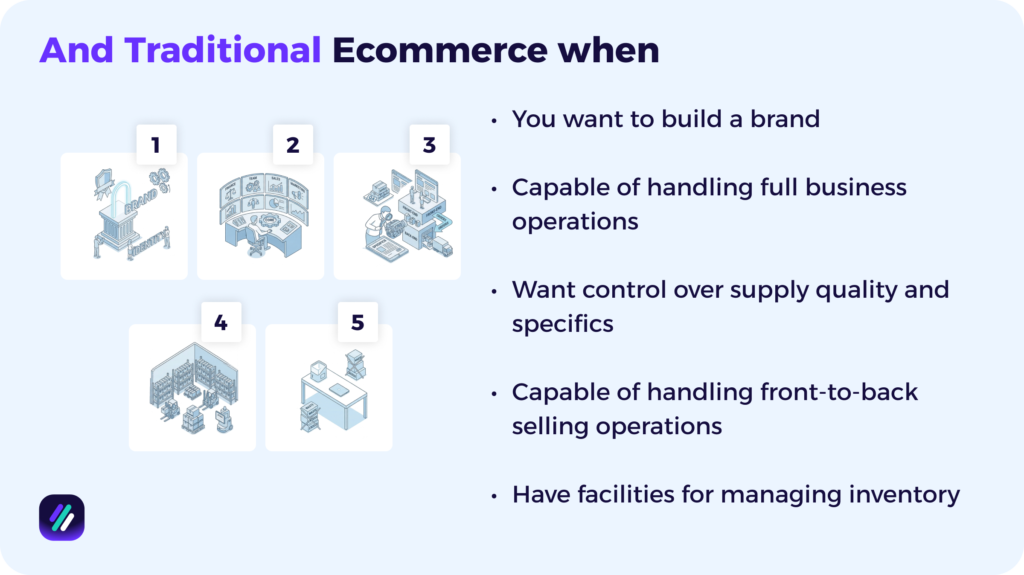
- You want to build a brand: E-commerce lets you customize every aspect of the customer experience. You can design your own packaging, add branded inserts, and create an unboxing experience that actually feels personal.
- Capable of handling full business operations: If you’re comfortable managing suppliers, staff, and daily logistics, traditional e-commerce is a natural fit. It’s a bigger operation but also a more rewarding one to run.
- Want control over supply quality and specifics: Being able to physically inspect products is a big advantage in terms of quality control and assurance. It lets you immediately spot detects and pull any substandard items before they ever reach the customer.
- Capable of handling front-to-back selling operations: If you have VAs or a small team for managing orders and customer support, traditional e-commerce can work well for you. It takes more coordination but gives you full visibility over every part of the business.
- Have facilities for managing inventory: If you have a warehouse or a 3PL partner and the software infrastructure needed to track and store physical inventory, ecommerce can be a more profitable venture for you.
Use ZIK Analytics for Your Dropshipping and Ecommerce Operation
ZIK Analytics has a suite of tools to support both dropshippers and eCommerce store owners at every stage of their business.
However, I want to highlight three tools that make dropshipping product research, supplier matching, and store management easier:
- Shopify Product Finder is your dropshipping product research tool for finding what’s selling across Shopify stores. Search keywords and filter by sales to identify winning products, then match them to Shopify suppliers with automatic profit calculations.
- Dropshipping Item Finder connects you with reliable suppliers across AliExpress, Alibaba, Amazon, Walmart, and CJ Dropshipping. Upload product images to find suppliers with pricing, shipping options, and profit margins.
- Shopify Sales Tracker lets you monitor successful dropshipping and eCommerce stores to see which dropshipping products are performing. Track stores over time to spot trends and new product launches.
You can also use the AdSpy Tool to see which ads competitors are running and the Shopify Store Finder to discover successful dropshipping stores by revenue and marketing channels.
Get your ZIK Analytics trial today and start building your dropshipping business with real product data and supplier insights.
Frequently Asked Questions on dropshipping vs eCommerce
In this section, I’ll answer the questions people frequently ask about dropshipping vs e-commerce.
Which is more profitable, dropshipping or ecommerce?
Ecommerce is generally more profitable in the long run as it involves making bulk purchases directly from manufacturers and offers margins in the 40%-60% range. Dropshipping, in comparison, yields thinner margins (10-30% due to high competition and dependence on limited suppliers.
How many dropshippers fail?
Over 90% of dropshippers fail within the first few months to a year of running their business. Most beginners quit when they don’t see immediate profits, not realizing that it takes consistent and long-term effort (think 6-24 months) to start making money from this business.
Is dropshipping easy?
Dropshipping is relatively easy to start due to low upfront costs and the availability of tools that simply store creation and management. However, building a profitable dropshipping business takes time due to high competition and saturation in most niches.
Is ecommerce basically dropshipping?
No, e-commerce is not basically dropshipping. Dropshipping is one type of e-commerce business model where you sell products without holding any inventory. E-commerce is the broader category that includes dropshipping, private label, wholesale, print-on-demand, and any other way of selling products online.
Is Shopify considered ecommerce?
Yes, Shopify is considered a solid channel for starting an e-commerce business. It has everything from customizable store templates to built-in sales tools to help merchants get their first sale online. Shopify also supports selling across social media platforms and in person, making it a flexible option for all kinds of selling.