

You’ve heard that it’s possible to start a dropshipping business with no money.
But you’re not exactly sure how it works and where to begin.
No need to worry, for I’ve laid out the entire process of dropshipping without money step by step.
Below, you’ll find all the details on how to start dropshipping with no money, along with the things you can and can’t do when operating on a zero-dollar budget.
Step 1: Choose Your Niche Without Spending Money
Premium niche research tools cost money to use. However, many free tools also let you identify profitable market gaps to target.
For example, Google Trends is a free tool that lets you track search interests for potential keywords over time. Enter a keyword related to your niche and then see the trend for the past five years.
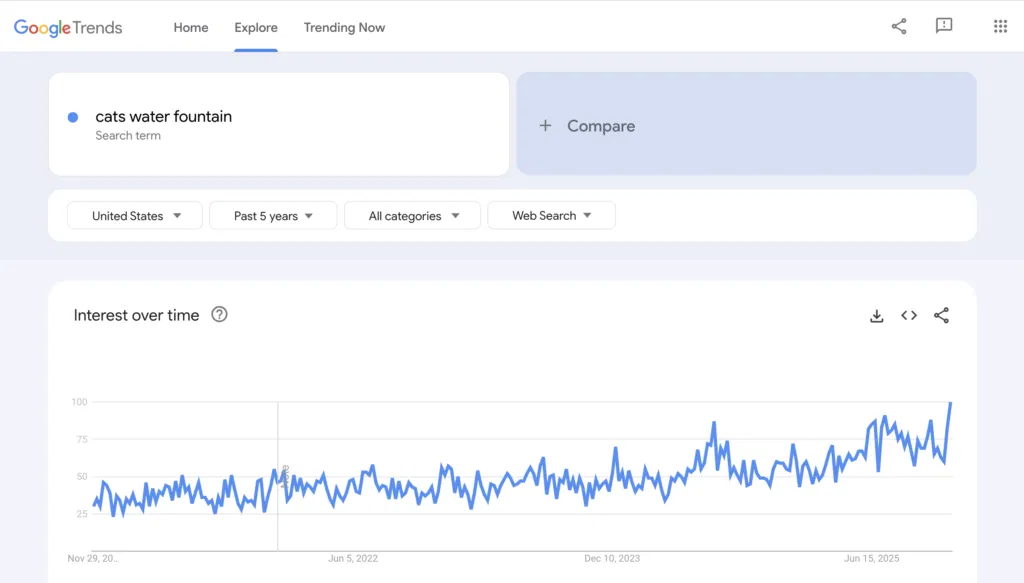
A growing upward graph means the niche has steady or growing interest and is likely to perform well throughout the year.
You can also browse the Best Sellers section on marketplaces like Etsy, Amazon, and eBay. This section features top-performing items based on the volume of recent sales on the platform. Make sure to drill down into subcategories to find niche opportunities (e.g., within “Pet Supplies,” focus on “orthopedic dog beds” or “interactive cat toys.”).

Criteria for Profitable Niches
After finding a few dropshipping niches, you’ll want to evaluate whether they’re profitable enough to make sense for your business. Here’s what you should look for:
- Low product turnover: Choose a niche with consistent demand and products that don’t go out of style quickly.
- Consumable items: Selling products that people need regularly (e.g., printer ink or coffee beans) helps build a base of repeat customers.
- Hard-to-find products: Dropshipping niches with products that people can’t easily find locally help in capturing online search traffic.
- Accessory-heavy goods: Niches with many accessories often allow for higher profit margins, as customers are less price-sensitive about add-ons than the core item itself.
Top 5 Beginner-Friendly Niches for 2026
When dropshipping without any capital or funds, you need to be careful about niche selection. Ideally, you should research and choose a dropshipping niche that is easy to market and contains a variety of visually appealing items. Below are five examples:
1. Consumer Electronics

Since beginners don’t have a big budget to invest in marketing, you need products that are visually appealing and easy to demonstrate. The consumer electronics category contains many such items, with Bluetooth speakers and LED light strips being two examples. You can just record a quick video showing the product in action and watch the engagement roll in.
2. Phone and Tablet Accessories

Nearly everyone has a smartphone these days, and people buy tablets for their kids in large numbers. These products can be marketed via organic social media posts that you can design via Canva. Make sure to highlight unique appeal such as faster charging times to attract people to your content.
3. Toys & Hobbies

Niches that attract enthusiasts make sense for beginners since products can be marketed through community engagement and content that sparks nostalgia or joy.
The toys and hobbies niche takes the win here, with items like action figures and remote control cars bringing back the fun of collecting and playing.
You can create engaging content with themes such as “toys from the 90s or “top RC cars for kids” to attract buyers who are already searching for these products.
4. Pet Supplies

Have you ever heard of a pet parent who thought twice before buying something their pet needed?
Yeah, me neither.
Pet owners are dedicated to keeping their animals happy and healthy, and they don’t hesitate to spend on products that deliver comfort or convenience. That means beginner dropshippers can create simple product videos and build a following around pet care without needing paid ads.
5. DIY Crafts

DIYers are a bunch that actively seeks out new objects and supplies to fuel their next creation.
Maybe you’ve seen craft content go viral on Pinterest or TikTok; that’s the kind of organic reach dropshippers can tap into.
You can create step-by-step tutorials using products like candle-making kits or resin supplies, then link directly to your store to make your first sales.
Step 2 Find Winning Dropshipping Products
Winning products are items that drive impulse purchases due to their functionality and visual appeal.
Nearly every dropshipping niche has such items. It just takes a good eye to find them before they become saturated.
One way to do so is to analyze social media trends. Hashtags like #trendingproducts and #tiktokmademebuyit can show you products that are currently sparking discussions amongst consumers.

You can take your research even further by using ZIK Analytics’ Shopify Product Explorer. Our tool gives you an overview of the top-selling items across the Shopify ecosystem (products collectively popular across all public-facing Shopify stores).
To use it, you have to sign up for a ZIK Analytics trial and then choose Shopify as your marketplace.
Once done, click the Product Explorer icon in the left hand menu, and the following dashboard will open.

Then, search for any item or niche using the filters available. For example, I searched for the Pet niche and chose dropshipping as the product type. For the country and currency, I selected United States and USD as those were most relevant to my target market.

ZIK also lets you analyze the results by metrics such as estimated revenue and approximate 7-day and 30-day sales to gain an idea of an item’s peformance.

You can then compare the items based on the sales and revenue they brought in, making it clear which ones are potential winners and should be added to your store.
Related Reading: Best Products to Sell on Shopify
Step 3: Find Free Dropshipping Suppliers
Most dropshipping platforms and apps charge a membership fee to access their supplier database. However, there are a few that don’t charge any fee and let you source products without any restrictions.
AliExpress

AliExpress has a free, built-in tool that helps you find trending ecommerce products and compare suppliers based on performance metrics like sales volume and delivery time history.
It’s called the AliExpress Dropshipping Center (or DS Center), and it is quite useful for finding the suppliers behind the top-selling items on the platform.
Just create an AliExpress account (registration is free) and go to your account section, which is usually an account dropdown menu or titled “My Orders.” Then look for the DS Center link and click it.
Then search for any product and use the filters to bring up results with relevant suppliers. For example, you can:
- Filter by “Orders”: Using this filter brings top-selling items to the top, indicating reliable suppliers who manage high order volumes.
- Sort by high rating: This lets you find items and sellers with a 4.5-star rating or above and at least 95% positive feedback score.
- Local warehouses: With this filter, you can find dropshipping suppliers who have warehouses in places such as Europe and the USA.
You can also check things like time in business, seller scores, and customer reviews to vet a supplier before choosing to partner with them for your store.
CJ Dropshipping

CJ Dropshipping is another platform that doesn’t charge you anything to access its supplier network.
Although it doesn’t give you the contact details of suppliers (CJ acts as the middleman), you can view product details, pricing, and available warehouses and shipping methods to see different sourcing options.
CJ’s free membership also comes with the option to post up to 5 daily sourcing requests. If you can’t find a specific product on the platform, you can submit a request with a description or image, and the CJ team will work with its network of factories to arrange it for you.
Spocket

Spocket is a dropshipping supplier that connects you with EU and US suppliers offering fast shipping within their regions.
Its free plan allows you to import up to 25 products in your online store as well as access features like shipment tracking and real-time inventory updates.
However, you don’t get features like branded invoicing or the ability to chat directly with suppliers. Nor do you get higher product limits for adding more items to your store.
Other Sources
You can also try finding dropshipping suppliers for free via:
- Online forums and communities: Join Facebook or Reddit groups like r/dropship and r/Shopify. People in these groups often share recommendations for reliable suppliers and warn against potential scams.
- Trade show events: Although there may be some costs involved to get to the event, it’s a great way to meet legitimate suppliers face-to-face.
- Manufacturers themselves: You can reach out to the manufacturer for the product you link and ask them about their approved dropshipping partners or wholesale distributors to find legitimate suppliers
Step 4: Set Up Your Free E-Commerce Store
You have a few different options for setting up your e-commerce store, ranging from marketplaces to website platforms. Here’s how each tends to work:
Marketplace-first
In this option, you’ll be creating a store directly on the e-commerce marketplace using internal tools. Here are the top ones for store building.
- eBay: eBay is a global marketplace where you can list new or used products through auctions or fixed prices. Registration is free, but you’ll pay insertion fees and final value fees when items sell.
- Amazon: Amazon offers access to a massive customer base for selling your items. Its Individual plan has no monthly fee, but you’ll pay a per-item fee plus referral fees on each sale.
- Etsy: Etsy specializes in handmade, vintage, and craft items that customers often buy on impulse. Setting up an Etsy shop costs no money, but you’ll need to pay a listing fee per item and transaction fees upon making a sale.

Social Commerce-first
Social commerce refers to using platforms like TikTok and Facebook to sell products directly to your customers. You can consider setting up an:
- Instagram Shop: This option comes with the ability to tag products directly in your posts and Stories. You just connect your shop to a Facebook catalog, and Instagram does the rest once you’re approved.
- Facebook Marketplace & Shop: This involves listing your products on the Facebook Marketplace and setting up a shop on your business page. You also get to choose whether customers check out directly on Facebook or get redirected to your website.
- TikTok Shop: TikTok Shop works directly within the app through videos, live streams, and your profile’s product showcase. It also comes with an affiliate program you can use to let creators promote your products for a commission.

Website
Some website platforms enable you to set up an e-commerce store for free, though they may involve some initial setup or a free trial period.
- WooCommerce (WordPress): WooCommerce is a free plugin available for the WordPress content management system. It allows you to turn any WordPress site into a fully-featured online store where you can sell products, though there’s a learning curve to it.
- Shopify Free Trial Strategy: While Shopify is a subscription-based platform, you can often take advantage of a free trial to launch your store and begin selling before committing to a paid plan.

Step 5: Create Product Listings That Convert
One of the things you can do for free is optimize the listings you create for your store.
As a first step, create titles that help shoppers quickly understand the product. You can use ZIK’s free title builder tool for creating keyword-rich titles that drive traffic to your listings.

Next, consider using unique images that are nothing like those of your competitors and suppliers. You can take your own images or try requesting user-generated content from your customers. Free design tools like Canva can help you add your branding to these images.
The description also plays a huge role in attracting (or turning away) customers. Write original copy here, and explain how an item solves a customer’s problem or improves their lives.

You’ll also want to break down the key information using headings, short paragraphs, and bullets to make the content scannable and easy to consume.
Step 6: Market Your Store With Zero Budget
You may be thinking that marketing a dropshipping business requires a huge budget.
Although you do need cash to run tests for advertising campaigns, a lot of marketing can be done for free.
Here are some dropshipping tips for marketing your store:
- Post engaging video content: Videos get shared when they have unique or entertaining footage. Think about how you can create lighthearted Reels or TikToks around your offerings.
- Build an email list: Using a free email marketing service, you can build an email list that you can promote to at any time without spending any funds.
- Collaborate with micro-influencers: Connect with micro influencers who have smaller followings but high engagement rates. Offer them a discount or free sample in exchange for an authentic review abour your store.
- Engage in cross-promotions: Collaborate with other non-competing Shopify dropshipping stores to promote each other’s products to your respective target audiences. This is an easy way to tap into a new customer base without incurring any cost.
Step 7: Process Your First Orders
When you’re dropshipping with no money, you will need to personally manage every order that customers place on your store.
Although manual fulfillment is time-consuming, it avoids the cost of automation tools until you begin generating consistent profit.
So, how do you manually process your first dropshipping orders?
- Go to Settings> General > Order processing in Shopify and uncheck the box “Automatically fulfill the order’s line items” if it’s turned on.
- Upon receiving a new order (which will show as “Unfulfilled”), click on it to view the customer’s details like shipping address, order notes, and more.
- Place the order with your supplier: Log in to your free dropshipping supplier’s website or app and manually buy the items present in the customer’s order.
- During the supplier’s checkout process, enter your customer’s shipping address as the delivery destination. Use your own information for billing and other things.
- Complete the transaction using your own payment method. The supplier will then process the order and give you a unique tracking number once it becomes available.
- Return to your Shopify dashboard and go to the Orders section. In the Unfulfilled or In progress section, click Mark as fulfilled.
- In the fulfillment screen, enter the tracking number provided by the supplier. Shopify should then automatically detect the shipping carrier; if it doesn’t, you can manually select it from the dropdown menu.
Step 8: Reinvest Profits to Scale
Any profit you make in the first few months should be geared towards streamlining and growing your business.
Some ideas include:
- Improving your store’s appearance: Since your e-commerce store is often the first impression you have on customers, reinvest some profit into improving its appearance. You can do this by investing in a premium theme and making sure your site looks and functions flawlessly on mobile screens.
- Setting up email automation: Allocate some funds for email marketing software and use it to set up automated welcome and abandoned cart emails. Most email tools have low monthly subscription costs and allow you to build customer loyalty with consistent messaging.
- Running paid ads: Paid ads can quickly scale your business if set up the right way. You can put some profits into running TikTok or Meta ads and analyzing campaign results to decide where to focus your efforts.
- Automate order fulfillment: You were manually fulfilling orders before, but after generating some profit, you have funds to get a tool or app that automatically syncs orders from your store to the supplier. Such a tool not only saves you time but also reduces the risk of manual errors that can affect the operations of your dropshipping store.
Dropshipping Challenges to Prepare Yourself For

Dropshipping brings a number of challenges that require you to take proactive steps to address them quickly:
Challenge 1: Long Shipping Times
Many dropshipping suppliers are based in far-off countries like China and India. This results in longer shipping times for customers in the West, with some orders taking several weeks or even months to arrive. You can prevent customer frustration by working with suppliers who are situated (or at least have a warehouse) near your customers’ location. Find the best US dropshipping suppliers today.
Challenge 2: Low Initial Profit Margins
Since dropshippers don’t purchase inventory in bulk, they get near-retail prices that leave only a small margin after adding all the costs. Although margins tend to improve with business growth and negotiating better deals with suppliers, the initial months can be pretty tight for beginner dropshippers in terms of pure profit earned.
Challenge 3: Limited Platform Features (Free Tiers)
Many popular e-commerce platforms offer free or basic subscription tiers, but these often come with limitations that can hinder a dropshipping business’s growth. You will need to work around product import limits and missing app integrations, forcing you to spend more time managing the backend stuff for your business.
Challenge 4: No Advertising Budget
Without any money to spend on paid ads, you’ll be relying on organic growth methods such as social media and content marketing. This can take a while to gain traction before you see any meaningful results. Even if you put in consistent effort, the compound effect takes time to kick in. Addressing this requires you to reinvest early profits into paid advertising to get immediate eyeballs on your store.
Get the eBook and learn how to launch your one-product Shopify store right!Find Winning Dropshipping Product with ZIK Analytics
ZIK Analytics has a suite of tools to make life easier for Shopify store owners looking to add winning dropshipping products to their store .
However, I especially want to highlight three tools that make dropshipping product research faster and more reliable:
- Shopify Product Explorer shows you what’s selling across Shopify stores. Search keywords, filter by sales, and match products to suppliers with automatic profit calculations.
- Shopify Sales Tracker lets you monitor any store’s performance. Enter a URL to see daily sales, revenue, and top products. Track stores to spot trends early.
- Dropshipping Spy Tool is your dropshipping spy tool for Facebook and Instagram. Search keywords to see which ads get engagement, then save winners for your campaigns.
You can also use the Shopify Store Finder to discover successful stores by revenue and marketing channels, and the Dropshipping Product Research Tool to access a dropshipping database that matches products with suppliers across platforms.
Get your ZIK Analytics trial today and use the best dropshipping product research tool to validate products before you commit.
Frequently Asked Questions About How to Start Dropshipping with No Money
In this section, I’ll answer the questions people frequently ask about dropshipping with no money.
Is it possible to dropship with no money?
It’s theortically possible to dropship with no money if you take advantage of the free trials offered by e-commerce platforms and tools. Marketing can also be done for free with organic methods such as TikTok video posting and UGC. However, these free methods require more time and effort than investing a small budget to help you scale faster.
Can I make $10,000 per month dropshipping?
Yes, you can make $10,000 per month dropshipping if you have a solid business plan and develop a highly effective marketing funnel for your store. Finding winning products in a less saturated niche and creating a professional, user-friendly storefront can also lay the foundation for generating thousands in profits monthly. Experience also affects your chances of making $10,000 monthly via dropshipping, with beginners earning around $0-$1k per month and veteran dropshippers crossing the $10,000 mark consistently.
How to start dropshipping as a beginner?
As a beginner, you can start Shopify dropshipping by choosing a specific niche, finding a reliable supplier and winning products, building your online store on a platform such as Shopify, and then driving traffic through targeted marketing (SEO, paid ads, etc.). Providing excellent customer service can also help build your brand and generate loyalty among buyers.
How much money would you need to start a dropshipping business?
You can start dropshipping with as little as $100-$200. However, this investment is only enough for a basic setup consisting of a store and a domain, plus minimal ads. A more realistic budget for testing products and marketing effectively is often $500-$1,000. This much capital is enough to cover the costs of your tools, subscriptions, and ads meant to ignite your growth.