
So you’re interested in starting a dropshipping business, but a few things are making you question your choice.
Someone on Reddit said their dropshipping store got shut down because the supplier sent counterfeit items to the customers. Another person on Facebook stated they couldn’t get past generating $100 in sales because the items went out of stock.
So, is dropshipping really a scam? Or a legitimate business that gets a bad reputation?
In this guide, I’ll tell you everything about dropshipping and why it’s a legitimate business model when done right. I’ll also cover common dropshipping scams and how to avoid them.
Is Dropshipping a Legal and Legitimate Business Model?
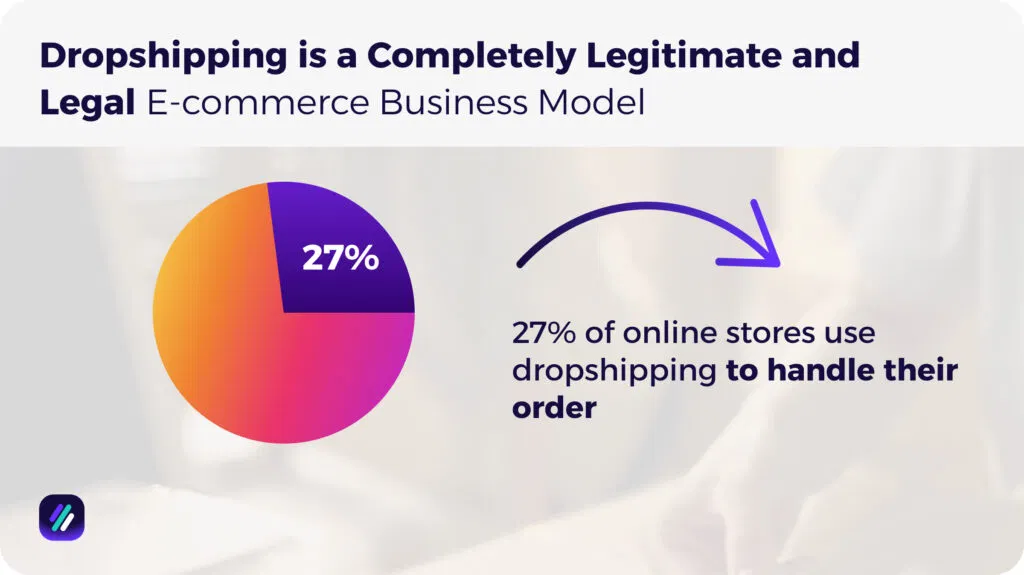
Yes, dropshipping is a completely legitimate and legal e-commerce business model; in fact, about 27% of online stores use dropshipping to handle their order.
To keep it that way, you need to adhere to the rules set by your state’s business registration office, comply with tax policies, and abide by platform rules.
Issues arise when you associate yourself with illegal practices such as selling counterfeit or fake branded goods, making supplier vetting a necessity for running a legitimate business.
Can Anyone Start a Dropshipping Business?
Yes, anyone can start a dropshipping business due to the low barrier to entry, and some can start dropshipping with no money. That’s exactly what makes it appealing to scammers and cybercriminals.
Scammers can easily set up online stores with minimal personal information, knowing that it’s not easy to trace the store back to them.
The low startup investment also means they won’t incur a significant loss if the scheme is shut down.
Plus, the seller not handling the product means the scammer can partner with fraudulent companies that sell counterfeit or low-quality products.
Without physical inventory inspection, they know the seller won’t know of their practice until the items get to the customer (by then, they will already have disappeared).
Overall, the flexibility that comes with dropshipping gives scammers the opportunity to defraud people quickly and vanish if exposed.
Types of Dropshipping Scams
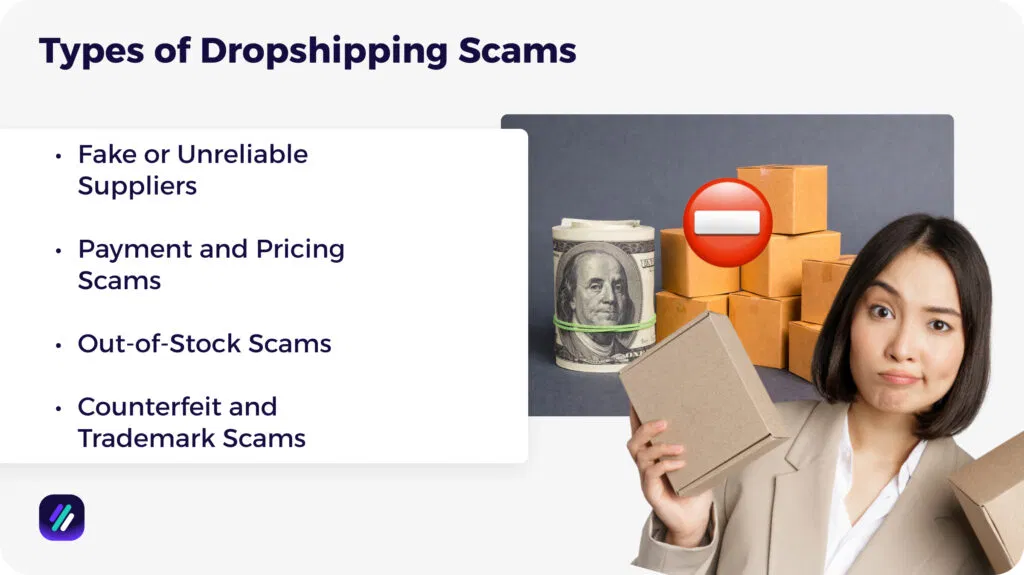
Here are some of the most common dropshipping scams to watch for:
Fake or Unreliable Suppliers
These consist of unethical suppliers who claim to offer branded items, but ship knockoffs or subpar goods instead. They usually create professional-looking stores with phantom inventory to lure people to their business. After collecting an upfront payment, these supplies disappear without shipping anything to the customer.
Some suppliers are also unreliable in that they are not genuine manufacturers or wholesalers but present themselves as one. In reality, they are just middleman who mark up prices and erode potential profits for dropshippers.
Payment and Pricing Scams
Dropshippers also need to watch out for deceptive practices that defraud them of money. Some fraudulent suppliers insist on using insecure payment methods like cryptocurrency or wire transfers. These channels are untraceable and make it nearly impossible for you to recover your funds.
Unrealistically low wholesale pricing is another scam. The purpose of hackers, again, is to take the money and disappear. They might use price bundling to make you feel like you’re getting a great deal, and offer even more discounts if you pay via a certain channel.
Out-of-Stock Scams
Out-of-stock scams happen when scammers list high-demand products using stolen images on different platforms. The dropshipper, thinking that these items are available, takes orders from customers and pays the supplier. The supplier then delays shipment indefinitely or just disappears, leaving the seller with a ruined reputation.
Counterfeit and Trademark Scams
A counterfeiting scam can happen to anyone. It involves scammers listing branded goods on an e-commerce site but shipping inferior or fake products to customers. These adversaries pose as legitimate wholesalers but often lack the documentation to provide an official relationship with the brand.
Illicit suppliers may also use copyrighted trademarks in product images and other places to drive traffic to their website. You may also come across domains such as adidas-outlet-store.com, which is basically a phony domain created by scammers to lure unsuspecting customers searching for brand deals.
These fraudulent sites often contain professional branding and trademarks copied from the authentic website to look more credible.
Customer-Side and Chargeback Scams
These scams involve buyers disputing legitimate purchases to get refunds without returning the items. Scammers may falsely claim that the product was defective or didn’t match the online description. Rather than following your return policy, the scammer asks their bank to debit the amount paid.
Some scammers may also engage in double-dipping, where they request a refund directly from you but then also file a chargeback with their bank for the same transaction. This is done to get maximum financial benefit from the illicit purchase.
Absurd Shipping Costs
Another common dropshipping scam is where a store lists a trendy item for a very low price and then hits the customer with an absurdly high shipping fee at checkout.
Although it does cost more to ship from certain places, the scam is carried out with the product’s origin hidden. You might believe that you are buying from a very remote country and will have to bear more taxes and duties, but the original item might be in a warehouse nearby.
And if you want to return the item? Good luck because the refund policy of these stores requires the customer to pay for return shipping out of pocket. Not to mention, the cost of return shipping is nearly as high as the inflated shipping fee, forcing you to give up.
Fake Reviews and Stores
Scammers can also create websites that look legitimate with third-party reviews from real people. This typically involves recruiting individuals through Telegram and WhatsApp and giving them free products or offering full refunds in exchange for posting a positive review.
Alternatively, scammers may use AI tools to generate natural-sounding reviews to avoid detection by algorithms. One more scheme is scammers posting a series of fake one-star reviews on a legitimate Google My Business profile and demanding payment to remove them. Scammers may also send unsolicited products to random people using stolen personal data and then post fake reviews as verified purchasers to boost their items’ rating.
Get the eBook and learn how to launch your one-product Shopify store right!How to Avoid a Dropshipping Scam
Now that you have an idea of the various dropshipping scams, here are the steps you can take to avoid them:
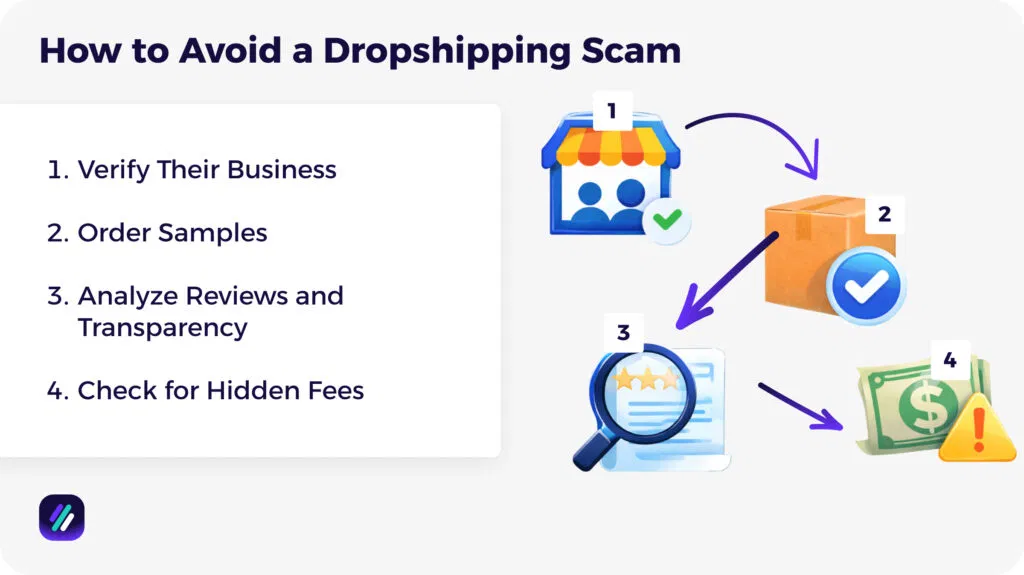
Verify Their Business
Legitimate suppliers should be able to provide a verifiable phone number and physical address. You can request this as well as check their status through directories like Worldwide Brands or the state’s Secretary of State website. If they only list a residential address or a P.O. Box, it puts a big question mark on their legitimacy.
Order Samples
Even though samples may not reveal much about a supplier’s intention or practices, they can help you filter scammers who just list products to defraud people of money. It also helps you avoid selling counterfeit and low-quality products, plus experience the shipping process firsthand. Consider ordering samples using a different address or name to verify the supplier’s consistency in the type of product they send, versus the initial sample.
Analyze Reviews and Transparency
Don’t just rely on the reviews present on the supplier’s websites. Go through feedback on independent platforms like Trustpilot and Better Business Bureau (BBB). You can also review industry forums and ask other dropshippers if they have any knowledge of this supplier’s business.
Be wary of suppliers with only positive, generic reviews and those with no reviews. Also, keep an eye out for repetitive language and reviews left from incomplete profiles. A mix of positive reviews and some low ratings is usually a sign of authenticity.
Fraudulent suppliers will often have hidden fees so they can make more money out of innocent buyers. You can check for this by requesting a full cost breakdown (product, packaging, shipping, handling, and returns), upfront. Also, be wary of terms like service charges and processing, as they might just be a way to charge extra fees on the order.
Ideally, you should discuss all potential fees before signing on the dotted line. If the supplier hesitates or gives an insufficient explanation of the charges, it’s best to take your search elsewhere.
Related Article: Common Mistakes to Avoid When Running a Shopify Store
Fake and Scammy Dropshipping Courses
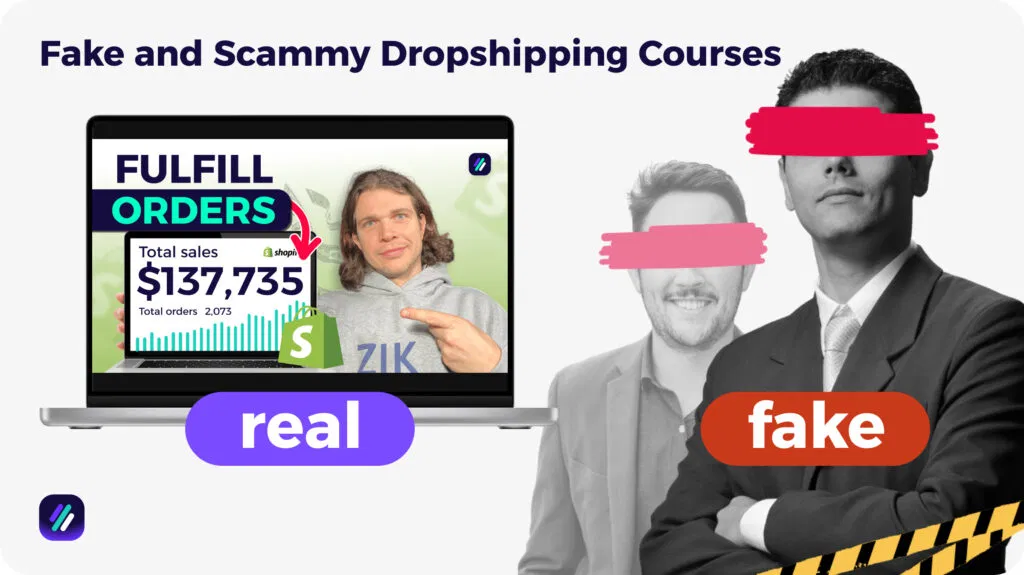
As someone new to the dropshipping game, you might be inclined to learn from people who’ve had success with this type of e-commerce business.
However, the market is full of fake and scammy dropshipping courses, and without knowing what to look for, you could end up spending your hard-earned money on a course that provides zero value.
Watch out for:
Get-rich-quick-schemes
Some dropshipping courses tell you that you can get rich overnight with minimal effort. People behind these courses often rely on tactics like flaunting luxury items (which are actually rented) on TikTok and other social media platforms.
These individuals claim that their wealth came from their “secret” methods, and they are offering a limited-time opportunity to learn from them. In reality, their course content is based on basic marketing insights that are readily available online for free.
As for the reviews, the only positive ones will likely be from the guru’s internal network. Plus, most of the course is more on the “mindset’ side of things rather than strategy, which is basically fluff when it comes to building a legitimate dropshipping business.
Influencer Plugs with Unclear Guidelines
A few influencers out there promote all kinds of low-quality products to receive commissions from fraudulent suppliers. Their posts don’t contain any clear information and are often promoted as “organic” to their followers. In other words, the influencer doesn’t mention that it’s a sponsored post, leading to audiences believing that it’s a genuine, trusted recommendation.
Some influencers also invite people to join a brand ambassador program, where they offer commissions in exchange for promoting their products. However, these commissions rarely materialize, and the promotions are there just to collect email addresses that influencers can use to build their customer list.
Incomplete LinkedIn Profiles of Dropshipping Gurus
A vague or incomplete LinkedIn profile often suggests that the self-proclaimed guru doesn’t have an actual track record of success.
These profiles may have AI-generated images or no photos to begin with. The job titles might also be just emojis and a sentence here and there discussing the experience. The guru may also lack a detailed work history, suggesting an attempt to hide limited or non-existent industry experience.
Instead of important details, these profiles will be centered around high-priced coaching. Plus, the guru will immediately try to move the conversation to a private WhatsApp or Telegram group when you get in touch with them. Note that genuine experts have established brands and are able to verify their claims via authentic resources.
Get this ZIK Analytics Dropshipping Course!
If you’re looking for a comprehensive and legitimate dropshipping course, ZIK Analytics has got you covered.
Our Shopify dropshipping course was created with beginners in mind. It covers store setup, product sourcing with ZIK Analytics tools, and Facebook advertising strategies. You also get lifetime free access to over 80 video lessons taught by people who’ve actually built 5-6 figure stores.
Here’s what you’ll learn:
- How to set up your Shopify store from scratch
- Shopify dropshipping product research using ZIK’s analytics tools
- Facebook pixel installation and ad campaigns
- Store automation for fulfillment and customer service
Ready to learn dropshipping from someone who’s actually done it? Enroll in the ZIK Analytics Shopify dropshipping course for free and start building your store the right way.
Use ZIK Analytics for Avoiding Product and Supplier Scams
The scams aren’t going to go away anytime soon. The good news is you can take steps to protect yourself before launching your dropshipping store.
ZIK Analytics can help you avoid supplier and product scams by giving you legitimate data pulled directly from official platforms. We’ve designed our tools to match your products with verified suppliers, so you don’t have to dig through questionable sources.
Here’s how we can help you stay safe:
- Direct data from official sources: ZIK pulls product information, pricing, and supplier details straight from Alibaba and AliExpress. You’re not relying on sketchy third-party databases or outdated listings to make your sourcing decisions. Everything you see comes from the actual platforms where millions of legitimate transactions happen daily.
- Verified supplier badges and trust signals: When you search Alibaba by image or search AliExpress by image, ZIK shows you supplier trust indicators like verified badges, years in business, and credibility icons. This makes it easy to spot reliable manufacturers at a glance and filter out the ones with no record.
- Instant profit and ROI calculations: ZIK automatically compares your Shopify pricing with supplier costs, calculates margins, and shows ROI for every match. You can quickly identify deals that are too good to be true, which often signal fake suppliers trying to lure you into buying.
- Side-by-side supplier comparisons: Instead of jumping between tabs and manually comparing suppliers, ZIK lets you view multiple options side-by-side. You can shortlist the most credible ones, export your research, and make informed sourcing decisions without the guesswork.
You don’t have to start your dropshipping journey with the thought that you might fall victim to a scam. With ZIK Analytics’ data and dropshipping research tools, you can be sure of making decisions that keep you protected as you begin selling.
Frequently Asked Questions on Is Dropshipping a Scam
In this section, I’ll answer the frequently asked questions about dropshipping being a scam.
Why do 90% of dropshippers fail?
90 percent of the people who start a dropshipping business fail due to wrong niche selection, long shipping times, and a lack of control over products, among other reasons. You can improve your chances of success by choosing a profitable dropshipping niche and working with suppliers who deliver in 1-3 days.
Is dropshipping actually worth doing?
Yes, dropshipping is actually worth doing because of the flexibility and scalability it offers to new entrepreneurs. It allows you to run your business from anywhere with an internet connection and easily test new products without worrying about inventory. But keep in mind that dropshipping is not a get-rich-quick scheme, and customer expectations demand a more strategic, brand-focused mindset from those planning to pursue it.
Can you make $1000 a month dropshipping?
Yes, you can make $1,000 a month dropshipping if you focus on finding winning dropshipping products and choose reliable supply partners for your business. Additionally, you need to make a consistent effort and find ways to build a loyal customer base. Although success isn’t guaranteed, taking these steps can improve your chances of reaching that $1,000 a month mark.
Is $100 enough for dropshipping?
$100 can be enough to start dropshipping, provided that you’re ready to put in the work and accept slow initial sales. It also requires a strict focus on organic marketing and leveraging free trials of platforms and tools. A more realistic budget for a smoother launch is $200-300, which includes some basic software and funds for a small test campaign.
Is drop shipping dead in 2026?
No, dropshipping isn’t dead in 2026. However, the old tactics of creating generic stores and targeting everyone are. Now success requires you to have a niche focus, reliable suppliers who ship quickly, and a brand that customers relate to across all touchpoints. Data-driven decision-making is going to be the main differentiator between successful and unsuccessful dropshippers in 2026.
Who is the richest dropshipper?
Kevin Zhang is the richest dropshipper with an estimated net worth of $20 million. He serves as the CEO of Kreator eCommerce and built a business by mastering Facebook Ads and ecommerce branding. The dropshipping rich list also includes Andreas Koenig & Alexander Pecka, whose pet-focused venture Doggykingdom does over $10 million a year in revenue.
Is it risky to do dropshipping?
Dropshipping, like any other business, has risks. But those risks can be easily mitigated with some effort and thinking. Researching and complying with e-commerce laws can help you avoid legal issues like IP infringement. Meanwhile, budgeting for ads and testing campaigns thoroughly to find winning creatives and bids can help you avoid losses from ad spend.