
Cosmetics have been around ever since people started caring about how they looked, which is safe to say, for a very long time.
From ancient Egypt to modern-day TikTok, cosmetics like skincare and makeup are a part of daily life for millions of people around the world.
As such, it makes a lot of sense to build a dropshipping business around them. But where do you start? How do you choose which cosmetics to sell?
In this post, I’ll answer all of these questions and show you how you can build a profitable cosmetics dropshipping business from scratch.
Is Dropshipping Cosmetics Profitable in 2026?
Yes, cosmetics dropshipping is profitable for a variety of reasons. For one, the margins on cosmetics can be as high as 50%, and higher if you manage to find a cheaper source.
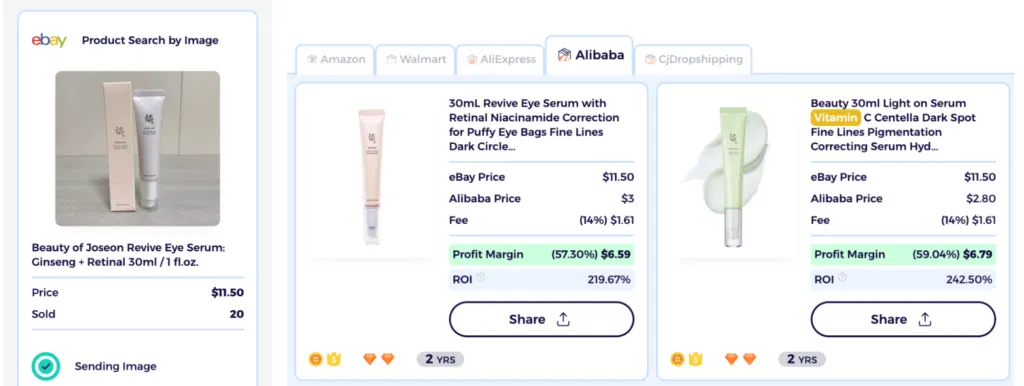
ZIK’s own data shows that sourcing from certain suppliers can net you around 60% in margins on sales.
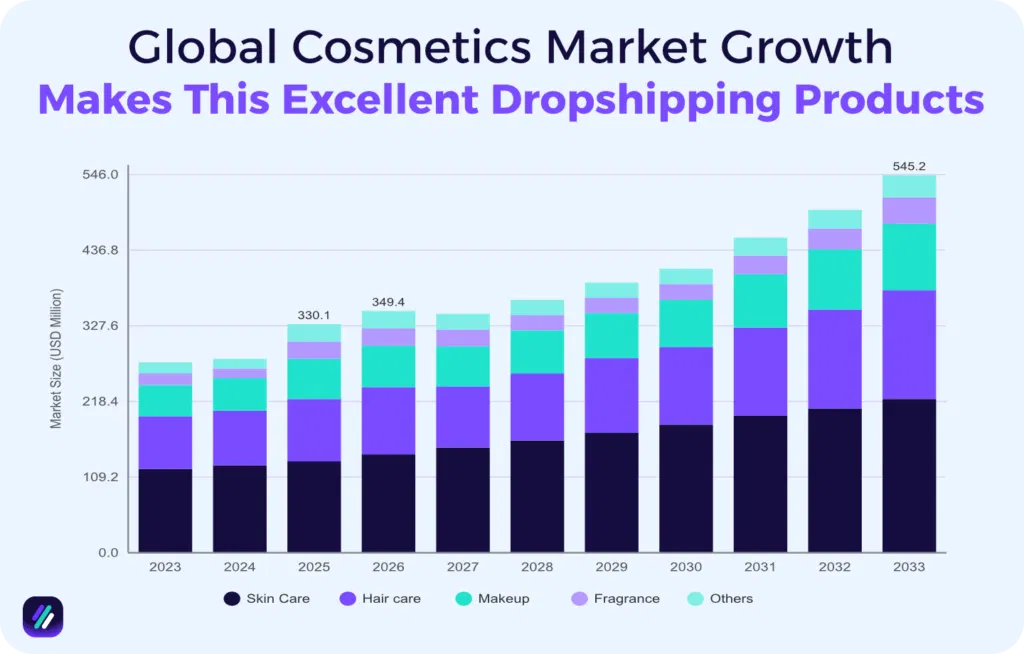
The cosmetics market is also growing steadily, with projections showing it reaching $545 million by 2033. Dropshipping items like skincare and makeup now means you can position yourself to benefit from that growth over the next several years.
Cosmetics are also consumable products, meaning people buy them repeatedly as they run out. That repeat purchase behavior means the same customer can generate revenue for you multiple times without you spending more to acquire them.
Moreover, cosmetic items are small and lightweight, which keeps shipping costs low and makes them less prone to damage in transit.
Best Cosmetics Products to Dropship
Certain cosmetics sell better than others because they improve people’s appearance. Here are some of the best cosmetics to dropship.
Skincare Products
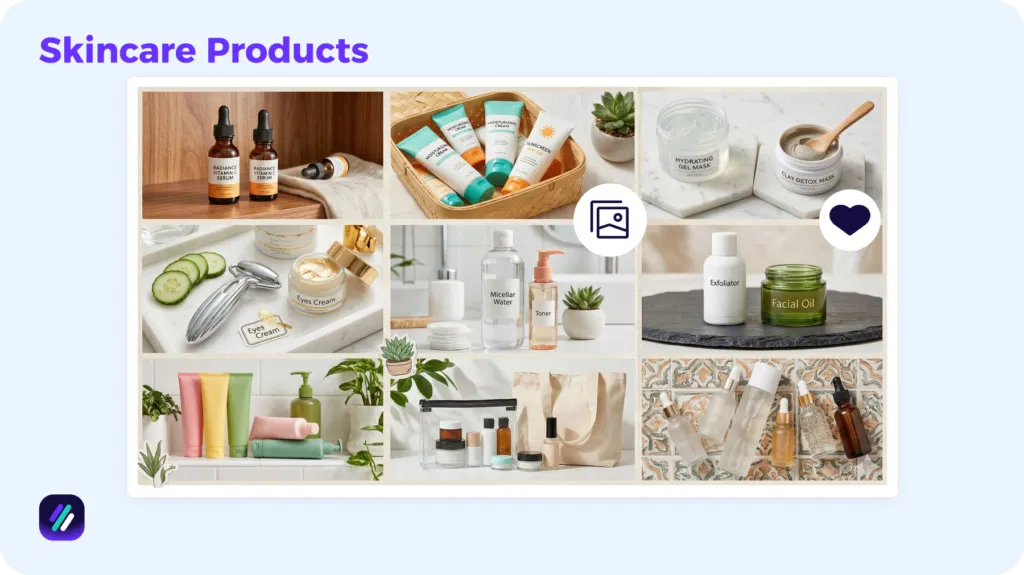
Skincare is one of the most reliable cosmetics niches to dropship, driven by consistent everyday demand and a growing interest in science-backed ingredients and simpler routines.
Some of the best items to dropship in this category include serums, targeted treatments, and face masks.
Dropshipping these can be highly profitable since customers tend to repurchase every 30 to 60 days as they run out, meaning you don’t have to keep spending to bring the same customer back.
Makeup Products
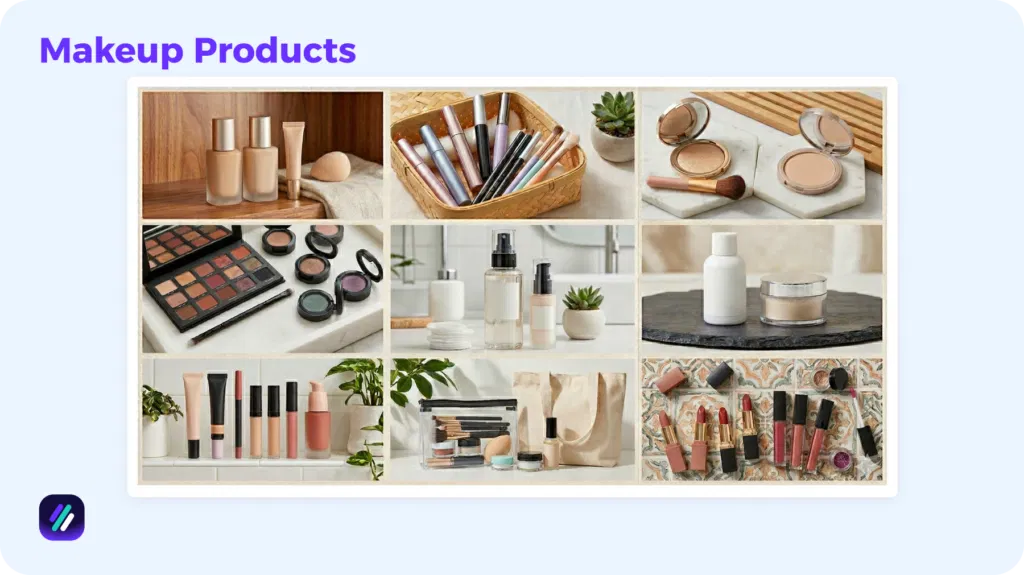
A good lipstick or a well-packaged eyeshadow palette can instantly add value to someone’s day.
Dropshipping makeup allows you to tap into a market where people buy repeatedly and follow trends closely. Items like jelly blushes and tinted lip oils can go viral overnight and sell in high volumes with the right content behind them.
With the visual nature of makeup, it’s easy to market these items through before and after videos and tutorials on TikTok and Instagram.
Niche Cosmetics
A few cosmetics niches have built loyal audiences and tend to drive repeat purchases. These include:
- Vegan and cruelty-free beauty: Items like vegan lipsticks and cruelty-free brushes are a hit with conscious consumers and can bring consistent sales to your store.
- K-beauty and J-beauty products: With ingredients like snail mucin and rice water going viral on TikTok, you can do well by stocking products that deliver the glass skin results people are after.
- Men’s grooming products: Items like beard oils and facial cleansers are in growing demand as more men begin to invest in dedicated skincare routines.
- Organic and natural cosmetics: Cosmetics made primarily from plant-based and herbal ingredients appeal to buyers who are cautious about what they put on their skin and are willing to pay more for cleaner formulations.
- Inclusive shade ranges (foundation, concealer): Millions of shoppers can’t find foundations that match their skin tone in local stores, making this an underserved niche worth tapping into.
At-Home Beauty Tech
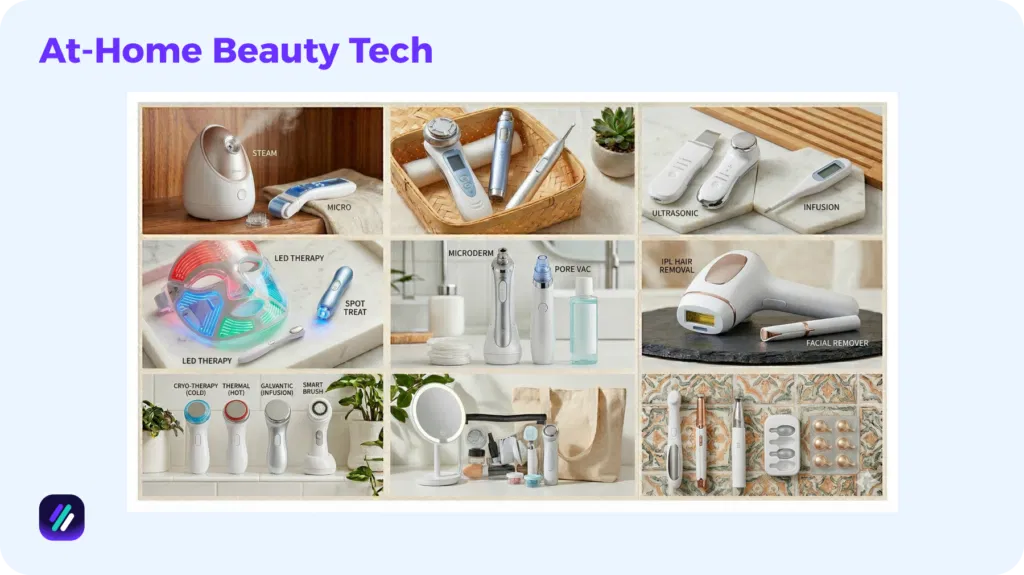
Ever scrolled past someone using an LED face mask and wondered what it even does?
That’s the kind of curiosity at-home beauty tech generates, and it translates directly into clicks and sales.
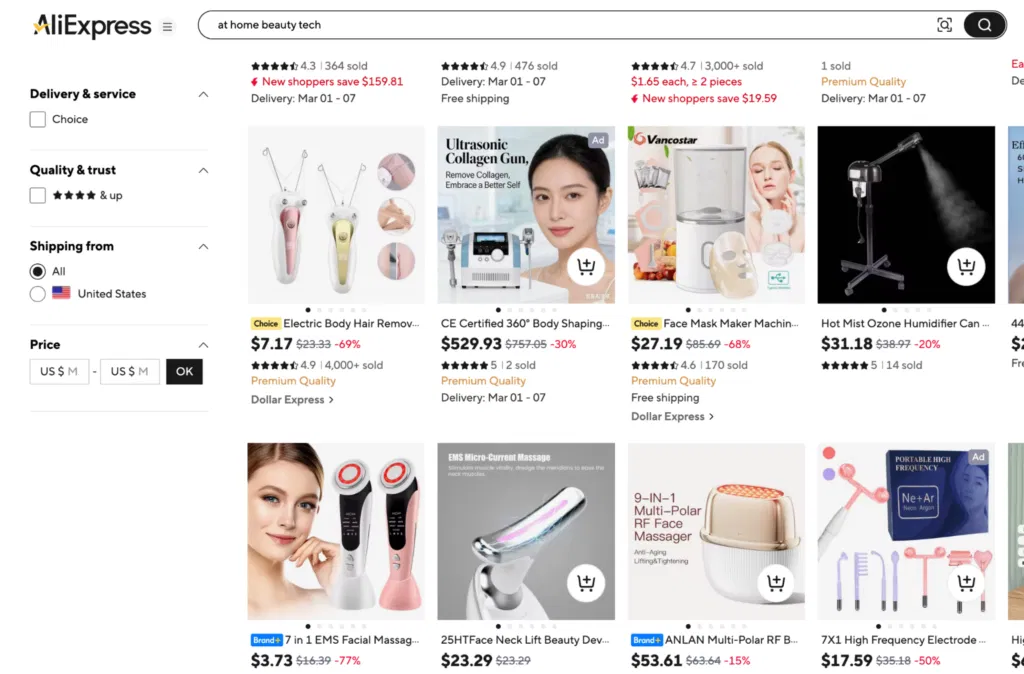
The demand for products like facial rollers and microcurrent wands keeps growing as more people look for ways to replicate professional treatments from home.
Dropshipping these can help you tap into the growing demand for self-care while benefiting from high-ticket margins that come with selling innovative items in the cosmetics niche.
Essential Cosmetic Regulations and Compliance to Follow
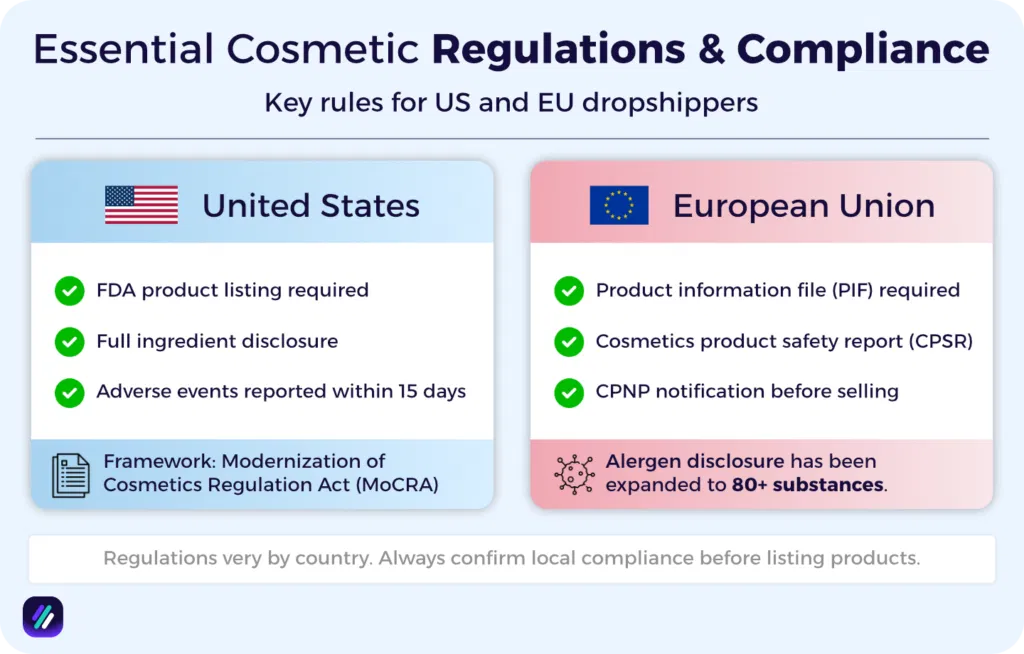
Dropshipping cosmetics requires you to comply with safety and labeling regulations that vary depending on where you’re selling.
In the US, the main framework is the Modernization of Cosmetics Regulation Act (MoCRA). It requires products to be listed with the FDA, ingredients to be properly disclosed, and serious adverse events to be reported within 15 days.
In the EU, the requirements are stricter. You’ll need a Product Information File, a Cosmetic Product Safety Report, and you must notify the EU’s Cosmetic Products Notification Portal before selling anything.
It’s also worth knowing that allergen labeling rules are expanding in both markets this year, with the EU requiring disclosure for over 80 substances by July 2026.
These are general guidelines. The exact requirements depend on where you’re selling, so it’s worth researching the rules for your specific target market before you start listing products.
How to Start Dropshipping Cosmetics
Now that you understand the potential of cosmetics dropshipping, here’s how you can start:
Step 1: Select Your Cosmetics Niche
You want to choose cosmetics that are both trendy and high-quality, and can generate consistent sales for your business.
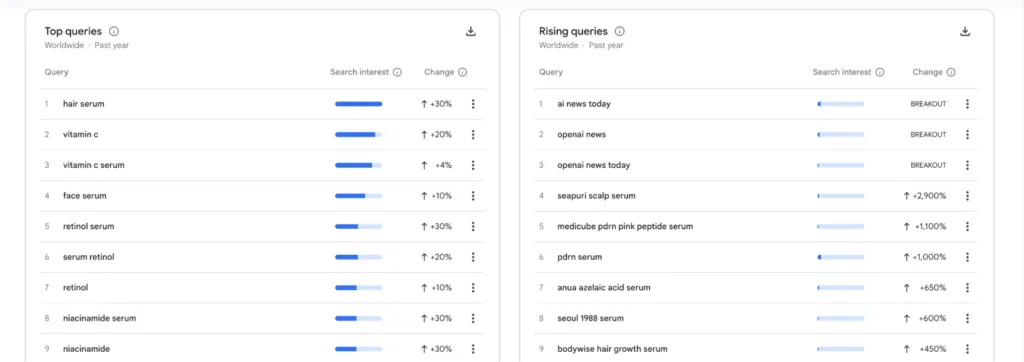
Using Google Trends and Pinterest Trends, you can see which items are picking up steam in the cosmetics space.
Search for something broad like “serums” or “lip tints” and scroll down to the Top queries and Rising queries section. That’s where you’ll spot breakout searches before they blow up.
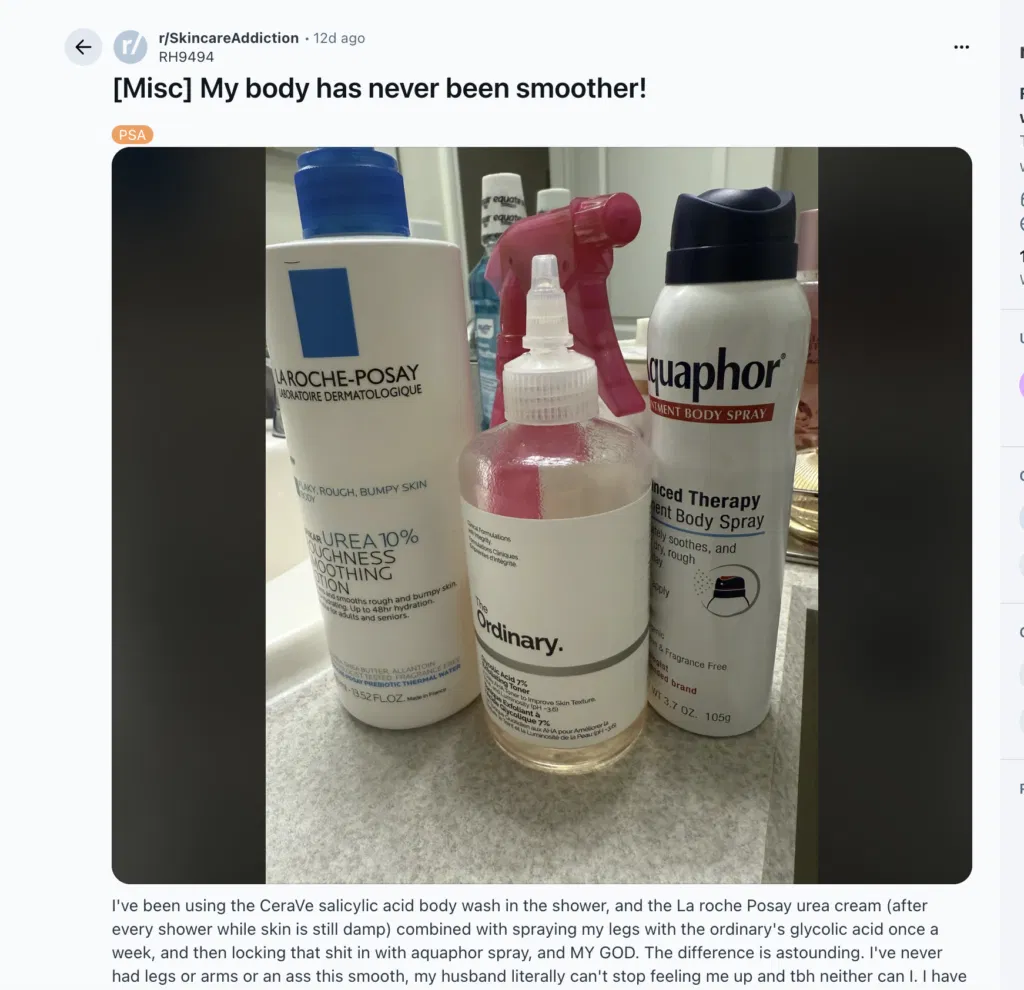
Reddit is worth your time too. Communities like r/SkincareAddiction and r/MakeupAddiction are full of people talking about products they can’t find, formulas that keep disappointing them, and dropshipping trends they’re already tired of. That’s free market research sitting right there.
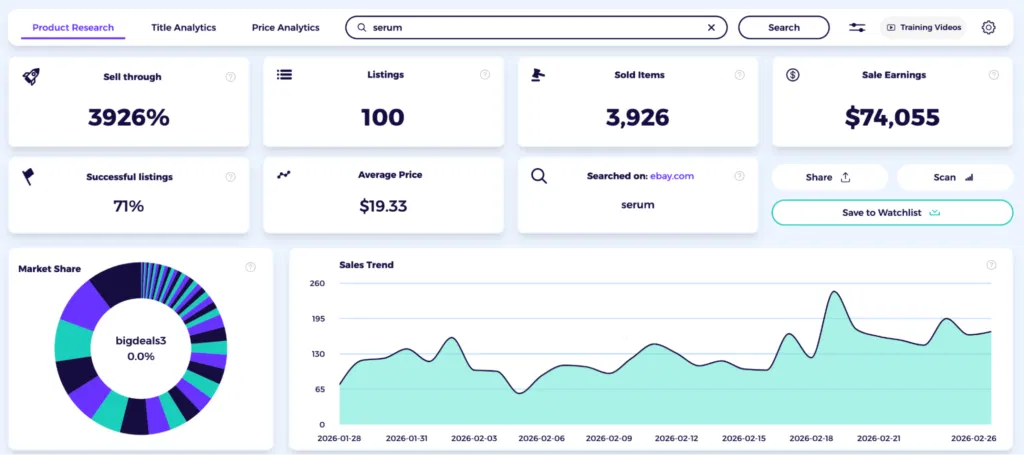
Once you have a product in mind, take it to ZIK Analytics’ product research tool. Type the name in, filter for the last 30 days, and hit Search.

You’ll get the sell-through rate, total sold, and average price. A sell-through rate above 50% tells you the product has real, consistent demand behind it. Check the average price too and make sure there’s enough margin left after sourcing and shipping costs.
Scroll down and you’ll see the top sellers for that product, the prices they’re listing at, and their 30-day sales.
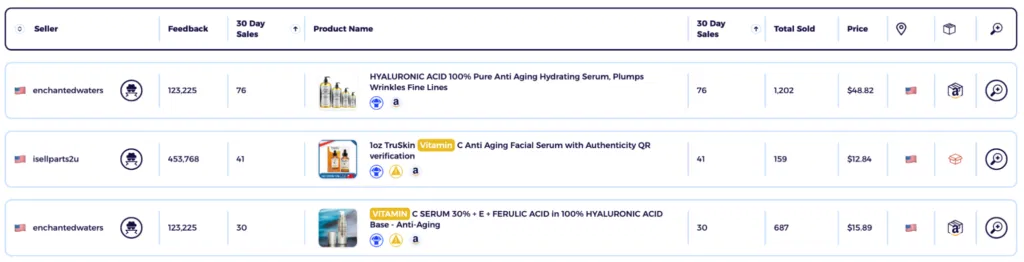
If the numbers are good but the listings look thin or poorly put together, that’s your opening to come in with a better presentation and capture some of that demand.
Step 2: Find and Vet 3-5 Perfume Dropshipping Suppliers
After choosing your cosmetics, the next step is to find suppliers who can reliably source and ship products to your customers.
Typically, people use directories and online marketplaces to find relevant suppliers for their business. But you can also find good options through specialized platforms like RangeMe and Faire, which connect retailers directly with beauty brands and manufacturers.
ZIK also gives you a list of dropshipping suppliers who can source the cosmetics you found on the platform.
Later in this guide, I’ll share a list of reputable cosmetics suppliers that you can explore to ensure fulfillment for your business.
Step 3: Build Your Dropshipping Store & Import Products
Once you have chosen your products and found reliable suppliers, you can start building your store.
Most cosmetics dropshippers choose Shopify to build their ecommerce site, but you can also use WooCommerce with WordPress or Squarespace if you want more customization.
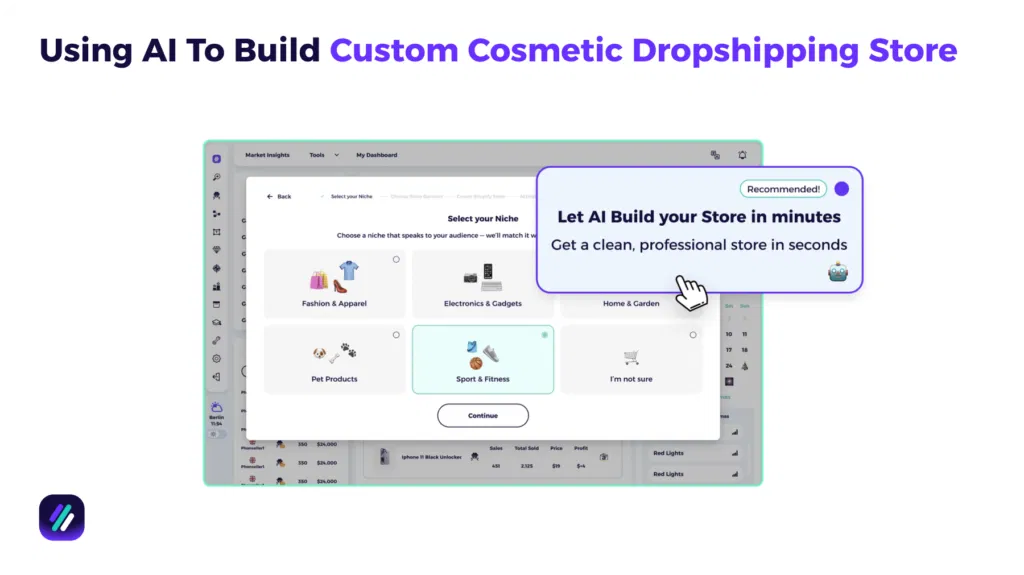
AI store builders are also available to help you set up a store quickly. These tools automatically set up important pages and just require you to add products to start selling .
ZIK’s Shopify AI Store Builder, for example, customizes your online store’s branding, homepage, and banners based on the niche you pick during setup.
If you’re looking to reach a broader audience quickly, consider listing products on Amazon or eBay to get eyeballs on your store.
Other places you can have a presence on include the Facebook Marketplace (for selling locally) and TikTok Shop (for selling via a social network).
Step 4: Marketing Your Store
Products like foundation and blush thrive on visual storytelling because people want to see their actual effect on the skin before buying. As such, you’ll want to focus dropshipping marketing strategies where content makes it easy to show texture and coverage.
You can create a series of get-ready-with-me videos to show how your cosmetics fit into a daily routine, or share simple tutorials that highlight pigment payoff and finish. Partnering with smaller beauty creators can also help, since audiences tend to trust relatable creators more than traditional ads.
To lower hesitation, consider offering mini kits or sample shades so customers can test formulas before committing to a full-size product.
Step 5: Shipping Out Sold Cosmetics
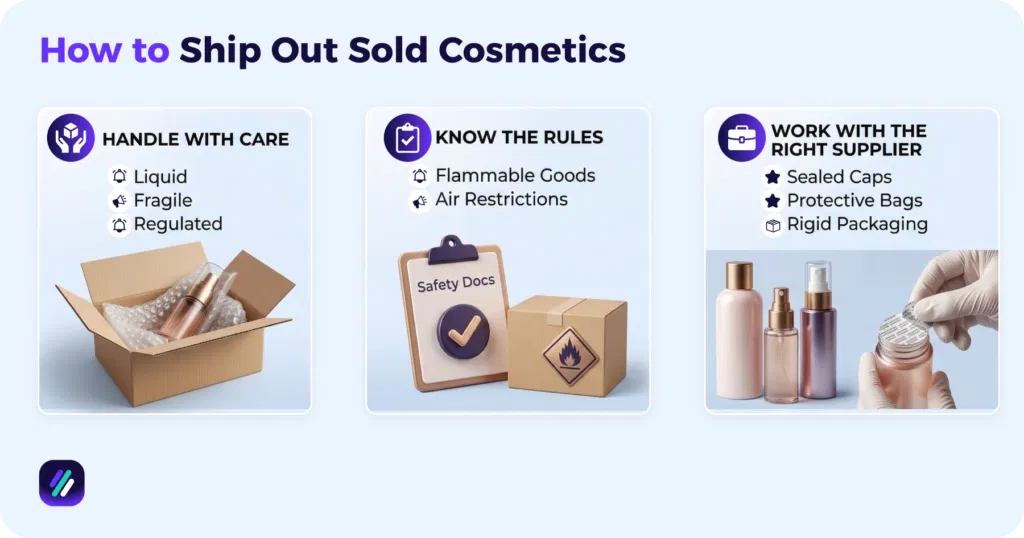
Shipping sold cosmetics can be complex because many beauty products are liquid-based or fragile, which means they require stricter packaging and handling than most standard items.
For example, products like nail polish or setting spray may be classified as flammable goods, which can limit air shipping or require specific hazard labels. You may also be asked to provide safety documentation, especially if you sell cosmetics that contain alcohol or other regulated ingredients.
Using a reliable cosmetics supplier can help you avoid these issues. Experienced suppliers know the compliance requirements and package cosmetics properly before they leave the warehouse.
Pro tip: Before committing to a partner, ask what measures they take to prevent leaks and product damage in transit. Reliable suppliers seal caps, place liquids in protective bags, and use proper cushioning inside rigid boxes to keep items secure.
Step 6: Customer Service, Returns, & Refunds
In cosmetics dropshipping, the way you manage customer expectations defines whether people go on to become loyal customers or just buy one time from your store. Since shoppers can’t swatch shades or test textures on their skin, your post-purchase support must be flawless.
To make a lasting impression on customers, have these essentials from day one:
- Shade & Finish FAQ: It helps to add details about each product variant. Clearly explain undertones like cool, neutral, or warm, along with the finish such as matte, dewy, or satin. You can also note skin-type compatibility, for example oily or dry, to reduce “it doesn’t look like the photo” complaints.
- Automated tracking: High-end cosmetics demand high-end transparency. Customers expect clear communication once they place an order. Using tools like AfterShip or 17TRACK, you can automate tracking updates so buyers always know where their package is and when it will arrive.
- Clear return policy: Clearly state that returns are only accepted for unopened, factory-sealed items due to sanitary regulations. According to the FDA Cosmetics Guidance, safety is paramount—use this to justify your policy.
- Proof of damage: Require photo/video evidence of broken palettes or leaking bottles within 48–72 hours. Since cosmetics are fragile, many AliExpress or CJ Dropshipping suppliers will offer a free reship if you provide this proof immediately.
- Retention incentives: If a customer hates a shade but the product is fine, offer a 30-50% discount on a different color or store credit. Because cosmetics are lightweight but often classified as “sensitive” shipping, a full refund without return is usually more cost-effective than paying for international return shipping.
Best Dropshipping Cosmetics Suppliers
As I promised earlier, here’s a list of the best cosmetics suppliers categorized by country.
US Suppliers
US suppliers offer fast shipping times and adhere to strict FDA standards when dropshipping cosmetics across the 48 states.
An example is Beauty Joint, a US wholesaler offering a massive range of branded makeup and Korean beauty products.
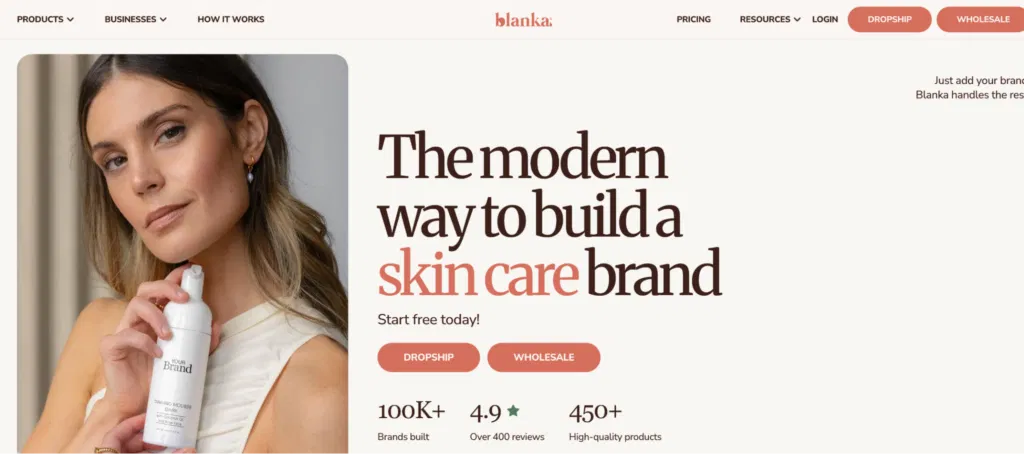
There’s also Blanka which specializes in makeup and private label dropshipping, allowing you to sell under your own brand while offering 5-21 days of shipping.
Chinese Suppliers
Chinese suppliers are known for their competitive pricing and a massive catalog of decent-quality cosmetics.
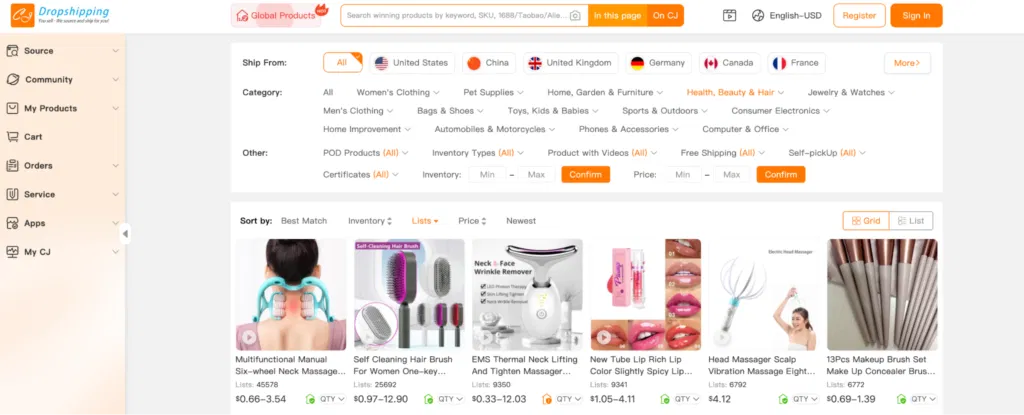
For sourcing affordable makeup and beauty tools, there’s no better option than the AliExpress marketplace. It offers a range of items along with filters like pricing and star rating to help you find relevant items quickly.
If you’re looking for private label services and fast local shipping via worldwide warehouses, CJ dropshipping offers both to help you improve the customer experience.
EU (UK, Germany, France) Suppliers
The EU is a massive market with strict cosmetic regulations and high consumer standards. Therefore, you need suppliers who are reliable and already understand what it takes to sell in the region.
One of the best options is BTSWholesaler, a Germany-based distributor with over 17,000 branded cosmetic and perfume products and fast local shipping across Europe.
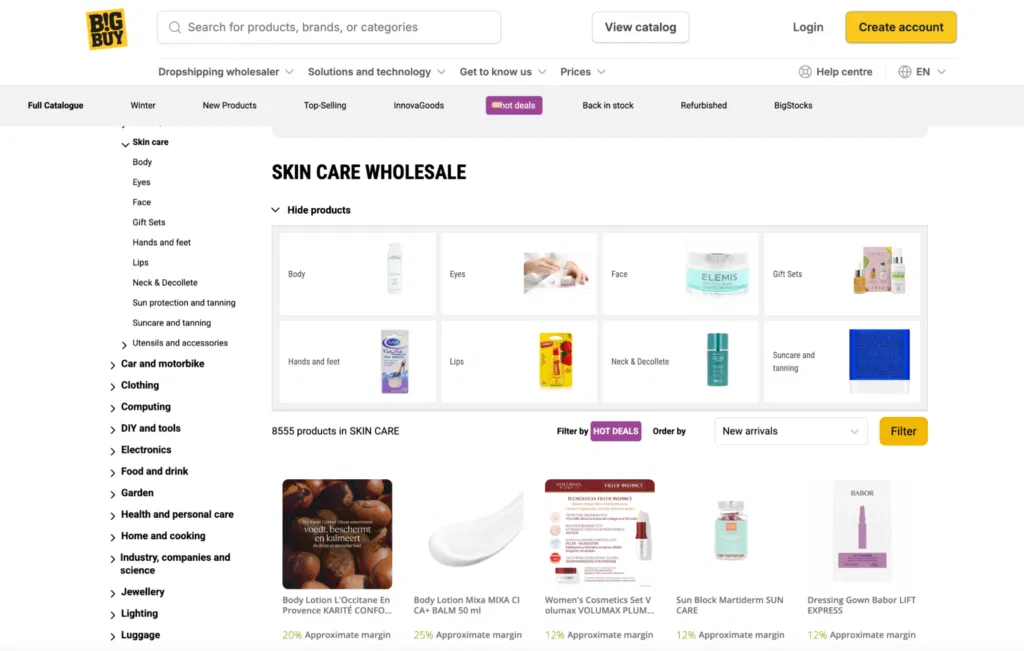
Another reputable dropshipping supplier in the EU is BigBuy. This dropshipping supplier offers a comprehensive beauty catalog and integrates seamlessly with Shopify to help you start selling quickly.
Australian Suppliers
Suppliers Down Under mainly focus on organic and cruelty-free beauty products. That’s because Australian consumers are highly conscious about the environment and tend to favor products that are ethical and safe to use.
For dropshipping in the region, White Lotus offers PETA-certified organic and vegan beauty products manufactured in Australia. Wefulfil provides tailored dropshipping services for makeup and skincare with fast local delivery.
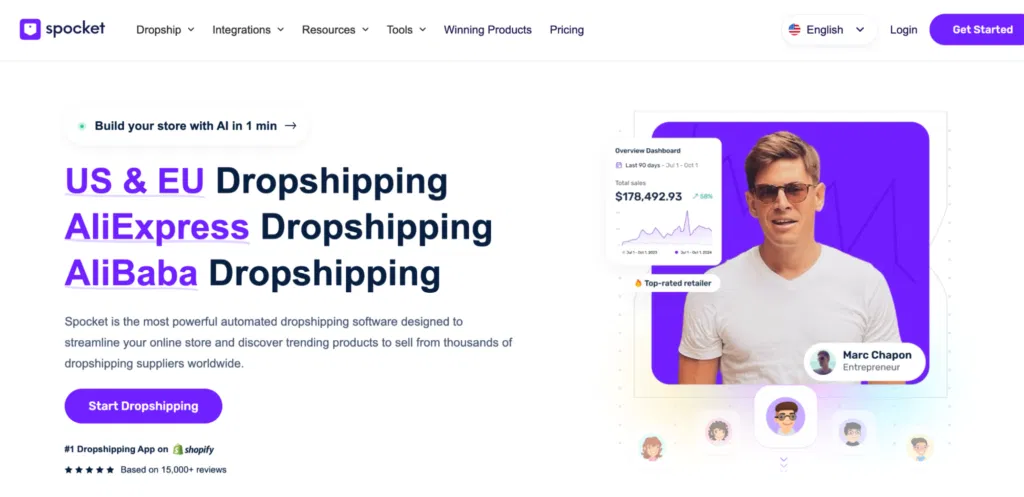
If you’re looking for more variety, Spocket can help you access a range of Australia-based suppliers with shipping times of two to seven days.
Indian Suppliers
India is a bit different for cosmetics dropshipping due to its focus on natural, herbal, and Ayurvedic beauty products.
But that’s exactly where Indian cosmetic suppliers can help. These suppliers specialize in chemical-free and botanically derived formulations that are difficult to find elsewhere.
If you’re looking for private label options, IndiaMart is a good supplier with a wide range of manufacturers to choose from. Other options include AliExpress for affordable Indian cosmetics and CJDropshipping for reliable international fulfillment.
Find Winning Cosmetics Products with ZIK Analytics
ZIK Analytics has a suite of tools to help you research and find winning cosmetics products for your dropshipping store.
However, I specifically want to mention three tools that make cosmetics product research and validation easier:
- Shopify Product Explorer is your dropshipping product research tool for finding which cosmetics products are selling across Shopify stores. Search keywords like “lipstick” or “skincare” and filter by sales to identify trending items.
- Shopify Sales Tracker acts as your Shopify dropshipping software for monitoring successful beauty stores. Enter a store URL to see daily sales, revenue, and which cosmetics products are performing best. Track stores over time to catch new product launches.
- AdSpy shows you which ads competitors are running for cosmetics products on Facebook and Instagram. Search keywords to see engagement metrics and save winning ads to reference when building your own campaigns.
You can also use the Shopify Store Finder to discover successful cosmetics dropshipping stores by revenue and the Shopify Market Insights to see trending beauty niches and products.
Get your ZIK Analytics trial today and start finding cosmetics products that are already generating sales.
Frequently Asked Questions about Dropshipping Cosmetics
In this section, I’ll answer the questions people frequently ask about dropshipping cosmetics.
Is dropshipping cosmetics worth it?
Dropshipping cosmetics can be worth it because beauty items offer margins in the 65-85% range. People also replenish cosmetics and skincare regularly, meaning you’ll benefit from repeat sales and loyalty. Plus, with many suppliers offering private labeling or white labeling services, it’s easy to build a unique brand identity that becomes your competitive advantage.
How to get into the cosmetics business online?
Getting into the cosmetics business online involves identifying a niche like organic or vegan skincare. Then you need to decide whether you want to resell products, source from manufacturers, or white-label your cosmetics line. It also requires you to build a unique brand and set up an e-commerce store with payment systems to run an online cosmetics business venture.
Can I make $10,000 per month dropshipping cosmetics?
Yes, it is possible to make $10,000 per month dropshipping cosmetics. However, it requires significant effort and long-term planning to achieve this level of revenue. Finding winning products with 30-60% margins, utilizing Facebook ads or influencers to reach your audiences effectively, and partnering with reliable suppliers to improve shipping times can help you get to this income level faster.
What is the most profitable cosmetic item to dropship?
The most profitable cosmetic item to dropship is the anti-aging serum, specifically Vitamin C or Retinol. It’s profitable because it costs $5-$15 to source but can be easily sold for $20-$50. Serums also have a high perceived value due to their ability to improve skin texture and are highly consumable, leading to repeat purchases every 30-45 days.
Other Dropshipping Products Articles
- Furniture Dropshipping: Can This Niche Actually Sell and Make a Profit?
- 13 Best Dropshipping Electronics and Gadgets Products
- 20+ Dropshipping Beauty Products: Best Sellers & How to Start