
Wondering how Alibaba to eBay dropshipping works in 2026?
Alibaba is a massive B2B marketplace where you can source products directly from manufacturers at wholesale prices. And eBay is a trusted platform where millions of buyers shop daily for everything from electronics to home goods.
But how exactly does dropshipping between these two platforms work? Are there any rules you need to follow? Do you need special accounts or approvals?
In this guide, we break down everything you need to know to start dropshipping from Alibaba to eBay successfully.
What is Alibaba to eBay Dropshipping?
Alibaba to eBay dropshipping is a business model where you buy products from an Alibaba supplier and list them on eBay. When someone buys from your listing, you place the order with the supplier and they ship it directly to your customer. You don’t need to store inventory or run a warehouse, and you only pay the supplier after you get paid on eBay.
Is Alibaba to eBay Dropshipping Allowed?
Yes, dropshipping from Alibaba to eBay is permitted. Because Alibaba is a wholesale marketplace and not a retail site, you can use it as a supplier for your eBay dropshipping business.
Before you start, though, make sure that your Alibaba vendor accepts low-quantity orders and is willing to send samples. That way, you can inspect the product and check shipping times before listing it on the eBay marketplace.
Benefits of Using Alibaba to eBay Dropshipping Model (Pros & Cons)
Dropshipping from Alibaba to eBay offers a variety of benefits, including:
Lower product costs
On Alibaba, you source from factories and wholesalers instead of middlemen. Because more than 200,000 suppliers compete on pricing, you often get lower costs from day one. Lower costs mean you can price competitively on eBay and keep more of the sale.
Built-in buyer demand
You don’t need to pay for traffic like you would on Shopify or a standalone site. eBay already brings shoppers to you. The platform connects 134 million active buyers across 190+ markets, which means someone is already searching for the product you want to list.
Easier niche discovery
You don’t need to guess what to sell. eBay shows what’s already moving through eBay sold listings, and Alibaba gives you a huge catalog to source from. This makes it simple to spot the best dropshipping niches and test new products without buying inventory.
Private label opportunity
Once a product proves itself, you can move from generic dropshipping into private labeling. Many Alibaba suppliers offer logo printing and custom packaging. This lets you build a brand and charge more without changing your fulfillment process.
Low startup risk
Most people begin with one listing and learn as they go. Because you don’t need to buy inventory ahead of time, the risk stays low. Over 60% of eBay sellers describe themselves as “accidental entrepreneurs,” which shows how beginner-friendly the platform is.
Global reach
You don’t need to learn international shipping. Alibaba suppliers deliver to over 200 countries, and eBay gives you access to buyers in 190 markets. You simply confirm the order details and upload the tracking number.
| Category | Pros | Cons |
| Pricing | You buy directly from factories and keep more profit | You need to compare suppliers to find the best rate |
| Demand | eBay already provides buyers. You do not need ads | Competition exists on popular items |
| Niche discovery | eBay gives an idea of the niches with the most traction | Some niches can become saturated fast |
| Branding | Suppliers can add your logo and packaging | Custom packaging may require a minimum quantity |
| Startup Risk | You list first and pay for inventory only after a sale | You need to test products to find a winner |
| Global Reach | Suppliers handle worldwide shipping | Shipping times can vary |
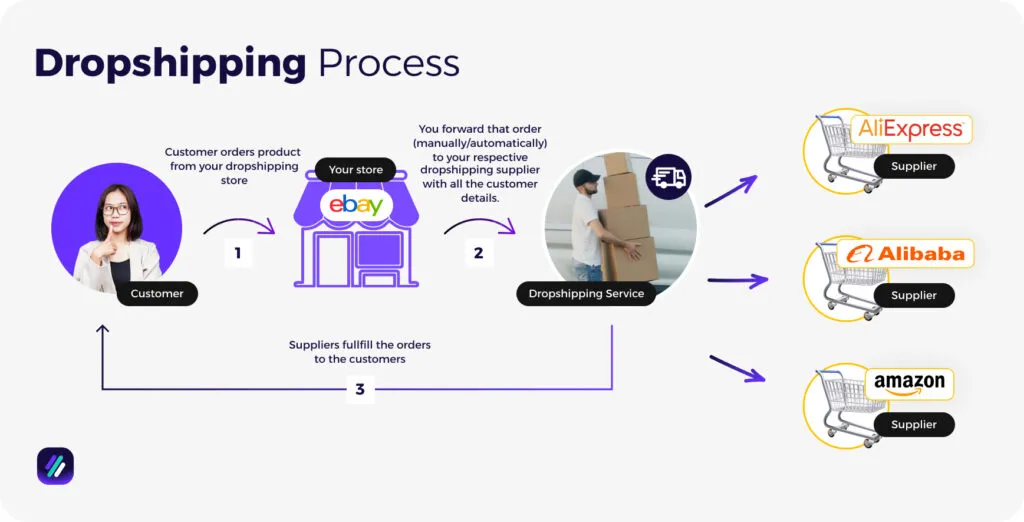
How Alibaba to eBay Dropshipping Works?
Alibaba to eBay dropshipping is a simple fulfillment model that lets you sell products without holding inventory. You choose a product on Alibaba, list it on eBay, and manage the order flow between the buyer and the supplier.
Here’s how the process works step-by-step:
- Find a supplier on Alibaba. You choose a product and confirm that the supplier can ship single units directly to your customers.
- List the product on eBay. You create a listing using your own photos and description. You set your selling price and choose your handling time.
- Customer places an order on eBay. The customer pays you first, and the order appears in your eBay dashboard.
- You place the order with the supplier. You enter the customer’s address at checkout. You keep the price difference as profit.
- Supplier ships the order. The supplier packages and ships the product to your customer.
- Customer receives the order. You upload the tracking number, and the buyer receives their product without knowing it came from your supplier.
How to Start with Alibaba to eBay Dropshipping
Dropshipping works best when you choose items that are in high demand on the eBay marketplace. Before sourcing from Alibaba, check which items are picking up interest on eBay and showing good potential.
Here’s how you can do that:
Step 1: Find Trending eBay Products
A trendy item can bring eyeballs to your eBay listings.
Before anything else, look for products that are making waves among consumers. A simple way to do this is to use a tool like ZIK Analytics.
ZIK Analytics comes with a Trending Niches section that shows what people are buying right now.
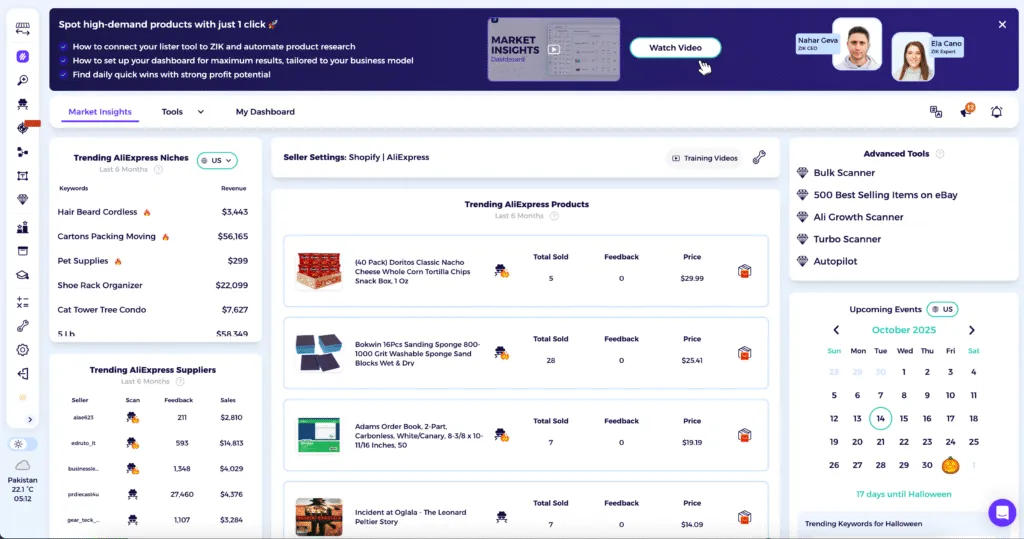
You can click on any product to see its selling price, number of units sold, and seller name.
If you want to analyze things like sell-through rate and average pricing, you can use our eBay product research tool.
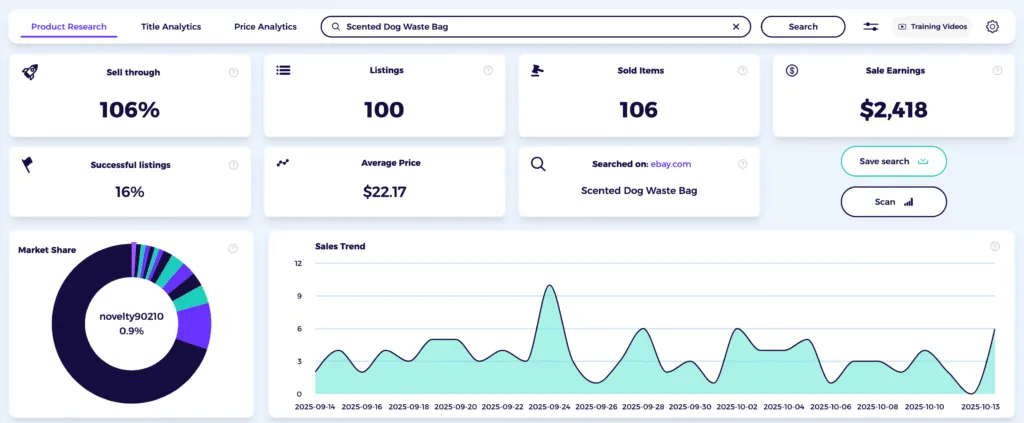
You’ll see live sales data on your screen that you can use to spot trends before they saturate.
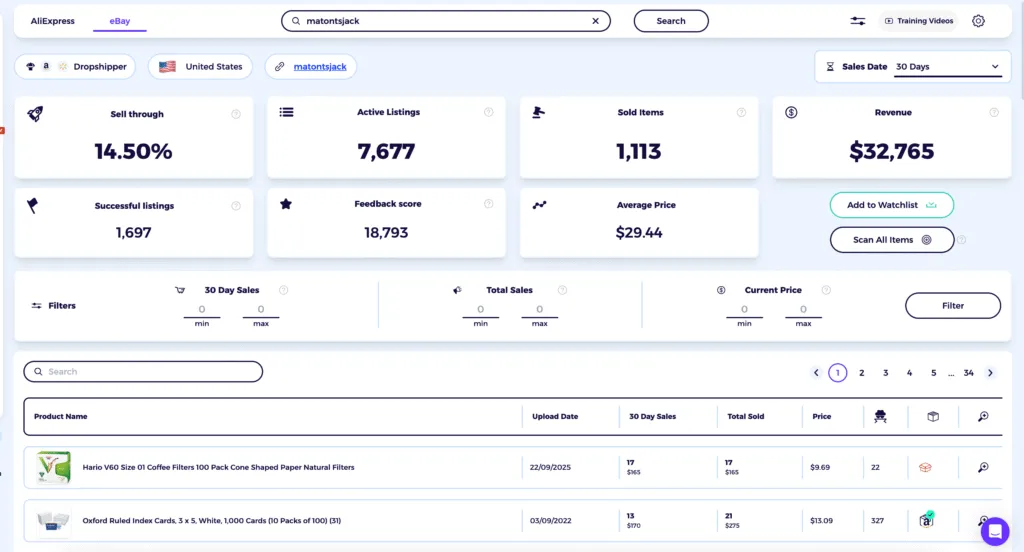
ZIK can also run an eBay competitor analysis to help you identify the best-selling items of other stores. You just have to enter their store name and our tool will show you a ton of useful information along with a list of products from their catalog.
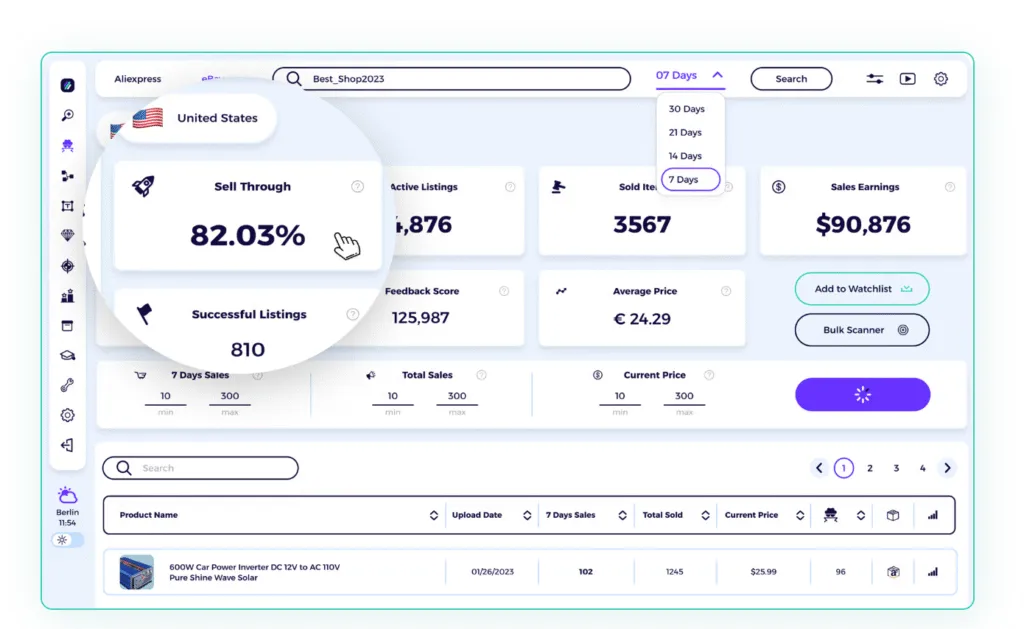
You can also bulk scan a competitor’s store to get a snapshot of all its best sellers and speed up your research.
Step 2: Find Alibaba Suppliers
Next, you need to find suppliers on Alibaba who can support dropshipping.
To do this, search for your desired product on Alibaba and add the keyword “dropshipping” in the query. While you do this, choose filters like “Verified Supplier” and “Trade Assurance” so that Alibaba shows you a list of vetted dropshippers who also offer payment protection. Then choose a few dropshipping suppliers to analyze.
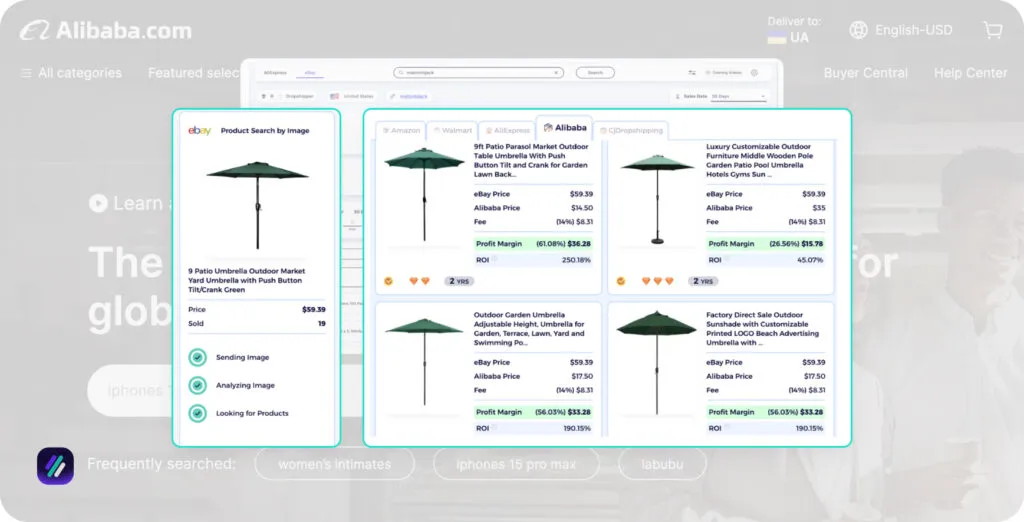
The simpler way is to use the image search function inside ZIK. Our tool matches products with Alibaba suppliers along with showing you the potential ROI and profit you can earn on different items.
Step 3: Analyze Alibaba Supplier Selection
After you find a few suppliers, you’ll want to check a few things to make sure they are reliable and fit your dropshipping needs.
The first thing you should check is supplier credentials. Not all suppliers work in favor of dropshippers, and you want to do everything possible to make sure you get the best vendor. Look for badges like “Gold Supplier” or “Alibaba Guaranteed” as these indicate the supplier has been vetted by Alibaba before publishing their listings.
Next, evaluate the supplier’s profile. Check how long they have been on Alibaba, read reviews from other buyers, and see what products they focus on. Their product catalog should make sense; if they sell phone cases, kitchen tools, and bike parts all under the same brand, that can be a red flag.

You should also pay attention to how they respond to your messages. A supplier who replies quickly and communicates politely is more likely to be accommodating than someone who takes days to get back to you.
Step 4: Negotiate SKUs, Packaging, and Identifiers
After you select a supplier, you need to negotiate the details of the product. These include:
- SKUs: Share the SKUs you want to use and how they should appear. You can send a simple spreadsheet and point out where each SKU should be placed on the product or the box.
- Packaging: Ask the supplier what packaging they include by default. If you want something custom, describe it with specifics like box size, material, color, logo placement, and any inserts you need.
- Identifiers: If your product needs barcodes or labels, tell the supplier exactly what to apply and where it should go. For example, you might ask them to place a barcode sticker on the back of the box or print the SKU directly on the product tag.
It’s very important that before you do the first order, you have all these nailed down and you’re in agreement with the supplier.
It’s very important that they understand you and that you’re happy with the agreement. Don’t leave anything to chance or always triple-check.
Step 5: Create Policy-Safe eBay Listings
Your listing must follow eBay’s dropshipping rules. The goal is to avoid flagging your account or getting hit with VeRO claims. Keep your listing honest and use your own photos or supplier images you have permission to use.
Follow eBay policy in three main areas:
- Prohibited items: Make sure the product is allowed on eBay. Stay away from counterfeits, unsafe items, or anything that violates eBay’s restricted product list.
- Intellectual property (VeRO): Do not use brand names or logos you don’t own. If the supplier gives you images, ask if you can use them on eBay. When in doubt, take your own photos or edit generic images.
- Accurate listing: Describe what you are selling as it is. Show clear photos and mention any small defect. Buyers trust listings that feel real.
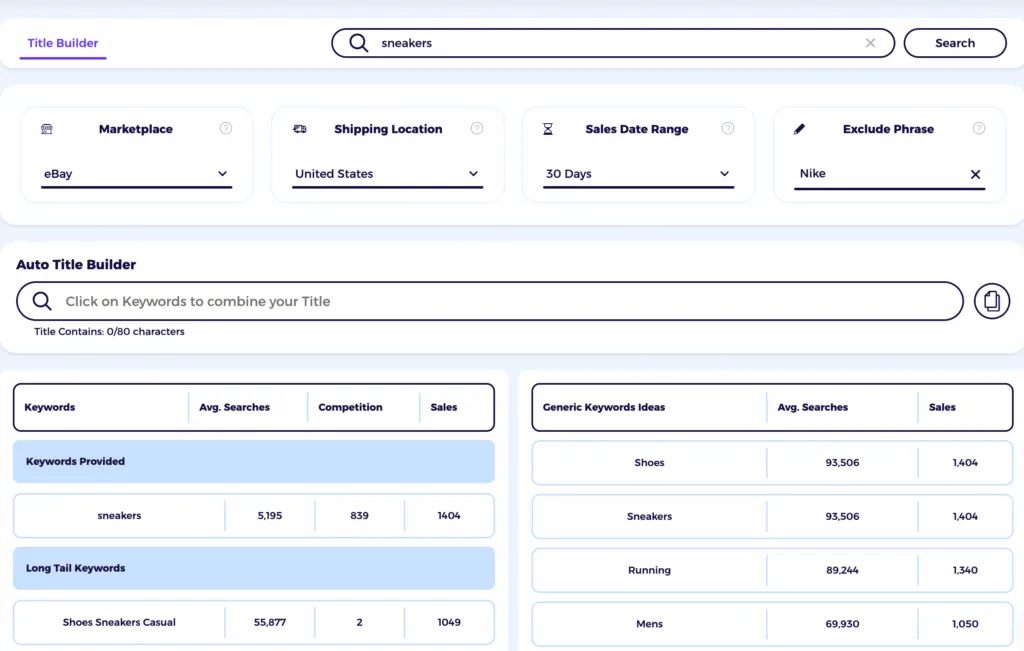
You can use ZIK’s eBay title builder and keyword tool to generate unique title ideas for your listing. Keep the wording simple and avoid brand names you don’t have right to use.
Step 6: Establish Order-to-Door SOPs
When orders start rolling in, you need a repeatable flow to keep everything running smoothly. A short SOP (standard operating procedure) can be a handy tool in this regard. You can create one inside a simple Google Sheet or any tool you already use to manage tasks.
Your SOP could look like this:
- Get the order on eBay.
- Place the same order with your Alibaba supplier.
- Confirm the address and expected ship-out date.
- Add the tracking number to eBay.
- Send a quick message to the buyer so they know it’s on the way
Step 7: Establish Delivery Times
Before you list a product on eBay, confirm the delivery timeline with your Alibaba supplier. Start by asking how long production takes and how long shipping takes. These are two different stages, and you want exact estimates for both instead of a single general timeline.
Once you have that, confirm the shipping method and whether tracking will be provided. Tracking matters because you need to upload it to eBay to keep the buyer updated. While you are on the supplier’s profile, look at their on-time delivery rate. A rate of 90 percent or higher shows they are consistent and ship when they promise.
If you’re not sure how reliable the supplier is, order a sample. This is a quick and efficient way to see how they handle shipping before you commit to a larger order.
How to Calculate Alibaba to eBay Costs, Fees & Margins
One of the biggest questions new sellers have is: “How do I know how much profit I’ll make on a product from Alibaba?”
Your profit is based on a few things you subtract from your eBay selling price:
- Alibaba product cost
- Shipping cost from the supplier
- eBay final value fee
- Payment processing fee (based on eBay Managed Payments)
Example:
You list an item on eBay for $34.99. The Alibaba cost (including shipping) is $15.50. eBay fees total $4.20, and payment fees are $1.05.
Formula:
Profit = Selling price − Alibaba cost − eBay fee − payment fee
Using the example:
34.99 − 15.50 − 4.20 − 1.05 = $14.24 profit
You can calculate this manually, but it becomes time-consuming when comparing many products.
A faster option is to use ZIK’s eBay Profit Calculator, which automatically pulls in fees and shows your margin instantly.
Alibaba to eBay Dropshipping Best Practices
There are a few things you can do to improve your chances of success with eBay dropshipping:
- Avoid IP/VeRO Items: Did you know that eBay blocks 99% of infringing listings before they even go live? Most of these are branded or trademarked products that violate VeRO policies. You can avoid this by selling generic, non-branded items or private-labeling your own product line.
- Location Mismatch & Host Warehouses: If your supplier ships from overseas but your eBay listing says “US warehouse,” buyers may complain and open cases. Always match the stated location with where the item actually ships from.
- Late Shipments & INR Claims: Set handling time you can actually meet. Confirm the supplier’s dispatch time and upload tracking as soon as it becomes available to avoid “Item Not Received” cases.
- Order Samples Before Listing Products: Before you sell anything, order one for yourself. This way, you can check the quality and confirm that the item looks like the photos.
- Test Shipping Times With Small Orders: More than 70% of eBay buyers expect delivery within 7–10 days. You can place a small order with your supplier to see if they are capable of meeting that time frame.
- Create Backup Supplier Lists For Each Product Category: Keep a short list of alternate suppliers for each product. If the first supplier runs out of stock, you can switch without canceling orders.
- Negotiate Volume Discounts and Exclusive Arrangements: Once sales start kicking in, ask the supplier for better pricing. Regular orders give you leverage, and even small savings improve your margin over time.
- Monitor Supplier Stock Levels Daily: Check inventory every day. If a supplier’s stock drops or prices change, update your listings right away to prevent unexpected losses and cancellations.
- Use Automated Tools To Pause Out-Of-Stock Listings: Automation tools pause listings when a supplier runs out of inventory. This helps prevent accidental sales when you have no way to fulfill the order.
- Use Original Product Descriptions (Never Copy-Paste From Alibaba): Always write your own descriptions. It helps avoid VeRO issues and makes the listing feel more trustworthy to buyers.
- Send Tracking Information Immediately Upon Shipment: As soon as the supplier provides tracking, upload it. Customers feel safer when they can follow their order, and it reduces “Where is my item?” messages.
- Follow Up With Customers During Long Shipping Periods: If shipping takes longer than usual, send the buyer a quick message. Simple updates reduce worry and keep communication positive.
- Factor In Currency Fluctuation Risks: When buying from overseas suppliers, prices can change due to currency shifts. Always leave a small margin to protect your profit when rates move.
- Calculate All Fees Including PayPal, eBay, And Currency Conversion: Before listing, calculate every fee: eBay, PayPal, shipping, and currency conversion. Knowing the true cost helps you pick products that are actually profitable.
- Set Minimum Profit Margins (Typically 20-30%): Choose a minimum margin and stick to it. This keeps your pricing healthy and avoids selling products that aren’t worth your time.
- Use Business Credit Cards For Supplier Payments: Pay suppliers with a business credit card to earn points, get cashback, and track expenses more cleanly for accounting and tax purposes.
- Use Bulk Listing Tools For Efficiency: Bulk listing tools let you upload products and edit titles or descriptions at scale. This saves time, especially when managing multiple SKUs.
Make Alibaba to eBay Dropshipping Profitable with ZIK Analytics
You now know how the Alibaba to eBay model works. The next step is finding products that sell and suppliers you can trust.
ZIK Analytics gives you the tools to make that part easy. You can research best products for dropshipping, track competitors, and validate demand before you list anything.
If you later want to test other sourcing options like CJdropshipping or Walmart, ZIK can support you there too.
Stop worrying about the specifics of the business. Start dropshipping from Alibaba to eBay with ZIK Analytics.
Frequently Asked Questions about Alibaba to eBay Dropshipping
In this section, I’ll answer the frequently asked questions about dropshipping from Alibaba to eBay.
Is it legal to dropship from AliExpress to eBay?
Yes, you can dropship on eBay, but not directly from AliExpress. eBay doesn’t allow sourcing from retail sites like AliExpress, Amazon, or Walmart. To dropship legally, you must use wholesale suppliers and make sure the item ships reliably to the buyer. Additionally, you should provide tracking information and manage customer service independently. Read the full eBay dropshipping policy.
How to connect dropshipping to eBay?
You can connect dropshipping to eBay by:
- Creating an eBay seller account
- Choosing a wholesale supplier like Alibaba
- Listing the products on eBay
with the correct item location - When an order comes in, place the order with your supplier
- The supplier ships directly to the buyer, and you upload tracking
Is Alibaba Chinese eBay?
No, Alibaba is not the “Chinese eBay.” Alibaba is mainly a wholesale marketplace where businesses purchase products in bulk directly from manufacturers. eBay is designed for individual buyers and sellers, often selling single items or used goods. If you want an eBay-style platform in China, that would be Taobao, which is also owned by Alibaba Group.
Is it good to dropship on eBay?
Yes, it’s good to dropship on eBay. Not only does the platform give you access to a high-intent audience, but it also allows you to list products, manage orders, and handle payments. Many dropshippers who started on this platform went on to generate millions in sales. As long as you follow eBay’s rules and choose products based on data, you should find it highly profitable to dropship on eBay.