
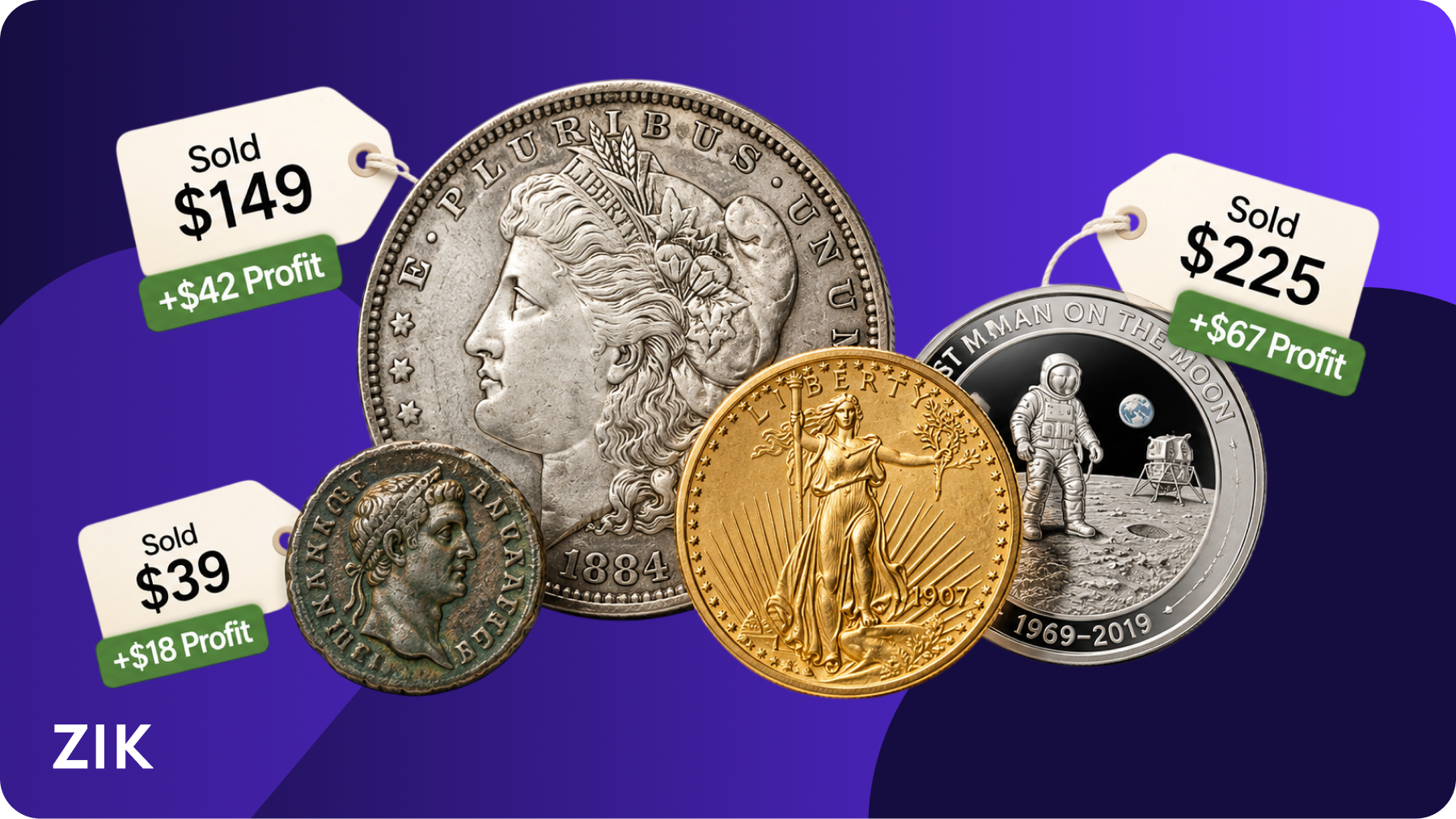
Selling coins is a hobby for some and a steady source of income for others.
But even when it is something in between, getting the most out of your collection means knowing where and how to sell.
eBay offers the largest customer base for coins online, with millions of active collectors searching for specific dates, grades, and mint marks every day.
Below, I walk you through every step that you need to take to start selling coins on eBay, from setting up your account to pricing, grading, and making your first sale.
Key Takeaways:
- Coins have a sell-through rate of around 1,525% on eBay, far above the platform average of 25 to 30%
- The eBay.com US website draws the most traffic, with the US market accounting for nearly 70% of total platform traffic.
- Using ZIK Analytics is helpful for identifying which coins are selling, at what price, and at what volume before you list anything.
- Coins over $200 should go through PCGS or NGC for professional certification since it drives higher sale prices.
- You should calculate fees before setting price as eBay charges 13.25% on the total sale amount including shipping.
- Your listing title’s first 40 characters carry the most weight in search, so lead with the year, mint mark, series, and grade every time.
Why eBay Is the Best Place to Sell Coins Online?
eBay is widely considered the best platform for selling coins online due to its massive reach and high preference among the collector audience.
According to recent data, there are between 3 and 5 million active coin listings on the platform, and the sell-through rate for coins sits at approximately 1,525% (to put that in perspective, a healthy sell-through rate on eBay generally falls around 50%+).
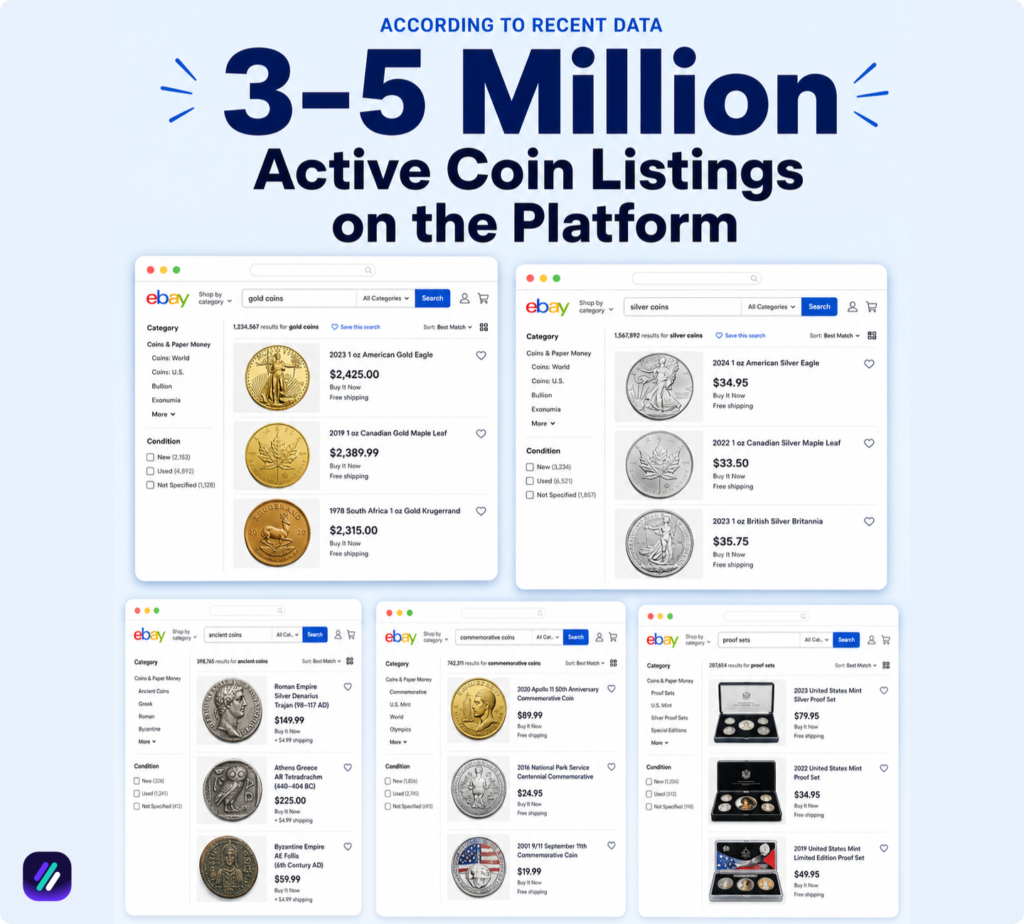
Coin sellers also earn well on eBay, with monthly sales reaching upwards of $290,000. High-value coins can sell for $200 or more when listed with high-quality photos and accurate grading.
Moreover, eBay gives you several tools to maximize the appeal of your listings. By selling your rare and collectible coins on this marketplace, you can tap into a global collectibles market expected to reach $602.4 billion soon.
Bonsu read: Best-selling items on eBay
How to Start Selling Coins on eBay: Step-by-Step
Now that you know eBay is the best platform for selling coins online, here are the steps you can take to get started on this platform.
Step 1: Select the eBay Country Marketplace Where You Will Sell
eBay is officially available in many countries worldwide, but that does not mean you should sell on any eBay site you feel is suitable for your business.
The better approach is to look at where the demand is and sell based on that. For example, eBay.com (US) accounts for 69.83% of total platform traffic, whereas eBay.co.uk draws 29% of global sellers, and Germany accounts for 15%.
Australia has around 12 million monthly users, though it runs on a smaller scale compared to the US. The UK and Germany round out the top four markets worth considering.
As such, it makes more sense to start with eBay.com if you are selling coins, as you will get access to the highest traffic volume and the most active collector audience on the platform.
Step 2: Find Winning Coins Selling on eBay
Once you’ve chosen a country marketplace, you need to identify the high-demand coins to list on eBay.
Using ZIK Analytics’ eBay Product Research tool is a great way to handle this. By entering specific keywords such as “Silver Eagles or “Pre-1933 Gold,” you can see exactly which listings are topping the search results.
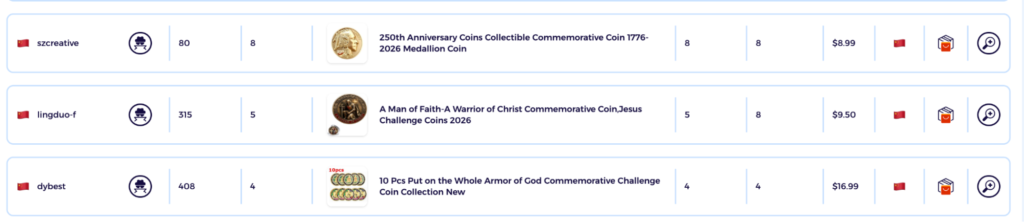
The tool provides key metrics like sell-through rates, average pricing, and total units sold over the last 7 to 30 days.
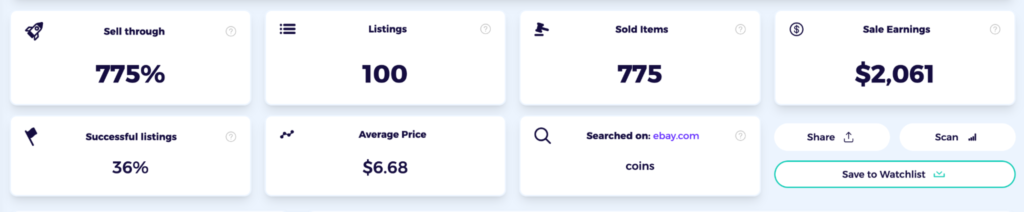
If you spot a particular mint mark or year that’s consistently moving at high volumes, that’s a clear signal to prioritize those coins for your inventory.
Step 3: Create Your eBay Account
Before you can list your first coin, you need to create and verify your eBay seller account.
Head over to eBay, click Register, and choose between a Personal or Business eBay account.
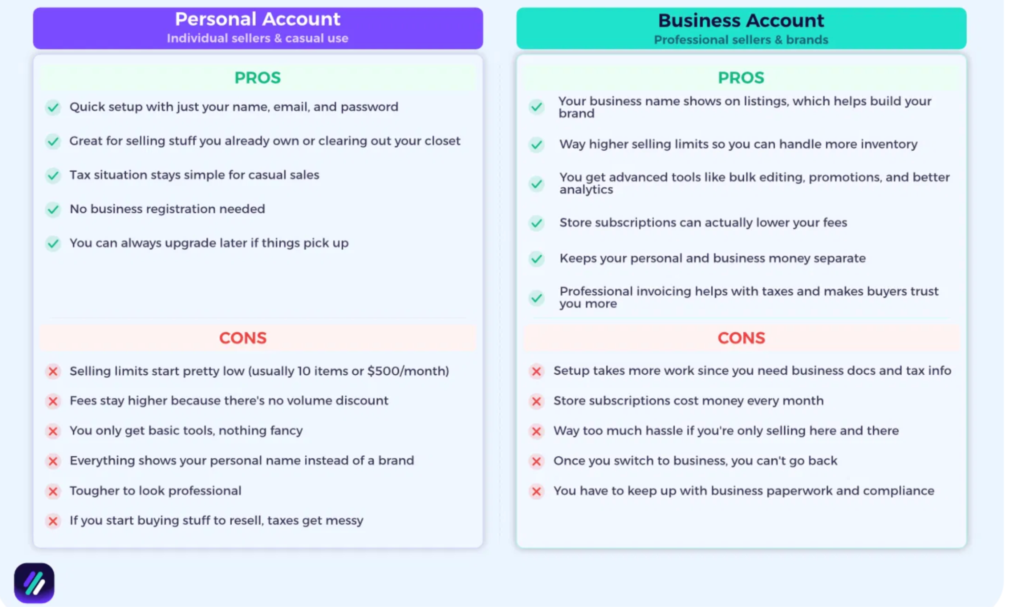
A personal account works fine if you are a casual seller, but if you are running a numismatic business or selling on behalf of an estate, go ahead and select Business.
Next, go to the Sell tab and link a checking account for payouts. Once done, eBay will send two small deposits within two to four days to verify your bank.
You also need to make sure the name on your eBay account matches your government ID and bank account exactly, as any mismatch can delay your payouts.
Plus, if you can make three to five small purchases before listing your first coin, the positive feedback helps build buyer trust from the start.
Step 4: Create Your Policies Pages
This step involves creating your policy pages, which tell buyers how you ship, handle returns, and collect payment.
These pages are required by eBay for every active listing, and the settings you choose directly affect your search visibility and buyer trust.
Here are the key pages you need to create:
Shipping policy: This page tells buyers how long it takes us to pack and ship a coin after payment. Setting it up requires choosing a handling time and a shipping method. One to two business days is the standard expectation for handling time, but check with your supplier first to see how long they take to dispatch. For shipping, eBay Standard Envelope works for coins under $20, and USPS Ground Advantage or Priority Mail works for anything valued higher.
Example:
Shipping: $0.99 eBay Standard Envelope (or Free Shipping)
Handling time: 1 business day
Ships to: United States
Helpful read: How to ship on eBay
eBay Return policy: The return policy dictates the terms under which buyers can send a coin back. Having this in place is important since eBay’s Money Back Guarantee applies to every sale regardless of whether you accept returns or not. Consider giving buyers a 30-day return window and stating that coins must be returned in their original, unopened holder in order to qualify for a refund.
Example:
Returns: 30 days; buyer pays for return shipping.
Condition: Returns accepted only if the item is in the original unopened package
Payment policy: The payment policy sets the payment terms for your buyers. The main setting to configure here is immediate payment for Buy It Now listings, which prevents non-paying buyers from locking up your inventory. Your bank account details for payouts are handled separately under your eBay account settings.
Example:
Payment: Immediate payment required.
To set all three of these up, go to My eBay, select Account, then Business Policies, and create a separate policy for each one.
Step 5: Connect Your Payment Processor
After creating your policies, make sure to connect a payment method so eBay knows where to send your earnings.
If you are based in the US, you can link a checking account directly through My eBay, under Account, then Payments. Make sure the name on your bank account matches your eBay account exactly.
For sellers outside the US, the payout method depends on your country. If you are in the UK, Canada, Australia, or the EU, you can link a local bank account directly. If you are based elsewhere, such as in South Asia, eBay typically requires a Payoneer account instead.
Keep in mind that Payoneer’s ID verification can take two to four weeks before you can start selling.
Step 6: Import Your Coins into Your eBay Store
With payments set up, you are ready to bring your coin inventory into your eBay store.
Getting your listings live requires you to import your coins into Seller Hub, which you can do individually or in bulk using a CSV file.
For individual listings:
- Go to Seller Hub and click Create Listing
- Fill in your coin details, upload photos, and publish
For bulk imports:
- Go to Seller Hub, select Reports, then Upload
- Download eBay’s listing template
- Fill in your coin details including titles, prices, and photo URLs
- Upload the file and click List to eBay
You can also use the bulk method to make quick price adjustments across your entire inventory when coin prices shift.
Step 7: Grading Your Coins
Once you have your coins ready to list, you need to assign each one a condition score that tells buyers exactly what they’re getting.
This is done via grading, a system where you evaluate the physical condition of a coin and give it a number from 1 to 70. A 1 means the coin is barely recognizable, while a 70 means it is in perfect, untouched condition.
There are free tools you can use to grade your coins yourself. For example, PCGS and NGC both offer online grading guides, and a basic jeweler’s loupe with good lighting is all you need to get started.
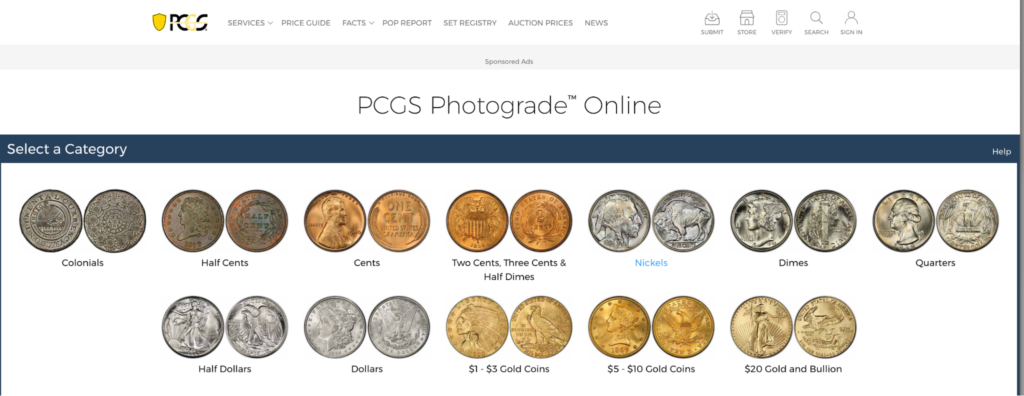
Alternatively, you can send your coin to a professional grading service like PCGS or NGC, which will authenticate it and seal it in a hard plastic holder with a verified grade.
For most beginners, self-grading works fine for common or low-value coins. If the coin is rare or worth over $200, professional grading is worth the cost since it builds buyer trust and typically results in a higher sale price.
Authentication and verification are important factors when selling high-value collectibles online. The eBay Authenticity Guarantee program helps buyers shop with confidence by providing independent authentication for eligible items in select categories.
Step 8: Pricing Your Coins and Calculating eBay Fees
Determining the right price for your coins requires some research and assessing what similar coins have sold for recently.
You can start by searching eBay for your exact coin and filtering by Sold Listings to see what others paid. Check mint marks and condition to understand the range. Cross-referencing with PCGS or NGC population reports can also help you confirm whether your coin is worth more than others in the same grade.
After settling on a figure, verify your margin using an eBay fees calculator like ZIK’s. eBay charges 13.25% on the total sale amount, including shipping and tax, meaning your actual take-home can be lower than the sale price suggests.
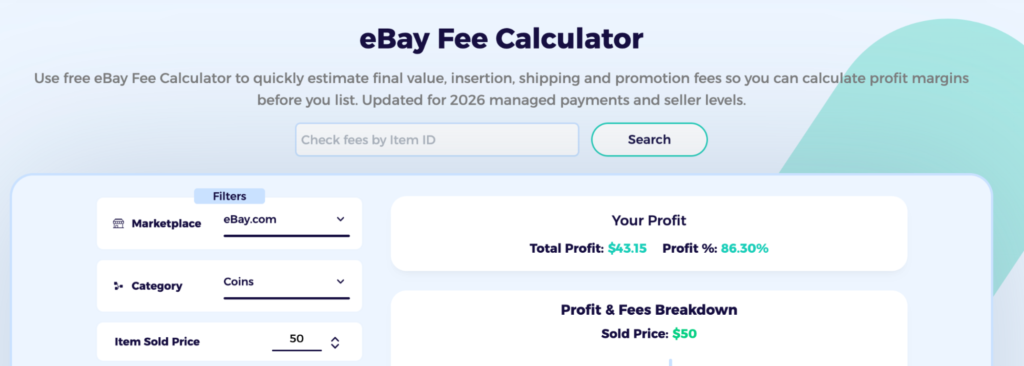
If you plan to use Promoted Listings, factor that percentage in before finalizing your price so it does not catch you off guard after the sale.
Step 9: Optimize Your eBay Listings with SEO
Optimizing your eBay coin listings comes down to making it easy for the right buyer to find you.
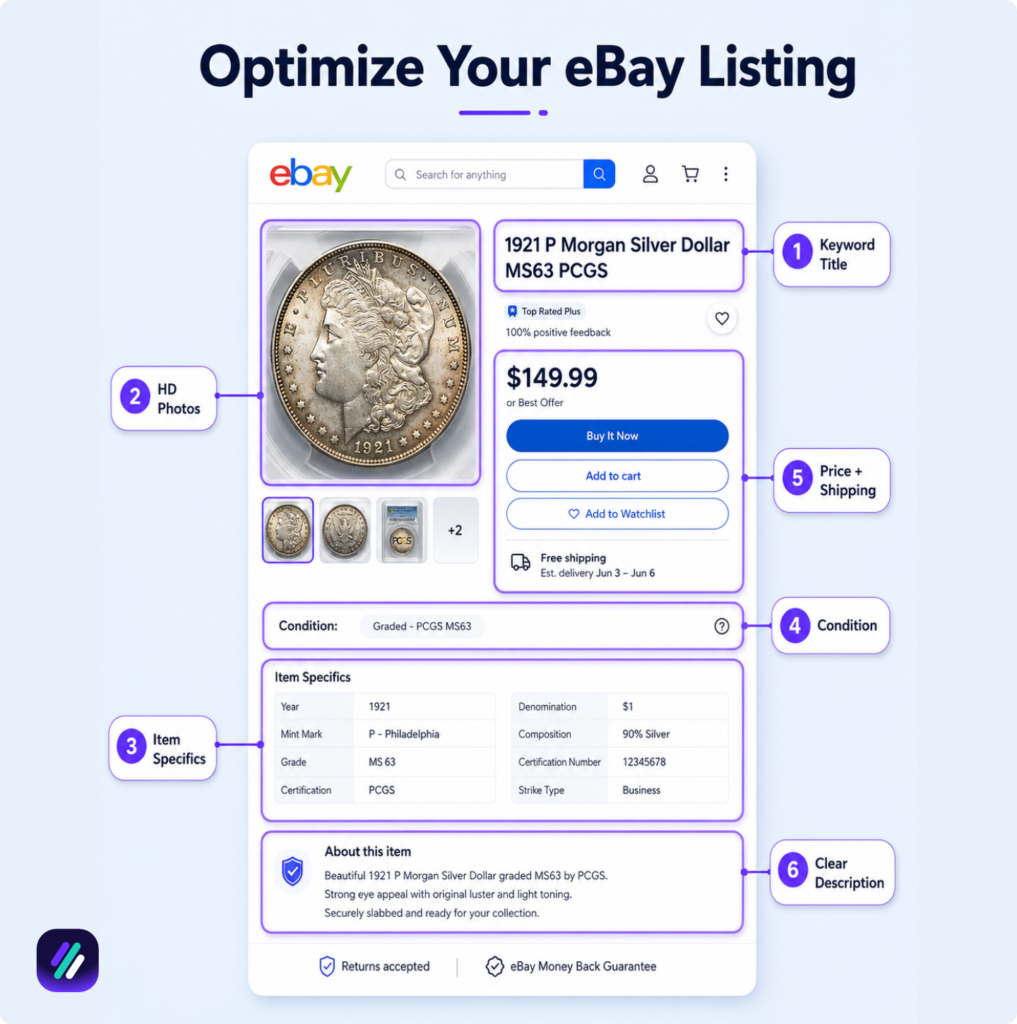
The first thing to get right is your title. Think of it as the most valuable real estate in your listing, since eBay’s Cassini algorithm reads left to right and weighs the first 40 characters the most. A title like “1921 P Morgan Silver Dollar MS63 BU Slabbed PCGS” will always outperform something that doesn’t include relevant eBay keywords.
From there:
- Fill out every Item Specifics field you can, as this is the main ranking factor for filtered searches
- Write a description of at least 200 words covering the coin’s history, condition, and any known defects
- Use bullet points in your description since most buyers browse on mobile
- Add 6 to 24 high-resolution photos of both sides, the mint mark, and the edge under soft, diffused lighting
You should also consider offering free shipping by building the cost into your price, as many buyers filter for it and it can give your listing an edge in search results.
Step 10: Using eBay Promoted Listings
Promoted Listings is an eBay marketing feature that places your coin in sponsored spots across search results.
Using them can help you reach buyers who are actively searching for what you are selling and increase your listing’s exposure by up to 36%.
To create a promoted listing:
- Go to Seller Hub, select Marketing, then Advertising Dashboard
- Click Create New Campaign and select Promoted Listings Standard
- Choose the listings you want to promote and set your ad rate
- Launch the campaign
Keep in mind that you only pay the ad fee when the coin sells, and most experienced sellers cap their rate at 2% to 3% rather than following eBay’s suggested rates, which tend to run higher.
Best eBay Coins Suppliers
There are several places to source coins for your eBay store. Here are the best options:
- Bullion dealers: These are large, reputable sellers who maintain their own eBay stores alongside their websites. Some examples include APMEX and Liberty Coin. Bullion dealers let you buy authenticated, slabbed coins at competitive prices.
- Local coin shops and coin shows: If you’re looking for junk silver and raw coins, there’s no better source than local shops. You can inspect each piece before buying and build relationships with dealers who may offer better prices over time.
- Estate sales and unsearched lots: These carry more risk but offer the highest potential margins, particularly when buying from families who may not know the value of what they have.
What Types are Best Selling Coins on eBay
There are many types of best-selling coins on eBay, but a few categories consistently attract more buyers and higher prices.
Top performers include:
American Silver Eagles
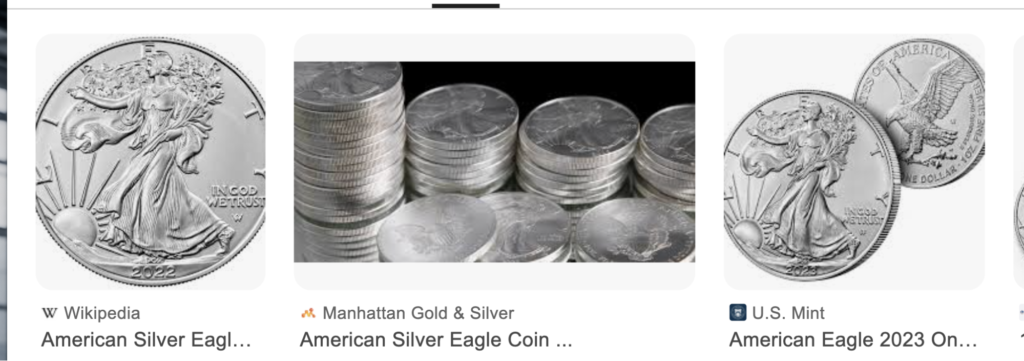
These coins tend to sell in high volumes due to their precious metal content and government-backed purity. Both silver stackers and coin collectors buy them, and graded examples in MS69 or MS70 condition also sell well above spot price. Selling them on your eBay store can help you generate consistent income from day one.
Modern Commemorative and Error Coins
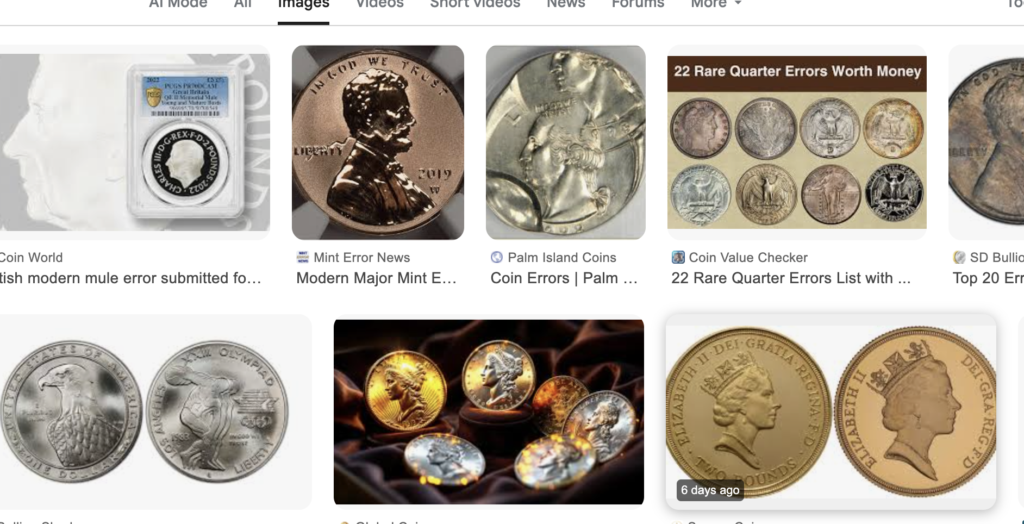
If you come across a limited edition commemorative or a coin with a production error, there’s no need to let it go cheap. These carry built-in collector demand and can sell well above face value. You can also do well with UK Royal Mint issues like the 2009 Kew Gardens 50p, which fetches a premium due to its low circulation numbers.
Ancient Coins
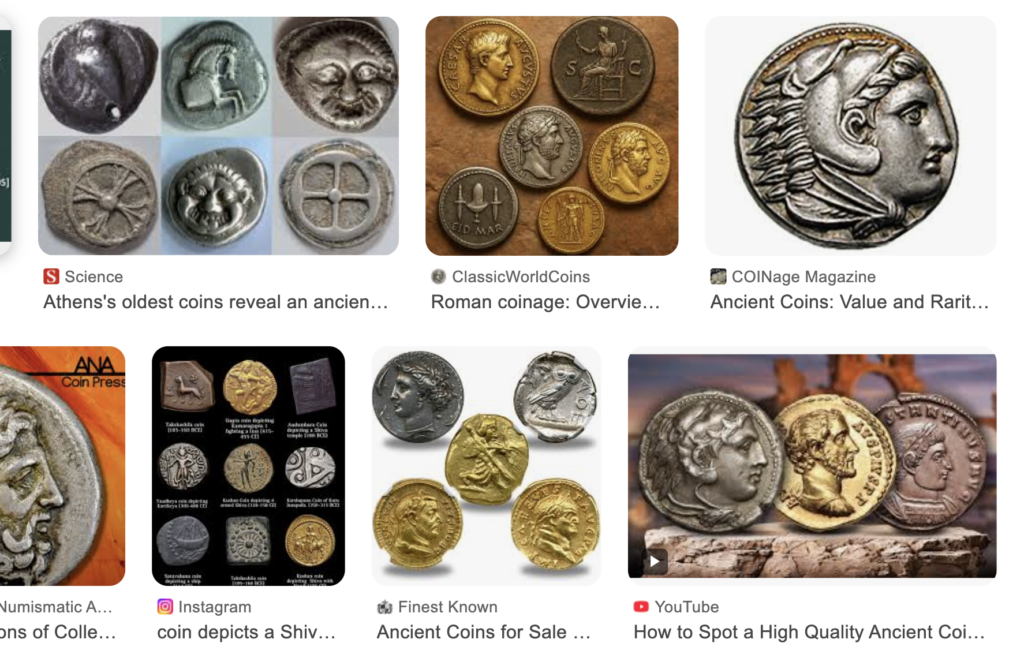
Since they carry centuries of history behind them, ancient coins tend to attract a dedicated and passionate buyer base on eBay. You can find buyers for budget Roman or Greek pieces under $50, and certified examples graded by NGC or PCGS can sell for much more.
Pre-1965 Junk Silver
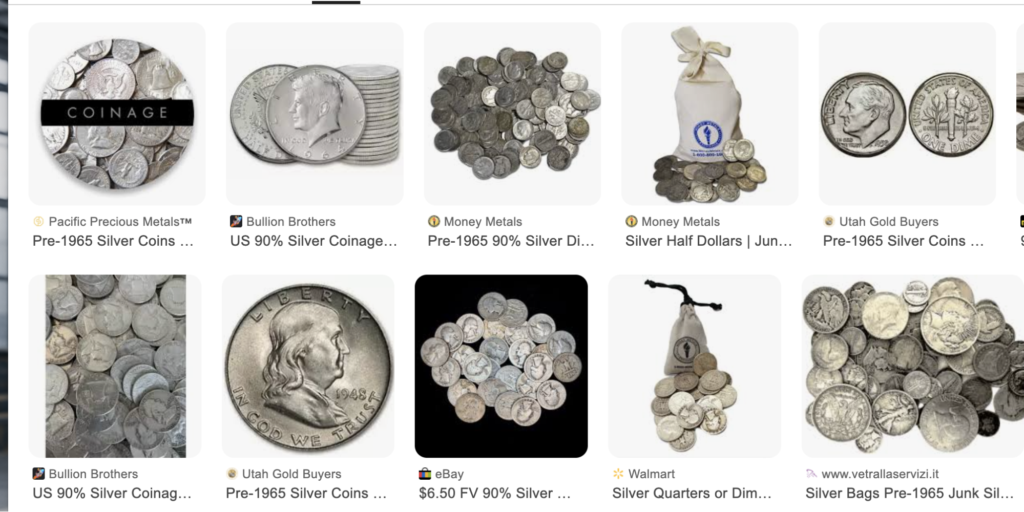
Dimes, quarters, and half dollars dated 1964 or earlier contain 90% silver and sell primarily for their metal content. Most buyers in this category care more about total silver weight than condition, making it one of the more straightforward coin types to sell on eBay.
Find Best Selling Coins on eBay with ZIK Analytics
ZIK Analytics has a suite of eBay seller tools to help you research coins and analyze what’s selling on the platform.
However, I want to highlight three tools that make product research and eBay competitor analysis easier:
- eBay Product Research Tool shows you which coin listings are ranking highest in search results based on sales volume. Search keywords and filter by price to identify items with strong demand.
- eBay Competitor Research Tool lets you analyze successful coin sellers. Enter their username to see monthly revenue, sold items, and top-performing listings. Track them over time to spot new inventory and pricing strategies.
- ZIK’s Calculator for eBay Fees helps you estimate profit margins before listing. Enter your item cost and selling price to see fees and net profit, ensuring you’re pricing coins competitively.
You can also use the 500 Best Selling eBay Items tool to see what’s trending in the collectibles category in real time.
Get your ZIK Analytics trial today and start researching coins with tools built for eBay sellers.
FAQs: How to Sell Coins on eBay
In this section, I’ll answer the questions people frequently ask about selling coins on eBay.
What are the rules for selling coins on eBay?
The main rules for selling coins on eBay are:
- You should never list a replica, counterfeit, or plated coin as authentic, as eBay prohibits these outright.
- Grades can only appear in your title or description if the coin has been certified by an approved service like PCGS or NGC.
- Ungraded currency listings cannot be priced above $1,000.
- eBay may require a high transaction volume, such as 100 transactions in 90 days, before you can list certain high-value ungraded items.
- You should include honest disclosures of any defects, and photos must show both sides of the coin clearly against a neutral background.
How much does eBay charge to sell coins?
eBay charges a final value fee of 13.25% on the total sale amount for coins, which includes the item price, shipping, and any applicable tax.
If you use Promoted Listings to boost your coin’s visibility, expect to pay an additional percentage on top of that.
International fees add another 1.65%, meaning your total selling cost can climb well above 13% depending on where your buyer is located.
What coins sell the most on eBay?
Gold coins from the American Buffalo and American Eagle series typically sell the most on eBay due to high collector and bullion demand.
Second on the list are graded key date coins certified by services like PCGS or NGC, which sell well thanks to the trust professional grading provides buyers.
Other coins that sell regularly include:
- Pre-1965 junk silver lots
- Mint error coins
- World coins from regions like the UAE and Pakistan
What other items can I sell on eBay?
Wondering what to sell on eBay? We have a few detailed guides that can help you on your way!