
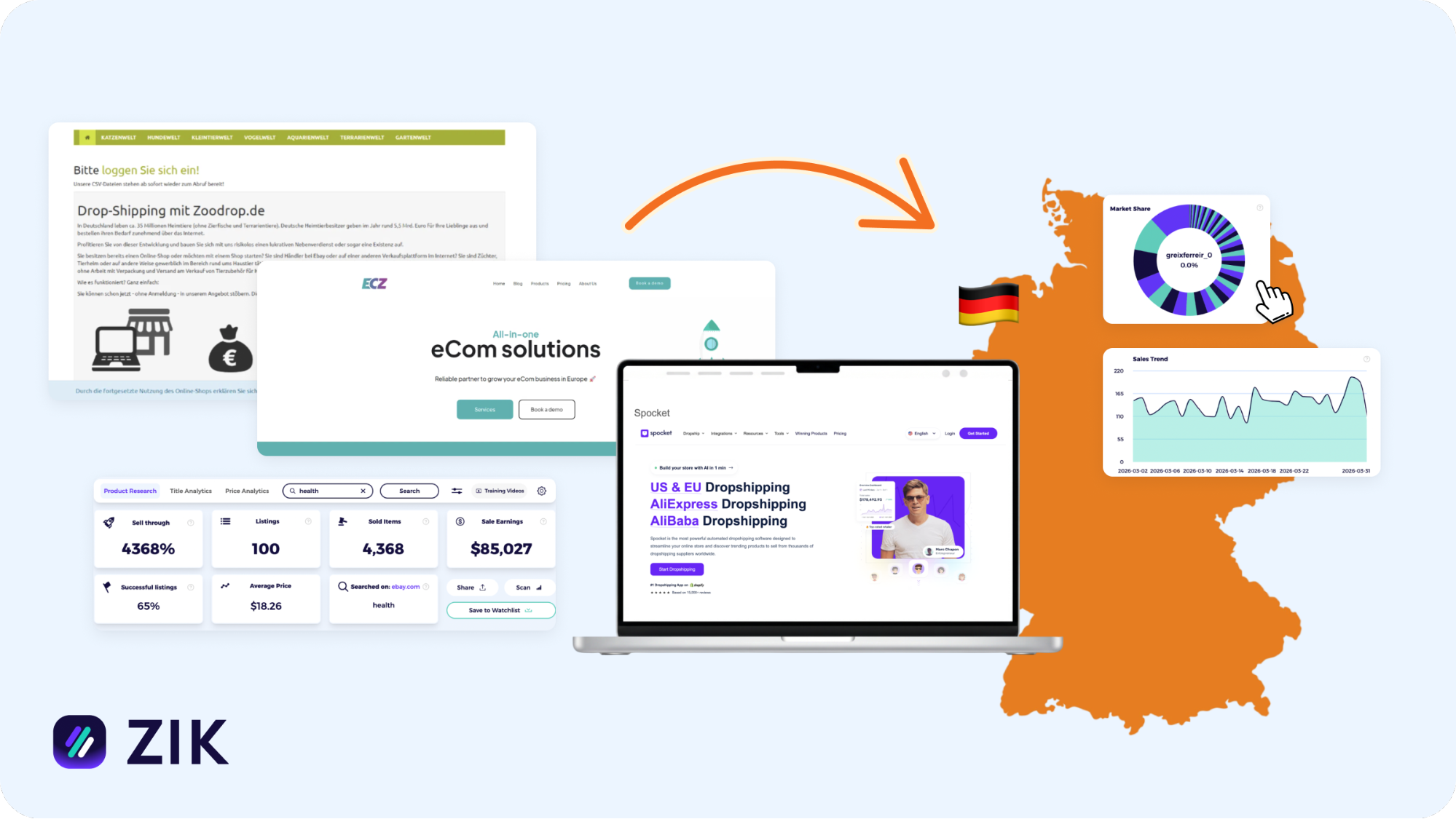
Germany, the hub of world-class automobiles and beer that the world raises a glass to.
Germany is known for its manufacturing prowess and engineering excellence, but it also imports a wide range of goods that millions of consumers buy every day.
Germans increasingly shop online for everything from daily essentials to fashion and home goods. That is why so many entrepreneurs are interested in learning how to start dropshipping products in Germany.
Below, I’ll tell you everything you need to know to start dropshipping in Germany and tap into this thriving Central European market, and launch a profitable online dropshipping business.
Is Dropshipping in Germany Legal?
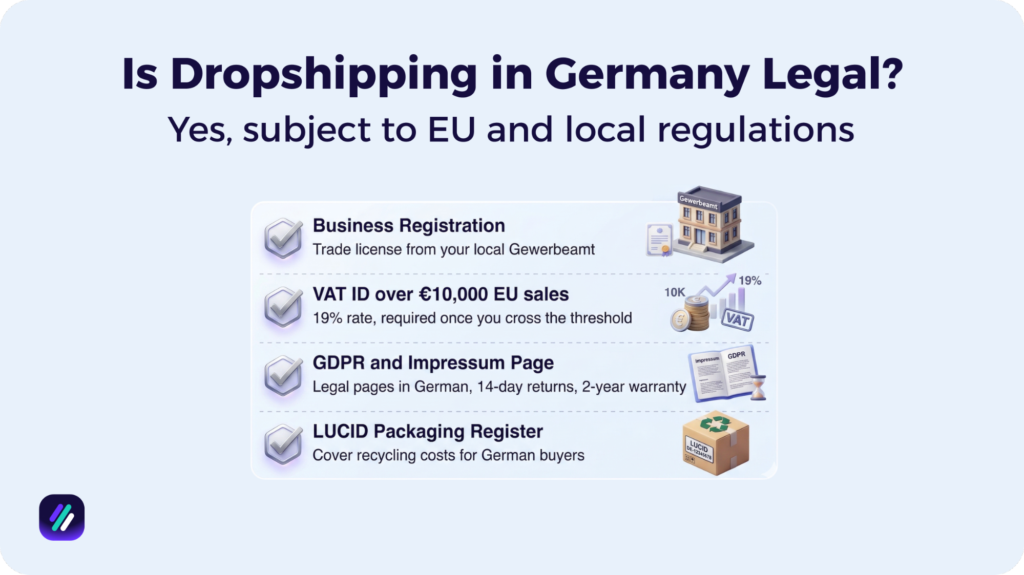
Yes, dropshipping in Germany is legal but subject to strict EU and local regulations.
The main regulation is that you must register your business with your local trade office (Gewerbeamt) to get a trade license (Gewerbeschein). Most dropshipprers choose to register as sole proprietorships (Einzelunternehmen) due to low fees and minimal paperwork.
If your annual revenue stays below €22,000, you can apply for the Kleinunternehmer status to avoid charging VAT, though you cannot reclaim VAT on business expenses.
You also need a VAT ID once you cross that threshold or sell over €10,000 cross-border within the EU. Germany’s standard VAT rate is 19%, and the One-Stop Shop (OSS) simplifies reporting for sales across multiple EU countries.
If you source from outside the EU, every import is subject to VAT from the first cent. The Import One-Stop Shop (IOSS) lets you collect VAT at checkout so customers pay no surprise fees at delivery. From July 2026, the €150 customs duty exemption ended, meaning all imports will face duties.
German law also requires your website to carry an Impressum page, your customers get a mandatory 14-day return window and a two-year warranty on defective products, GDPR governs your data practices, and all legal pages must be in German. You must also register with the LUCID Packaging Register to cover recycling costs for packaging shipped to German buyers.
Is Dropshipping in Germany Profitable?
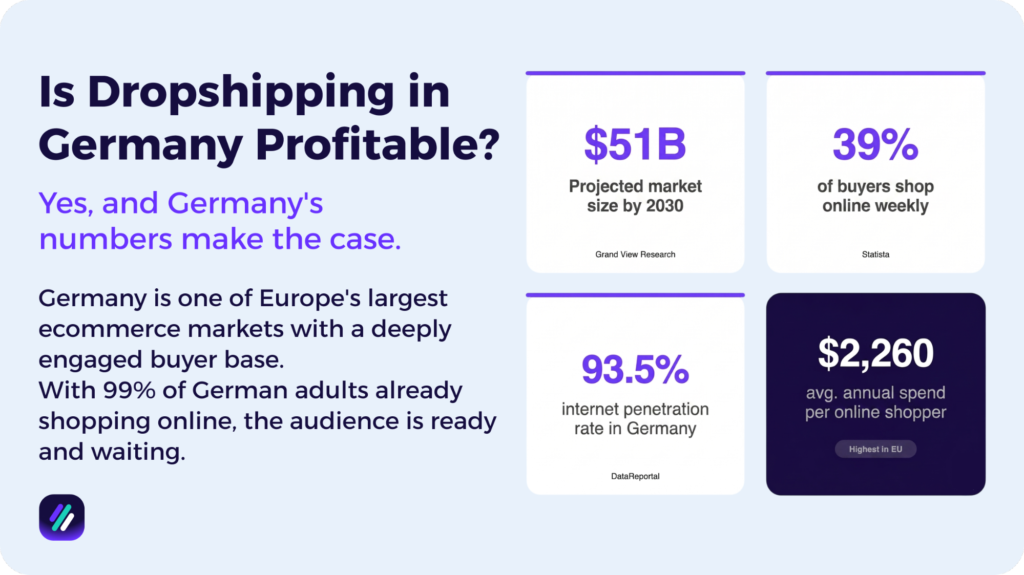
Yes, dropshipping in Germany can be highly profitable due to the growing local demand and a large base of active online shoppers.
According to Grand View Research, the German dropshipping market is projected to reach USD 51 billion by 2030. With 39% of online buyers shopping weekly and user penetration expected to hit 70%, it is expected to offer plenty of opportunities to new sellers.
Germany also has an internet penetration rate of 93.5%, with approximately 99% of German adults already shopping online. Targeting this EU market now means you can benefit from a consumer base already comfortable spending across e-commerce stores.
Plus, with the average German online shopper spending $2,260 per year, you are tapping into one of the highest-spending audiences in Europe and the world.
Strong market demand is only one part of the equation. Before launching, it’s worth understanding whether dropshipping is worth it based on the costs, competition, and long-term scalability of the business model.
Pros and Cons of Dropshipping in Germany
There are both benefits and drawbacks to choosing Germany as your target market for dropshipping.
In this section I intent to lay them out so you can decide for yourself if that’s something you would be interested in.
Benefits of Dropshipping in Germany
The main benefits of dropshipping in Germany include:
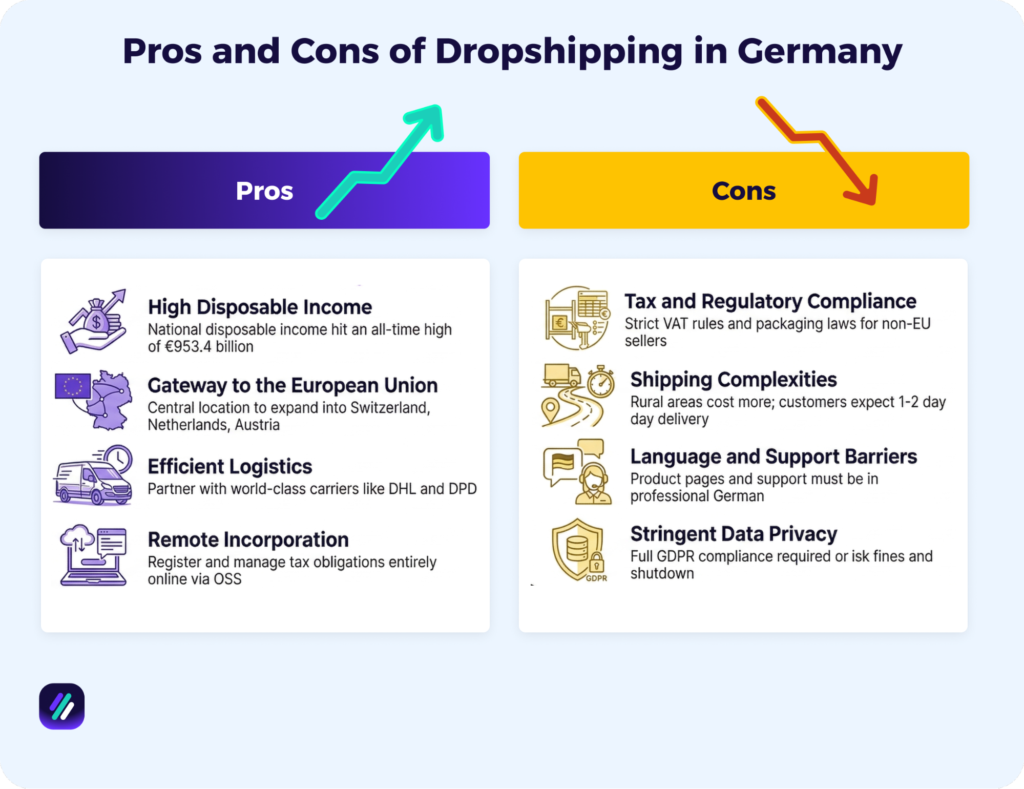
- High disposable income: Germany consistently ranks as one of the wealthiest nations in Europe. With a disposable income per capita estimated between $42,800 and $48,000 and national disposable income hitting an all-time high of €953.4 billion, you can expect German consumers to have significant income to put toward online purchases even to the, let’s say oddest products. 😀
- Gateway to the European Union: Germany’s central location makes it the ultimate testing ground for the broader EU market. Selling in Deutschland gives you the experience needed to dropship in neighbouring countries like Switzerland, the Netherlands, and Austria.
- Efficient logistics: Dropshipping to Germany also comes with the opportunity to partner with world-class logistics companies. Since the majority of your customers will be located within the country, partnering with carriers such as DHL and DPD can ensure fast shipping to German customers.
- Remote incorporation: Digital services are now available to help you register a business and manage tax obligations entirely online. You can also use the EU One-Stop Shop (OSS) scheme to simplify VAT reporting across multiple European countries.
Disadvantages of Dropshipping in Germany
As for the disadvantages, dropshipping in Germany comes with:
- Tax & regulatory compliance: Germany requires rigorous VAT registration for non-EU sellers. Furthermore, you must comply with strict packaging laws in order to sell items in the country.
- Shipping complexities: Although shipping to customers within major cities (Berlin, Hamburg) is efficient, costs can rise significantly for rural areas or islands. German customers also demand high-speed delivery (often 1-2 days) and expect proper packaging, making slow and poorly packaged items a major source of dissatisfaction.
- Language and customer support barriers: Offering product pages in German is necessary to gain trust of local consumers. Failure to provide professional, grammatically correct German customer service can also lead to low conversion rates across your store.
- Stringent data privacy: Germany has strict GDPR laws. Your website must be perfectly compliant with data usage policies, or you risk facing heavy fines and even shutdown of your dropshipping business.
How to Start Dropshipping in Germany
Now that you know the potential benefits yous stand to gain, here’s how you can get started with German dropshipping
Step 1: Choose Your Niche
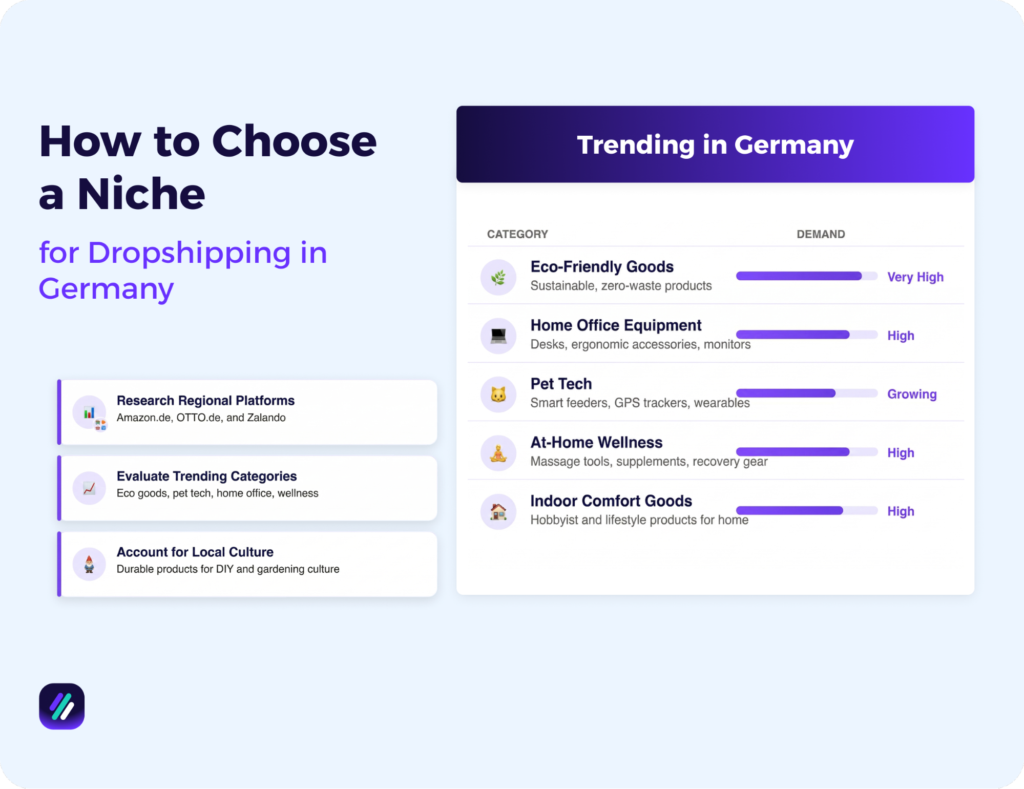
The first step to German dropshipping involves choosing a niche or product category. This acts as your area of focus and helps you compete more effectively in one of Europe’s most demanding e-commerce markets.
Here are a few ways to choose a dropshipping niche for Germany:
- Research using regional platforms: Although universal research tools can give you an idea of items resonating with Germans, using region-specific platforms is the better way to validate demand. Sites like Amazon.de, OTTO.de, and Zalando can help you pinpoint products that are already generating a buzz among local shoppers. ZIK Analytics also has German eBay and Shopify data that you can use to validate niche popularity.
- Evaluate trending product categories: Some product categories perform better than others for online stores selling in Germany. This year, Germans are expected to spend heavily on eco-friendly goods, pet tech, home office equipment, and at-home wellness products.
- Account for local culture and preferences: With distinct seasons and a deep-rooted DIY and gardening culture, Germans expect products that are built to last and suited to their lifestyle. As such, dropshipping indoor comfort goods and hobbyist products can help you make a solid first impression on local consumers.
Step 2: Find Winning Products
Since it takes time to establish yourself in a new market, you need to come up with ways to distinguish your business from other online stores.
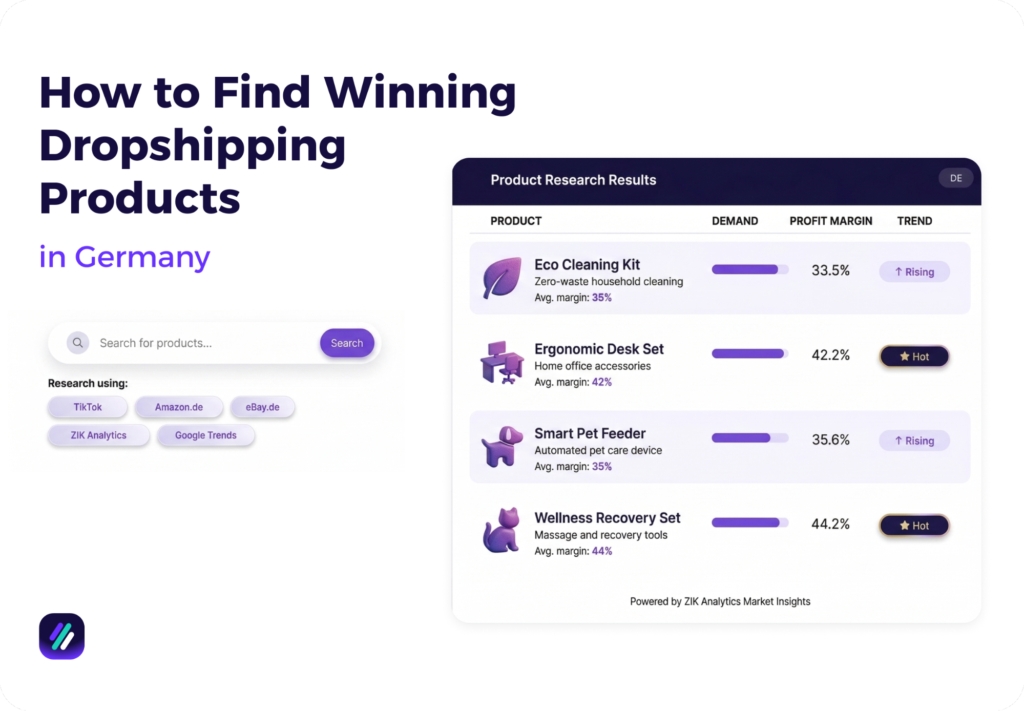
One of the best ways to do that is to add winning products to your catalog. These are items that have proven themselves to be in demand and offer a good dropshipping profit magin on sales.
To find winning products:
- Track viral trends on TikTok: Trends make their way to TikTok faster than any other platform. Using hashtags like #TikTokMadeMeBuyIt and #Deutschland, you can see which items are currently popular with German consumers.
- Check Amazon.de and eBay: Amazon’s best-sellers page and eBay’s trending listings monitor products that have seen the biggest increase in sales. Visiting these pages frequently can help you identify patterns long before they become mainstream.
- Analyze competitor stores: Whether done manually or with a tool like ZIK Analytics, analyzing competitors can help you understand which products are selling and what price points are working in the German market.
- Analyze demand insights: With tools like Google Trends filtered to Germany and ZIK’s Shopify Market Insights, you can see which products and niches are gaining traction across marketplaces like eBay and Shopify. ZIK’s tool also tracks buyer activity and top-performing categories, helping you validate demand before committing to a product.
Step 3: Find Reliable Suppliers
Once you’ve finalized your niche and products, you can start looking for suppliers who can source and ship those items to your customers.
The good thing is that you don’t have to spend days Googling and cold emailing potential wholesalers. There are tools built specifically for this that cut the process down considerably.
Here are some of the best ways to find suppliers for your German store:’
- Reverse-engineer winning eBay listings: This method involves finding the vendor behind a best-selling product and using their source as your own. You can use our AliExpress Item Finder to match any eBay.de listing to its original supplier on AliExpress. We also have a Shopify Product Explorer that you can use to do the same for top-selling Shopify stores in Germany.
- Browse specialized German supplier directories: Platforms like wlw.de (Wer liefert was) and Europages list verified German wholesalers and manufacturers you can filter by niche. Search using German terms like “möbel großhandel” or “dropshipping großhändler Deutschland” to narrow results down to suppliers already operating within the country.
- Vet suppliers before committing: Request product samples to check quality firsthand. Also confirm that the supplier is registered in the Handelsregister and verify their VAT ID through the European Commission’s VIES tool to stay compliant.
These are some of the ways to find suppliers for your German store. Later, I’ll share a list of the best German dropshipping suppliers you can work with to get started.
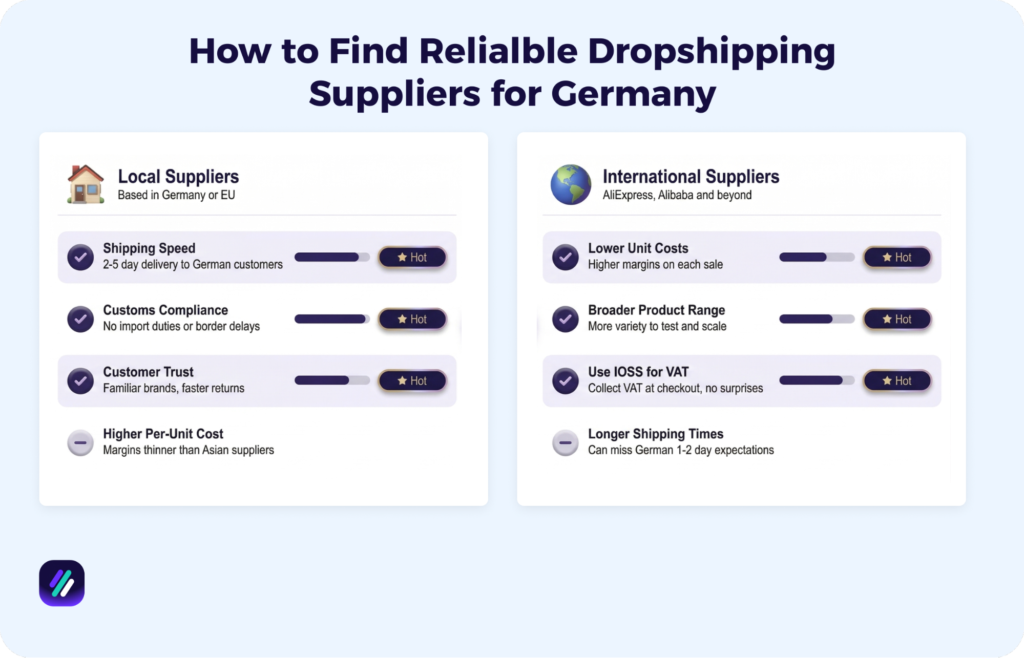
Finding reliable suppliers is one of the most important decisions you will make when building a dropshipping business in Germany.
Both local and international options are available to you, with each offering distinct advantages to merchants selling in the EU market.
Local-based suppliers offer fast 2-5 day shipping and smooth customs compliance, whereas international suppliers provide lower per-unit costs and a broader product range.
You can find suppliers through dropshipping directories, using ZIK Analytics Item Finder to see available suppliers for your chosen products, or by browsing marketplaces like AliExpress or Alibaba directly. An AliExpress to eBay dropshipping tool helps you identify supplier-product matches faster, making it easier to source items with proven sales history.v
Later, I will also recommend some of the best dropshipping suppliers to help you get started selling in Germany.
Step 4: Register Your Business
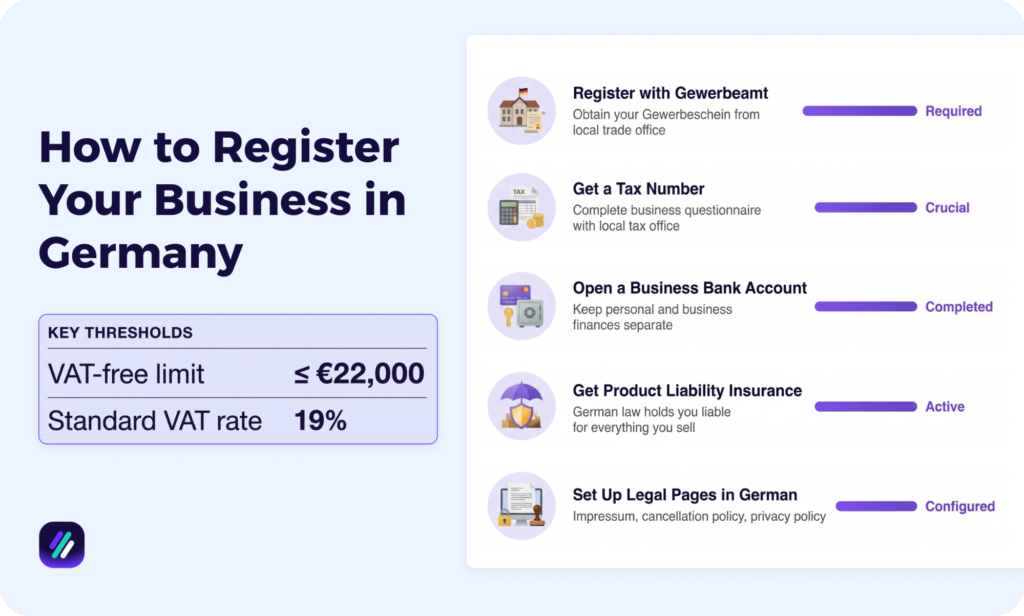
Even though it is legal to dropship in Germany, you still need to register your business with the appropriate local authority before you start selling.
The most popular business structure for new dropshippers in Germany is sole proprietorship (Einzelunternehmen), meaning you run the business under your own name and are personally responsible for any debts or liabilities.
You also need to register for a tax number by completing a business registration questionnaire with your local tax office. If your turnover stays below €22,000 in the first year, you can avoid charging VAT under the small business regulation. Once you cross that threshold, you must charge 19% VAT.
A few other things to sort out early:
- Open a business bank account to keep personal and business finances separate.
- Get product liability insurance since German law holds you accountable for everything you sell.
- Set up your legal pages in German, including your legal notice, cancellation policy, and privacy policy.
Step 5: Set Up Your Online Store
Now, for perhaps the most important step of starting a dropshipping business in Germany: building your online store.
Dropshipping in Germany requires you to create an online store that meets both local legal standards and customer expectations. For a beginner, here are the steps to follow:
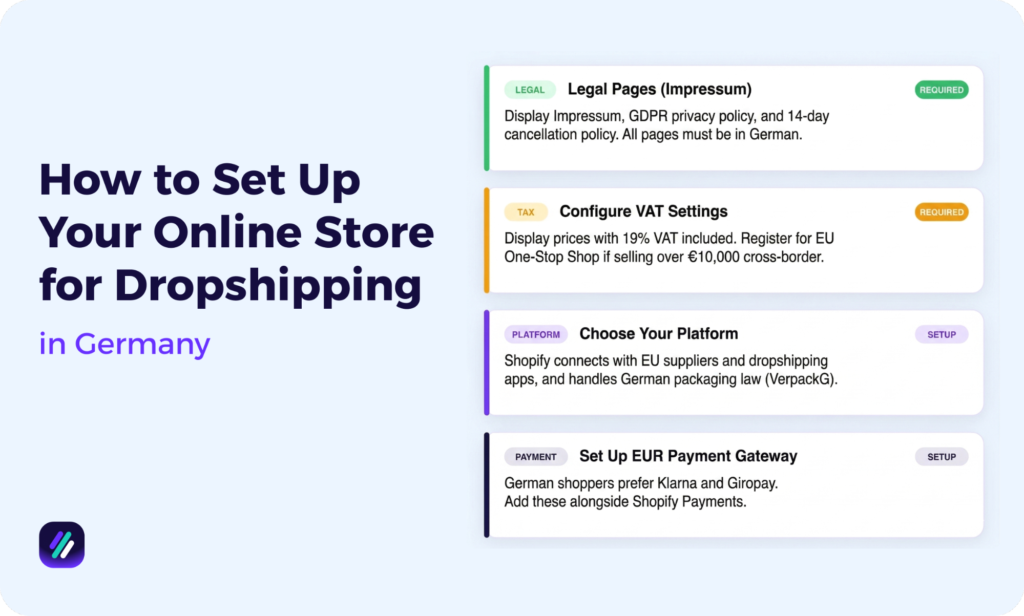
- Choose an ecommerce platform suited for German dropshipping: Many dropshipping website builders exist to help you create a dropshipping website. However, most entrepreneurs prefer using Shopify for its ease of use and vast app ecosystem. Shopify connects with many European suppliers and dropshipping apps, making it easy to fulfill orders and meet requirements around (VerpackG). Additionally, you can start dropshipping on eBay Germany, as that’s easier.
- Set up your essential store elements: The law in Germany is stricter for online sellers than in most European markets. It requires online stores to display a legal notice (Impressum), a GDPR-compliant privacy policy (Datenschutzerklärung), and a clear 14-day cancellation policy (Widerrufsbelehrung). Shopify provides templates to help you get these pages up quickly, but you can also use an AI store builder to create these for you.
- Configure tax settings before launch: Germany runs on a value-added tax system (Mehrwertsteuer/MwSt) rather than regional sales tax. The standard rate is 19%, with a reduced 7% rate for items like books and food. Your store must display prices with tax already included, as required by the Price Indication Act (Preisangabenverordnung). If you sell over €10,000 annually to buyers in other EU countries, register for the EU One-Stop Shop to handle VAT across borders from one place.
- Set up a payment gateway that accepts EUR: German shoppers prefer local, trusted payment methods over standard credit cards. Options like Klarna and Giropay along with Shopify Payments can help you cover the most widely used options and keep cart abandonment low.
Step 6: Marketing Your Dropshipping Store
After building your storefront, you need to start thinking of ways to attract customers to your business.
Some of the most effective dropshipping marketing strategies for Germany include:
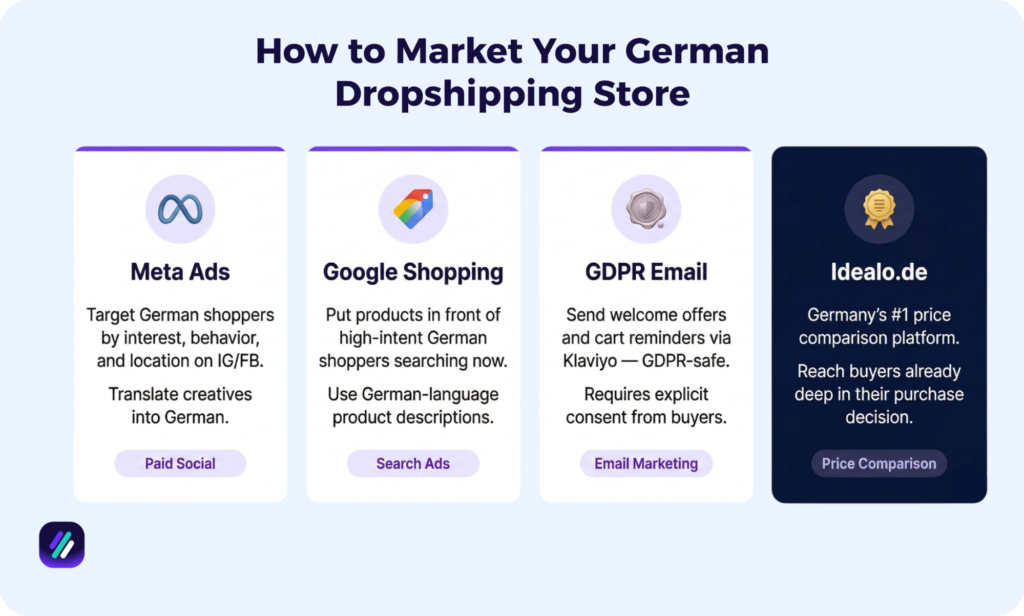
- Running Meta ads: Instagram and Facebook let you target German shoppers by interest, behavior, and location. Keep your creatives professional and translate your copy into German to build credibility with local buyers who are cautious about unfamiliar online stores.
- Listing on Google Shopping: Google Shopping puts your products in front of shoppers already searching for what you sell. Use detailed German-language product descriptions to capture high-intent traffic that is ready to buy.
- Sending GDPR-compliant emails: Email is a cost-effective way to retain customers and drive repeat purchases. Platforms like Klaviyo let you send welcome discounts and abandoned cart reminders while keeping every campaign compliant with GDPR consent requirements.
- Listing on Idealo.de: Idealo is Germany’s top price comparison site and a go-to resource for German shoppers before they commit to a purchase. Getting your products listed here puts you in front of buyers who are already deep in the decision-making process.
Step 7: Scaling Your Store
After your store picks up momentum, you can start thinking of ways to expand beyond your initial audience.
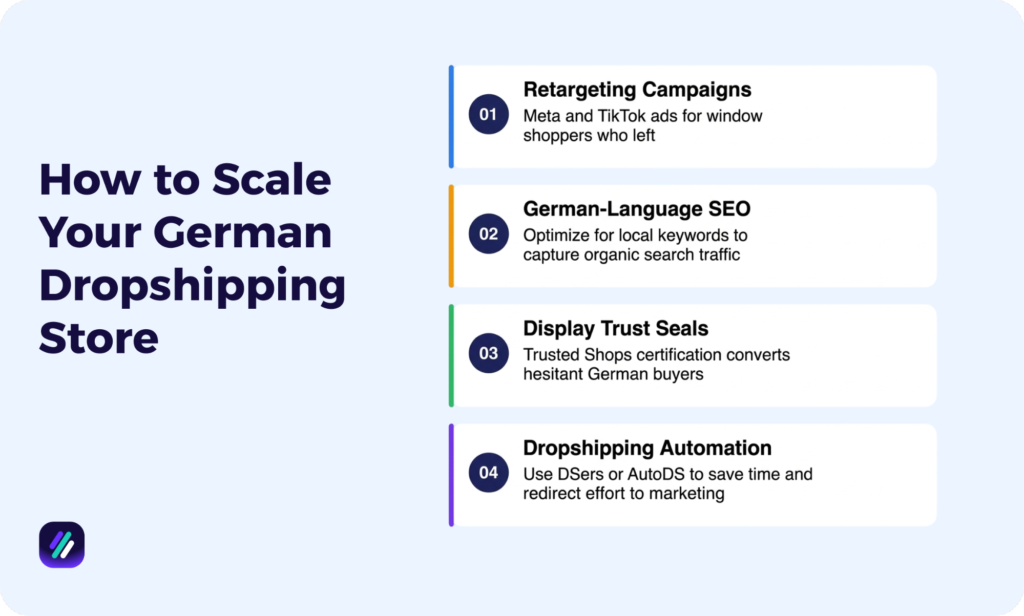
Many dropshippers leverage dropshipping advertising to get more eyeballs on their products. Others run retargeting campaigns on Meta and TikTok to convert shoppers who visited your site but left without buying.
You can also optimize your store for German-language keywords to reach local buyers already searching for what you sell.
Displaying trust seals on your site can also help push hesitant buyers over the line. Certification from Trusted Shops or a recognized German e-commerce association can help you build credibility with potential customers.
Lastly, using dropshipping automation tools like DSers or AutoDS can help you save hours that you can gear towards marketing your dropshipping business.
Best Products to Dropship in Germany
Since I want to help you be successful, I took the time to research dropshipping niches that are sure to bring you profits when dropshipping in Germany. I also compiled a list of categories that you should avoid to stay on the right side of German law.
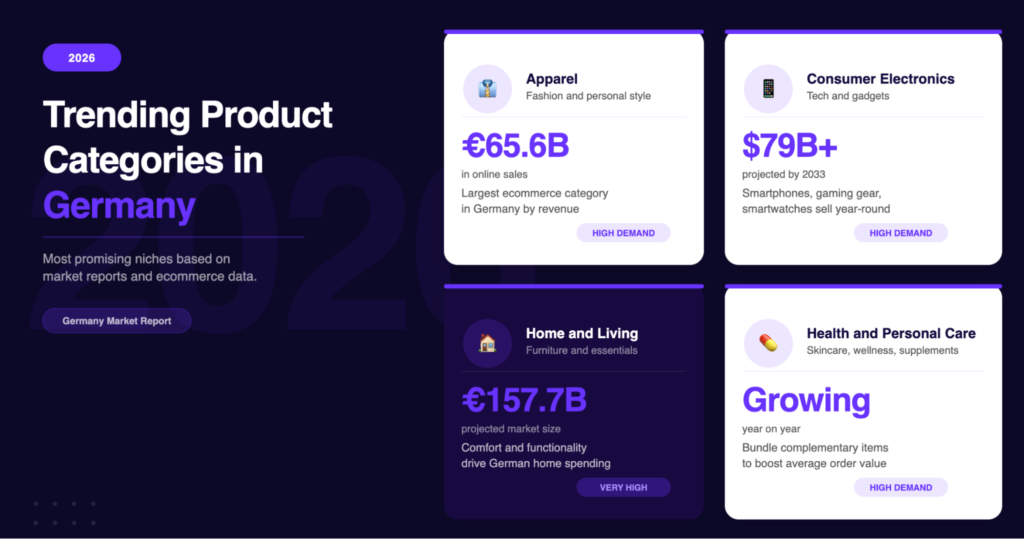
Trending Product Categories 2026
Based on reports and market trends, here are the most promising niches for dropshipping in Germany.
Apparel
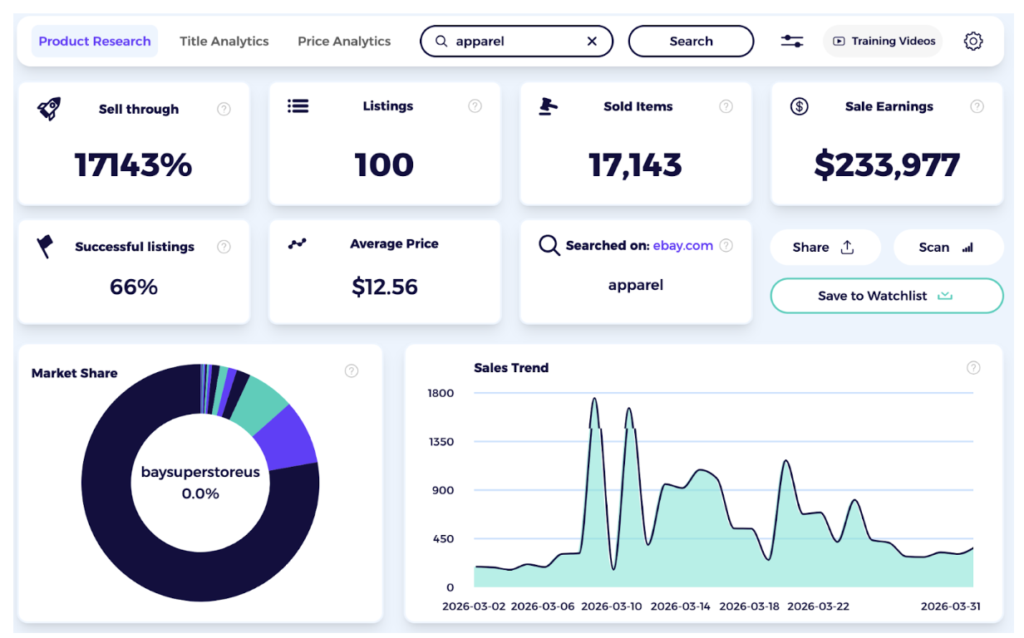
Turns out, Germans have a knack for fashion and personal style. With apparel generating €65.6 billion in online sales, it is the single largest e-commerce category in the country. ZIK’s own data shows that apparel listings on eBay generated $233,977 in sales earnings across just 100 listings, with a 66% successful listing rate. By dropshipping across various styles and price points, you can appeal to a wide range of shoppers.
Consumer Electronics
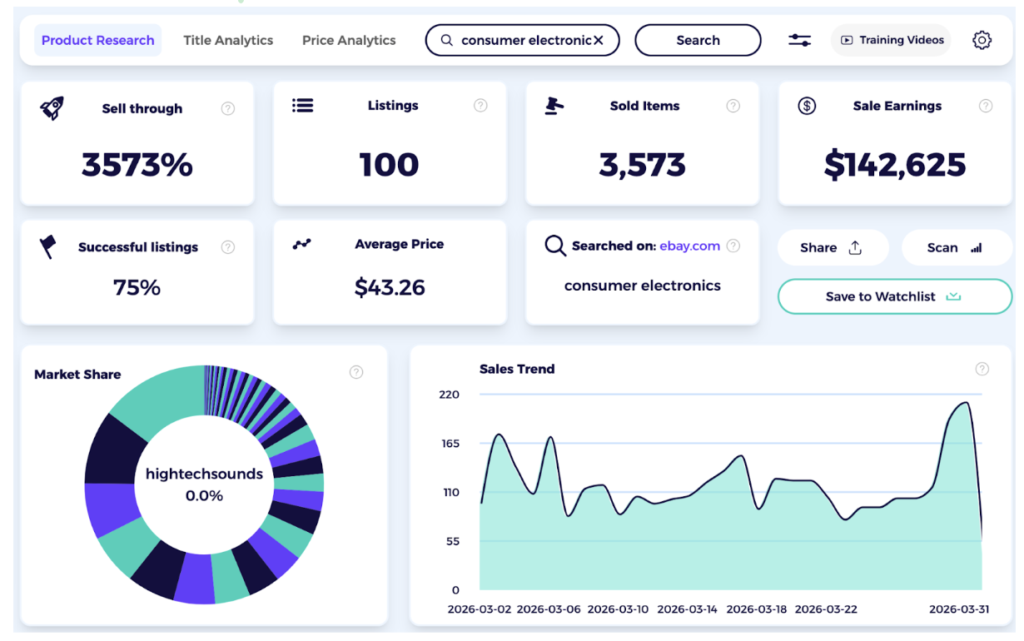
Consumer electronics are a staple among Germans, with the category expected to pull in over $79 billion in online sales by 2033. ZIK’s data shows 3,573 sold items generating $142,625 in sales earnings across 100 listings, with 75% of those listings ending in a successful sale
By offering competitive pricing and detailed product specs, you can build a store that keeps shoppers coming back.
Home and Living
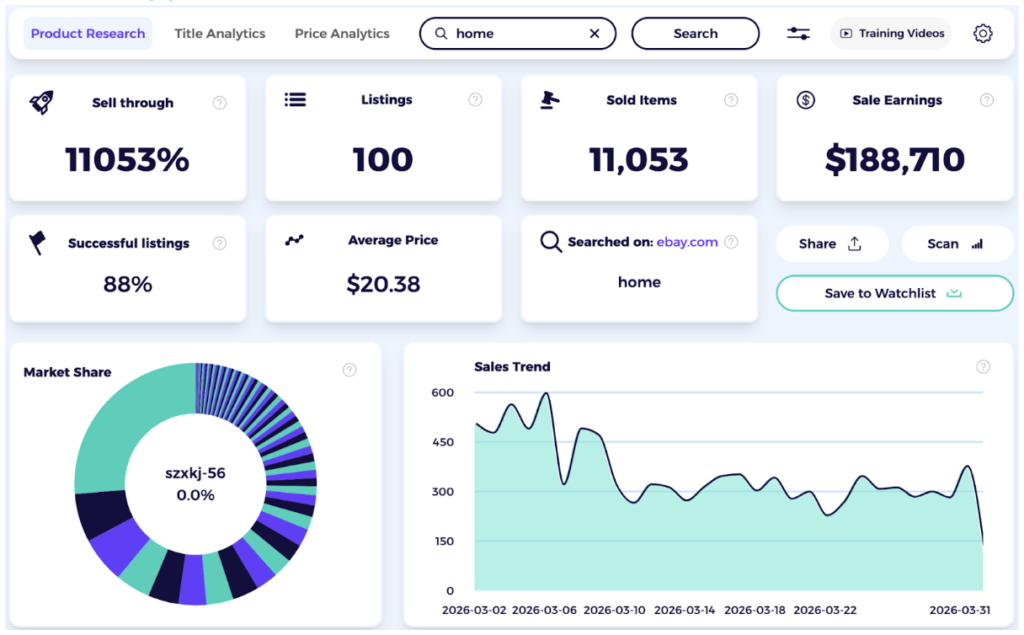
Germans are particular about comfort and functionality in their living spaces. As such, they spend increasingly on home furniture and essentials that make everyday life easier. With the category pulling in 11,053 sold items and $188,710 in sales earnings across just 100 listings, focusing on this niche can help you tap into an active customer base.
Health and Personal Care
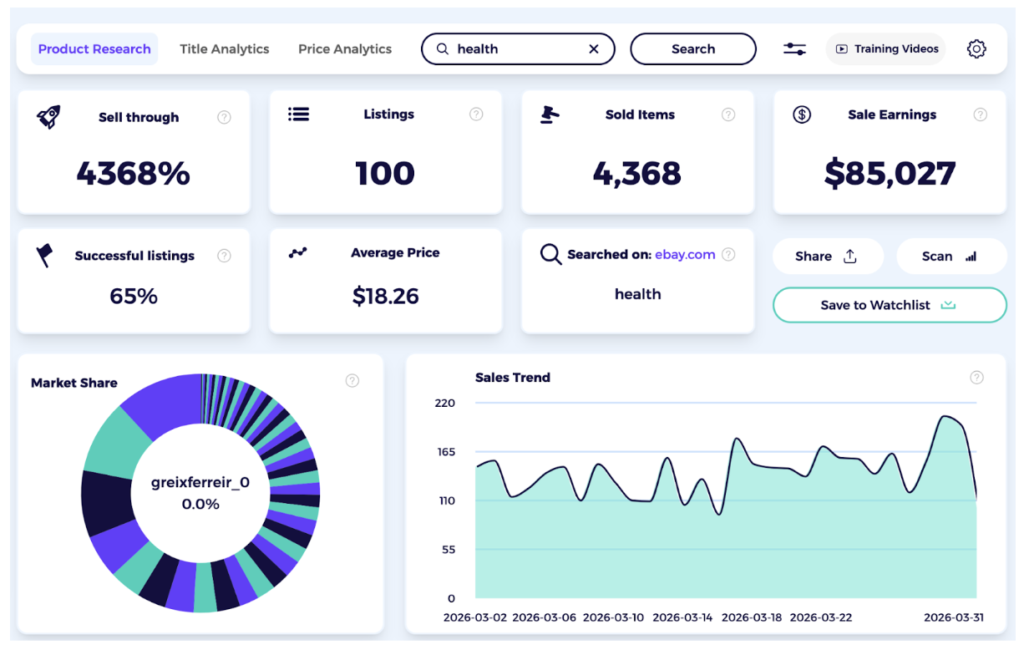
From skincare and haircare to dropshipping supplements and wellness gadgets, Germans are also spending more on products that improve their overall health. ZIK’s data shows 4,368 sold items generating $85,027 in sales earnings across 100 listings, with a 65% successful listing rate. You can build a catalog around a single niche or sell bundles on Shopify that pair complementary items together.to increase your average order value.
Products to Avoid
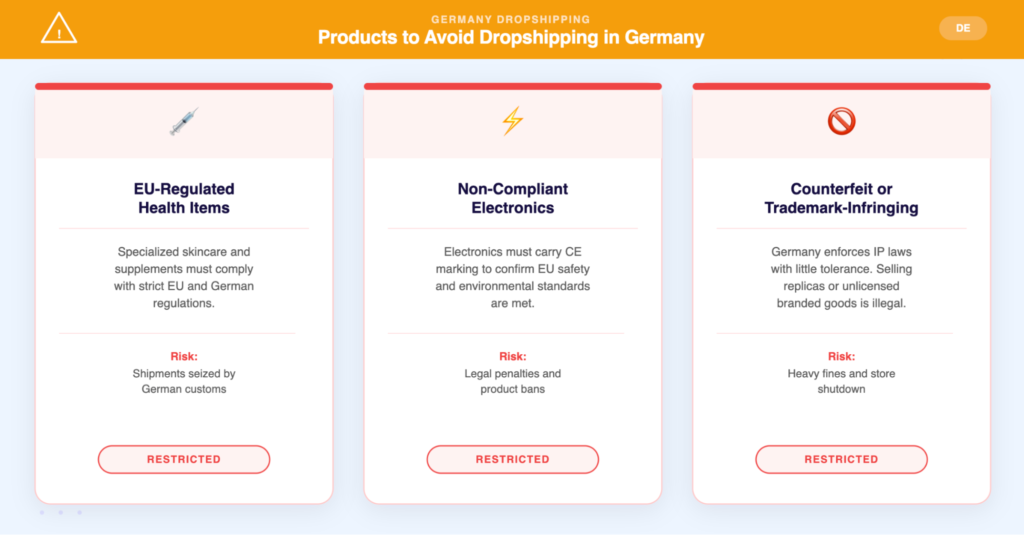
Not all products make sense for German dropshipping. Here are some categories to avoid:
- EU-regulated health and cosmetic items: Products like specialized skincare and food supplements must comply with strict EU and German regulations. Importing these without proper documentation can result in shipments being seized by German customs.
- Non-compliant electronics: Electronics sold in Germany must carry CE marking to confirm they meet EU safety and environmental standards. Selling uncertified chargers or electrical toys puts you at risk of facing legal penalties.
- Counterfeit or trademark-infringing goods: Germany enforces intellectual property laws with little tolerance. Selling replicas or unlicensed branded products can result in heavy fines and even the shutdown of your store.
Best Germany Dropshipping Suppliers
Many dropshipping companies claim to deliver products to Germany. But you’ll want to choose someone reputable and known for offering fast shipping to local customers.
Here is a list of some local and international suppliers that you can use.
Local Dropshipping Suppliers in Germany
Local dropshipping suppliers include companies that are headquartered in Germany. Working with them allows you to offer faster shipping and minimize returns and complaints.
eComZone
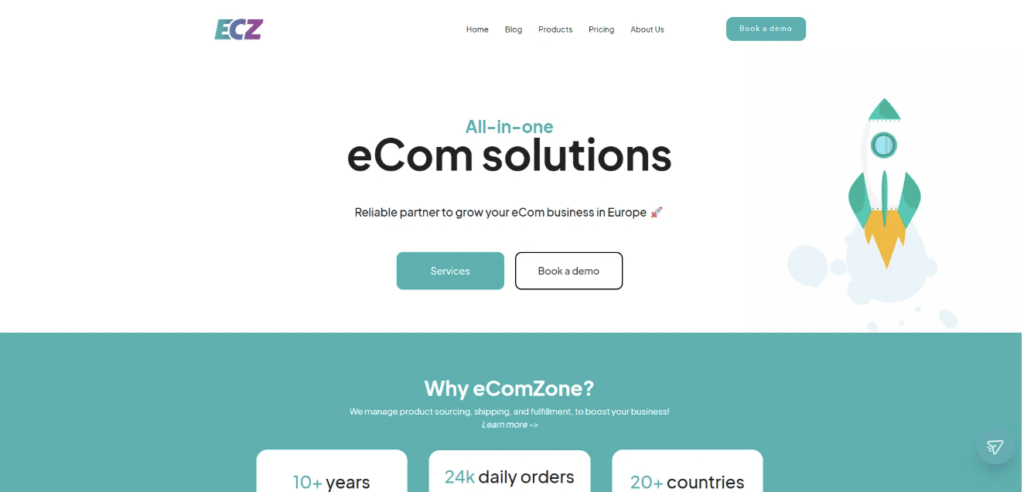
Based in Central Europe with a warehouse in Germany, eComZone is considered a top supplier for both new and established dropshipping businesses. It offers a diverse catalog of over 1,000 items with a heavy focus on specialized electronics, viral gadgets, and home goods. eComZone also lets you customize packaging to assist with branding and offers fast delivery times (2-5 days) within Germany.
Zoodrop
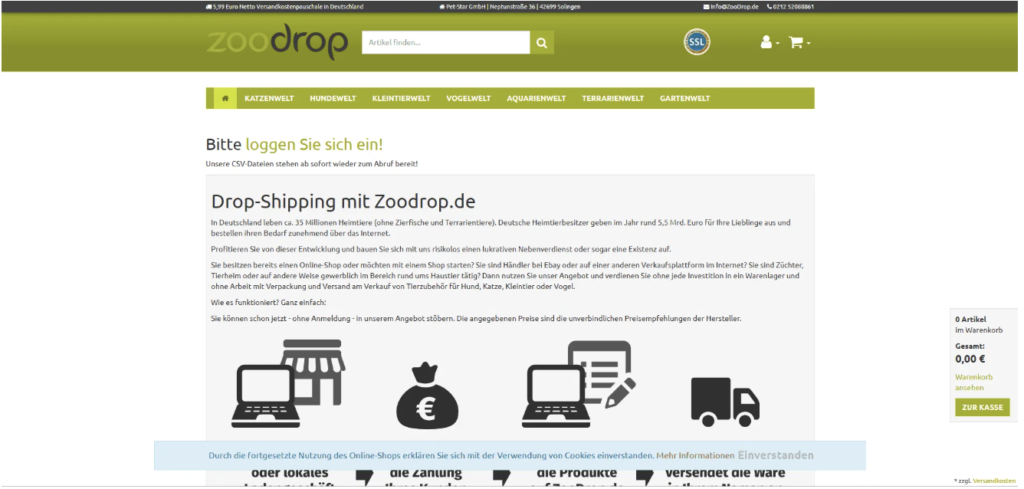
Zoodrop is a premier German Shopify dropshipping supplier specializing specifically in dropshipping toys, pet supplies, food, and grooming products. It provides retailers with high-quality images and detailed product information to help them create effective listings. Zoodrop also offers direct integration with platforms like Import2Shop, allowing you to automate product importing and inventory syncing for your store.
Manolya Electronics
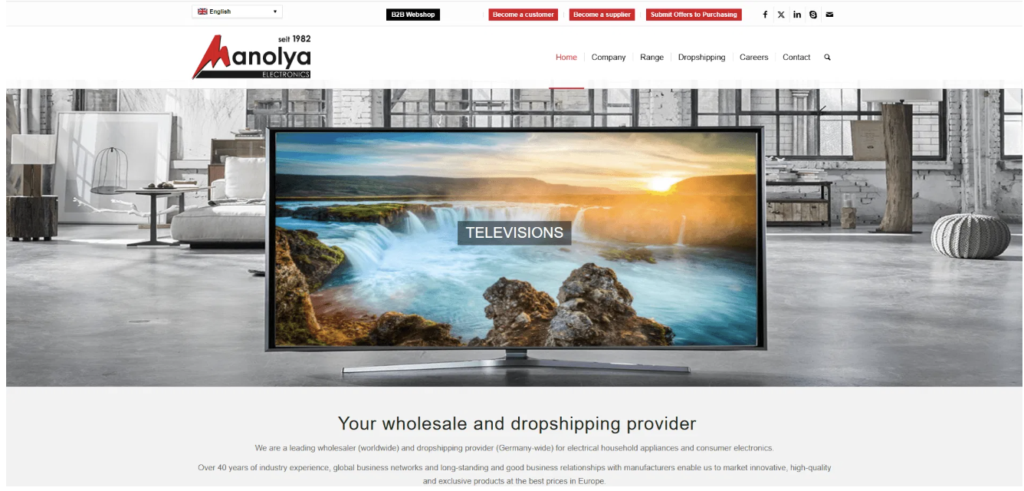
Manolya Electronics is a wholesale supplier offering high-ticket consumer electronics and household appliances. Its catalog includes branded items from reputable manufacturers such as Xiaomi, Apple, Miele, Samsung, and Panasonic. Merchants dropshipping through this Berlin-based company can achieve higher profit margins compared to typical international alternatives.
Find more German dropshipping suppliers.
International Dropshipping Suppliers in Germany
Here are the international suppliers that allow you to dropship items in Germany.
CJ Dropshipping
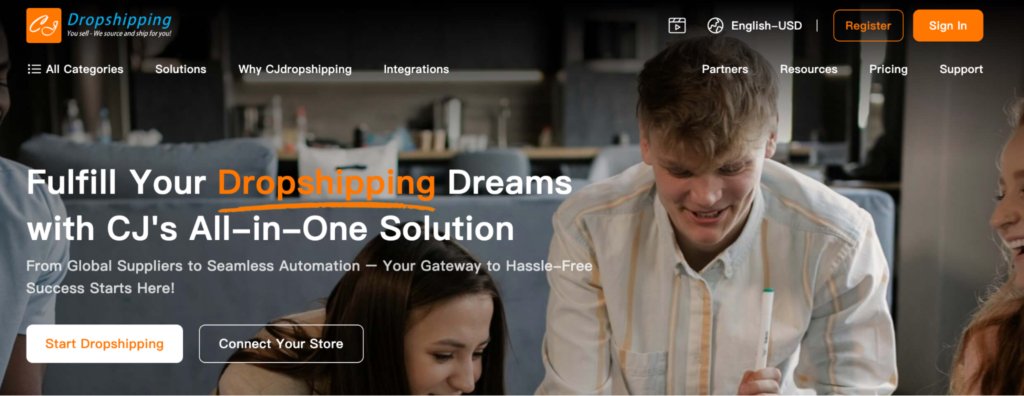
CJ Dropshipping is a major global supplier with warehouses located directly in Germany and other parts of Europe. It is ideal for dropshipping electronics and custom-branded items, with 2–5 day shipping options available within Germany.
Spocket
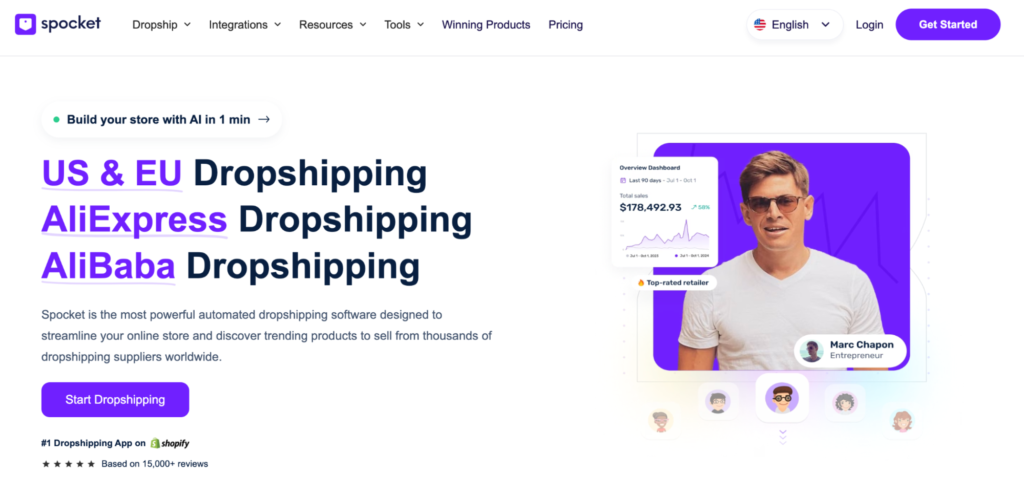
Spocket is another ideal dropshipper for Germany because of its high percentage of EU suppliers. It offers fast shipping times (often 2–7 days) and vetted, higher-quality products to help you build trust with German customers.
AliExpress
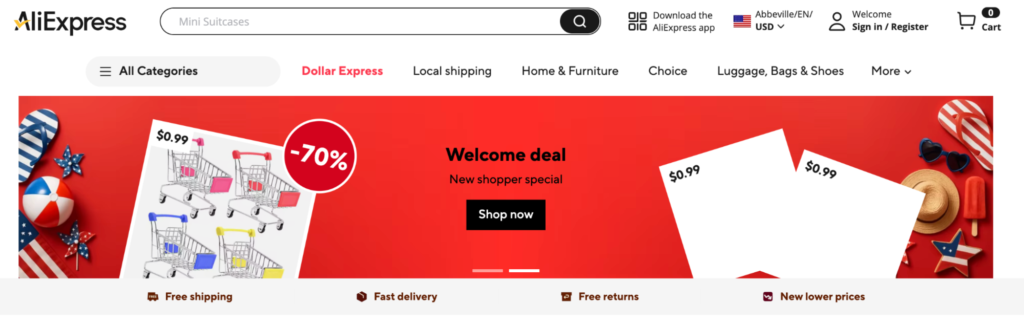
AliExpress offers millions of products across all niches at low manufacturer-direct prices. Many AliExpress suppliers also have warehouses in Germany and other EU countries, enabling faster shipping to EU customers.
Find Winning Dropshipping Products in Germany with ZIK Analytics
ZIK Analytics has a suite of tools to help you find and validate profitable products for dropshipping in Germany.
However, I specifically want to mention three tools that simplify product research and validation for German dropshipping:
- Shopify Product Explorer is your dropshipping product research tool for finding which products are selling across German Shopify stores. Search keywords and filter by sales to identify trending items that resonate with German buyers.
- Shopify Store Finder acts as your dropshipping database for discovering successful German dropshipping stores. Filter by country, revenue, and marketing channels to find stores worth analyzing.
- AdSpy shows you which ads competitors are running for German markets on Facebook and Instagram. Filter by country to see campaigns targeting Germany and save winning ads for reference.
You can also use the Shopify Sales Tracker to monitor successful German stores and the Shopify Market Insights to see trending products and niches by revenue.
Get your ZIK Analytics trial today and start finding products that sell in Germany.
Frequently Asked Questions About Dropshipping in Germany
In this section, I’ll answer the questions people frequently ask about dropshipping in Germany.
Is Germany good for dropshipping?
Yes, Germany is an excellent market for dropshipping. Germans are among the top spenders in Europe and earn around 50,000 euros annually. A major portion of the German population is also tech-savvy, meaning they discover products via social platforms and shop there directly or via their smartphones. Optimizing your dropshipping store for Germany today can help you get a slice of the German e-commerce pie in the future.
Is it legal to do dropshipping in Germany?
Yes, it is legal to dropship in Germany. However, it requires strict compliance with German and EU laws, including business registration and tax compliance. There are also regulations around product safety and quality, plus how online stores protect the data of customers they do business with. Retailers are also required to provide a clear returns and privacy policy.