
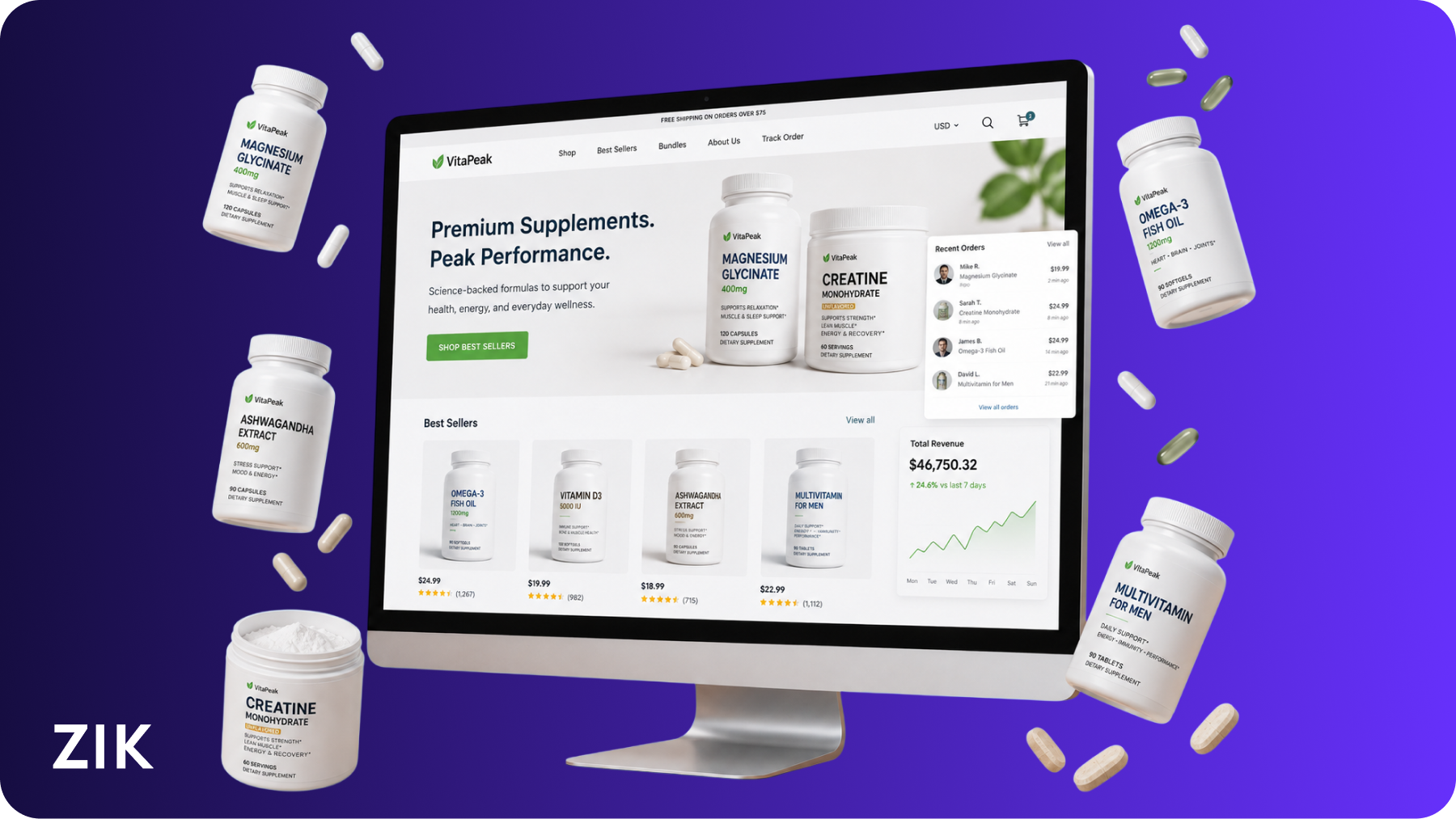
Supplements have a longstanding history dating back to the old days of cod liver oil and simple herbal extracts.
People have been consuming them in one form or another for ages, all with the simple goal of trying to feel better and stay healthy.
That means the market for supplements was always there and has never really slowed down despite facing competition from flashy new health trends.
It, therefore, makes perfect sense to explore dropshipping supplements if you’re looking to launch a brand-new dropshipping business.
Can You Dropship Supplements?
Yes, you can dropship supplements as long as you follow the legal requirements and safety regulations in place.
That means complying with strict advertising guidelines and making sure you never claim your products can cure or prevent any medical diseases.
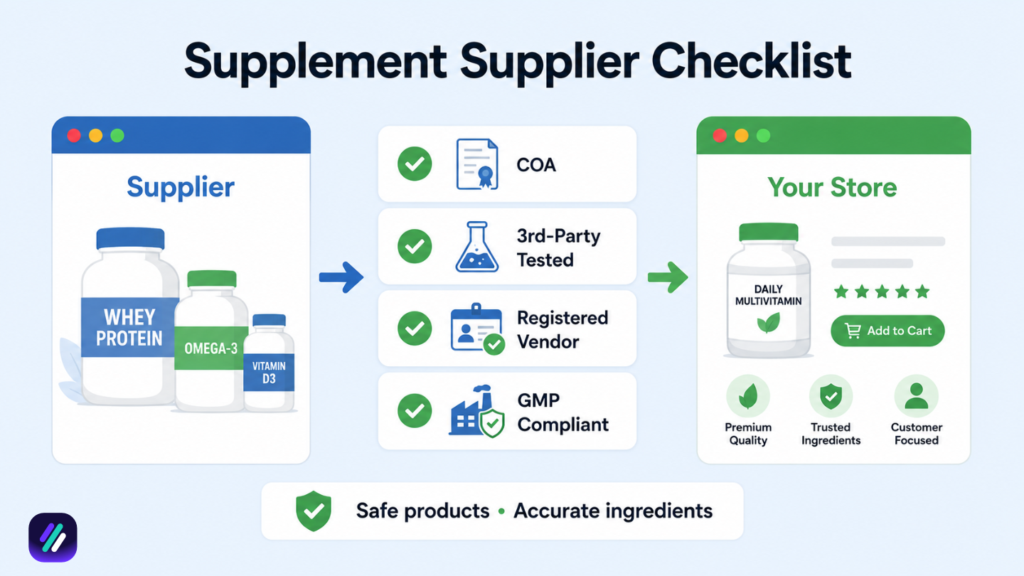
You also need to vet suppliers for relevant quality certifications, such as a Certificate of Analysis (COA) or third-party laboratory testing verification.
Additionally, vendors need to be registered and compliant with Good Manufacturing Practices (GMP) in order to guarantee product safety and ingredient accuracy for your buyers.
Plus, make sure to add clear medical disclaimers to your website checkout pages to protect yourself and set expectations with your buyers.
With the global dietary supplements market expected to reach $862.51 billion by 2033, now is a good time to learn about and get started with dropshipping supplements.
Dropshipping Supplements Pros and Cons
Before deciding to start a supplement dropshipping business, it helps to weigh the advantages and disadvantages of this business venture.
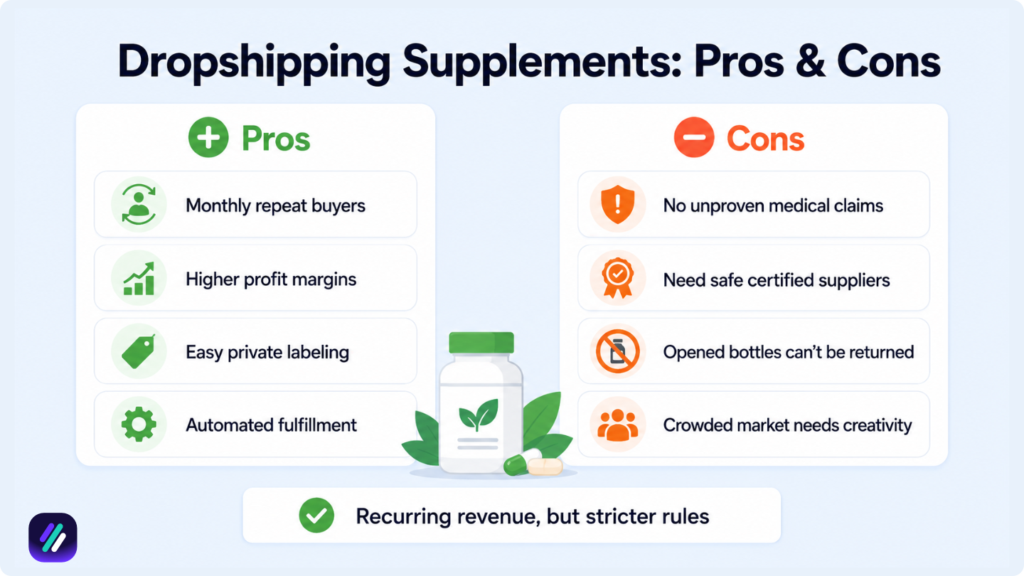
Pros
The supplements niche gives you a few major advantages over other dropshipping niches.
- You get to sell to loyal customers who buy their refills every single month.
- Your profit margins are way higher than selling cheap plastic novelty items.
- You can easily place your own logo on products to build a supplement brand.
- Automation tools handle the fulfillment so you do not have to ship anything yourself.
Cons
However, running a supplements brand means dealing with some unique challenges.
- You have to be careful never to make unproven medical claims on your store.
- Your business depends entirely on finding a reliable supplier with safe, certified ingredients.
- Opened supplement bottles can never be returned or resold due to health and safety rules.
- Gaining an edge over the competition requires a lot of creativity because the health market is crowded.
How to Start Dropshipping Supplements
Now that you understand the benefits and drawbacks of supplement dropshipping, here are the steps you need to take to start a dropshipping business.
Step 1: Become Compliant
The FDA is strict when it comes to regulating supplements. It holds sellers legally responsible for every marketing claim they make on their website.
That means you cannot state or imply that a product prevents or treats any disease; as such, every health claim must include the standard FDA disclaimer.
It’s also important to vet your suppliers carefully before placing any orders.
The best practice is to only partner with cGMP-compliant, FDA-registered fulfillment centers and always request their Certificates of Analysis (COA) to verify product purity. Since you never handle the inventory directly, their compliance is your only safety net.
Finally, consider registering an LLC before launching your supplement dropshipping business, and pair that with a product liability insurance policy specifically rated for dietary supplements, and publish a comprehensive Terms of Service on your storefront to protect your personal assets.
Step 2: Select Your Subniche Research
It’s nearly impossible for new dropshippers to compete with established supplement retailers; that’s why, to carve out space in this niche, you need to target a narrow community that mainstream brands tend to overlook.
The goal here is to find an audience with recurring demand who already buy their supplements from e-commerce stores.
Focusing on a tight-knit audience allows you to speak directly to their problem and makes your marketing significantly cheaper and easier to differentiate and focus on important problems for a smaller target audience.
- Spot customer review gaps: Checking the 3-star feedback on Amazon for popular products is a great way to find out what people actually dislike. If you notice constant complaints about chemical aftertastes or poor mixability, you can easily use that data to source an alternative that gets it right.
- Focus on lifestyle-driven hobbies: Zeroing in on tight-knit groups like night-shift nurses or older pickleball players gives you a big advantage over corporate brands. These audiences have highly specific demands, so they are much more responsive to a store tailored just for them.
- Prioritize high-replenishment items: Sticking to daily habits like sleep aids or joint vitamins means your product naturally runs out every month. Building your catalog around high-replenishment inventory is the easiest way to secure orders for your business.
Step 3: Product Research
Once you’ve chosen a sub-niche, the next step is to find winning dropshipping products for your store.
Winning products are items that have high profit margins and proven market demand. You can find these data-backed products using a few different online research tools.
Google Trends
Google Trends is a great tool for tracking market interest over time. You can type in your specific supplement ingredients, like “collagen” or “magnesium,” and then set the filters to your target country.
Look at the data over a 12-month or 5-year window to verify whether the product’s demand is growing or dying out.
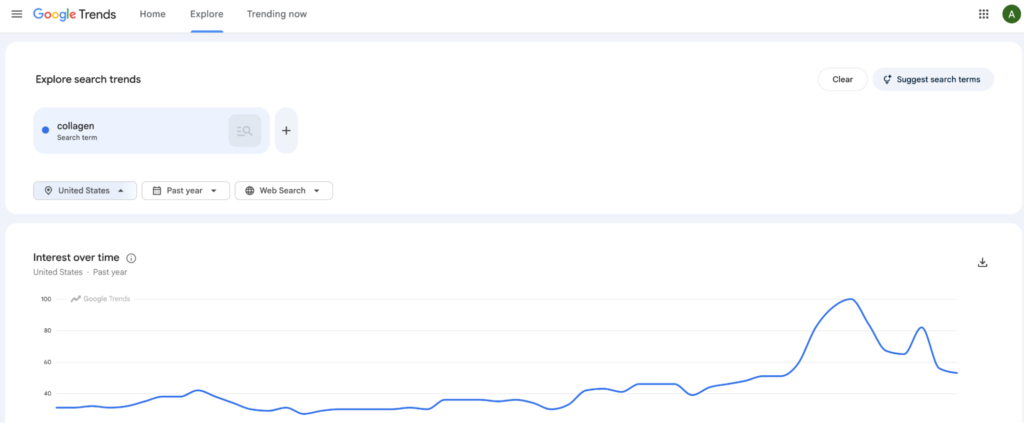
You’ll now see a graph showing search volume over time. Look for a steady upward trajectory or a stable line, as it implies a supplement is gaining mainstream traction and will make a reliable addition to your catalog.
Exploding Topics
Exploding Topics is a trend forecasting tool that lets you identify breakout supplement categories before they go mainstream. Using its dashboard, you can see which ingredients and vitamin formulas are gaining search momentum across the internet.
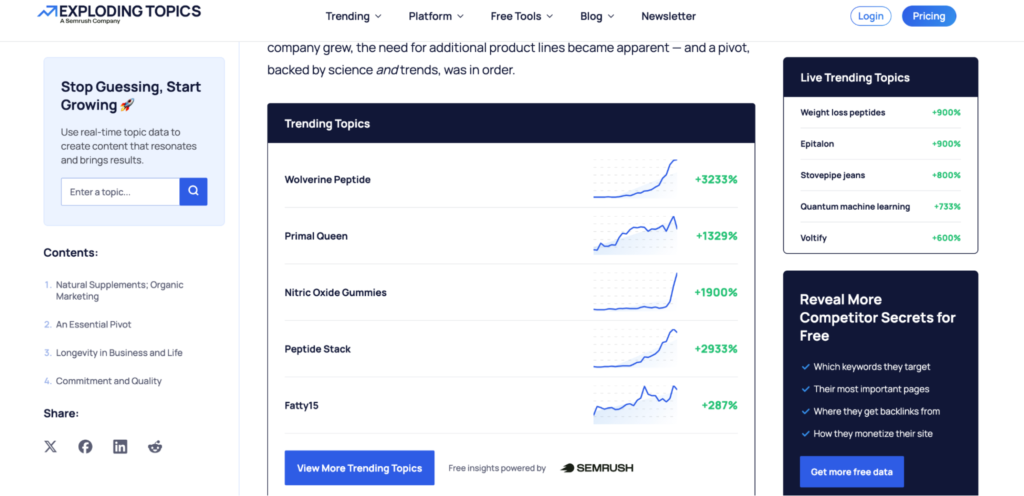
I especially like its Categories filter that enables users to isolate search data within the health and wellness space. Make sure to set your historical timeline to a multi-year view so that you can separate sustainable trends from short-term fads.
ZIK Analytics
Not to brag or anything, but ZIK Analytics is the best tool for finding trending dropshipping products to sell across different categories, as we don’t recommend any of our products but any products with proven demand, unlike all of our competitors.
Using the Shopify Product Explorer within ZIK, you can type your subniche keywords directly into a dedicated e-commerce database.
This instantly pulls up a list of matching supplements currently being sold by active Shopify dropshippers. You can immediately see how many units those items have sold over the last 7 or 30 days to verify real buyer demand.
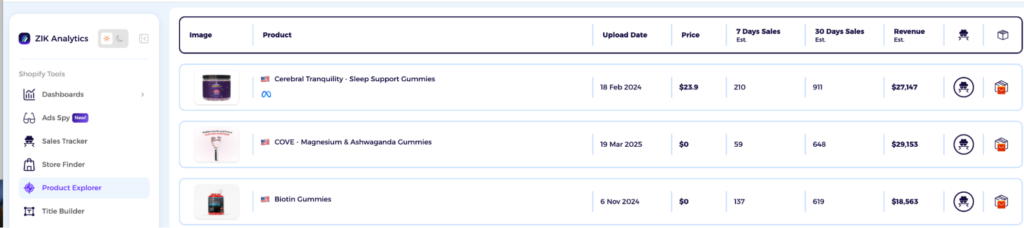
If you want to study your competition, you can use the Shopify Sales Tracker feature. Once you drop a rival store’s URL into the search bar, you can pull up a view of their best-selling products and estimated revenue.

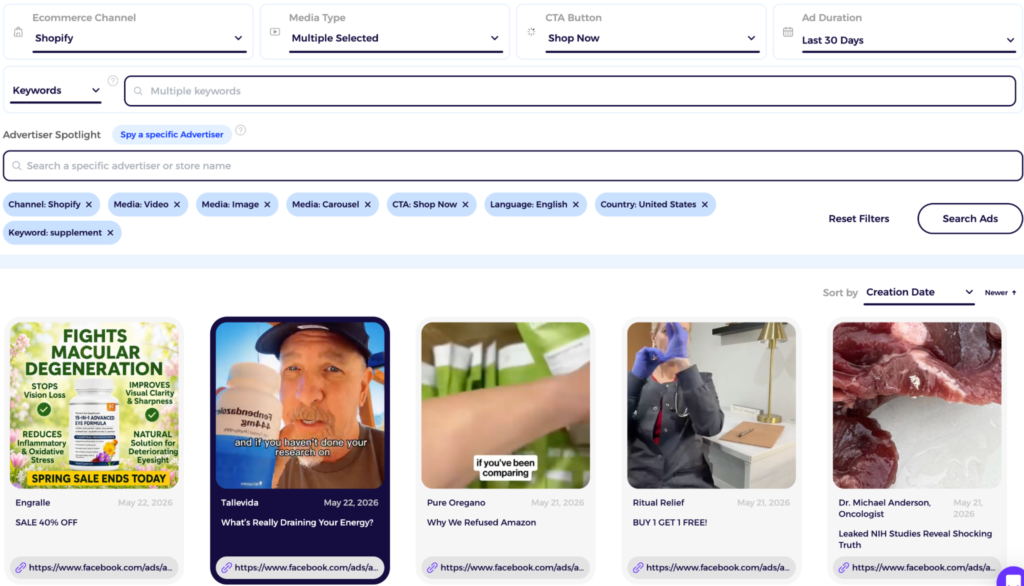
ZIK also offers an AdSpy tool that lets you look at competitor marketing campaigns without needing a Facebook account. Set the filters for target age, country, and format, then scan the live gallery to see which supplement ads are running on Meta. This is useful for finding winning visual angles and seeing what hooks are converting.
Step 4: Searching & Vetting Suppliers
Once you’ve finalized your supplement product ideas, you can start looking for dropshipping suppliers to fulfill customer orders safely and reliably.
Vetting is the most critical part of this process because poor product quality or slow shipping speeds can tarnish your store’s reputation before you know it.

Here are a few ways to vet supplement vendors properly:
- Order a test sample: What better way to test a product than getting it into your own hands without paying full price? Ask the supplier to send a sample to your address in exchange for high-quality product photos or an honest video review.
- Evaluate communication: A supplier’s style of communication can tell you a lot about whether they are a good fit for your business. Wholesalers who answer quickly and clearly now are likely to be there when shipping or quality issues come up later.
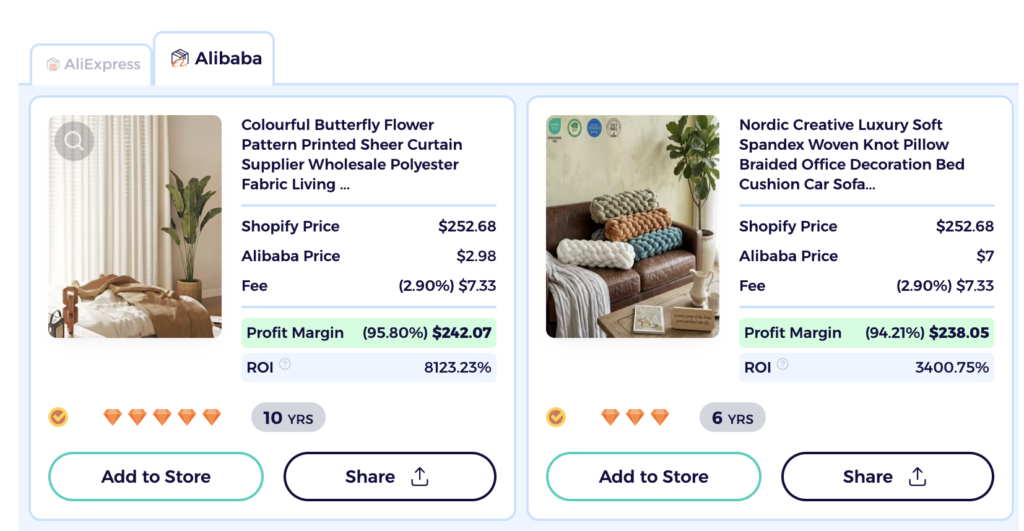
- Go through the supplier’s background: See how long the supplier has been in business and the rating they’ve received on platforms. ZIK’s suppliers tool shows store age, feedback ratings, and trust badges inside its supplier dashboard. Live shipping locations and minimum order quantities are also displayed, making it easy to gauge inventory constraints before choosing.
Step 5: Building Your Dropshipping Store
Now for the part where you actually bring your store to life. There are a few different ways you can get started:
- Dedicated ecommerce platform: Shopify is the most popular choice because it gives you full control over your branding and customer experience. You can design it from scratch or use ZIK’s Shopify AI Store Builder to automatically generate a high-converting storefront tailored for supplements dropshipping.
- Online marketplaces: Another way is to sell directly on marketplaces like Amazon or eBay. These platforms offer built-in traffic from millions of daily buyers, which makes getting your first few sales much faster. The tradeoff is that you have to pay transaction fees on every order, and you face competition from other sellers on the same page.
- Social selling: You can also set up shop strictly on social media platforms such as TikTok and Facebook. These apps use native Shop Now”buttons that consumers can click to buy directly on the platform, allowing you to instantly convert casual scrollers into paying customers.
Step 6: Marketing Your Products
After building your store, you should start thinking of ways to get your product in front of buyers because products don’t sell themself.
Many supplement brands throw money at Facebook ads right away and think they will get instant sales, and in many instances, it’s the best way IF you know what you’re doing.
Based on our customer survey, Meta Ads is the most popular dropshipping marketing strategy.
However, you don’t need to start with that.
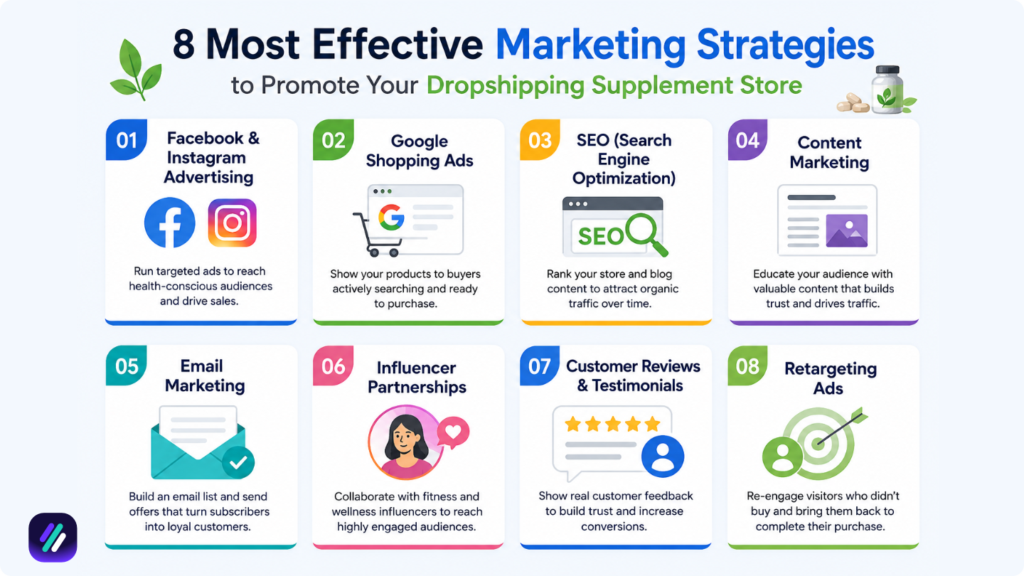
Instead, try exploring organic strategies that can generate high-quality traffic without draining your budget. Some options include:
- Influencer marketing: Go on TikTok and Instagram to see who is already making waves in your subniche. Micro-creators with 5k-20k followers might have smaller audiences, but their high engagement rates make them perfect for cheap product-gifting collabs that build fast trust.
- Search engine optimization: SEO is all about answering the exact health questions your target audience types into Google. Doing this brings ready-to-buy shoppers straight to your storefront without costing you a single cent in advertising.
- Reels and short-form video: Using platforms like Instagram Reels and TikTok, you can create attention-grabbing videos that showcase your supplement’s benefits in action. Some ideas include filming compliant before-and-after progress journeys or showing quick texture and mixability tests of your powders. Just make sure your videos don’t make any unauthorized medical claims to keep your store completely safe from legal trouble.
Step 7: Pricing Your Products
Now that your marketing is bringing in traffic, you need to turn those visitors into paying customers. Pricing plays an essential role here, as people mostly decide whether or not to buy based on the product’s cost.
There are a few ways you can price your supplements:
- Cost-plus: This involves taking your supplier’s wholesale cost and adding a fixed profit markup on top.
- Value-based: In this method, you price items based on perceived health benefits and high-quality branding.
- Competitor: As you might have guessed, you simply research rival supplement stores and match or undercut their current rates.
You can also use tools like the free ZIK Analytics eBay Fee Calculator to determine your ideal pricing.
This tool lets you plug in your item acquisition costs, shipping rates, and target selling price.
It then instantly breaks down marketplace fees and final takeaway percentages, helping you find a sweet spot that attracts buyers to your store.
Step 8: Shipping, Returns, and Customer Service
Once you start receiving orders, the next step is to manage the customer experience. Even though shipping will be dealt with by the supplier, you still need to make a few decisions to ensure everything runs smoothly.
- Shipping: The supplier will give you a few different options for sending items to customers. Avoid choosing the ones that take weeks to arrive and lack reliable tracking numbers. The better option here is to choose a premium courier like FedEx Express or work with a dropshipper located in the US, UK, or Canada, depending on where your target audience is located.
- Returns: Most suppliers won’t accept returns on opened supplements due to health and safety, so you need to look up their exact policy on damaged items. If you’re stressed about managing this manually, you can use apps like AutoDS or Spocket to help sync and track your dropshipping returns smoothly.
- Customer service: This part is mostly handled by the store owner as the direct line of communication for the buyer. You can set up a simple support email address and use automated templates to answer common tracking questions. Make sure to respond politely within 24 hours to build long-term buyer trust.
Step 9: Scaling and Building Processes
Once your supplement store starts getting regular sales, you should shift your focus to automating your daily tasks. Running a busy e-commerce shop means you can no longer spend hours manually copying and pasting customer details. You need to set up systems that handle the busywork for you so the business can grow smoothly.
Many dropshippers set up subscription options at checkout. This helps them secure recurring monthly revenue and keep buyers coming back automatically. You can also bundle complementary health products together to increase your average order value and maximize the profit from every visitor.
You can look into tools such as AutoDS or Spocket. These are excellent automation platforms that link your store directly to your supplier, automatically sending over the buyer’s shipping address the exact second a new sale happens.
Get the eBook and learn how to launch your one-product Shopify store right!Best Dropshipping Supplement Suppliers
Finding a reliable supplier is the most important step in ensuring your health products are safe, compliant, and delivered on time.
Here are a few supplement dropshippers that check all those boxes.
Supliful
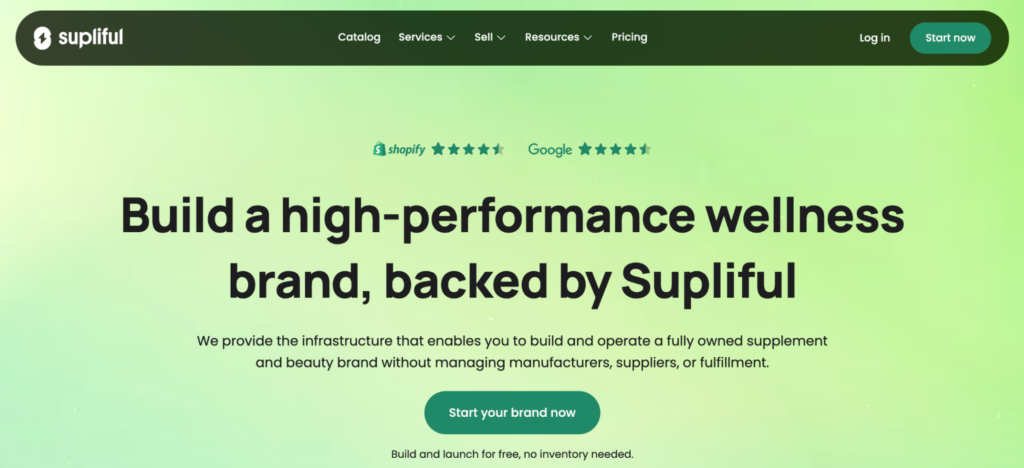
Supliful is a dedicated dropshipping platform tailored specifically for the supplement and wellness industry.
It offers an extensive catalog of vitamins, fitness powders, and sleep aids that easily sync with your online storefront.
This supplement dropshipper also lets you customize product labels with your own logo and handles the entire shipping and fulfillment process.
Nutribl

Nutribl is a premium UK private-label supplement manufacturer and fulfillment provider.
It operates GMP-certified facilities and offers low MOQs on vitamins, minerals, and herbal formulas, making it highly accessible for new entrepreneurs.
This supplier also provides in-house regulatory support to help your formulations meet strict compliance standards across different markets.
GreenDropShip
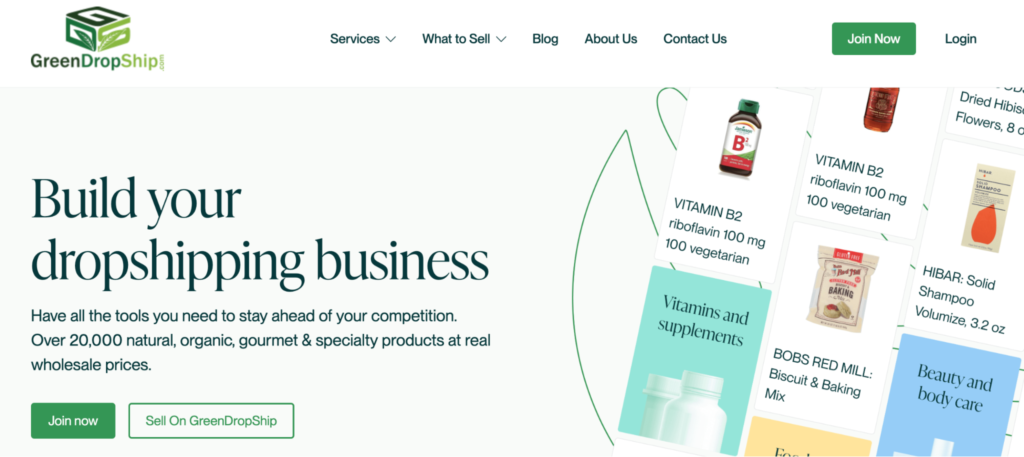
GreenDropShip offers a broad catalog of natural, organic, and non-GMO vitamins, supplements, and health products.
Merchants use this supplier to dropship established, well-known organic brands directly to consumers from their US-based warehouses.
While it may not offer custom private-label options out of the box, GreenDropShip is an excellent choice if your goal is to build a specialized health and wellness storefront.
Find Winning Dropshipping Supplement Products with ZIK Analytics
ZIK Analytics has a suite of tools to help you find and validate supplement products for dropshipping.
However, I want to highlight three tools that make supplement product research and store setup easier:
- Shopify Product Explorer is your dropshipping product research tool for finding which supplement products are selling across Shopify stores. Search keywords like “collagen” or “protein powder” and filter by sales to identify trending items with proven demand.
- AdSpy Tool shows you which ads competitors are running for supplement products on Facebook and Instagram. Search keywords to see engagement metrics and save winning ads to reference when building your own campaigns.
- Shopify AI Store Builder helps you set up your supplement dropshipping store faster by automating store design and product page creation. Tell it which niche you’re targeting, and it creates banners and a homepage automatically.
You can also use the Shopify Sales Tracker to monitor successful supplement stores and the Shopify Market Insights to see trending supplement products by revenue.
Get your ZIK Analytics trial today and start finding supplement products with tools that show you which items are already generating sales.
Frequently Asked Questions about Dropshipping Supplements
In this section, I’ll answer the questions people frequently ask about dropshipping supplements.
Do I have to manually process every order that comes in?
No, you don’t. Dropshipping automation tools are available to help you streamline the entire fulfillment process. Software like AutoDS or Spocket can automatically route customer shipping info straight to your vendor the second a sale happens, saving you from having to copy and paste addresses manually.
Should I dropship supplements or become an affiliate for a popular brand?
It depends on how much control you want over your profits.
Dropshipping gives you full ownership over your pricing, branding, and customer relationships, meaning you get to keep the entire markup on every sale. Affiliate marketing lets you earn a commission just for recommending products, but it comes with limited revenue potential and zero control over the customer experience.
For a deeper look into which business model is right for you, see our comprehensive guide on affiliate marketing vs dropshipping.
Exploring the best affiliate dropshipping programs can help you earn commissions without managing inventory or customer orders.
How do I make sure I am choosing the right dropshipping products to sell?
The key is focusing on specific trends instead of trying to sell everything at once. When you do your initial dropshipping niche research, look for high-demand, low-competition items like organic sleep gummies or vegan protein powders rather than generic multivitamins. Choosing health products with a dedicated audience makes your marketing way easier and improves the overall perception of your store.