
Doba has been a popular option for finding dropshipping suppliers and automating product sourcing, but it does not work for every seller. You might end up paying for features you barely use, dealing with limited research tools, or struggling with supplier and support issues that slow down your business.
As your store grows, these gaps can make it harder to find winning products, improve profit margins, and automate your workflow efficiently. The good news is you are not limited to one platform.
In this guide, you will discover the best Doba alternatives to help you automate your dropshipping business to fit your budget, goals, and selling strategy.
1. ZIK Analytics
Best for: Data-driven product and competitor research
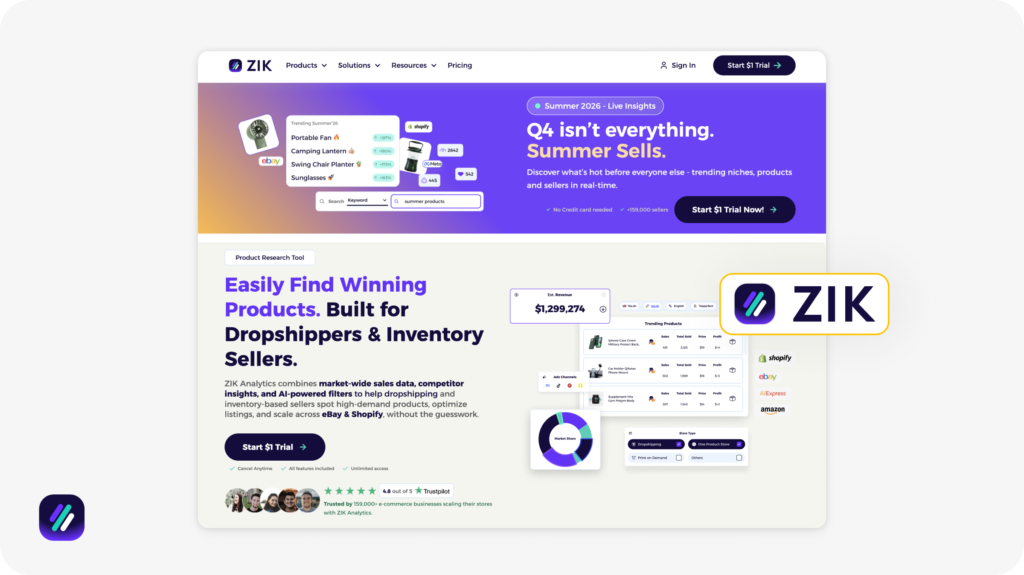
ZIK Analytics is one of the strongest Doba alternatives if you want deeper product research backed by real marketplace data. Instead of relying on guesswork, you can see what products are already selling on Shopify, eBay, and AliExpress through live sales data, competitor tracking, and product performance insights.
The platform helps you make smarter dropshipping decisions by showing profitable products, reliable suppliers, pricing comparisons, and potential profit margins.
You can also analyze successful competitors, discover trending products faster, and validate demand before adding products to your store. If your priority is finding winning products instead of just supplier access, ZIK Analytics gives you more research-focused tools to scale your business strategically.
Pros
- Find Winning Products Faster: You can identify top-selling products across Shopify, eBay, and AliExpress using real marketplace data.
- Make Better Product Decisions: You can validate demand, analyze pricing trends, and avoid products with low selling potential.
- Learn From Successful Competitors: You can study high-performing stores and uncover products and niches that are already generating sales.
- Discover Trends Before They Peak: You can use keyword data and marketplace insights to spot trending products earlier.
- Improve Supplier and Profit Selection: You can compare suppliers, estimate profit margins, and prepare for seasonal demand more effectively.
Cons
- Steeper Learning Curve: You may need time to fully understand and maximize all of the research tools and features available.
- Requires Extra Integrations: You need third-party tools or apps if you want to import products directly into your store automatically.
- Not Built for Fulfillment: You can research products and suppliers effectively, but you still need separate platforms for order fulfillment and shipping automation.
Pricing
ZIK Analytics Pricing starts at $19.90 for the first month on entry-level plans, with regular pricing starting at $39.90 per month. Higher-tier plans can go up to $59.90 monthly, depending on the features and usage limits you need. Annual plans are also available, lowering the monthly cost to around $14 per month when billed yearly.
2. AliExpress
Best for: Low-cost product sourcing and large product selection
AliExpress is one of the most widely used sourcing platforms for the best dropshipping products, giving you access to millions of affordable items from suppliers and manufacturers, primarily based in China. The platform is known for its massive product catalog, making it easier for you to test different niches and find products with higher profit potential at lower upfront costs.
Many dropshippers use AliExpress because suppliers are generally open to working with dropshipping businesses and offer direct-to-consumer shipping.
Ordering products is relatively simple, but you will usually need third-party dropshipping automation tools to manage product imports, inventory syncing, and order fulfillment more efficiently as your store grows.
Pros
- Low Startup Costs: You can start sourcing products without large upfront investments or inventory purchases.
- Direct to Consumer Shipping: Suppliers can ship products directly to your customers, making order fulfillment easier for your store.
- Easy Tool Integrations: You can connect AliExpress with various dropshipping automation platforms for smoother product importing and fulfillment.
- Affordable Product Pricing: You get access to low-cost inventory that can help improve your profit margins.
- Massive Product Selection: You can explore millions of products across different niches, categories, and trends.
Cons
- Long Shipping Times: You may deal with slower delivery times, especially when products are shipped internationally from China.
- Inconsistent Product Quality: You cannot physically inspect products before selling them, so quality can vary between suppliers.
- Limited Product Research Data: You do not get built-in sales analytics or detailed pricing insights when comparing products and suppliers.
Pricing
AliExpress does not charge you a platform subscription fee or standard transaction fee for placing orders. You only pay for the product cost, shipping fees, and any third-party dropshipping automation tools you choose to use.
3. ZenDrop
Best for: Fast fulfillment and Shopify dropshipping automation
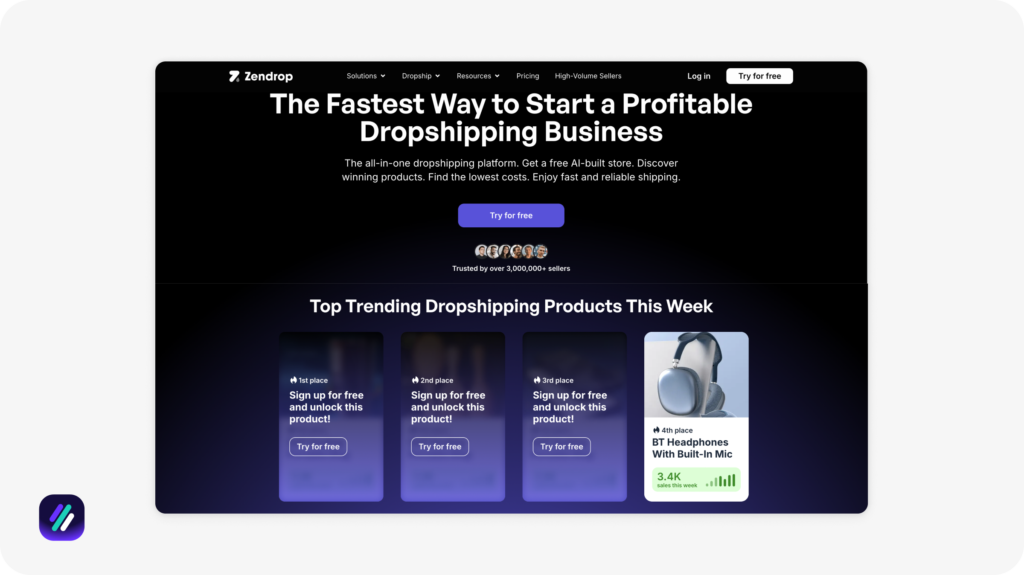
Zendrop is one of the stronger Doba alternatives if your priority is supplier access, faster shipping, and automated order fulfillment. The platform connects you with vetted suppliers primarily based in the US and China, helping you source products more reliably while improving delivery times for your customers.
You get access to over one million products, along with features like automated fulfillment, shipment tracking updates, and print-on-demand support. Zendrop is designed for sellers who want smoother backend operations and easier Shopify automation instead of advanced product research tools.
The platform also offers agent-assisted sourcing and product negotiation, which can help you secure better pricing and improve fulfillment processes as you scale winning products.
Pros
- Large Supplier Network: You get access to over one million products from suppliers across different categories and niches.
- Automated Fulfillment: You can automate order processing and tracking updates to reduce manual work and save time.
- Faster Shipping Options: You can work with US and global suppliers to improve delivery times for your customers.
- Built-in Print on Demand: You can sell custom products without managing inventory or production yourself.
- Branding Features: You can add custom packaging and branding elements to create a more professional customer experience.
- Scaling Support: You can use agent-assisted sourcing and product negotiation to help scale successful products more efficiently.
Cons
- Limited Product Research Features: You do not get advanced trend research or deep product validation tools compared to dedicated research platforms.
- No Built-In Competitor Analytics: You cannot access detailed ad spy data or competitor revenue tracking features.
- Higher Starting Costs: You may pay more compared to basic product discovery or supplier sourcing tools.
- Best for Shopify Users: The platform is primarily optimized for Shopify, which may limit flexibility if you use other ecommerce platforms.
- Limited International Shipping on Some Products: Certain US-based supplier products only ship within the United States.
Pricing
Zendrop offers a free plan with limited access for beginners who want to test the platform. Paid plans start at $49 per month for growing stores and go up to $79 per month for more advanced automation, branding, and fulfillment features.
4. CJ Dropshipping
Best for: Product sourcing and fulfillment automation
CJ Dropshipping is an all-in-one dropshipping platform that helps you source products, fulfill orders, and ship directly to customers. Based primarily in China, it serves sellers targeting North American and European markets while offering products across a wide range of niches.
The platform integrates with stores like Shopify and WooCommerce, allowing you to automate sourcing, order processing, branding, and fulfillment from one dashboard. Many sellers use CJ Dropshipping as an alternative to AliExpress because it offers more sourcing support, warehouse options, and branding flexibility.
Pros
- Free to Start: You can begin using the platform without monthly subscription fees and only pay when orders are placed.
- Faster Warehouse Shipping: You can use US and EU warehouses to reduce delivery times for domestic customers.
- Branding Flexibility: You can add custom packaging, inserts, and private labeling dropshipping to build a stronger brand experience.
- Product Quality Checks: Products are inspected before shipping to help reduce fulfillment and quality issues.
- Free Sourcing Support: You can work with sourcing agents to find products directly from Chinese manufacturers and factories.
- Wide Product Selection: You get access to a large catalog with products across multiple niches and categories.
Cons
- Expensive Shipping Costs: You may encounter high shipping fees on certain products, especially for international deliveries.
- Higher Freight Pricing: Shipping rates can sometimes reduce your overall profit margins compared to other suppliers.
- Limited Free Shipping Availability: Some products only offer free shipping within the United States and not worldwide.
- Higher Product Pricing: Certain products may cost more compared to competing suppliers or marketplaces.
- Inconsistent Shipping Speeds: Delivery times can still vary depending on the warehouse location and supplier.
Pricing
CJ Dropshipping is free to use with no monthly subscription fees. You only pay for product costs, shipping fees, storage services, and optional branding or fulfillment services, depending on your order requirements.
5. Spocket
Best for: US and European supplier sourcing
Spocket is a dropshipping platform that connects you with suppliers mainly based in the US and Europe. This gives you access to products with faster shipping times and potentially better product quality compared to many overseas suppliers.
The platform also includes features like sample ordering, automated inventory updates, and branded invoicing to help you run a more professional dropshipping business. Spocket is commonly used by sellers who want to improve customer experience through quicker fulfillment and more reliable supplier options..
Pros
- Faster Shipping Times: You can offer quicker delivery compared to many overseas suppliers, with some products arriving within a few days.
- Access to US and European Suppliers: You can source products from suppliers located in the US and Europe for more reliable fulfillment and product quality.
- Beginner-Friendly Platform: You can easily browse, import, and manage products even if you are new to dropshipping.
- Supports Multiple Platforms: You can integrate Spocket with platforms like Shopify, WooCommerce, Wix, Square, and Ecwid.
- Better Product Transparency: You can view product costs, shipping fees, and estimated profit margins more clearly before listing products.
- Access to Trending Products: You can discover popular products and higher-quality product variations across different niches.
- Free Trial Available: You can test the platform through a free trial before committing to a paid subscription
Cons
- Limited Product Selection: You may find fewer product options compared to larger marketplaces like AliExpress.
- Higher Product Costs: Products and subscriptions can be more expensive, which may reduce your overall profit margins.
- Smaller Margins Compared to Chinese Suppliers: Faster shipping and better quality often come at the cost of slightly lower margins.
- Occasional Technical Issues: Some users report platform bugs, account access problems, and onboarding difficulties.
- Customer Support Concerns: You may experience slower support responses or difficulty resolving billing and technical issues.
- Confusing Interface for Some Users: The platform can feel less intuitive when managing products, subscriptions, or integrations.
Pricing
Spocket Pricing offers a free plan for testing the platform and browsing products. Paid plans start at around $39.99 per month for beginners and can go up to approximately $99.99 per month for larger stores that need higher product limits, premium products, and advanced branding features.
6. WooCommerce
Best for: Customizable WordPress ecommerce stores
WooCommerce is a free, open source ecommerce plugin built for WordPress that allows you to turn your website into a fully functional online store. You can sell physical and digital products, manage inventory, process secure payments, and handle shipping directly through your WordPress site.
One of WooCommerce’s biggest advantages is flexibility. You have full control over your store’s design, checkout process, payment options, hosting, and integrations. Unlike many hosted ecommerce platforms, WooCommerce allows you to customize your store based on your specific business needs while supporting both local and global selling.
Pros
- Easy Store Setup: You can quickly launch and manage your online store even if you are new to ecommerce.
- Wide Integration Support: You can connect WooCommerce with various ecommerce tools, payment gateways, and marketing platforms.
- Highly Customizable: You can customize your store extensively through plugins, themes, and WordPress integrations.
- Large Plugin Ecosystem: You get access to thousands of plugins that help expand your store’s features and functionality.
- Flexible for Different Business Models: You can adapt WooCommerce for different ecommerce needs, including dropshipping, digital products, subscriptions, and more.
Cons
- Extra Costs for Advanced Features: You may need paid plugins and premium extensions to unlock more advanced ecommerce functionality.
- Can Affect Website Speed: Using multiple plugins and add-ons can slow down your website performance over time.
- Plugin Compatibility Issues: You may experience integration conflicts between plugins, themes, and third-party tools.
- Limited Built-In Features: Some important ecommerce features require additional plugins instead of being included by default.
- Ongoing Maintenance Required: Updates can occasionally break customizations, requiring regular maintenance and troubleshooting.
Pricing
WooCommerce Pricing is free to install with no platform subscription fee, but your total costs depend on hosting, premium plugins, themes, and payment processing fees. Basic stores can start with low monthly costs, while larger stores may spend significantly more on advanced extensions, hosting, and ecommerce tools as they scale.
7. DSers
Best for: AliExpress dropshipping automation
DSers is a dropshipping automation platform designed to simplify product sourcing, order management, and fulfillment. It helps you manage products, suppliers, and customer orders more efficiently while reducing manual work.
The platform is widely used for AliExpress dropshipping and includes features like bulk order processing, shipment tracking, automated pricing rules, and supplier management. With its Chrome extension and store integrations, you can quickly import products and automate parts of your dropshipping workflow as your business grows.
Pros
- Saves Time Through Automation: You can automate repetitive dropshipping tasks and manage your business more efficiently.
- Multi-Store Order Management: You can manage orders from multiple sales channels in one dashboard instead of switching between platforms.
- Bulk Order Processing: You can process multiple customer orders at the same time, making it easier to handle higher order volumes.
- Improves Workflow Efficiency: You can streamline product imports, supplier management, and shipment tracking in one system.
Cons
- Learning Curve for Beginners: You may need time to understand the platform’s interface and automation features if you are new to dropshipping.
- Limited Language Support: The interface is mainly available in English, which may be less convenient for some users.
- Limited Integrations: The platform may not integrate as smoothly with certain third-party tools and systems.
- Advanced Features Locked Behind Paid Plans: Some automation and advanced tools require higher-tier subscriptions.
- Store Setup Can Be Technical: Connecting your online store and configuring integrations may require some technical knowledge at the beginning.
Pricing
DSers Pricing offers plans starting at $19.90 per month for advanced features, while higher-tier plans range from $49.90 to $499 per month, depending on your order volume and automation needs.
8. Printful
Best for: Print-on-demand dropshipping
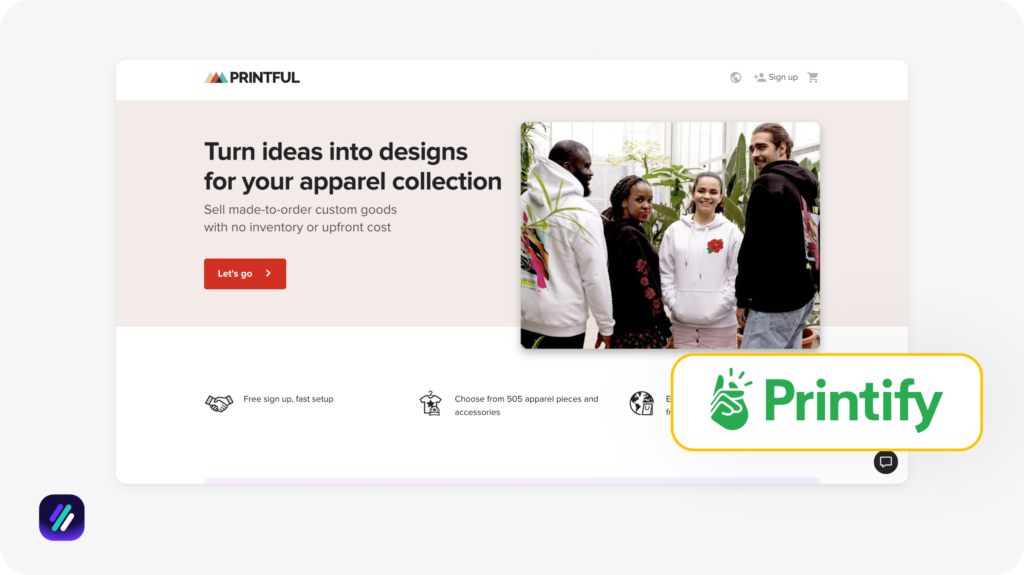
Printful is a print-on-demand and dropshipping platform that allows you to sell custom-designed products without holding inventory. You can create and sell apparel, accessories, home goods, and other branded products while Printful handles printing, packing, and shipping on your behalf.
When a customer places an order, the platform automatically fulfills it through its global production facilities and ships directly to customers in over 190 countries. Printful is commonly used by creators, brands, and ecommerce sellers who want to build a custom product line with less upfront inventory risk.
Pros
- Easy to Use Platform: You can set up your store and manage orders without dealing with a complicated workflow.
- Automated Order Fulfillment: You can automate printing, packing, and shipping to keep operations running smoothly during busy periods.
- Simple Design Uploads: You can easily upload artwork and create product mockups for your store.
- Professional Branding Experience: You can maintain a more consistent brand presentation through custom-branded products and packaging options.
- Efficient Order Management: You can streamline order processing and reduce manual work through centralized fulfillment management.
Cons
- Higher Product Costs: Product pricing and shipping costs can be more expensive compared to other print-on-demand suppliers.
- Shipping and Stock Limitations: You may experience delays or stock shortages during peak selling seasons.
- Inconsistent Delivery Times: Shipping speeds can vary depending on the product type and customer location.
- Limited Customization Options: Some products offer fewer customization features compared to specialized print-on-demand platforms.
- Smaller Product Variety in Certain Categories: Apparel and customization options may feel limited if you want a broader product selection.
Pricing
Printful Pricing offers a free plan for new sellers with access to core print-on-demand features. Paid plans start at $24.99 per month for additional discounts and branding benefits, while enterprise plans use custom pricing for larger ecommerce brands that need dedicated support and advanced solutions.
9. SaleHoo
Best for: Verified supplier directories and beginner friendly sourcing
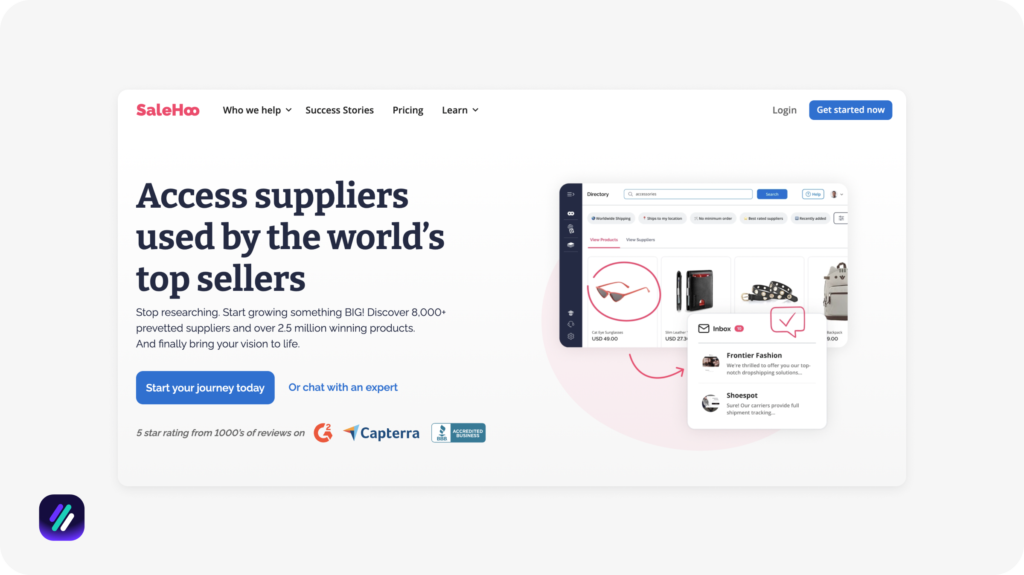
SaleHoo is an ecommerce supplier directory and product research platform designed to help you find verified wholesale and dropshipping suppliers. The platform connects sellers with thousands of vetted suppliers worldwide, helping reduce the risks of scams, unreliable vendors, and low-quality products.
In addition to supplier sourcing, SaleHoo also provides product research tools, training resources, and market insights to help you discover trending products and build your dropshipping business more confidently. It is commonly used by beginners who want a simpler and more guided approach to finding suppliers and products.
Pros
- Verified Supplier Network: You can access thousands of vetted suppliers to reduce the risk of scams and unreliable sourcing.
- Responsive Customer Support: You can get helpful support and guidance while building your dropshipping business.
- Access to Recognized Brands: You can source products from suppliers connected to popular brands like Disney, Lego, Adidas, and Sony.
- Wide Product Selection: You can explore a large range of trending and in-demand products across multiple categories.
- Low Minimum Orders: You can purchase smaller quantities from many suppliers, making it easier to manage costs and inventory.
Cons
- Limited Beginner Guidance: You may find the training resources and onboarding less detailed if you are completely new to ecommerce.
- Confusing Interface: The platform interface can feel less intuitive for first-time users navigating supplier and product research tools.
- Marketplace Selling Fees: Your profit margins can shrink when selling through platforms like eBay or Amazon because of additional marketplace fees.
- Limited Branding Control: Since you are often reselling supplier products, building a unique brand identity can be more difficult.
- Smaller Product Database Compared to Some Competitors: The product catalog may feel more limited compared to larger wholesale directories and sourcing platforms.
Pricing
SaleHoo Pricing starts at around $9 per month for beginners who need supplier access and product research tools. Higher-tier plans go up to about $49 per month and include additional Shopify store connections, higher product import limits, unlimited supplier contacts, and advanced research support.
10. Appscenic
Best for: AI-powered dropshipping automation
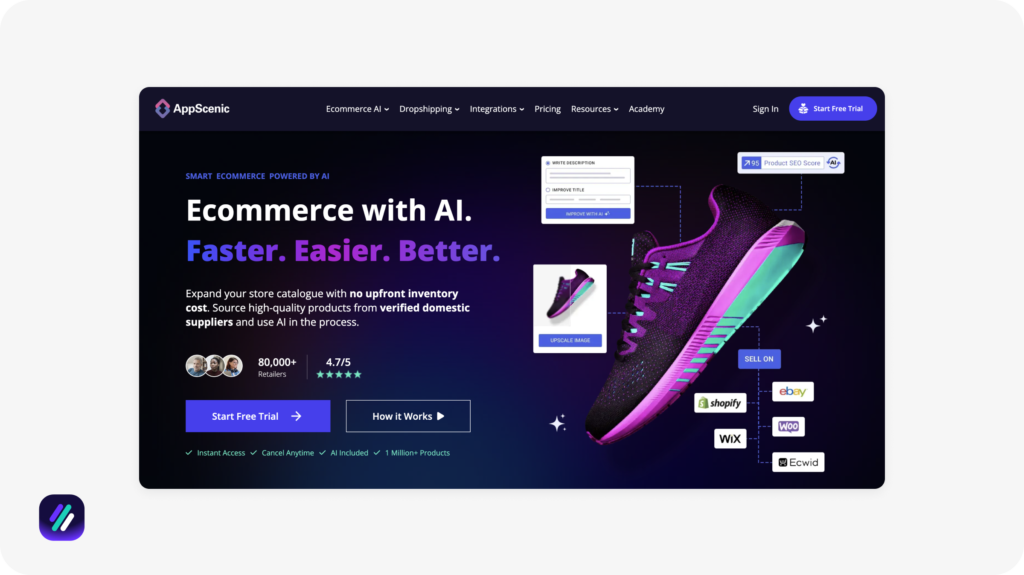
AppScenic is a dropshipping automation platform that connects you with suppliers primarily based in the US, UK, Europe, Canada, and Australia. The platform focuses on helping you automate product importing, inventory syncing, and order fulfillment while sourcing products from higher-quality suppliers.
AppScenic is designed for sellers who want a more automated dropshipping workflow without holding inventory. It also includes AI-powered tools and integrations that help simplify store management, supplier sourcing, and fulfillment operations as your business grows.
Pros
- Easy Store Integration: You can connect your Shopify or eBay store quickly and start importing products with minimal setup.
- Beginner-Friendly Workflow: The platform is designed to simplify product importing, fulfillment, and store management.
- AI-Powered Features: You can use built-in AI tools to assist with marketing and product-related tasks.
- Supports Business Scaling: Higher-tier plans allow you to manage larger product catalogs and growing stores more efficiently.
- Multi-Store Management: You can manage multiple ecommerce stores from a single platform dashboard.
- Responsive Customer Support: Many users highlight the platform’s fast and helpful support experience.
Cons
- Limited Supplier Regions: You do not get access to Chinese suppliers, which may limit lower-cost sourcing options.
- Higher Pricing: The platform can be more expensive compared to simpler dropshipping automation tools.
- Initial Learning Curve: You may need time to fully understand the setup and automation features when starting out.
- Limited Free Plan Features: The free version offers restricted selling functionality, making it harder to fully test the platform before upgrading.
Pricing
AppScenic offers a free plan for browsing products and testing the platform. Paid plans start at $39 per month for smaller stores and go up to $99 per month for advanced sellers who need higher product limits, multi-store support, automation features, and premium supplier access.
11. Dropified
Best for: Dropshipping automation and product importing
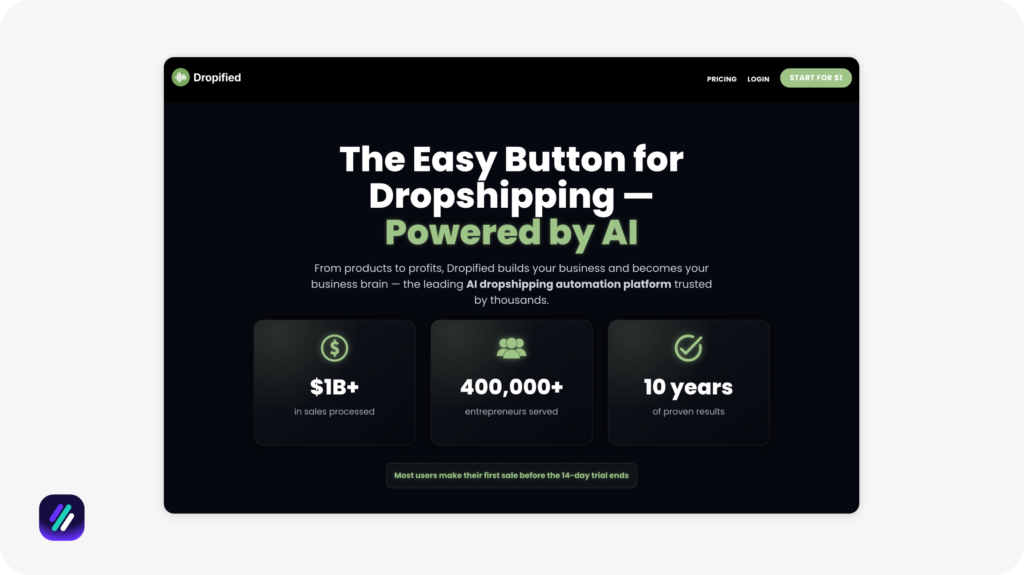
Dropified is a dropshipping automation platform designed to help you manage product sourcing, order fulfillment, and inventory tracking more efficiently. The platform allows you to import products from suppliers like AliExpress and Alibaba directly into ecommerce platforms such as Shopify and WooCommerce.
Dropified also includes automation tools for managing orders, tracking inventory, and simplifying repetitive dropshipping tasks. In addition, the platform offers AI-powered tools, templates, and store-building features to help you launch and manage your ecommerce business more easily.
Pros
- Easy Product Importing: You can quickly find and import products into your Shopify or WooCommerce store with minimal setup.
- Strong Automation Features: You can automate product importing, fulfillment, inventory management, and other repetitive dropshipping tasks.
- Saves Time and Reduces Errors: You can streamline order handling and product management while reducing manual mistakes.
- Supports Multiple Integrations: You can connect Dropified with various ecommerce platforms and workflow tools.
- Multi-Store Management: You can manage multiple stores from one dashboard, making it easier to scale your business.
Cons
- Customer Support Limitations: You may experience slower support responses, especially outside standard business hours or during weekends.
- Higher Pricing: The platform can feel expensive compared to more budget-friendly dropshipping tools.
- Learning Curve for Beginners: Some automation workflows and setup processes may feel overwhelming if you are new to dropshipping.
- Relies Heavily on AliExpress Style Sourcing: Many of the platform’s workflows are built around AliExpress suppliers, which may not fit every business model.
- Setup Can Take Time: Configuring integrations, automation rules, and workflows may require additional learning and testing.
Pricing
Dropified Pricing starts at around $50 per month for the monthly plan, while annual plans lower the cost to about $41.66 per month when billed yearly. The platform also offers a $1 trial for 14 days with access to its AI and automation features.
What is Doba?
Doba is a dropshipping platform that helps you find products, connect with suppliers, and automate parts of your ecommerce business from one dashboard. Instead of managing inventory yourself, you can source products from Doba’s supplier network and have suppliers ship orders directly to your customers.
The platform includes features like product sourcing, inventory syncing, automated order fulfillment, and integrations with ecommerce platforms such as Shopify, Amazon, eBay, and WooCommerce. Doba also offers AI-powered tools for product discovery, listing optimization, and store management.
Many sellers use Doba because it simplifies supplier management and helps automate dropshipping operations, especially for beginners who want an easier way to launch and manage an online store.
When Do You Need Doba Alternatives?
You might’ve used Doba already and see things that need a bit of improvement, or it just can’t finish all your tasks, and find a better tool that deals with all. Here are some reasons:
- When you need product research: You may outgrow Doba if you need deeper insights into winning products, competitor performance, pricing trends, and market demand before listing products in your store.
- When the suppliers can’t reach your customers: You may need alternatives if suppliers have limited shipping regions, slow delivery times, or expensive international shipping that affects customer satisfaction.
- When you need to tackle returns management: Managing dropshipping returns can become difficult when supplier policies are inconsistent or communication is slow, especially for international orders.
- When you specialize in print-on-demand: Doba may feel limiting if your business focuses heavily on custom products, branded merchandise, or personalized items.
- When you need higher profit margins: You may look for alternatives if supplier pricing, shipping fees, or product costs make it difficult to maintain healthy profit margins.
How to Pick the Right Doba Alternative For You
Now you know the issue that you have with Doba and what it lacks, here’s a checklist on how you can vet the Doba alternative you need.
- Assess your needs: Start by identifying what your business actually needs most, whether it is product research, supplier access, faster shipping, automation, or print-on-demand features.
- Settle on a budget: Compare pricing plans carefully and choose a platform that fits your current budget without paying for features you may not use yet.
- Research your competitors: Study how successful competitors source products, manage fulfillment, and automate their stores so you can understand what tools may fit your business better.
- Test out the platform first: Use free trials or starter plans whenever possible so you can evaluate the workflow, supplier quality, and ease of use before committing long-term.
- Record your results and compare: Track product quality, shipping speed, profit margins, customer experience, and automation features to see which platform performs best for your store.
- Have a backup option ready: Avoid relying entirely on one supplier platform so you can quickly adapt if pricing, shipping, or supplier performance changes later on.
Which Doba Alternative is Perfect For You?
It really depends on what your business needs most. Some platforms focus more on product research and competitor analysis, while others are better for automated fulfillment, supplier sourcing, print-on-demand, or faster shipping.
If your priority is finding winning products and validating demand, you may want a platform with stronger research and analytics tools. If you care more about automation and fulfillment, you may prefer a platform that simplifies order processing, inventory syncing, and shipping management.
You should also consider your budget, target market, shipping requirements, and preferred business model. The best Doba alternative is the one that fits your workflow, profit goals, and long-term scaling plans.
Let ZIK Analytics be the Doba Alternative
With so many Doba alternatives available, choosing the right platform can feel overwhelming when you simply want a tool that helps you find profitable dropshipping products and grow your store.
ZIK Analytics is built for sellers who want real product research data instead of guesswork. The dropshipping product research tool helps you discover winning products, analyze demand, and identify profitable opportunities across multiple marketplaces.
Want to see what your competitors are selling? The Shopify store analyzer lets you track successful stores, uncover their best-selling products, and study strategies that are already generating sales. You can also use the eBay competitor research tool to analyze listings, pricing trends, and product performance from top eBay dropshippers.
Tired of guessing what products will sell next?
Frequently Asked Questions About Doba Alternatives
Here are the frequently asked questions about alternatives to Doba:
Is Doba a good dropshipper?
Yes, Doba is a good dropshipping platform for beginners who want easier supplier sourcing, product importing, and fulfillment automation. It simplifies many parts of running a store, especially if you do not want to manage inventory manually. However, some sellers may find the pricing, supplier costs, and limited research tools less ideal for scaling long-term.
What is the difference between Zendrop and Doba?
Zendrop and Doba are their focus. Zendrop is more focused on faster fulfillment, supplier automation, and Shopify integration, while Doba focuses more on supplier sourcing and centralized product management. Zendrop also emphasizes branding and shipping speed, whereas Doba offers broader supplier marketplace access and beginner-friendly store automation.
Is Doba good for beginners?
Yes, Doba is generally considered beginner-friendly because it simplifies supplier sourcing, product importing, and order fulfillment in one dashboard. You can quickly connect your store and start selling without managing inventory yourself. However, as your business grows, you may eventually need more advanced product research, automation, or profit optimization tools.
How much is Doba per month?
Doba plans typically start at around $29.99 per month for basic access and can go up to approximately $299.99 per month for enterprise-level features. Pricing depends on the number of store integrations, product listings, automation tools, and supplier access included in your plan.
What are the best Doba alternatives?
Some of the best Doba alternatives include ZIK Analytics for product research, Zendrop for fulfillment automation, CJ Dropshipping for sourcing and branding, Spocket for US and EU suppliers, and Printful for print-on-demand businesses. The best choice depends on your budget, shipping needs, automation goals, and business model.