
Most dropshipping suppliers are located overseas, especially across Asia, while many of your customers are based in North America or Europe.
This setup can create gaps, especially in your fulfillment and logistical operations. You may face language barriers, time zone differences, slow communication, and confusion about shipping policies or production timelines.
These can slow down your dropshipping business and make it harder to maintain consistent product quality. But getting a dropshipping gent will actually solve all of these problems.
In this guide, you will learn how a dropshipping agent works and how to find one for your business.
What is a Dropshipping Agent?
A dropshipping agent is a person or agency that acts as an intermediary between you and your dropshipping suppliers. Their role is to help you source dropshipping products, oversee quality control, coordinate shipping, and verify transactions with manufacturers or factories.
In the dropshipping industry, these professionals are also referred to as sourcing agents, private agents, or fixers.
Working with a dropshipping agent is common when your supplier is located in another country.
Instead of handling communication, logistics, and compliance requirements yourself, the agent manages these processes locally and coordinates everything on your behalf.
Most dropshipping agents work as independent contractors rather than employees. Because of this, an agent typically works with multiple dropshipping businesses at the same time while helping each client source products and manage order fulfillment.
Dropshipping Agent Vs. Dropshipping Supplier – What’s The Difference?
| Key Factors | Dropshipping Agent | Dropshipping Supplier |
| Cost | Service fees or order commissions | Direct product cost without intermediary fees |
| Product Sourcing | Factory sourcing and supplier negotiation | Fixed supplier catalog |
| Order Fulfillment | Coordinated fulfillment and logistics management | Supplier handled fulfillment |
| Shipping Speed | Optimized courier selection and consolidated shipping | Standard supplier shipping options |
| Scalability | Multi-supplier coordination for higher-order volume | Limited by supplier capacity |
| Quality Control | Pre-shipment inspections and defect checks | Internal supplier quality checks |
| Insurance Availability | Optional logistics or shipment protection | Limited carrier-based insurance options |
Pros and Cons of Working with a Dropshipping Agent
Here are some pros and cons of working with a dropshipping agent on the ground:
Benefits of Using a Dropshipping Agent
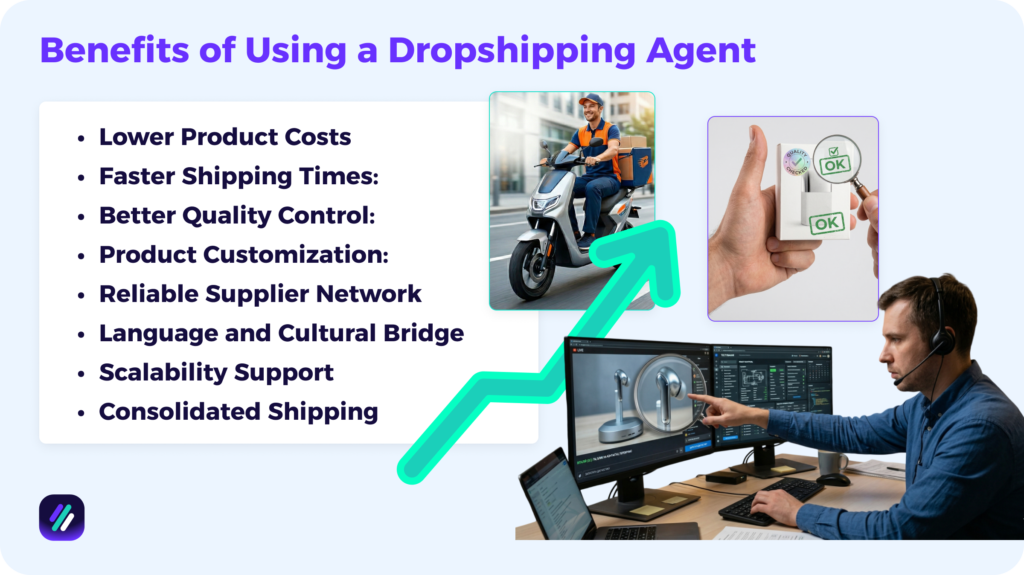
Here are the main reasons for using a dropshipping agent:
- Lower Product Costs: A dropshipping agent can negotiate directly with factories to secure better wholesale prices compared to standard dropshipping suppliers.
- Faster Shipping Times: Agents can arrange dedicated courier services or optimized shipping routes to reduce delivery times for your customers.
- Better Quality Control: Your agent can inspect products before shipment to ensure they meet your quality standards and reduce defective orders.
- Product Customization: Many factories allow product or packaging customization once you meet the minimum order quantity. An agent can help negotiate these options for your store.
- Reliable Supplier Network: Experienced agents usually have an established network of manufacturers, making it easier to source reliable dropshipping products.
- Language and Cultural Bridge: Since many factories are based in Asia, a local agent helps handle communication and cultural differences with suppliers.
- Scalability Support: As your store grows and order volume increases, your agent can coordinate larger production and fulfillment operations.
- Consolidated Shipping: Agents can combine orders from multiple manufacturers into one shipment to reduce logistics complexity and shipping costs
Drawbacks of Using a Dropshipping Agent
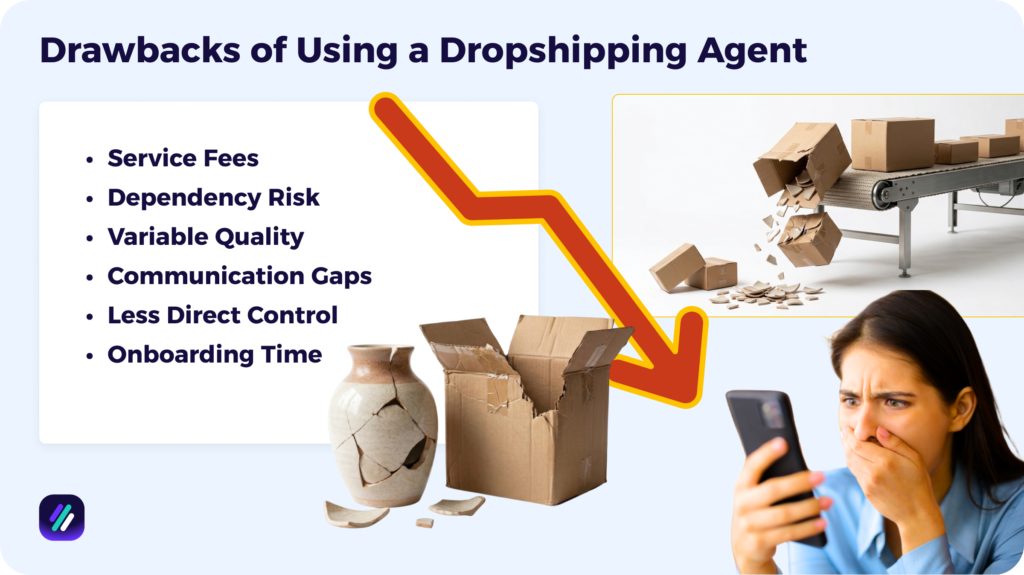
Here are the things you have to look out for when hiring a dropshipping agent:
- Service Fees: Agents typically charge service fees that may be higher than working directly with traditional dropshipping suppliers, especially if they provide inspections, customization, or sourcing services.
- Dependency Risk: Relying too heavily on one agent may limit your ability to explore other suppliers or better deals in the market.
- Variable Quality: Not all agents offer the same level of service. Some are highly reliable, while others may lack experience or transparency.
- Communication Gaps: If your agent operates in a different time zone or has limited language proficiency, communication delays or misunderstandings may occur.
- Less Direct Control: Because the agent handles operations on the ground, you may have less visibility into manufacturing, fulfillment, or supplier interactions.
- Onboarding Time: Building trust and establishing a smooth workflow with a new agent can take time, especially in the early stages of collaboration.
How Dropshipping Agents Work
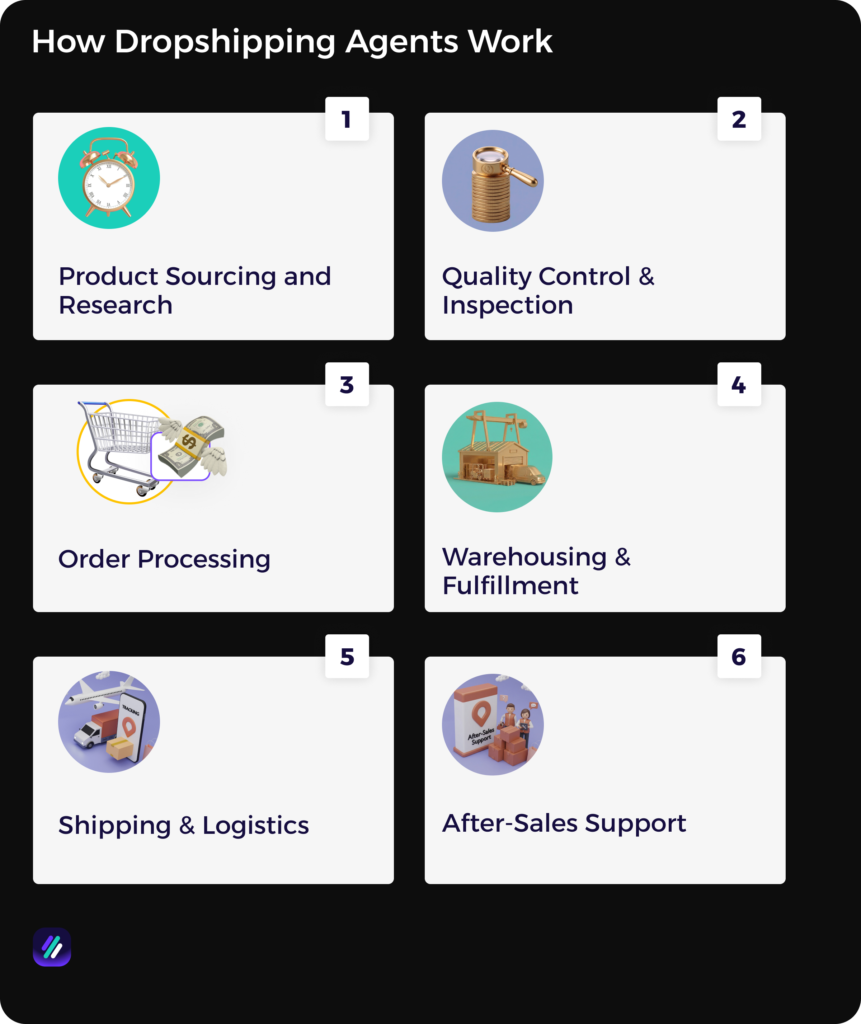
Dropshipping agents can handle a lot of business processes at once, but not all of them are capable or committed to these things for you; it all depends on what you need and what you negotiate.
Product Sourcing & Research
- Finding manufacturers and suppliers: If you discover potential dropshipping products online, you can send them to your agent. They will locate manufacturers or factories that can produce or supply the item.
- Negotiating wholesale prices: Your agent communicates directly with suppliers and negotiates better factory pricing, often overcoming language barriers in the process.
- Product customization options: If you want product modifications or branding, your agent can discuss available customization options with the manufacturer.
- Sample procurement: Your agent can order product samples from multiple suppliers so you can test quality before selling.
Quality Control & Inspection
- Pre-shipment inspections: Before products are shipped, the agent can inspect them to ensure they meet quality standards.
- Product photography: Some agents offer product photography that you can use for your store listings.
- Defect identification: If defects or quality issues appear, the agent can notify the supplier and resolve the problem before shipment.
Order Processing
- Order management: Agents can monitor and process incoming orders from your store and coordinate with suppliers for fulfillment.
- Inventory monitoring: They can track factory inventory levels and inform you if stock is running low or production capacity changes.
- Supplier communication: Your agent handles communication with manufacturers and suppliers on your behalf.
Warehousing & Fulfillment
- Storage options: If factories have limited storage, your agent may arrange warehouse space to store your products.
- Picking and packing: Agents can pack products according to your instructions before shipping them to customers.
- Custom packaging or branding: Some agents also provide branded packaging or inserts to support your private label dropshipping strategy.
Shipping & Logistics
- Carrier selection: Your agent can choose reliable couriers based on shipping speed, reliability, and cost.
- Tracking coordination: They can help integrate tracking information with your store so customers can monitor deliveries.
- International shipping expertise: Agents often manage international logistics and freight coordination, especially for air shipping.
After-Sales Support
- Returns handling: If customers request dropshipping returns, the agent may coordinate returns or product replacements with the supplier.
- Customer service coordination: While you manage customer support, the agent can provide updates or supplier information when issues occur.
- Issue resolution: If problems arise during manufacturing or shipping, the agent can communicate with suppliers to resolve disputes.
Types of Dropshipping Agents
There are many types of dropshipping agents you can hire. Here are the most common classifications:
By Business Model
- Full Service Agents: These agents handle the entire process for you, including product research, sourcing, quality control, fulfillment, and sometimes customer service coordination. This approach allows you to run a more hands-off operation, though you may have less direct control over certain processes.
- Sourcing Only Agents: These agents focus strictly on finding manufacturers or suppliers for your dropshipping products. If you identify a product you want to sell, the agent locates factories that can produce it or provide similar variations.
- Fulfillment-Focused Agents: These agents specialize in the operational side of dropshipping fulfillment. They handle packaging, sorting, and shipping products to your customers once orders are placed.
- Niche-Specific Agents: Some agents specialize in particular dropshipping niches that require expertise or trusted supplier networks. For example, high-value dropshipping products like jewelry often require agents who understand sourcing quality materials and managing secure fulfillment.
By Location
Here are some dropshipping agent types according to geographical services:
- China-Based Agents (Most Common): Many dropshipping agents operate in China because a large number of manufacturers for dropshipping products are located there. These agents help you source products directly from factories and coordinate production and shipping.
- US-Based Agents: These agents typically focus on products manufactured in the United States. While costs are usually higher, some sellers choose this option to offer faster shipping or promote locally made products.
- European Agents: Agents based in Europe usually work with European manufacturers. They are often used for specialty products or brands that want to source items within the EU.
- Regional Specialists: Some agents focus on specific regions such as Southeast Asia or Australia and New Zealand. These agents are useful when you want to source products unique to a particular market or dropshipping niche.
What Services Does a Good Dropshipping Agent Provide?
Different agents offer different services; some can be all-in-one, and some can only fulfill a particular business process.
Core Services
These are services that agents must do for you:
- Sourcing and supplier negotiation: Your agent should locate reliable dropshipping suppliers and negotiate competitive pricing while ensuring the product meets acceptable quality standards.
- Quality control and inspections: The agent should inspect products before shipment and inform you immediately if they find defects or issues that could affect your store.
- Order fulfillment and tracking: Your agent should process orders with the supplier and provide accurate tracking information so you can monitor deliveries and update your customers.
Nice-to-have Services
These services are additional features some dropshipping agents offer. They are not always included, but they can add value as your dropshipping business grows.
- Warehousing and consolidation: While traditional dropshipping fulfillment does not involve storage, some agents offer warehouse space to hold inventory and combine shipments when you receive a high volume of orders.
- Branded packaging inserts: If you plan to build a brand through private label dropshipping, an agent may help add custom packaging, inserts, or branding elements to your orders.
- Bundling or kitting: Some agents allow you to combine multiple dropshipping products into one package to create bundles or product kits for your promos.
- Returns handling and replacements: A few agents also assist with managing dropshipping returns and coordinating product replacements with suppliers.
Shipping Terms You Must Understand
When working with a dropshipping agent, you should understand these common international shipping terms:
- DDP (Delivered Duty Paid): The seller handles all import duties, taxes, and customs fees before the package reaches your customer. This usually results in smoother delivery since the customer does not need to pay additional charges.
- DDU (Delivered Duty Unpaid): The shipment is delivered without prepaid duties or taxes. Your customer may need to pay these fees upon delivery, which can sometimes lead to delays or unexpected costs.
How to Find a Reliable Dropshipping Agent (Best Methods)
There are several ways you can find a reliable dropshipping agent for your business. Most successful dropshippers use a mix of platforms, networks, and direct outreach to connect with agents who can help manage sourcing, fulfillment, and supplier coordination. Here are some of the most common methods:
Online Platforms & Directories
Many well-known dropshipping agents operate their own websites where they showcase their services, pricing, and fulfillment capabilities. These platforms often include reviews, case studies, or testimonials that help you evaluate their reliability.
You can also find agents listed in curated directories or resource lists shared by experienced dropshippers. These directories often highlight recommended agents based on service quality, pricing, and experience working with dropshipping businesses.
Freelancer Platforms
Freelancer platforms like Upwork and Fiverr allow dropshipping agents to list their services and connect with potential clients. On these platforms, you can review their pricing, past projects, and feedback from other sellers who have used their services.
You can also post a job listing describing the type of dropshipping agent you need. This allows qualified agents to reach out directly and propose their services.
Alibaba & Trade Shows
You can also find a dropshipping agent through supplier platforms like Alibaba or by attending ecommerce trade shows. Many agents connect with sellers in these environments to offer sourcing and fulfillment services.
Trade shows bring together manufacturers, suppliers, and service providers, including dropshipping agents. This allows you to meet potential partners, discuss your business needs, and compare service offers. Because many agents compete for clients at these events, you may also be able to negotiate better service rates.
Referrals & Communities
You can also find a reliable dropshipping agent through referrals from other sellers. If someone in your network has had a good experience with an agent, they may be able to recommend them to you.
Many agents operate as small teams and are capable of handling multiple dropshipping businesses at the same time. Because of this, a single referral may lead you to several trusted agents who already have experience working with dropshippers.
Direct Outreach
In some cases, you may not need to actively search for a dropshipping agent. Once your dropshipping business becomes visible online through your website or social media, agents may reach out to you directly to offer their services.
These agents often contact store owners to propose sourcing, fulfillment, or logistics support. From there, you can review their offers, ask questions, and negotiate terms before deciding whether to work with them.
How to Vet a Dropshipping Agent
Before working with a dropshipping agent, you should evaluate them carefully to avoid supplier issues, poor product quality, or fulfillment delays. Here are some important criteria you can use when vetting an agent:
- Proven experience with dropshipping: Ask about their experience working with dropshipping businesses, including the types of products and order volumes they typically handle.
- Supplier and factory network: A reliable agent should already have established relationships with manufacturers and dropshipping suppliers to ensure consistent product sourcing.
- Quality control process: Confirm that the agent performs product inspections before shipment to reduce defective orders and customer complaints.
- Transparent pricing structure: Make sure the agent clearly explains their service fees, product costs, and shipping charges so you understand the full cost structure.
- Secure payment protection: If you work with agents through Alibaba, use Trade Assurance to protect your payments in case of product quality issues or order disputes.
Best Dropshipping Agents
Here are some of the best-known dropshipping agents out there:
- CJ Dropshipping: Provides product sourcing, private labeling, warehousing, and worldwide fulfillment services for ecommerce sellers. It also integrates with platforms like Shopify and WooCommerce and allows direct sourcing from Chinese manufacturers.
- Zendrop: Focuses on faster shipping and automated order fulfillment for ecommerce stores. It also offers curated products, US and global fulfillment options, and private labeling features.
- Spocket: Connects sellers with suppliers primarily based in the US and Europe. This helps stores offer higher-quality products and faster shipping compared to traditional AliExpress suppliers.
- DSers: Helps sellers manage and place multiple AliExpress orders efficiently through bulk ordering and automation. It also includes supplier optimization tools to streamline fulfillment.
- Modalyst: Provides access to independent brands and suppliers, particularly across the US and Europe. It is commonly used for sourcing higher-end or boutique-style products for online stores.
- Sourcinbox: Helps sellers source products directly from Chinese manufacturers while handling order fulfillment. It also offers private labeling, custom packaging, and automated order processing.
- EPROLO: Offers product sourcing, branding services, and global order fulfillment for dropshipping stores. It also allows sellers to create private-label products without upfront costs.
Find Winning Dropshipping Products with ZIK Analytics
Finding a reliable dropshipping agent is only one part of building a successful store. You also need to identify profitable dropshipping products that already show strong demand in the market. This is where product research tools like ZIK Analytics can help streamline the process.
The ZIK Analytics Dropshipping Database allows you to explore products that are already performing well across ecommerce marketplaces. By analyzing real sales data, pricing trends, and competitor listings, you can quickly identify potential best-selling products for dropshipping before adding them to your store.
You can also use the Dropshipping Product Research Tool to study successful listings, evaluate competition, and validate product demand. For deeper market insights, AdSpy helps you analyze active ad campaigns from other sellers so you can find trending dropshipping niches, marketing angles, and product opportunities gaining traction.
You can use Alibaba to eBay dropshipping software to ease out finding dropshipping suppliers for your successful eBay products that you have just researched.
Frequently Asked Questions About Dropshipping Agent
Here are some frequently asked questions about dropshipping agents:
What does a dropshipping agent do?
A dropshipping agent acts as a middleman between you and your suppliers. They help source dropshipping products, negotiate prices with manufacturers, inspect product quality, and coordinate shipping to your customers.
Do I need a dropshipping agent?
You do not always need a dropshipping agent, especially if you work directly with established dropshipping suppliers. However, an agent can help when you want better product sourcing, faster shipping, improved quality control, or custom branding. Many growing dropshipping businesses use agents to streamline fulfillment and supplier communication.
How much does a dropshipping agent cost?
The cost of a dropshipping agent varies depending on the services provided and order volume. Many agents charge a commission of about 3% to 10% of the order value, while others charge $1 to $5 per order for sourcing and fulfillment tasks. Some agents also offer monthly retainers or service fees.
Can beginners use dropshipping agents?
Yes, beginners can work with a dropshipping agent, especially if they want help managing suppliers and logistics. An agent can assist with sourcing dropshipping products, quality checks, and shipping coordination. This support allows you to focus on marketing, testing dropshipping niches, and building your store while operational tasks are handled.
Can I use multiple dropshipping agents?
Yes, you can work with multiple dropshipping agents if your business requires sourcing from different suppliers or regions. Some sellers use separate agents for specific dropshipping products, fulfillment needs, or specialized dropshipping niches. However, managing multiple agents requires clear communication and organized order tracking to avoid fulfillment errors.