
Jewelry is something that is often associated with luxury and high price tags.
And most dropshippers are of the opinion that selling it requires a hefty amount upfront.
Newsflash: you don’t. Several jewelry pieces are affordable to source and can leave you with a good profit margin.
Below, I walk you through the steps to find the right products, set up your store, and start your own jewelry dropshipping business.
Is Dropshipping Jewelry Profitable in 2026?
Yes, jewelry dropshipping products are profitable and a viable business model for those willing to pursue it strategically.
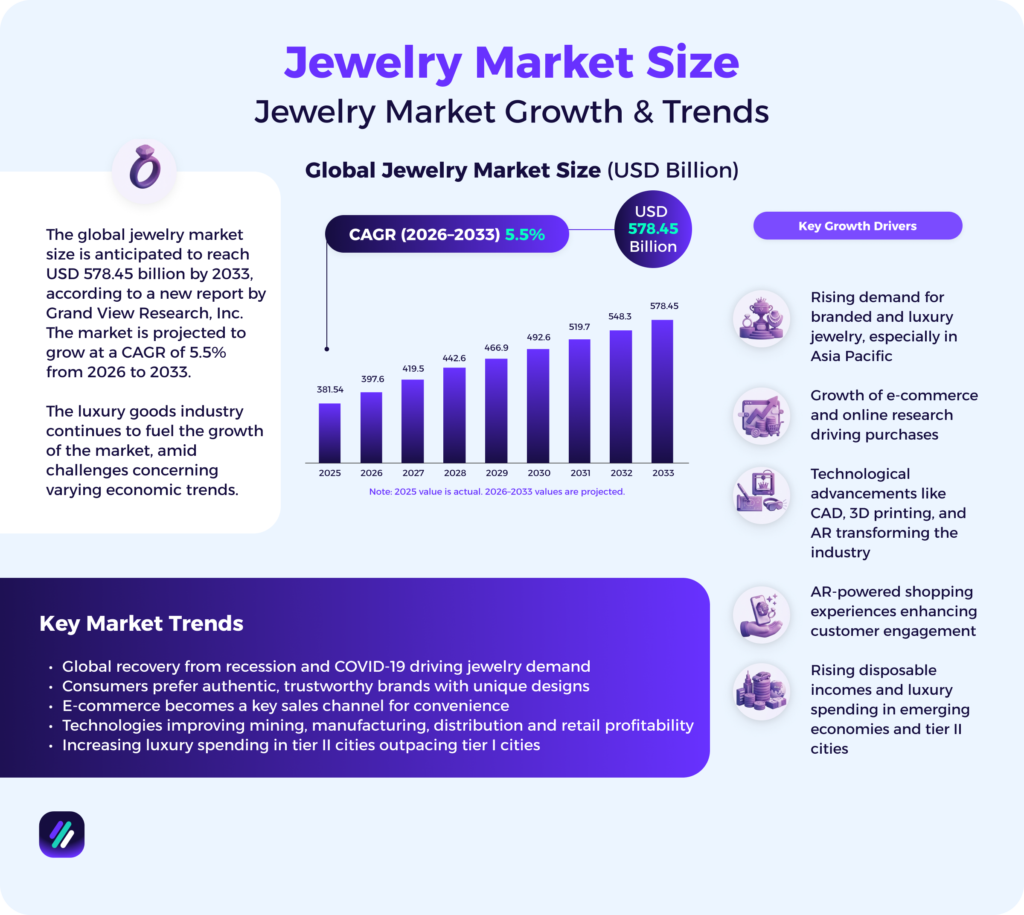
According to Grand View Research, the global jewelry market is rising and projected to reach $578.45 billion by 2033. Online sales of jewelry are also climbing, with e-commerce already accounting for roughly 25% of total market sales.
Jewelry is also well-suited to the dropshipping model. The lightweight nature of most pieces allows for low shipping costs and healthy margins, with well-run stores achieving net profits between 10% and 30%.
Moreover, jewelry allows you to be more flexible with pricing than most other dropshipping categories. You can charge a premium or keep things accessible, depending on the niche you build around and how you position your store.
Pros and Cons of Jewelry Dropshipping
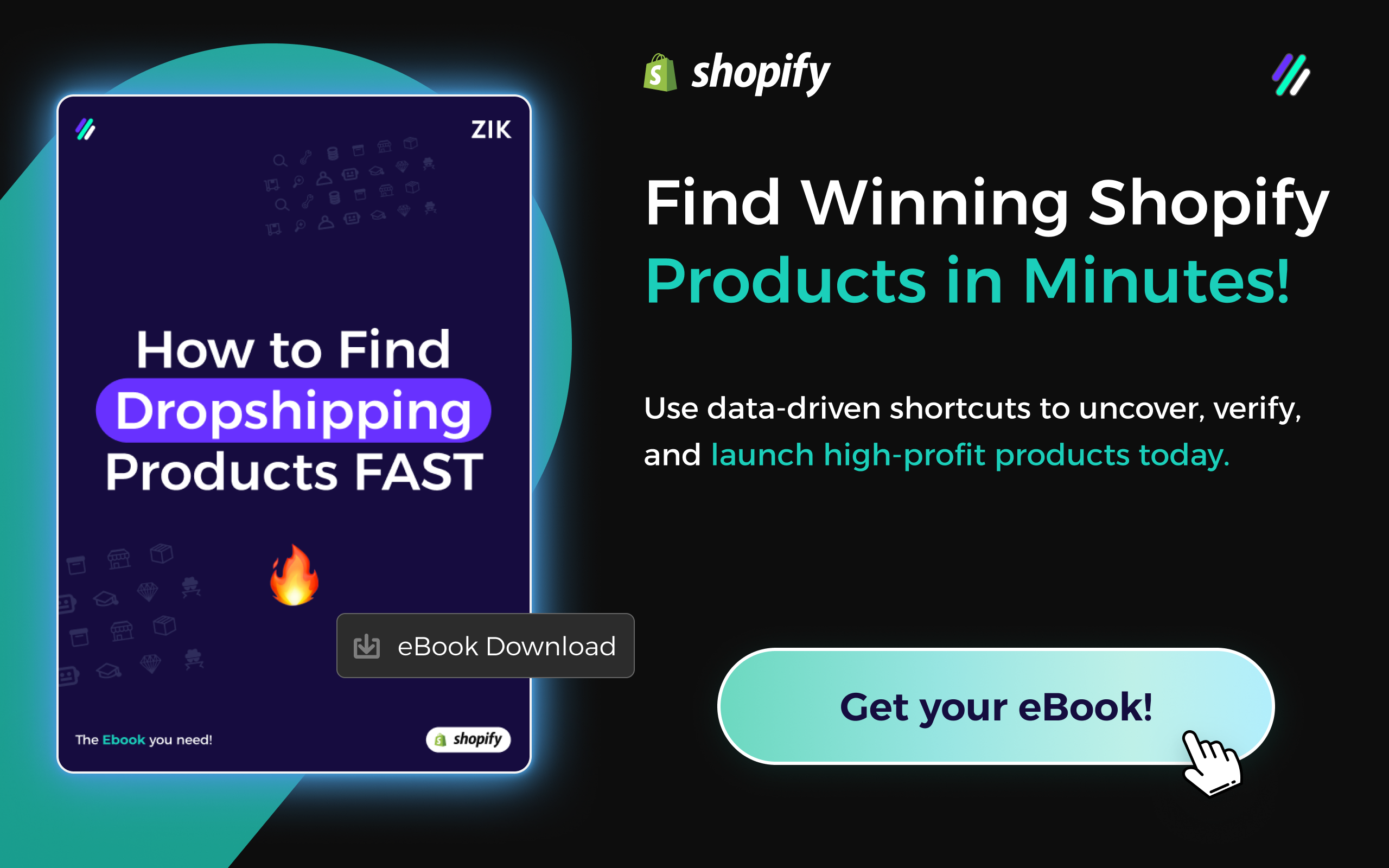
Jewelry dropshipping comes with certain benefits and drawbacks that you must know about before getting started.
Benefits of Jewelry Dropshipping
Here are the main benefits of pursuing this business:
- Low barrier to entry: You can launch with little capital because you do not need to purchase inventory upfront. This allows you to test various styles without the risk of financial setup or unsold stock.
- High perceived value: Jewelry is a purchase that carries emotional weight for most people. That makes buyers place a higher perceived value on it compared to most other product categories.
- Evegreen demand: Unlike trends that come and go, you can sell jewelry at most times of the year. Associating it with occasions such as birthdays, anniversaries, and holidays can help you stay relevant across different seasons.
Challenges of Jewelry Dropshipping
Jewelry dropshippers also tend to face challenges like:
- Product quality and inconsistency: Since you do not handle the product, you risk sending items that tarnish or differ from the photos. Poor quality can lead to negative reviews and destroy your brand’s reputation.
- Intense competition: Due to the lower barrier to entry, a lot of sellers are out there selling the same or very similar pieces. This can push prices down and make it harder to justify a premium without investing in branding that sets your store apart.
- Branding limitations: Most dropshipping suppliers use generic packaging, which makes it difficult to deliver the kind of unboxing experience that builds repeat customers. A piece of jewelry arriving in a plain plastic bag feels cheap regardless of the quality inside, and that first impression is hard to recover from.
Important Jewelry Rules and Regulations to Know Before Dropshipping Them
Dropshipping jewelry requires you to understand a few legal responsibilities before you start selling. Even if you never handle the product yourself, you are considered the primary seller in the eyes of regulators, which means compliance falls on you.
For a start, you must meet the material safety standards of whatever market you are selling into. Different countries have their own rules around toxic metals like lead and cadmium in jewelry. For example, the EU’s REACH regulations set tight limits on both, and jewelry sold to EU customers also needs to meet the Nickel Directive to be considered hypoallergenic.
There are also rules around how you describe your products. You cannot call something “gold” unless it is solid gold, and any synthetic or treated gemstones need to be disclosed clearly. Terms like hypoallergenic should be used carefully, as they can be challenged if you cannot back them up.
Moreover, you must ask for material documentation from your supplier and make sure your product pages reflect accurate descriptions. If you are unsure about the rules in a specific market, it is a good idea to speak to a legal professional before you go live.
How to Start Jewelry Dropshipping
Now that you understand the potential of dropshipping jewelry, here are the steps you can take to get started.
Step 1: Choose Your Jewelry Niche
The first step to starting a jewelry dropshipping business is to choose a niche to build around.
Jewelry is a broad and competitive market, and niching down helps you attract a specific type of buyer and build a store with a clear identity as well as establish yourself in the market.
Going too broad might seems like good idea, but actually, it;s one of the top dropshipping mistakes you can make.
To find one worth building around:
- Look at what is trending on social platforms. Sites like TikTok, Pinterest, and Etsy can show you which styles and aesthetics are gaining traction among jewelry enthusiasts. You can use these to identify opportunities that have demand but have not yet been picked up by other sellers in the jewelry space.
- Go after categories with clear buyer intent. Not every jewelry niche converts at the same rate. You will want to focus on segments like personalized pieces or minimalist everyday wear, as these tend to attract shoppers who already know what they are looking for.
- Pay attention to seasonal and emotional purchase drivers. Jewelry is often bought for special occasions and personal milestones. Aligning your store around these moments gives your store momentum and makes it easier to attract the right audience.
- Evaluate niche popularity using data: You cannot be sure of a niche unless there is data to confirm its growth. With ZIK Analytics, you can see sell-through rates and sales earnings over the last 30 to 60 days to get an idea of whether there is enough demand behind a niche. Our tool also highlights high-growth sub-niches to help you get ahead before they become oversaturated.
Step 2: Find Winning Products of That Niche
Since establishing a presence in the competitive jewelry market takes time, you must find ways to differentiate your brand from the thousands of generic online accessory shops.
The most effective strategy is to curate a catalog of winning jewelry pieces. Think items that tap into personal expression, hold high perceived value, and offer significant profit margins due to their lightweight nature and low shipping costs.
To find winning jewelry products:
- Track aesthetic trends on TikTok and Instagram: Jewelry is a highly visual niche where trends tend to go viral overnight. Using hashtags like #jewelrycheck and #goldfilled, you can see which styles are capturing the attention of fashion-forward consumers.
- Monitor best-Sellers on Amazon and Etsy: Amazon’s best-sellers page and Etsy’s trending listings track items that have seen the biggest increase in sales. Frequently visiting these pages can help you identify patterns long before they become mainstream.
- Spy on successful jewelry boutiques: Visit the websites of successful jewelry stores to see the type of photos and pricing they are using to attract buyers. With tools like ZIK’s Shopify Store Analyzer, you can dig into their top-performing listings and see which specific designs are driving the most sales.
- Validate demand jumping in on a niche. Tools like Google Trends can help you check whether interest in a category is growing or seasonal. You can also use ZIK’s Shopify Market Insights or Shopify Product Finder to track rising interest in specific materials or styles before you build a store around them.
We really recommend analyzing each product you find with sales data to ensure you’re not wasting your time on products that do not sell.
Using tools like the Shopify Store Analyzer can help reduce some of the guesswork by allowing you to study successful Shopify stores, analyze winning products, and identify profitable niches before spending heavily on ads.
One of the biggest reasons why dropshippers fail is that they do not do correct dropshipping product research and validation.
Grab your Shopify dropshipping eBook and find winning suppliers fast!Step 3: Find and Vet Dropshipping Suppliers
After deciding on your products, you can start looking for suppliers to source and ship them to your customers.
The good news is that you do not have to spend days searching and cold emailing wholesalers. Here are some of the most practical ways to find dropshipping jewelry suppliers:
- Reverse-engineer winning listings. Find a best-selling jewelry piece on eBay or Etsy and trace it back to its original supplier. ZIK’s AliExpress Item Finder lets you match any listing to its source on AliExpress, and the Shopify Product Explorer does the same for top-performing Shopify stores. For jewelry specifically, look for unbranded minimalist pieces in silver or gold-plated finishes, as these tend to have the most supplier options.
- Browse jewelry supplier directories. Platforms like Spocket and Faire list vetted suppliers with faster shipping times and better quality control than generic AliExpress vendors. If you want suppliers who already meet EU standards for materials like nickel content and lead limits, filtering for European-based options is worth the extra step.
- Vet suppliers before committing. Order samples and wear them for a few days to check for skin reactions or color changes. If a supplier claims their pieces are 925 sterling silver or 18k gold-plated, ask for documentation to back that up. For any market with material compliance requirements, consider this step to be non-negotiable.
One thing about this is that having an excellent product, but terrible suppliers will basically result in customers complaining and ultimately losing your brand credibility, which is VERY hard to regain.
Step 4: Choose Your Dropshipping Platform
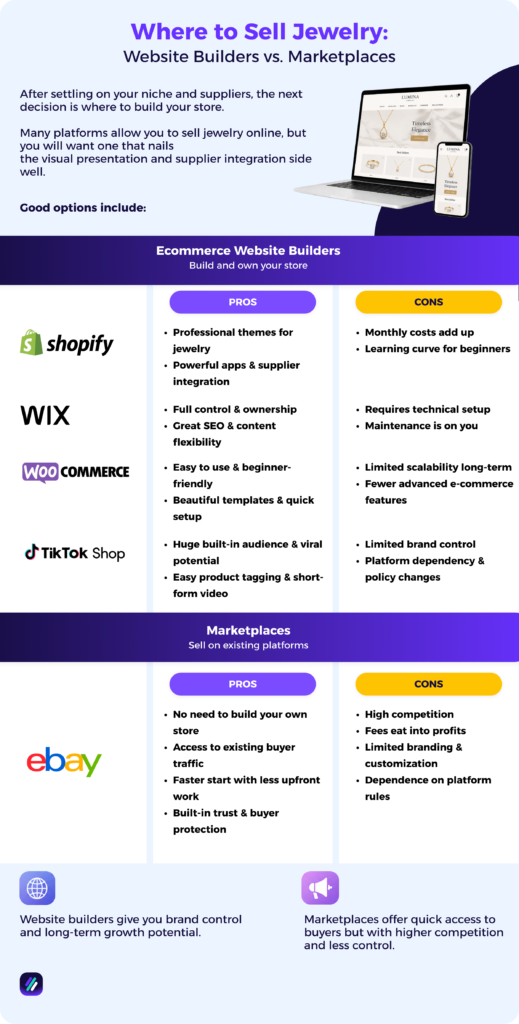
After settling on your niche and suppliers, the next decision is where to build your store.
Many platforms allow you to sell jewelry online, but you will want one that nails the visual presentation and supplier integration side well. Some good options include:
- Shopify: Shopify is a popular e-commerce platform that lets you build a store using a drag-and-drop editor. It has a large app ecosystem and themes designed for image-heavy catalogs, which makes it a natural fit for jewelry.
- WooCommerce: For those who want full ownership of their store, WooCommerce is worth a look. Being built on top of WordPress also means you get the SEO flexibility and content tools that come with the platform.
- Wix: Wix is a great choice if you are just starting out and do not want the hassle of a more technical setup. It comes with ready-made templates and a simple editor that gets you live quickly.
- TikTok Shop: You can also set up a store on TikTok and sell directly to people browsing your pieces on social media. Make sure to take advantage of the app’s built-in tools for product tagging and short-form video to drive traffic to your listings.
Then there are other alternatives, you can start dropshipping on marketplaces such as eBay, allowing you to skip entirely building and marketing your store steps.
It will be limited in other ways, but for beginners, it’s often the right way to get started.
Step 5: Build Your Dropshipping Store
Once you have decided on a platform, you can start putting your store together. The setup process is simple, but a few details around taxes and payments are worth getting right before you go live.
Most jewelry sellers start by setting up their store pages. The main ones you need are a dropshipping shipping policy, a return and exchange policy, and an FAQ. Platforms like Shopify offer ready-made templates for these that you can fill in and publish quickly.
You will also want to set up an FAQ page that answers the questions jewelry shoppers tend to ask before buying. Whether that is whether a piece is nickel-free, how to care for gold-plated items, or what to expect with sizing, having these answers ready reduces support emails and gives shoppers the confidence to follow through on a purchase.
Some other things you will want to sort out before launch:
- Configure your tax settings. Shopify can handle tax calculations automatically based on your customers’ locations, but the settings need to be in place before you go live. If you plan to sell internationally, make sure each target region is covered.
- Set up a payment gateway. See which payment methods your target customers are most likely to use. Most shoppers are comfortable with PayPal and Shopify Payments, and both support multiple currencies without much friction at checkout.
- Check your mobile experience. Since a large share of jewelry purchases happen on phones, you will want to make sure your store looks good, and your checkout runs smoothly on mobile before you go live.
Step 6: Price Your Products
Pricing is something that can make or break your jewelry dropshipping store. You will want to cover every cost involved while keeping your prices competitive enough to convert. Here are a few things to keep in mind:
- Account for all your costs before setting a price. This includes the product itself, packaging, shipping, platform fees, and a small buffer for returns. Excluding any of these from your calculations can create a false image of potential margins.
- Think about where your brand sits in the market. A value-oriented store can get away with a modest markup, but a niche or premium brand has more room to charge higher prices. If your presentation matches the price point, things like branded packaging and quality photography go a long way toward making that case to shoppers.
- Bundle products to raise your average order value. According to Dynamic Yield, the average order value for jewelry was $402 in March. When setting your prices, you can use this figure to gauge whether you are pricing too low relative to what jewelry buyers are already spending, and whether bundling items together could help you earn more per order.
It also helps to know the prices competitors are charging for similar jewelry. With ZIK’s Shopify store finder tool, you can see the catalog of competing stores and use their pricing as a reference point when setting your own.
Step 8: Market Your Jewelry Store
Jewelry sells more when it gets in front of the right people at the right time. To make sure that happens, you will want a marketing approach that leans into the visual and emotional nature of the category. Here are some of the most effective ways to do that:
- Use visual platforms to your advantage. Instagram, TikTok, and Pinterest are where jewelry buyers discover new pieces, and short-form videos showing the jewelry being worn in real settings tend to outperform static product shots. Focus on lifestyle content that helps shoppers picture the piece on themselves or as a gift to create the biggest impact.
- Work with micro-influencers. Sending pieces to influencers with between 10,000 and 50,000 followers in the fashion and lifestyle space can be more effective than running a bunch of ads on Facebook. Their audiences trust their taste, and an honest unboxing or styling video carries more weight than a static ad campaign.
- Use Pinterest as a discovery channel. Pinterest functions more like a search engine than a social platform, and shoppers actively look for things like “minimalist gold necklaces” or “gift ideas for her.” Creating boards around a specific aesthetic gives your store visibility at the point when buyers are still deciding what they want.
- Set up email flows for gifting seasons. An abandoned cart flow with a customer review or a time-sensitive offer can also help recover shoppers who were close to buying but did not follow through. Such email marketing campagins work especially well for re-engaging past buyers around ocassions such as the Valentine’s Day and anniversaries.
Step 9: Optimize and Scale Your Dropshipping Store
Your job after setting up your dropshipping store is only half done. You still need to optimize it for conversions and make sure it’s actually generating sales.
How do you do that? Here are a few ways to optimize and scale your jewelry dropshipping store:
Create pre-matched sets
Jewelry sells better when it’s bundled on Shopify with complementary pieces. You can bundle a necklace with matching earrings or stackable rings to simplify customer decisions and increase your average order value. Name your sets by mood or lifestyle, like “Everyday Gold” or “Night Out Stack,” to help customers visualize owning them.
Partner with micro-influencers
TikTok and Instagram are filled with creators showing off their jewlery and people getting all excited about where to buy it. Shopify Influencer marketing works for jewelry businesses because it relies on high trust and personal recommendations. You can look for micro-influencers with 1,000 to 50,000 followers whose style matches your brand, and partner with them to promote your jewelry to their engaged audience.
Invest in optimization
Your dropshipping store needs a makeover to feel like a specialized jewelry brand. Design is where most stores fall short, so look into themes that are clean and elegant without cluttering the page. Using optimized images that load quickly also improves conversions by keeping visitors on your site.
Best Jewelry Products to Dropship
Some jewelry products resonate better with audiences based on their aesthetic and functional appeal. Based on my research, here are some of the best jewelry pieces to dropship.
Cuban Chains
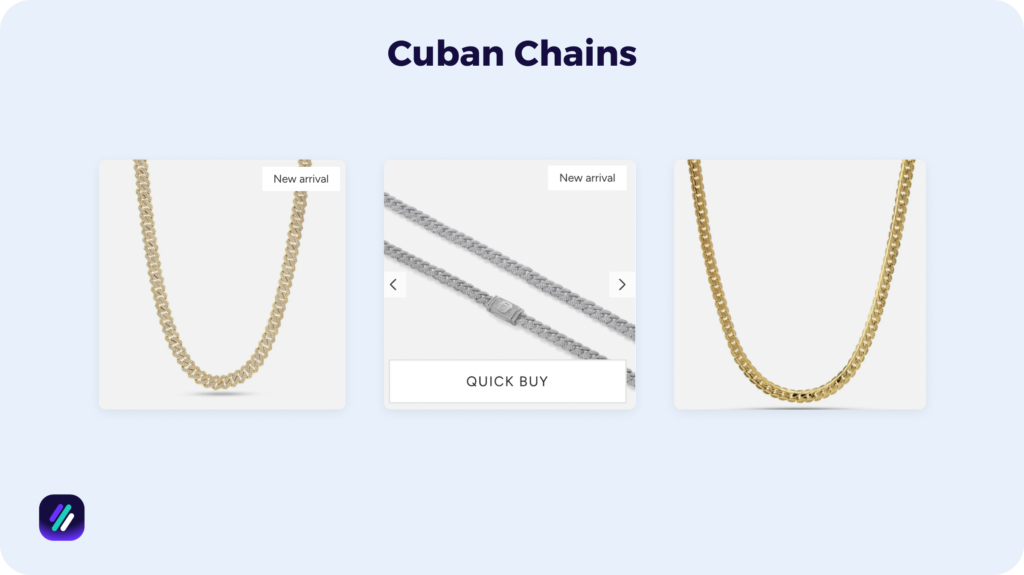
Cuban chains are thick, interlocking link chains that sit close to the neck and work across casual and dressed-up looks. With their bold profile and broad appeal across both men’s and women’s styling, these chains have made a permanent place for themselves in mainstream jewelry.
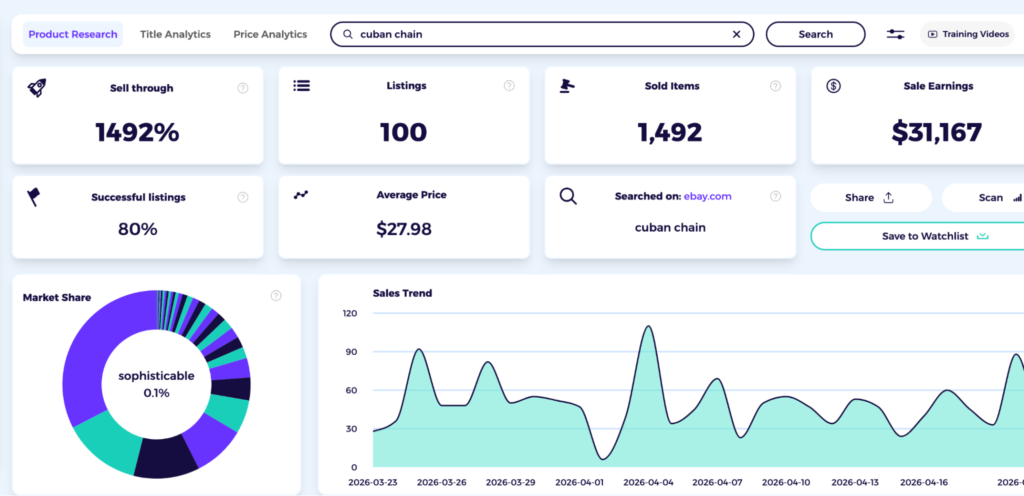
Our ZIK’s data shows 1,492 sales across 100 listings, with a sell-through rate of 1,492% and $31,167 in total earnings. Dropshipping these chains can help you tap into a category with consistent demand and high profit margins.
Minimalist gold necklaces
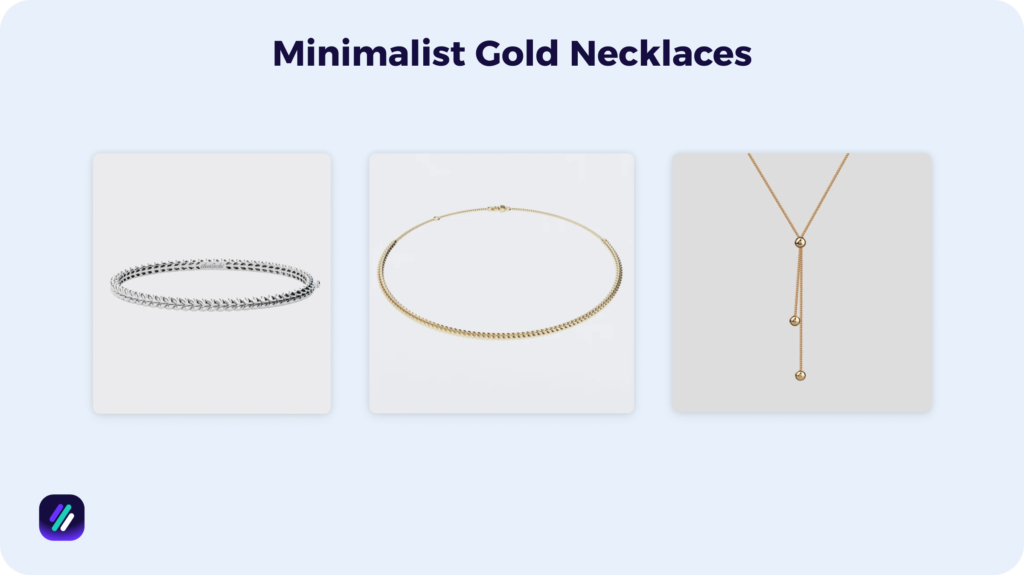
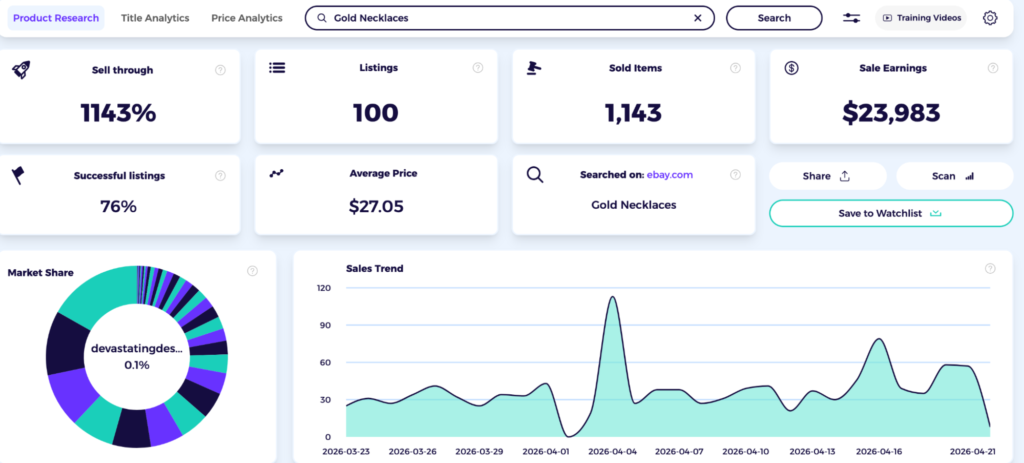
Minimalist gold necklaces are gold-plated or vermeil pieces that work as everyday staples and gifting options alike. From delicate pendants to simple layering chains, this category appeals to a broad range of shoppers.
ZIK data shows healthy demand behind this item, with 1,143 units sold across 100 listings and $23,983 in total earnings. With an average selling price of $27.05 and a 1,143% sell-through rate, you can make good money selling these consistently throughout the year.
Sterling silver 925 pendant
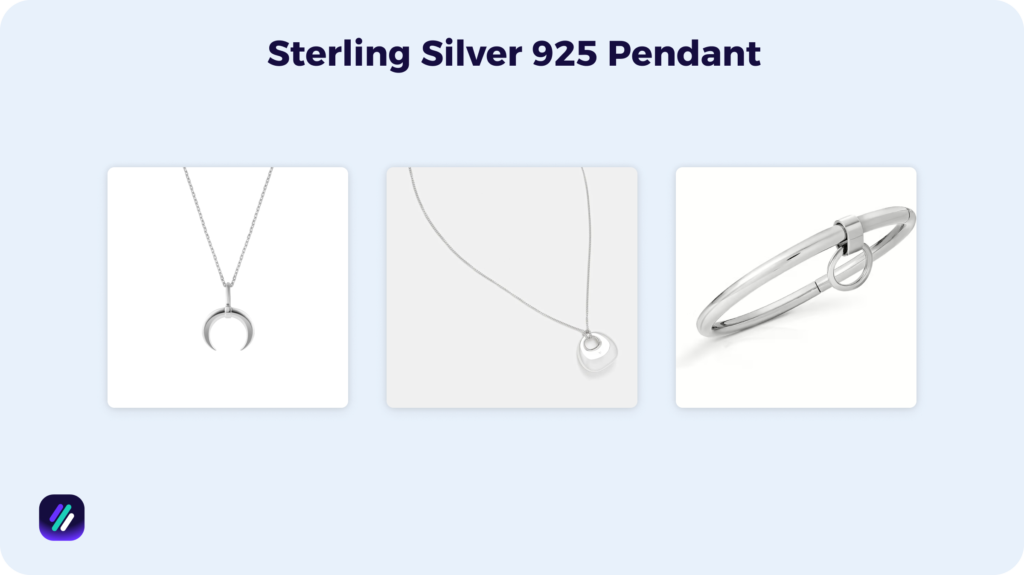
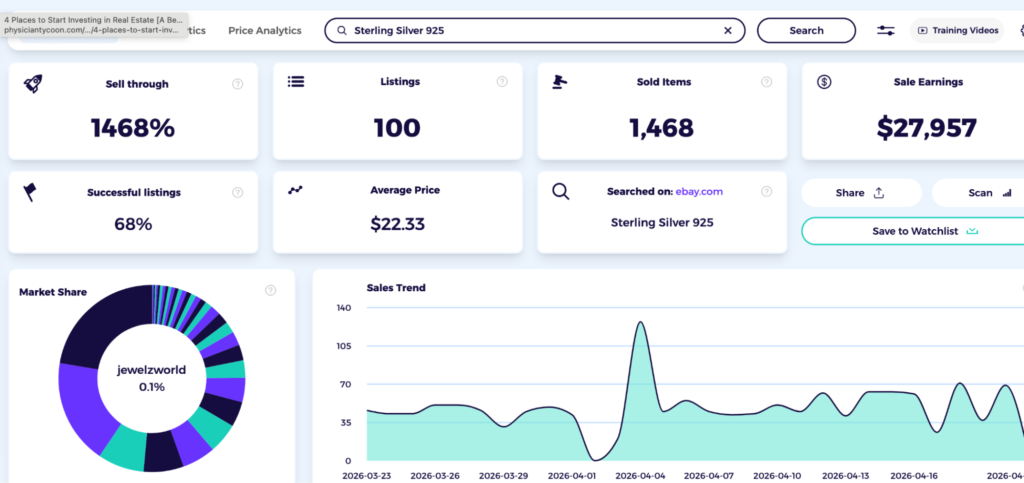
There are jewelry categories that come and go with trends, and then there is sterling silver 925, a material that buyers actively search for by name and return to consistently. This product can be a great buy for the individual looking for something understated and long-lasting.
According to ZIK’s data, sterling silver jewelry generated 1,468 sales across 100 listings, with $27,957 in total earnings and an average selling price of $22.33. By adding sterling silver pieces to your catalog, you can tap into a customer base that shops with intention.
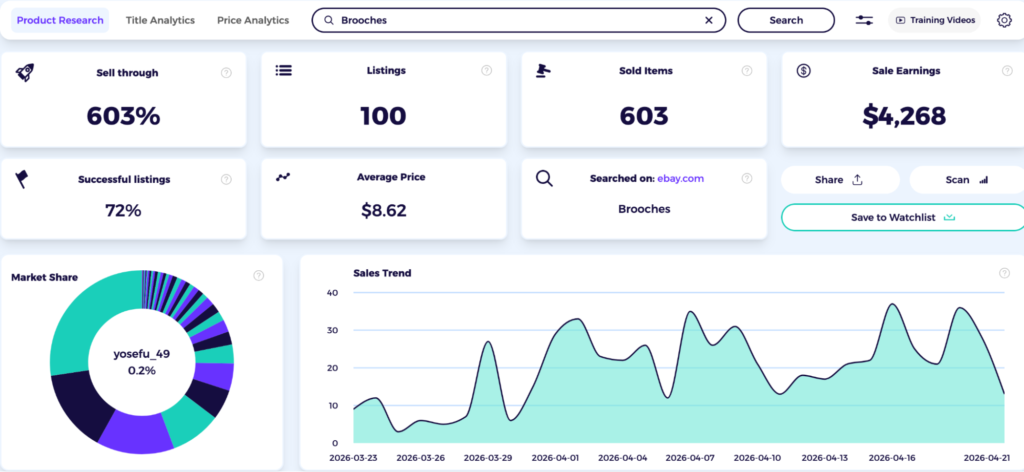
Brooches and pins
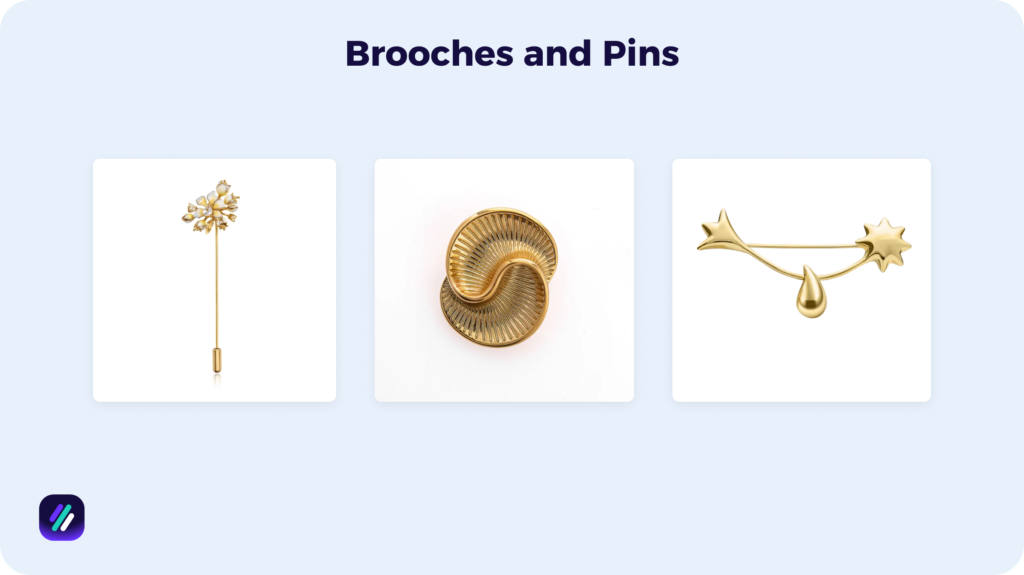
Brooches and pins might feel like a tucked-away corner of the jewelry market, but the numbers tell a different story. Turns out, there is a dedicated group of shoppers who seek these out specifically.
ZIK’s data shows that brooches generated 603 sales across 100 listings, with $4,268 in total earnings and an average selling price of $8.62. You can add these to your catalog as a low-risk entry point into a niche that most sellers overlook.
Best Jewelry Dropshipping Suppliers
If you’re looking for supplier recommendations to kickstart your jewelry dropshipping business, here are some vendors and wholesalers worth considering:
CJDropshipping
CJdropshipping is a massive jewelry supplier with a wide catalog that covers everything from minimalist chains to statement pieces. It offers competitive pricing and a sourcing service that lets you request specific items if you cannot find them listed on the platform. You can get started for free and use it to test different jewelry styles before committing to a specific item.
Branvas
Brandvas is the ideal supplier if you’re going to be using Shopify to run your jewelry dropshipping business. It offers a curated catalog of high-quality, brand-ready jewelry that you can sell as your own via its private labeling service.
Spocket
Spocket is a dropshipping platform that connects you with pre-vetted suppliers based primarily in the United States and Europe. After creating an account, you can use the available filters to look for suppliers in your target region, and then import products directly into your store. Using this supplier means you can easily meet people’s expectations around delivery times and create a lasting impression on them.
Find Winning Jewelry Products to Dropship with ZIK Analytics
ZIK Analytics offers tools to help you discover and validate jewelry products that are generating sales in the dropshipping market.
However, there are three specific tools I recommend for jewelry product research:
- Shopify Product Explorer acts as your product research tool for finding which jewelry items are selling across Shopify stores. Search keywords like “rings” or “necklaces” and filter by sales to spot trending pieces with real demand.
- Shopify Market Insights functions as your dropshipping market insights tool by showing trending jewelry products and niches over the last 6 months. Use it to identify emerging jewelry trends before they become oversaturated.
- AdSpy reveals which ads competitors are running for jewelry products on Facebook and Instagram. Search for jewelry-related keywords to see which campaigns are getting engagement and save the best ones for reference.
Beyond these three, you can use the Shopify Sales Tracker to monitor successful jewelry stores and the Shopify Suppliers tool to connect products with reliable suppliers.
Start your ZIK Analytics trial and begin researching jewelry products with the best product research tools built for successful dropshippers.
Jewelry Dropshipping FAQs
In this section, I’ll answer the questions people usually ask about starting a jewelry dropshipping business.
Can I sell branded or trademarked jewelry?
No, you cannot dropship trademarked jewelry without a legal licensing agreement. Doing so can lead to your online store being shut down or legal action. Instead, focus on unbranded white-label jewelry or work with a supplier that offers Print-on-Demand (POD) services. These options allow you to add your own unique designs or personalized engravings to the pieces.
What are the best ways to market a dropshipped jewelry brand?
Jewelry is a highly visual product, making platforms like Instagram and TikTok the most effective platforms to focus on. Make sure to take advantage of:
- User-generated content: Encourage customers to share photos wearing the jewelry.
- Influencer partnerships: Send samples to micro-influencers in the fashion space for authentic reviews.
- High-quality video: Use short-form video to show the sparkle and detail of the pieces, as static images often don’t capture the true quality of jewelry.
More on Dropshipping Different Products:
- 13 Best Dropshipping Electronics and Gadgets Products
- Dropshipping Cosmetics: Getting Started, Best Niches & Suppliers
- 20+ Dropshipping Beauty Products: Best Sellers & How to Start
- 9 Best Dropshipping Dog Products You Can Start to Make Dropshipping Profits