
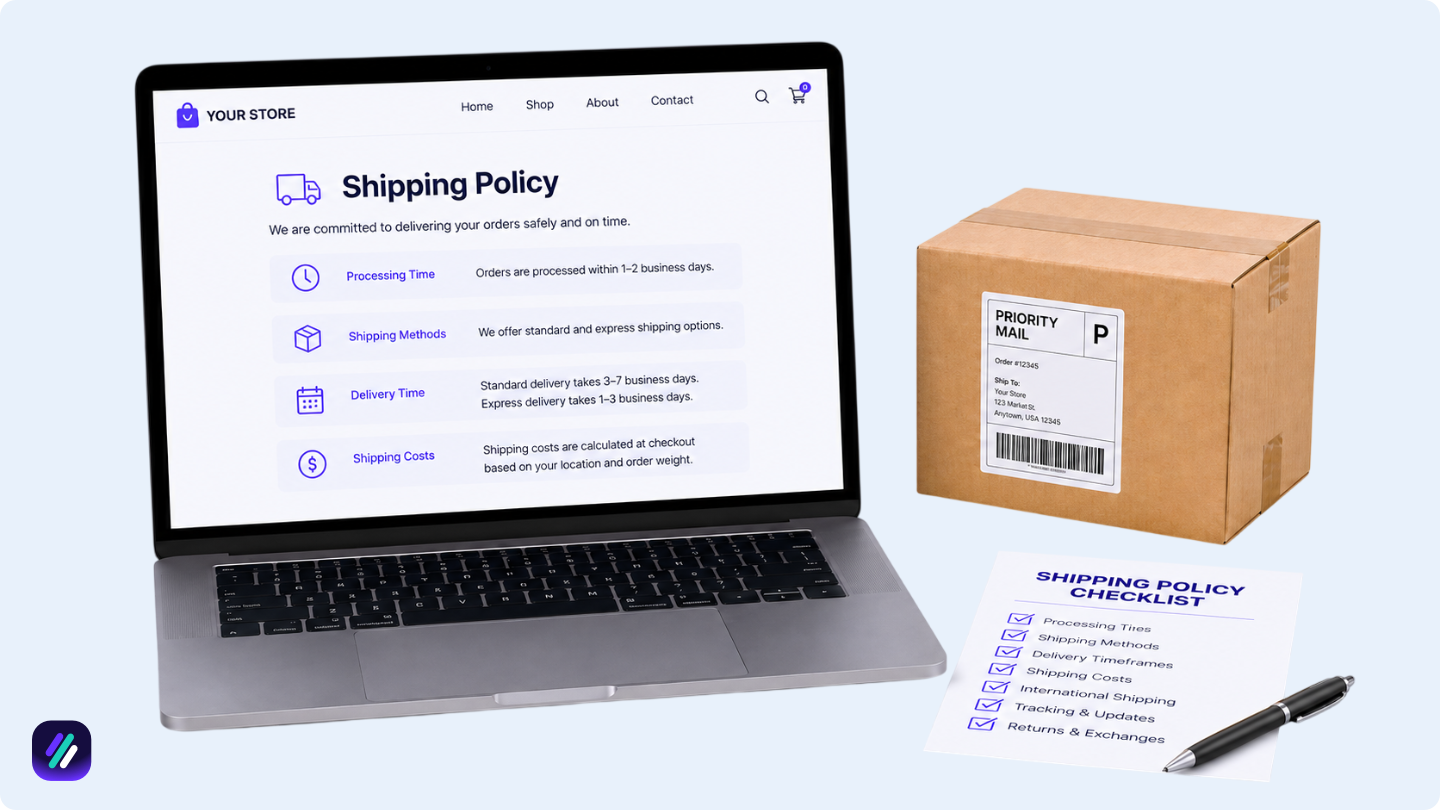
Most dropshipping sellers put off writing a shipping policy until something goes wrong. Then they either skip it entirely or copy one from another store.
Both can be extremely costly to your business.
A vague or missing dropshipping shipping policy creates a flood of “where is my order” messages, opens you to chargebacks, and, in several markets, leaves you on the wrong side of consumer protection law.
In this article, I am going to walk you through exactly how to write a dropshipping shipping policy that protects your store, step by step.
Key Takeaways
- A dropshipping shipping policy is legally binding in most markets. Vague or copied policies leave you exposed to chargebacks, disputes, and consumer protection violations.
- The most expensive mistake new sellers make is copying another store’s policy without verifying that their supplier’s actual SLA matches what the policy promises.
- Platform compliance matters: eBay and Shopify have different shipping policy requirements, and mismatches can trigger account restrictions or listing removals.
- The end of the US $800 de minimis exemption means import duty disclosures are now a required part of any dropshipping shipping policy for US-bound orders.
- Use ZIK Analytics to validate demand and verify your supplier’s actual SLA before finalizing shipping terms: a complete policy on a low-demand product solves the wrong problem first.
- Review against a checklist before you publish, then link from your footer, checkout page, product pages, and FAQ.

What is a Dropshipping Shipping Policy?
A dropshipping shipping policy is a public document that tells customers how long delivery takes, what shipping costs, and what happens when an order is delayed, lost, or flagged at customs.
Unlike a regular ecommerce store where you control inventory and fulfillment, dropshipping means your supplier handles the packing, shipping, and dispatch. Your policy is the only thing standing between your customer’s expectations and your supplier’s actual process.
So when your supplier takes 5 business days to process an order and your policy says “ships within 24 hours,” you already have a problem before the first order is placed.
The policy bridges the gap, but only if it reflects your actual fulfillment, returns, and refund reality.
Unfortunately, most new sellers treat it as a formality.
It is not!
And when you start your dropshipping business, it is one of the first documents you need to get right, not one of the last.
Step 1: Use the Dropshipping Shipping Policy Generator
The fastest way to get a working first draft is to use a shipping policy generator from tools like Termly and Easyship, which offer free generators that produce a usable starting template in a few minutes.
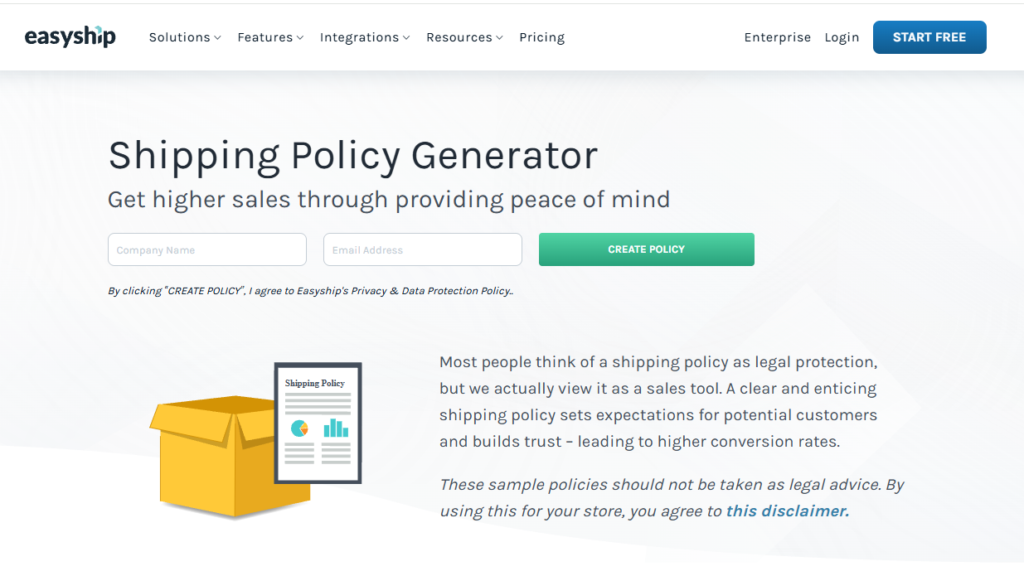
The generator gets you to 60%, so you should use it for the structure, not for the final language.
What your policy actually needs depends on your supplier’s specific SLA (service-level agreement, the markets you ship to, and the platforms you sell on.
But don’t worry, the next five steps get you to publish-ready.
That said, if you work with a dropshipping agent rather than a direct supplier, ask them for their standard SLA documentation before filling in any delivery timeframes.
The most common generator mistake is accepting the default “5-7 business days” without ever checking what your specific supplier actually delivers.
Step 2: Including Essential Parts in the Dropshipping Shipping Policy
Now that you have a generated draft of your dropshipping shipping policy, there are few things you should check in order to ensure it has everything it should have.
Most templates get the obvious elements, but they leave out the ones that actually prevent disputes or legal issues. For example, a generic template will include processing time but skip the customs clause entirely.
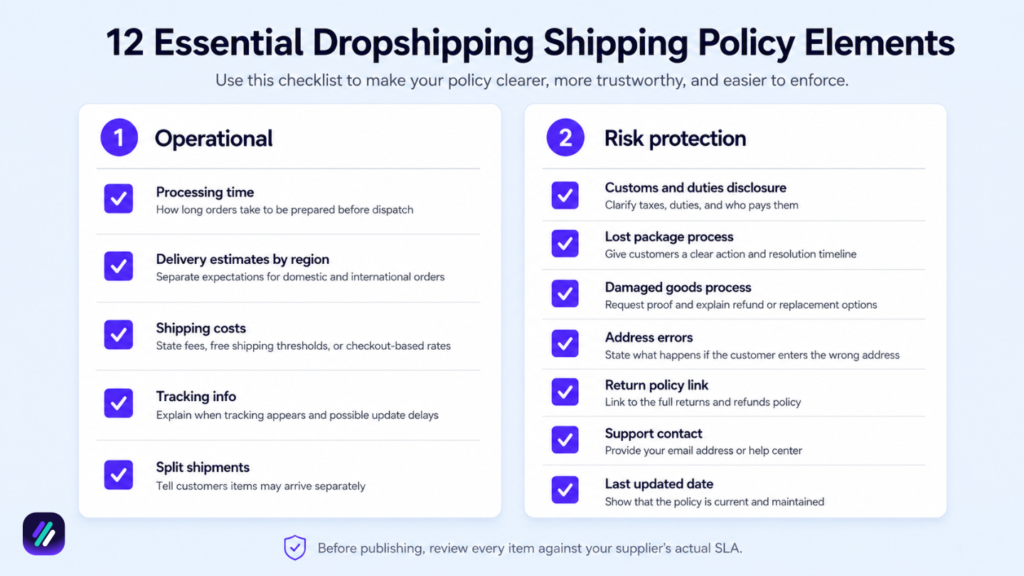
So, our team of dropshipping experts prepared a list of essential dropshipping shipping policy elements it should contation:
- Processing time: The time between when the customer places an order and when your supplier actually ships it. This is separate from transit time, and it is where most under-delivery problems start. Your policy should state a range, not a single number: “Processing takes 2-5 business days, not including weekends and holidays.”
- Delivery estimates by region: Domestic and international customers have very different timelines. Your policy should list both separately. For international orders, 10-20 business days is a common realistic range depending on the destination and supplier origin.
- Shipping costs: Your policy should state your free shipping threshold if you offer one. If costs vary by destination, explain how customers can see their rate at checkout.
- Tracking process: Your policy should tell customers when tracking information will be available, that it may not update immediately after dispatch, and which carrier handles the delivery. The gap between “shipped” and the first tracking scan is a major WISMO trigger.
- Customs and import duties: Critical for any store shipping internationally. With the end of the US $800 de minimis exemption, you must now state clearly that import duties and taxes may apply for US-bound orders and that those charges are the buyer’s responsibility.
- Lost package process: Your policy should give customers a clear action: “If your order has not arrived within [X] days of the estimated delivery date, contact us at [email] and we will open a carrier investigation.” Include your resolution timeline as well.
- Damaged package process: Your policy should specify what evidence the customer needs to provide (photos of the package and item contents) and what your resolution options are, whether a replacement or refund.
- Address errors: Customers who enter incorrect shipping addresses at checkout bear responsibility for resulting delays or failed deliveries. State your process for address correction before dispatch, and whether a reshipment fee applies.
- Split shipments: If an order contains items from different warehouses or suppliers, those items may arrive separately. One sentence here prevents an entire support conversation when the first package arrives alone.
- Return and refund policy link: Your shipping policy should not reproduce the full returns policy. Link to it directly instead.
- Support contact: Your email address or help desk link.
- Last updated date: A “Last updated: [date]” line at the top or bottom signals to customers and to platforms that the policy is actively maintained.
You should carefully review your shipping draft against this to ensure you have ticked all the boxes. Trust me it can save you a ton of headaches and potentially legal issues.
Not every shipping issue is carrier-related. In rare cases where a buyer repeatedly abuses claims or engages in suspicious behavior, sellers should understand how to report a buyer on eBay to help protect their account and transaction history.
Step 3: Review with Other Dropshipping Stores (Ideally in the Same Niche)
With your draft in hand, the next step is competitor calibration, which is arguably the best way to ensure your policy is good!
However, you should not copy it, but rather understand whether your promises are realistic compared to stores shipping similar products to the same markets.
Your review should cover 3-5 stores in your niche. For each one, note:
- Their processing time claims
- How they handle international shipping disclosures
- Whether they include a customs and duties clause
- How specific their lost-package resolution process is
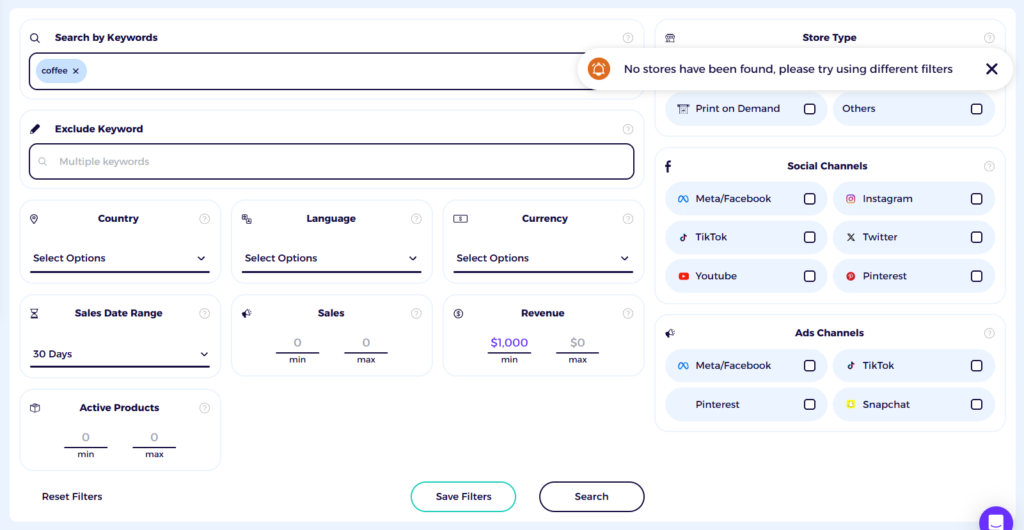
For finding those stores, ZIK Analytics’ Shopify store finder is built for exactly this. You can easily search for top-performing stores in your niche, check their top products, and navigate directly to their policy pages to see what successful sellers in your category are promising.
Based on our in-house team at ZIK Analytics, the most common outcome of this step is discovering that successful competitors are more conservative on delivery estimates than your generator draft suggested.
Thus, matching their realistic terms, rather than outpromising them, is the right calibration, and again, it can save you a ton of headache!
And remember, your eBay business policies benchmark is other successful eBay dropshippers in the same product category, not generic templates from a policy generator.
Grab your Shopify dropshipping eBook and find winning suppliers fast!Step 4: Review It Against Our Dropshipping Shipping Policy Checklist
With your draft in shape, here is the checklist that validates it before you publish. It is based on the experience of our dropshipping team at ZIK Analytics reviewing shipping policies across stores of all sizes.
- Processing time listed
- Delivery estimates by country/region
- Shipping costs explained
- Free shipping threshold included (if applicable)
- Tracking process explained
- Tracking update delay mentioned
- Customs/duties disclosure included
- PO box/military/remote restrictions listed
- Lost package process included
- Damaged package process included
- Wrong address process included
- Split shipment note included
- Return/refund policy linked
- Support contact included
- Last updated date shown
- Supplier SLA verified against stated times
- Policy added to footer, checkout, product pages, and FAQ. An incomplete policy is not a shorter policy. It is a gap your customers will find at the worst possible moment.
It is also a compliance exposure you will not see coming until a dispute lands, so see it as another guardrail against future troubles.
Better be safe than sorry! 😀
Step 5: Adjust the Policy for Specific Platform/Marketplace Compliance
Now that your draft passes the checklist in Step 4, the next step is to adjust it for the specific platform you sell on.
Every platform has its own requirements, and a single policy page does not automatically meet all of them.
And there are a ton of dropshipping platforms, and it would be impossible for me to address them all here.
So I just addressed the two most common ones
Shopify
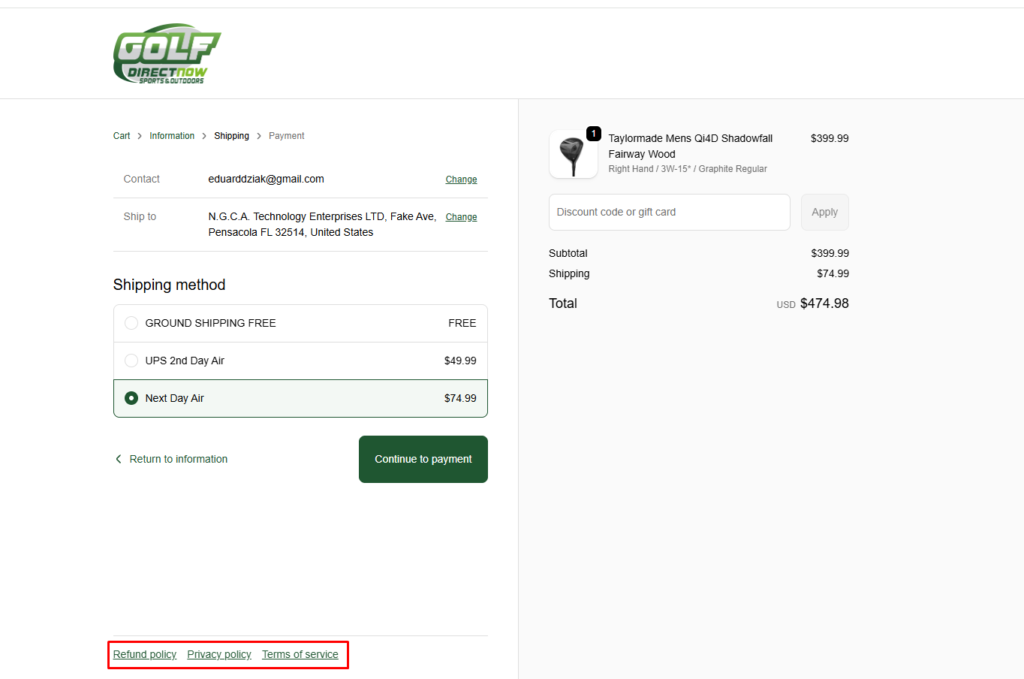
Shopify’s dropshipping compliance requirements state that sellers must add shipping information to their store’s legal pages (Settings > Legal), disclose that products are shipped by a third-party from a different location, note that orders may be subject to customs clearance, and display estimated delivery times before checkout is completed.
A policy visible only in the footer does not satisfy the checkout disclosure requirement on its own.
For Shopify returns, a separate returns policy linked directly from the shipping policy is also required. The two documents cross-reference each other in Shopify’s compliance framework.
eBay
eBay handles shipping policies through its business policies system, which is a structured shipping, payment, and return profiles attached to your listings at the account level, not a free-text web page.
Per eBay’s dropshipping guidelines, you are responsible for delivery within the stated handling time regardless of what your supplier does.
Your eBay return policy and shipping profile handling times must be consistent with each other, and any mismatched stated timeframes across the two profiles create system conflicts on eBay’s end, which show up as defects on your account, and it can potentially get you banned.
As I said, these are two examples of adjusting your dropshipping shipping policy based on the platform you’re using to dropship.
Step 6: Publish and Link to It On Your Store Website
A policy that nobody can find is almost as bad as no policy at all. So once it is written, placement matters as much as the content itself.
And there are several places where you should and could put it so here is where yours needs to appear:
- Footer: Every page should have a “Shipping Policy” link. This is the universal customer expectation for any e-commerce store, including dropshipping stores.
- Checkout page: Visible before the customer completes payment, either as linked text or a summary of key delivery times.
- Product pages: Include a shipping estimate block on each product page with a link to the full policy.
- FAQ page: A “How long does shipping take?” entry that mirrors your policy’s stated times is the minimum.
- Order confirmation email: Link to the policy in your confirmation email so customers can find it after purchase.
If you use a dropshipping agent to manage multiple supplier relationships, keep them updated whenever your published shipping times change. As a policy update your agent does not know about creates a gap between what you promise and what they deliver.
Work this into your dropshipping checklist before you list your first product. The policy belongs in your store setup, not as an afterthought after your first sale.
Difference Between Dropshipping and eCommerce Shipping Policy
The short version is control; that’s really the main difference.
A regular ecommerce seller controls their own inventory, packs their own orders, and ships from a known location, while a dropshipper hands all of that to a third party, which changes both what the policy needs to say and where the risk sits.
| Area | Dropshipping | Regular e-commerce |
|---|---|---|
| Inventory control | No inventory held; supplier ships direct | Seller holds and manages stock |
| Fulfillment | Supplier handles packing and dispatch | Seller or 3PL handles packing and dispatch |
| Tracking | Supplier generates tracking; upload delays are common | Seller or 3PL uploads tracking at dispatch |
| Shipping time | Processing time (supplier) + transit time; typically longer | Usually shorter; ships from a fixed location |
| Returns | Seller manages customer-side; supplier rules affect backend; see dropshipping returns | Seller manages end-to-end |
| Customs | Third-party origin creates import exposure; duties may apply | Usually ships domestically; lower customs exposure |
| Customer service | Seller handles all buyer communication regardless of fulfillment source | Usually managed by seller |
| Liability | Seller is liable to the buyer regardless | Seller is liable to the buyer |
The liability row, though, is worth pausing on.
In both models, you are the seller of record. Your customer bought from you, not from your supplier.
So when something goes wrong, the responsibility lands on your store, and your shipping policy is the document that defines how you respond to it.
Legal and Tariff Updates Your Shipping Policy Needs to Reflect
The legal landscape around shipping has shifted significantly. Three rules affect most dropshipping stores right now.
One thing about anything legal, we can be sure is that it constantly changes, and it can be a pain in the ass to keep on top of things, but there is not much choice isn’t.
Also, the legal rules depend on the country you will be dropshipping at, so make sure you do the research for it. Again, I cannot list down all the legal and tarif updates for every single country so I will give you two examples.
But, the three biggest rules that affect dropshipping stores universally right now are:
US de minimis exemption has ended
The US ended its $800 de minimis tariff exemption for international shipments, effective August 29, 2025. For goods from China and Hong Kong, from June 1, 2025, carriers have been collecting either a $200 flat fee per item or 120% ad valorem duty, whichever applies at time of delivery.
For your shipping policy, this means you must now disclose that import duties and taxes may apply to US-bound orders and that the buyer is responsible for those charges.
A policy that says nothing about customs, or still implies there are no import fees, is a chargeback waiting to happen when a customer opens a $200 customs bill on a $30 order.
Not a good customer experience, is it?
UK Consumer Rights Act 2015
Under Section 28 of the Consumer Rights Act 2015, if you do not agree on a delivery date with the customer, you are legally required to deliver within 30 days.
If you state a specific delivery date and miss it, the customer has a statutory right to cancel and receive a full refund. This applies even when your supplier caused the delay, because you remain the seller of record and bear the full responsibility!
For UK-targeting stores, your estimated delivery window is not just a customer expectation. It is a legal commitment.
FTC Mail Order Rule (US)
Under the FTC’s Mail, Internet, or Telephone Order Merchandise Rule, US sellers must have a reasonable basis for any stated shipment timeframe.
That means if you promise “ships in 1-3 days” but your supplier regularly takes 7, you are non-compliant and if a delay occurs, you must notify the customer promptly and explain their right to cancel for a full refund.
For a deeper look at legal compliance as an eBay seller, see legal agreements for eBay dropshipping business. The compliance frameworks overlap more than most sellers expect.
Why Do You Need a Shipping Policy for Dropshipping Store?
A dropshipping shipping policy does four things at once: it keeps you legally protected, reduces your support load, cuts your chargeback risk, and insulates your brand from supplier mistakes.
Most sellers understand the legal protection piece in theory. The other three are where the day-to-day value actually lives.
With that, here are the biggest reasons of why you need a shipping policy for your dropshipping store:
Avoid Potential Breaking of Local Laws
The FTC Mail Order Rule, the UK Consumer Rights Act 2015, and similar consumer protection frameworks across the EU and the world require online sellers to disclose delivery timelines accurately and handle delays with proper notification. A policy that overpromises, says nothing about delays, or ignores customs exposure creates legal liability in every market you sell to.
You do not need to read every framework in full. But you do need a policy that reflects your actual shipping reality and covers what happens when things go wrong.
It Reduces “Where Is My Order” Tickets
WISMO queries, those “where is my order” messages, account for 20 to 40% of all ecommerce support tickets, and during peak seasons, that number climbs to 50% or more. Most of those tickets are preventable.
When a customer knows upfront that processing takes 3-5 days, that tracking may not update immediately after dispatch, and that international orders can take up to 20 business days, they stop emailing to ask.
The policy does the customer service work before anyone types a message.
From our in-house team at ZIK Analytics, the first thing new sellers skip when setting up a store is the shipping policy. It feels like paperwork until the support inbox hits 40 messages a day.
It Lowers Refunds and Chargeback Risks
Delayed delivery is the motivation behind 18% of consumer chargeback filings, and retail ecommerce chargeback rates surged 233%. A clear, documented shipping policy is one of the most effective ways to win a dispute when one is filed.
If a customer was told in writing what to expect, and you can show they accessed that information before purchasing, the dispute calculus changes. A missing policy, by contrast, leaves you with nothing to point to and certainly loses the dispute!
It Protects Your Brand from Supplier Delays
Your supplier will miss a deadline. It happens to every dropshipping store at some point. What protects you is having a policy that accounts for realistic supplier timelines from the start, not an optimistic one written to look impressive in the listing.
If your policy says “delivery in 2-4 business days” and your supplier regularly takes 15 days, you are risking a negative review, eBay defects, Shopify payment holds, and a customer base that does not come back and getting nasty reviews that stick.
The eBay dropshipping policy holds you to your stated handling time regardless of supplier performance, so the number in your policy is the number you are held to. If there are issues that arise, you can contact eBay customer service to clear things up.
How the Dropshipping Shipping Process Works
Understanding the full process makes it clear why each element in your policy matters.
Dropshipping shipments pass through more stages than most customers realize, and quite frankly, even dropshipping beginners, and your policy needs to account for all of them.
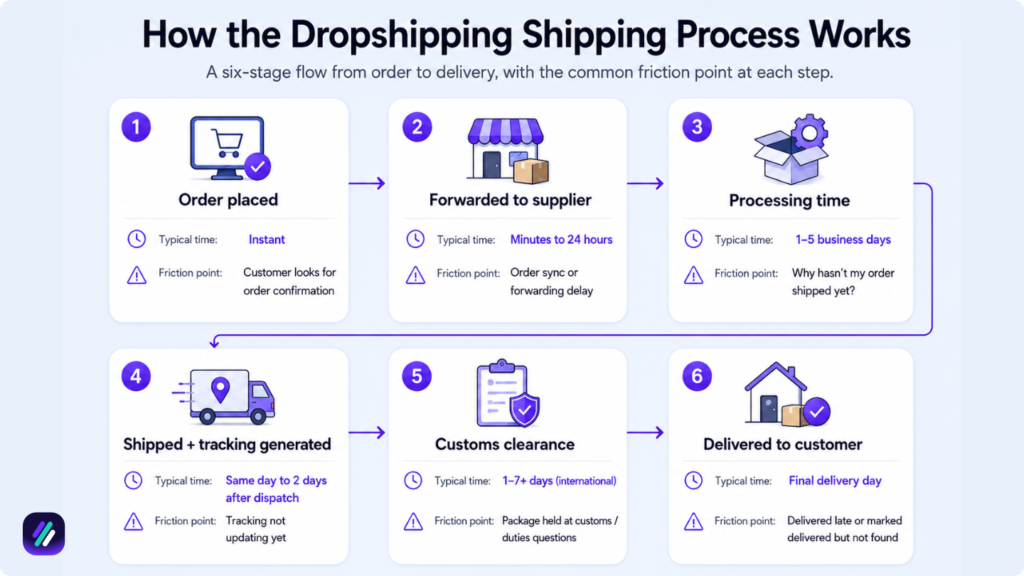
So this is the typical flow of dropshipping shipping:
- Customer places an order. Payment processes through your store.
- You forward the order to your supplier. Manually or via automation, the order details go to the dropshipping suppliers handling fulfillment.
- Supplier processes the order. This is the processing window: 1-5 business days depending on the supplier. This stage is entirely separate from shipping time, and it is where most delivery timelines break down.
- Supplier ships and uploads tracking. The package leaves the warehouse. Tracking may not update immediately, especially for international carriers, which triggers the first wave of customer confusion.
- Package clears customs. For international orders, clearance adds time. With US de minimis rules gone for internationally sourced parcels, duties may now be collected on arrival.
- Customer receives the package. The timeline your customer experiences is the sum of all five stages above.
Your shipping policy needs to cover all six stages, not just the delivery part.
Common Dropshipping Shipping Policy Mistakes to Avoid
Coming to the end of this blog post, I want to address the common mistakes dropshippers make when crafting their shipping policy for dropshipping.
I have asked our in-house experts as well as source them from online sources such as Reddit to give you the final check, you’re good to go:
- Copying a competitor’s policy without SLA verification: Your competitor’s stated times reflect their supplier’s SLA, not yours. Copying their policy gives you their promises with your supplier’s limitations. If their supplier processes in 2 days and yours takes 6, that borrowed policy is a liability from day one.
- Using the same policy text for multiple platforms: eBay’s business policies and Shopify’s legal pages have different structures, disclosure requirements, and compliance standards. A policy copy-pasted across both will miss platform-specific language that matters in a dispute.
- Overpromising on delivery speed: Conservative shipping estimates win fewer impulse clicks at listing time and save you from chargebacks, defects, and negative reviews. A customer expecting 15 days who receives their order in 10 is pleased. A customer expecting 5 days who waits 15 is filing a case.
- Not updating after changing suppliers: Your policy is a live document. When you change dropshipping suppliers or a supplier updates their processing time, your published policy needs updating on the same day. The gap between what the policy says and what the supplier delivers is the source of most shipping-related disputes.
- Leaving customs and duties vague: “International buyers may be subject to customs fees” is not enough after August 2025. State clearly that duties apply to US-bound orders, that the buyer is responsible for those costs, and what they should do when a customs fee arrives. Vague language reads as deceptive to card issuers reviewing a chargeback.
- Forgetting split shipments: If an order contains items from different warehouses or suppliers, those items arrive separately. A customer who receives one of two items with no prior explanation will assume the other is lost. One sentence in the policy prevents that entire support conversation.
These are the most common issues, however, there are also cases specific to certain dropshipping niches because the product itself changes how delivery works.
For example, if you sell items like wireless headphones, cameras, LED devices, smart watches, power banks, or gadgets with lithium batteries, your shipping policy should mention that some products may have carrier restrictions.
Or skincare, perfume, nail products, aerosol sprays, and similar items may need leak-safe packaging, ground-only shipping, or extra handling.
Ensure Your Dropshipping Products Can Be Shipped with ZIK Analytics
One thing is clear: a great shipping policy only matters if your products are actually selling. If there is no demand, the policy covers orders that never arrive.
With ZIK Analytics, you can validate demand and confirm supplier SLAs before building a policy around anything:
- Dropshipping product research tool: Search products by keyword, filter by sell-through rate and revenue, and see what is actually selling on eBay and Shopify before you list.
- AdSpy: Study which Facebook and Instagram ads are driving traffic to dropshipping stores right now, so you know which products have genuine buyer intent, not just search volume.
- Item Finder / Supplier Match: Match winning products to verified AliExpress and Alibaba suppliers and confirm their real processing and shipping SLA before you build your policy around it.
Try ZIK Analytics for $1 and know what is worth listing before you invest time in the full store setup.
Conclusion
The sellers who treat their dropshipping shipping policy as a legal and operational document, not just a box to check, are the ones who avoid the support spirals, chargebacks, and platform compliance problems that quietly eat into margins.
Your policy is the contract between your customer’s expectations and your supplier’s actual process.
With the end of the US de minimis exemption and consumer protection frameworks tightening across the UK and EU, the stakes for getting this document right are higher now than they were two years ago.
So, ensure to review yours against the checklist in Step 4, update it every time you change a supplier, link it everywhere a customer might look before, during, and after checkout, and then focus the rest of your energy on what the policy exists to support: finding products with genuine demand and building a store worth coming back to.
Dropshipping Shipping Policy FAQs
In here, I am going to answer commonly asked questions regarding the dropshipping shipping policy:
Is a shipping policy required for dropshipping?
Not always required by law, but practically mandatory. Shopify’s Terms of Service require publicly accessible shipping information, and eBay requires stated handling times in your business policies. Beyond platform requirements, the FTC (US) and Consumer Rights Act 2015 (UK) both set legal standards for delivery time disclosure. Stores without a clear policy face higher chargeback rates, heavier support volume, and genuine platform compliance risk.
What should a dropshipping shipping policy include?
At minimum: processing time, delivery estimates by region, shipping costs and free shipping threshold, tracking process, customs and import duties disclosure, lost and damaged package procedures, wrong address policy, a link to your returns policy, support contact, and a “last updated” date. The full breakdown is in Step 2 above.
How long should I say my dropshipping orders take?
Base it on your supplier’s actual SLA, not a best-case estimate. If processing takes 3-5 days and international transit takes 8-15 days, state “11-20 business days for international orders” and add a customs buffer for US-bound orders. Under-promising and over-delivering is almost always the better outcome, and it gives you a legal buffer under both FTC and UK consumer protection frameworks.
Can I copy another store’s shipping policy?
You can use one as a structural reference, but never copy it outright. The other store’s delivery times reflect their supplier’s SLA, not yours. Their legal obligations may differ based on where they are incorporated. And if they have errors or outdated customs language, you inherit every one of those problems directly.
Does eBay require a separate shipping policy?
Yes. eBay does not use a standard web page policy in the same way Shopify does. It uses structured business policies: separate shipping, payment, and return profiles that attach to your listings at the account level and are managed inside your eBay seller account. Your stated handling time inside those profiles is your legal commitment to eBay and to the buyer. It is not the same document as your Shopify policy page.
How do I handle long shipping times in my dropshipping policy?
Be transparent and specific rather than vague. State the full range, break down processing time versus transit time, and explain why the window is longer. Add a clear “not yet received” clause: “If your order has not arrived within [X] days of the estimated delivery window, contact us at [email], and we will follow up with the carrier immediately.” Honesty about timelines consistently outperforms overpromising in the medium term.