
The UK gave the world Shakespeare, the Beatles, and Harry Potter. But lately, it’s been giving entrepreneurs something far more valuable: one of the most active and profitable e-commerce markets on the planet.
British consumers increasingly shop online and spend across a diverse range of categories. They also buy frequently via social media platforms and aren’t shy about dropping £117 on a purchase straight from their phone.
That’s why so many sellers are interested in learning how to start dropshipping in the UK.
If you’re in the same boat, you’ve come to the right place. Below, I’ve covered everything you need to know to start profitable dropshipping in the UK. You can learn it as well by listening to dropshipping podcasts and YouTube videos.
Step 1: Find Dropshipping Niche in the UK
To begin your UK dropshipping journey, consider which niche or product category you can build an e-commerce store around.
There are many ways to choose a niche for UK dropshipping:
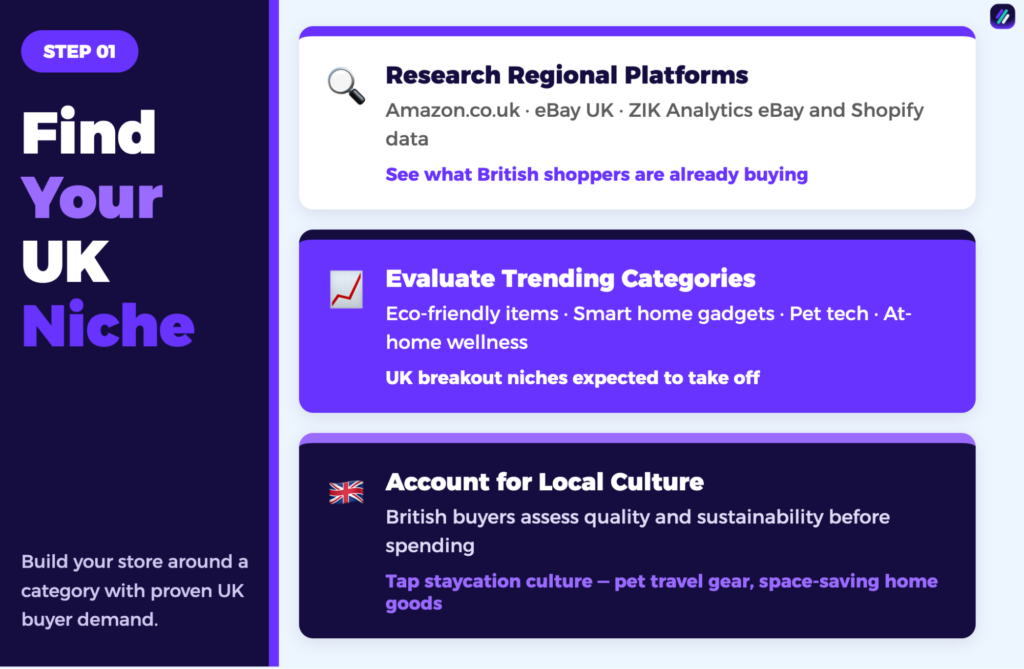
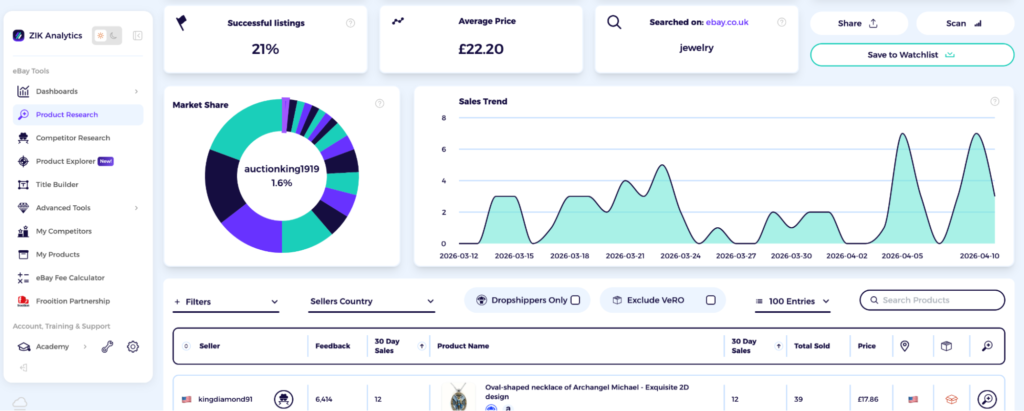
- Research using regional platforms: Although global trend tools can help, you’re better off using UK-specific platforms to validate demand. Sites like Amazon.co.uk and eBay UK show you what British shoppers are already buying and how often. ZIK Analytics also has eBay and Shopify data you can use to see which product categories are gaining traction in the UK.
- Evaluate trending product categories: Certain product trends are expected to take off this year. For the UK, ones to watch out for include eco-friendly everyday items, smart home gadgets, pet tech, and at-home wellness products.
- Account for local culture and preferences: British consumers have a “worth it” mindset, where they assess quality and sustainability before spending. Catering to this mindset requires stocking products that feel purposeful and well-made. You can also tap into the UK’s staycation culture by selling pet travel gear or space-saving home goods suited to smaller city living.
Step 2: Find Winning Dropshipping Products in the UK
Since you’ll be a new entrant in the UK dropshipping market, you need to use every possible way to distinguish yourself from the competition.
One of the best ways to do that is to add winning dropshipping products to your store. These are items that have proven to be a hit with consumers because of their quality or problem-solving ability.
With that, there are several ways you can find profitable dropshipping products in your selected dropshipping niche:
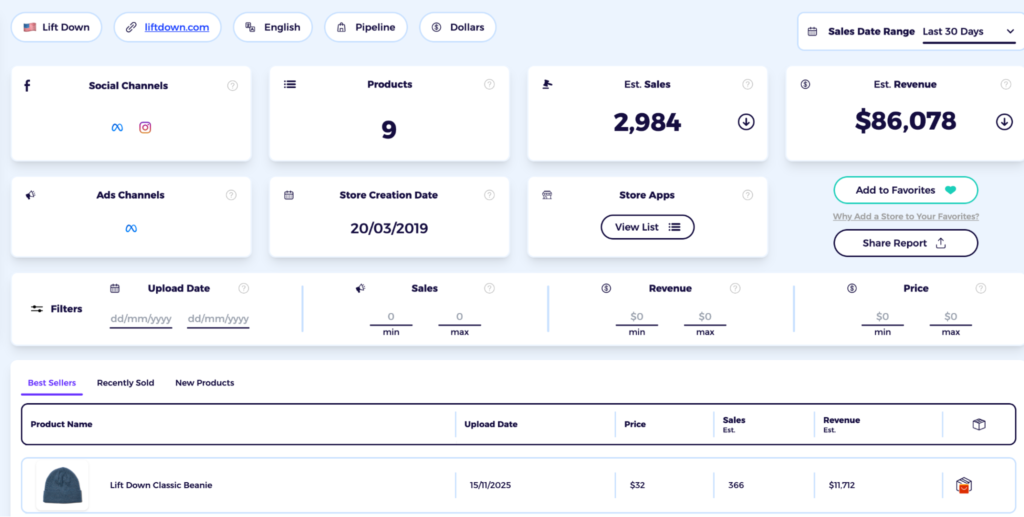
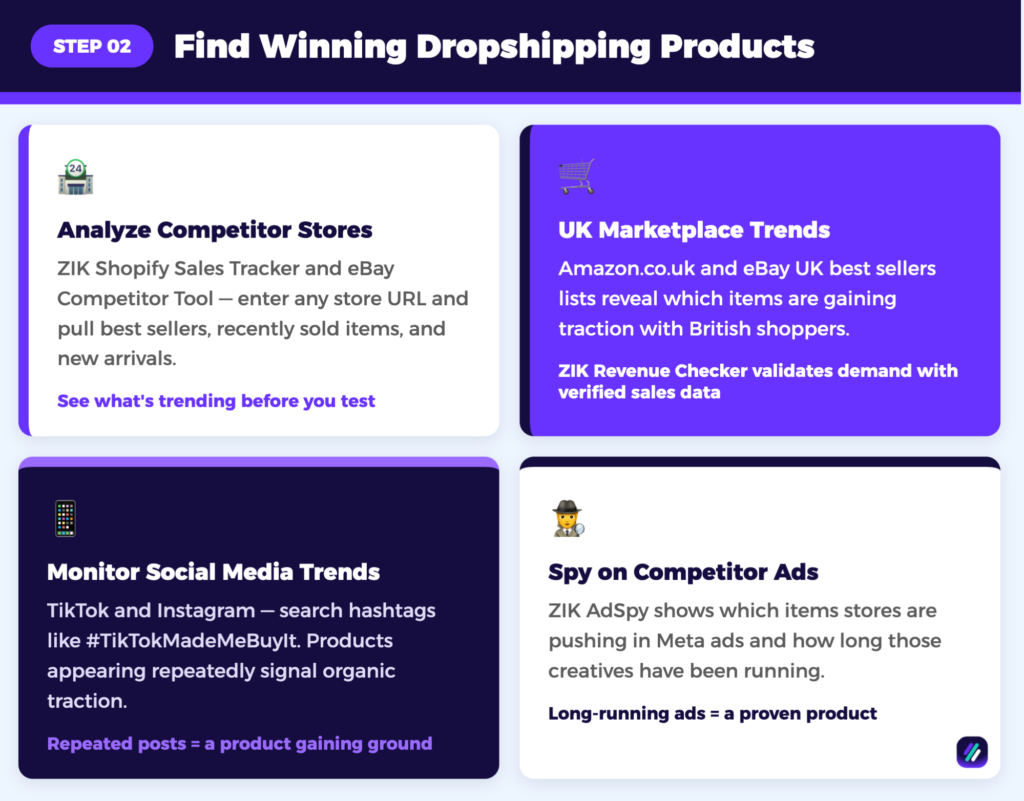
- Analyze competitor stores: ZIK’s Shopify Sales Tracker and eBay competitor research tool let you enter any store’s URL and instantly pull up their best sellers, recently sold items, and new arrivals. This tells you what’s trending in the UK market before you spend a penny testing.
- Research trending products on UK marketplaces: Marketplaces like Amazon.co.uk and eBay UK for dropshipping have trending and best seller lists that reveal which items are gaining traction with British shoppers. ZIK Analytics’ dropshipping revenue checker tool can also help you validate demand with verified sales data and identify items worth adding to your store.
- Monitor social media trends: On TikTok and Instagram, you can research hashtags like #TikTokMadeMeBuyIt and #GadgetUtile to find potential winners for your store. See which items appear across different reels and posts repeatedly, as that often signals a product gaining organic traction.
- Spy on competitor ads: If a competitor keeps featuring the same product in their ads, they’re likely onto a winner (otherwise, why would they keep paying for it?). With ZIK’s AdSpy, you can see which items stores are pushing in Meta ads and how long those creatives have been running, giving you a list of proven sellers to consider for your own store.
Step 3: Find and Vet Dropshipping Suppliers for the UK
After finalizing your niche and products, the next step is to find suppliers who can source, package, and ship those items to your customers.
In the past, finding suppliers was a manual process requiring days of research and outreach. Now, there are tools you can use to speed things up considerably.
To find the best dropshipping suppliers for your UK store:
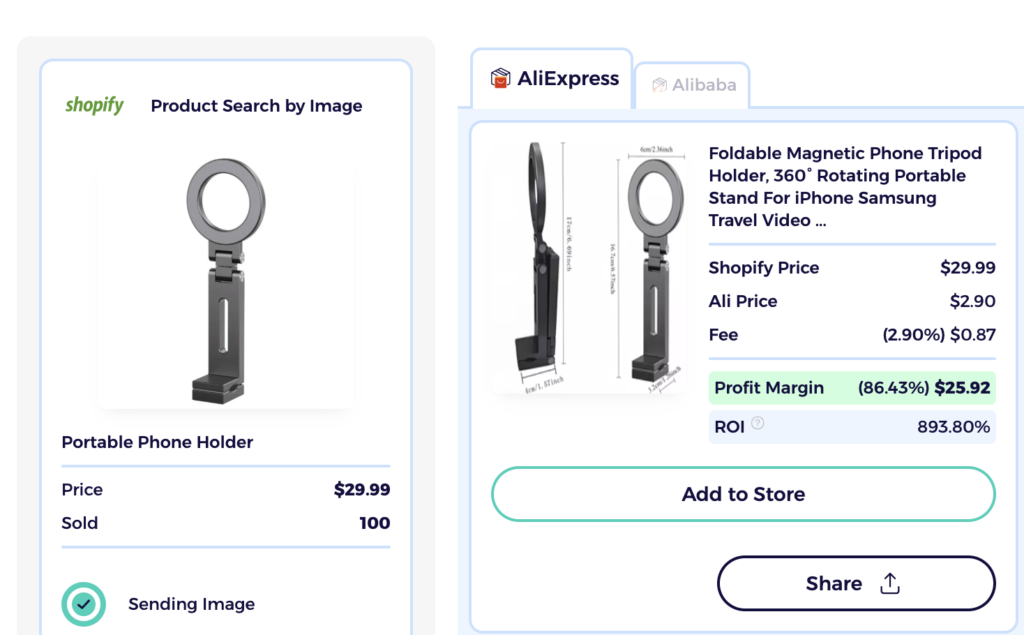
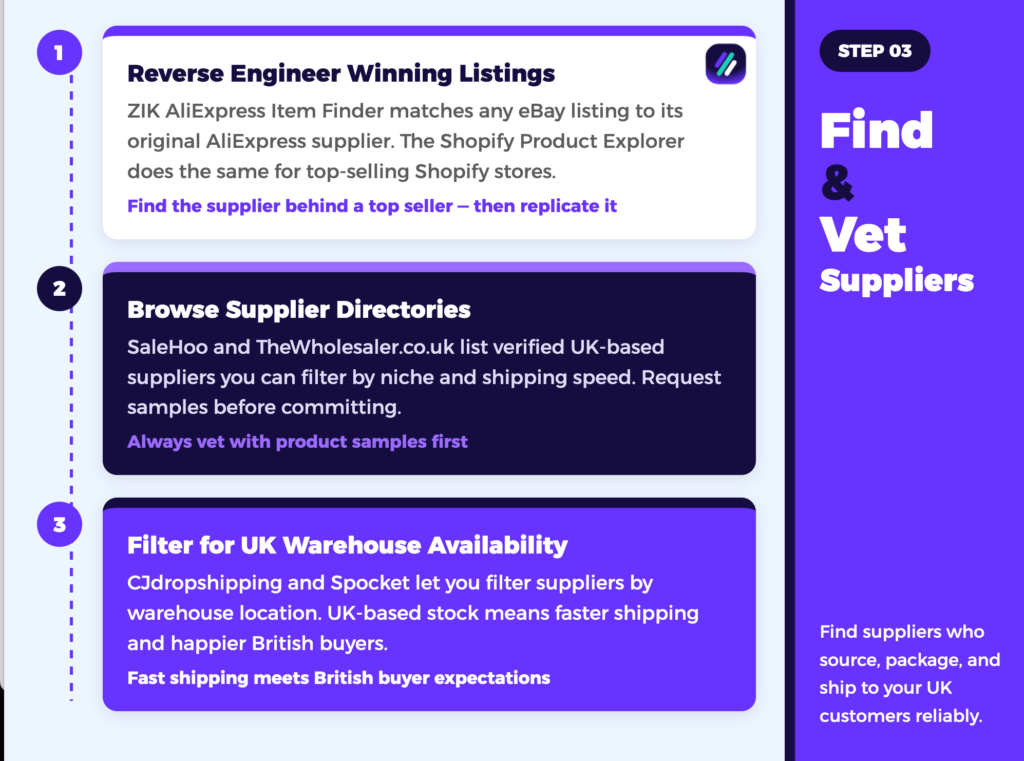
- Reverse engineer winning listings: This involves finding the supplier behind a top-selling product and replicating the sourcing. You can use our AliExpress Item Finder to match any eBay listing to its original supplier on AliExpress..
- Browse supplier directories: Platforms like SaleHoo and TheWholesaler.co.uk list verified UK-based suppliers you can filter by niche and shipping speed. Contact relevant suppliers and ask for product samples to make sure they meet your quality standards before committing.
- Filter for UK warehouse availability: Platforms like CJdropshipping and Spocket let you filter suppliers by warehouse location. Use it to find suppliers based within the UK and get fast shipping times that meet British buyer expectations.
These are some of the ways to find suppliers for your UK store. Later, I’ll share a list of the best UK dropshipping suppliers you can work with to get started.
If you’re looking for more sourcing options, check out our guide to the UK dropshipping suppliers for eBay, which compares popular supplier platforms, UK-based wholesalers, and fulfillment options to help you find reliable partners. Choosing the right supplier is one of the biggest factors in maintaining fast shipping times and positive seller performance.
Step 4: Register Business and Bank Account in the UK
The next step is making sure you’re legally covered before you start selling.
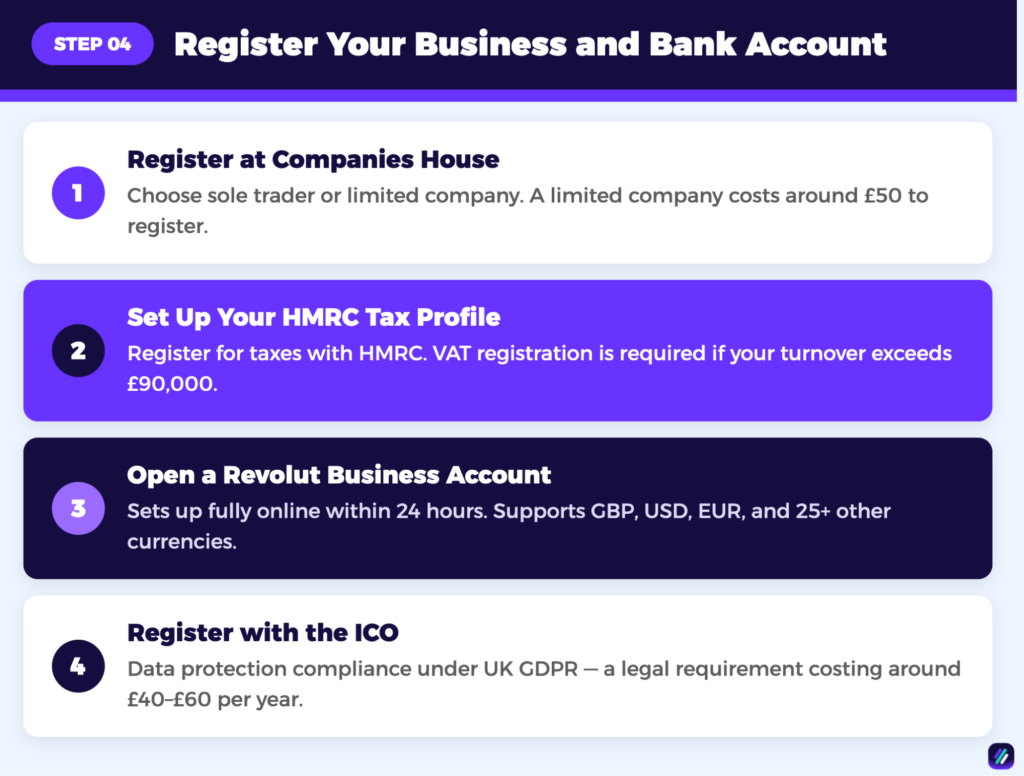
The UK requires you to register your business structure, either as a sole trader or a limited company, through Companies House, with the latter costing around £50. You’ll also need to register for taxes with HMRC and, if your turnover exceeds £90,000, sign up for VAT.
For a business bank account, Revolut Business is a solid choice. It sets up fully online within 24 hours and supports multi-currency transactions across GBP, USD, EUR, and 25+ other currencies.
To get started:
- Register your business at Companies House
- Set up your HMRC tax profile
- Open a Revolut business account at revolut.com
- Upload your ID, company details, and a brief description of your business
Additionally, you have to register with the ICO for data protection compliance. This costs around £40–£60 per year and is a legal requirement under UK GDPR.
Step 5: Decide Where You Want to Dropship
One more thing you need to decide is where to sell your products in the UK.
Most dropshippers have two options:
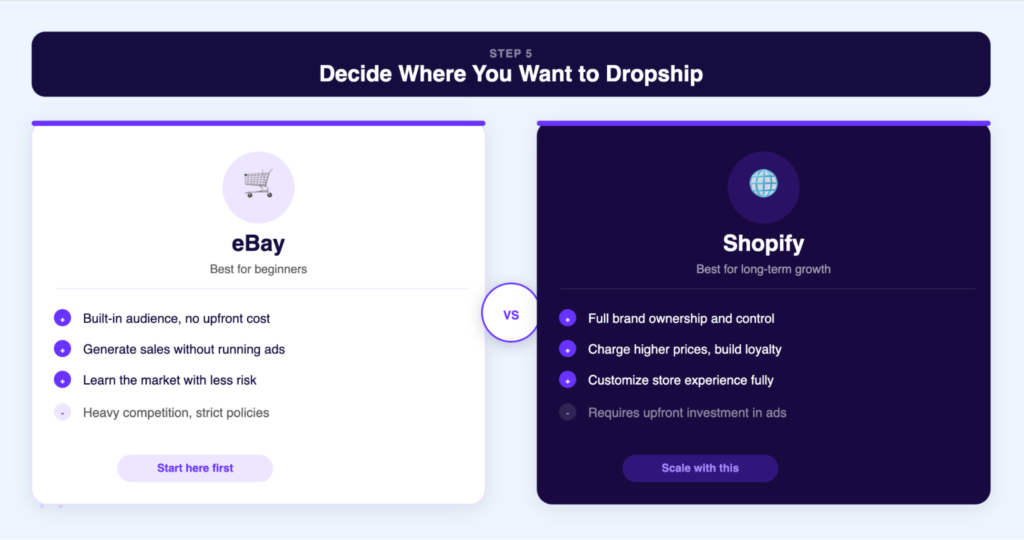
- Dropship on an established marketplace such as eBay
- Build your own store on a UK dropshipping platform like Shopify or WooCommerce
eBay dropshipping gives you immediate access to a massive built-in audience. You can start listing products with little upfront cost and generate sales without spending on ads. There are many high profit eBay niches that can help you earn good income, but the downside is heavy competition and strict supplier policies when it comes to who you can source from.
Shopify dropshipping lets you build a branded store you fully own and control. You can customize the experience charge higher prices than you typically could on a marketplace. Other platforms like WooCommerce are also worth considering, but most dropshippers prefer Shopify in the UK for its ease of use. See how they compare in our Shopify vs WooCommerce guide.
Overall, eBay makes more sense if you’re just starting out and want to learn the ropes without a big upfront investment. Building your own store is the better path if you have some capital and want to grow something long-term.
Step 6: Create Your Dropshipping Store in the UK
Now for the part that is considered the bread and butter of dropshipping: creating your online store.
Dropshipping in the UK requires you to build a store that looks professional and earns the trust of British shoppers.
Here are the steps to do so.
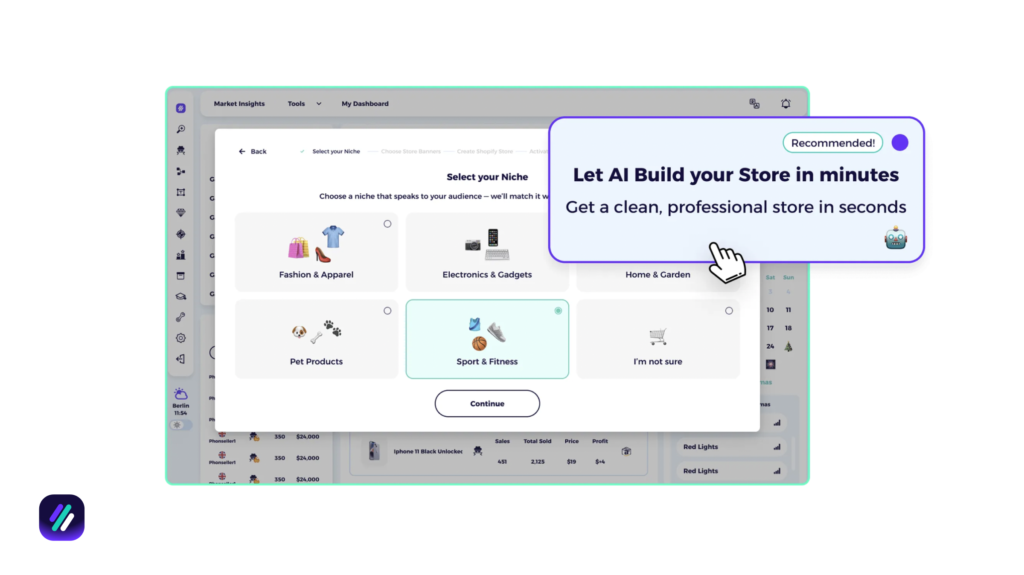
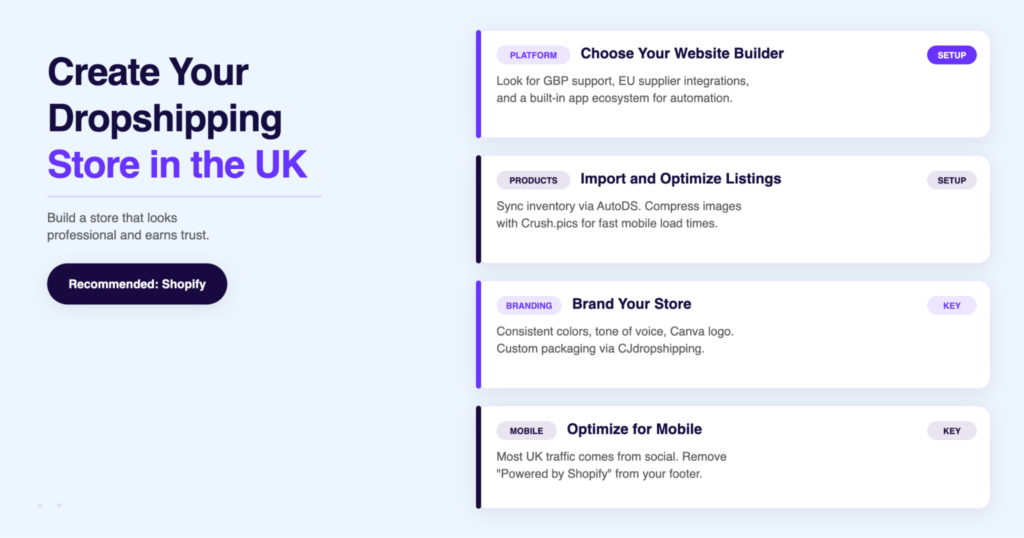
Choose a website building tool: There’s no shortage of dropshipping website builders out there to help you design and launch a dropshipping website. However, not every builder is worth investing your money in. Look for options that let you integrate easily with suppliers like Spocket or Syncee, and check whether they support GBP as a default currency and have a built-in app ecosystem for automation. You can also use the Shopify AI store builder to get a head start on your setup.
Import and optimize your products: As with most platforms, you’ll need to put some work into getting your listings ready. Using a tool like AutoDS, you can sync inventory directly from your supplier and avoid overselling. Images can also be compressed using an app like Crush.pics to keep load times fast for mobile shoppers.
Brand your store: Branding involves picking consistent colors and a tone of voice that runs across your store and social media. You can use Canva to create a clean logo and suppliers like CJdropshipping to add custom packaging or thank-you cards to orders. High-quality product photos and trust badges are also good ways to improve the visual appeal of your store. For more ideas, check out our essential guide to eCommerce branding for sellers.
Optimize for mobile: Most UK traffic arrives from social media, so mobile performance is non-negotiable. The best e-commerce platforms offer mobile-friendly themes that load fast and convert well on smaller screens. Remember to remove “Powered by Shopify” from your footer so that your store looks professional to customers.
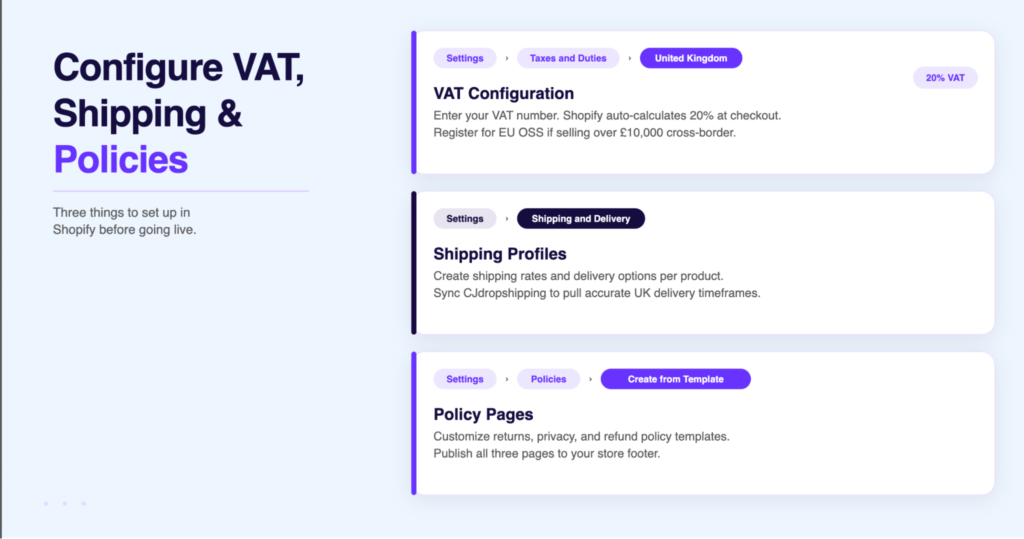
Step 7: Configure VAT/Taxes, Shipping & Policy Pages
Another requirement for dropshipping in the UK is setting up tax, shipping, and policy pages. These are legal necessities that protect your business and tell customers what to expect before they place an order.
VAT can be configured from within Shopify’s admin panel. Head to Settings > Taxes and duties, select United Kingdom, and enter the VAT number you obtained in Step 4. Shopify then handles the calculations automatically.
The shipping page can also be set up directly inside Shopify. Go to Settings > Shipping and delivery, then create your shipping profiles. These define the rates and delivery options tied to your products. If you’re using a supplier app like CJdropshipping, sync it here to pull accurate delivery timeframes.
As for policy pages, Shopify offers ready-made templates that you can customize in minutes. Go to Settings > Policies, click “Create from template,” tailor each page to your store, and publish them to your footer.
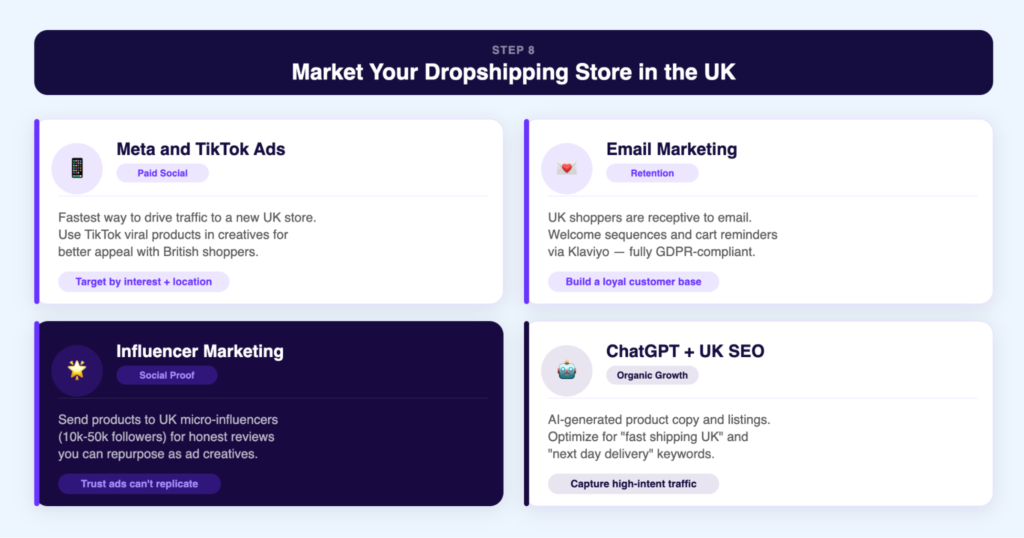
Step 8: Market Your Dropshipping Store in the UK
After creating your store, you need to think of ways to get your products in front of UK buyers.
Some effective dropshipping marketing strategies for the UK include:
- Running Meta and TikTok ads: Paid social is one of the fastest ways to drive traffic to a new store. You can leverage TikTok dropshipping products to find items with existing viral traction and feature them in your ads to improve appeal
- Leveraging influencer marketing: Influencers add social proof that paid ads struggle to replicate. You can send free products to UK-based micro-influencers with 10k–50k followers and ask them to post honest reviews or demonstrations you can repurpose for ads.
- Using ChatGPT for dropshipping: ChatGPT dropshipping can help you show up both in search and on social. Using AI-generated product descriptions and ad copy, you can produce content faster and test more variations without needing to write from scratch.
- Promoting via email: The UK audience is more receptive to email than many other markets. With a welcome sequence and regular newsletters featuring your products, you can build a loyal customer base.
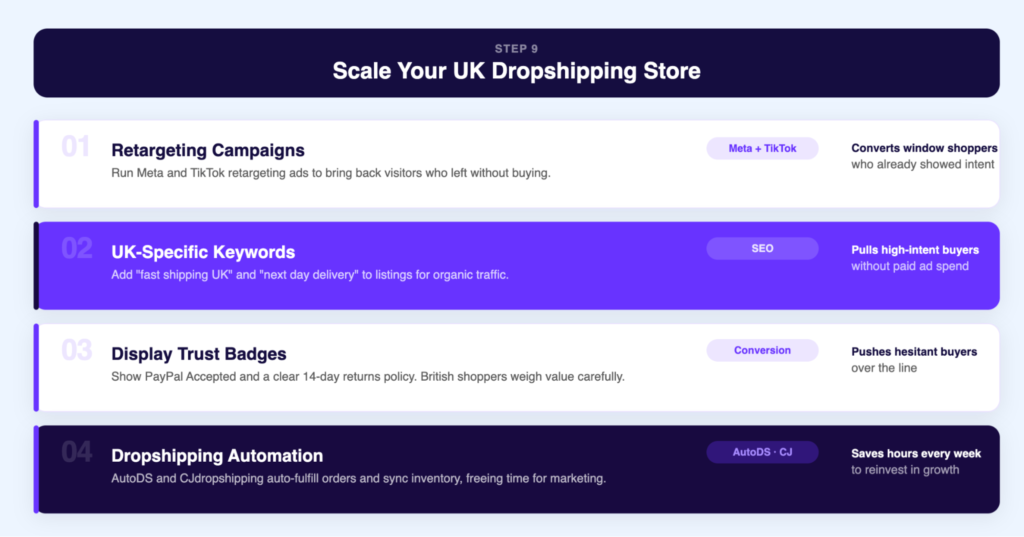
Step 9: Scale Your Dropshipping Store
After your store generates a few sales, you can start thinking of ways to broaden its reach.
Many people use TikTok and Facebook ads for dropshipping since they offer a quick way to get more eyes on your products. But you can also run retargeting to bring potential shoppers back to your store.
Optimizing for UK-specific keywords is another tactic dropshippers use to pull in organic traffic. When shoppers see terms like “fast shipping UK” or “next day delivery” in your listings, they’re more likely to click and convert.
Furthermore, you can display trust badges like PayPal Accepted and a clear 14-day return policy to reassure hesitant buyers. Since British shoppers weigh value carefully, visible guarantees and transparent policies go a long way in making them comfortable with your store.
The last piece of advice is to invest in dropshipping automation. Using tools like AutoDS and CJdropshipping, you can set up a system where orders are fulfilled and inventory is synced automatically, leaving you more time to focus on growth.
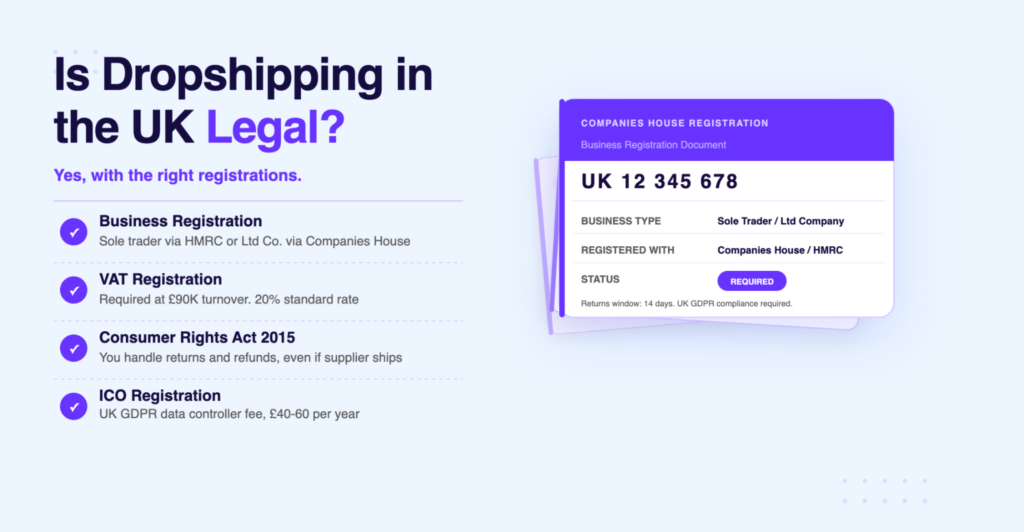
Is Dropshipping Legal in the UK?
Yes, dropshipping is legal in the UK but subject to legal and compliance requirements.
The main requirement is that you must register as either a sole trader with HMRC or a limited company through Companies House. This registration must be completed by 5 October following the end of the tax year in which you start trading.
You also need to register for VAT once your turnover hits £90,000 in any rolling 12-month period. And if you’re based outside the UK but selling to UK customers, you must register for VAT from your very first sale, regardless of your current turnover.
UK law also requires you to comply with the Consumer Rights Act 2015, meaning you’re responsible for returns and refunds even when your supplier ships directly. Plus, your store must clearly display product descriptions, pricing, and a returns policy.
Additionally, you must register with the ICO as a data controller and pay an annual fee of £40–£60 to stay compliant with UK GDPR.
Is Dropshipping in the UK Profitable in 2026?
Yes, dropshipping in the UK can be highly profitable due to growing local demand and a large base of active online shoppers.
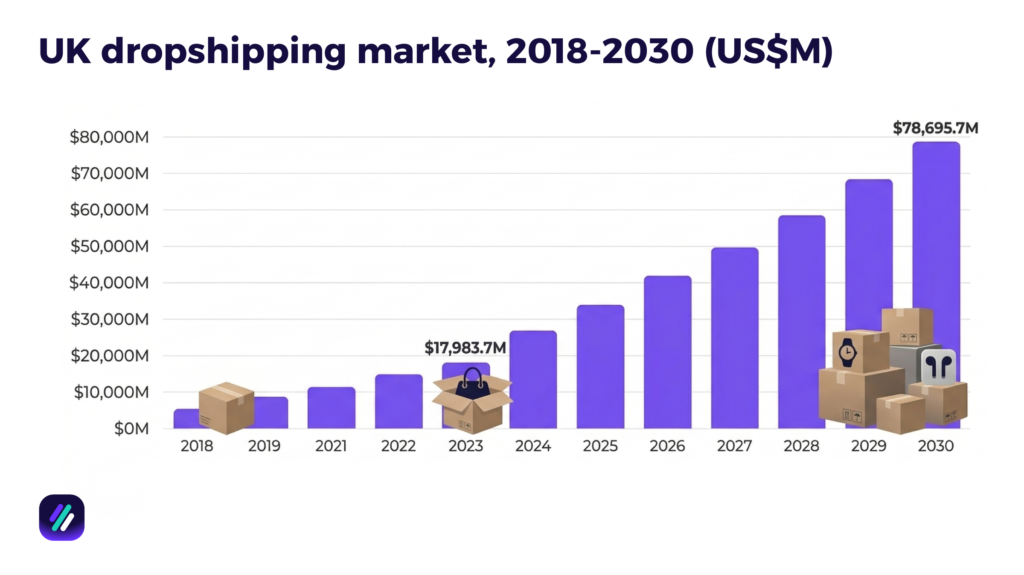
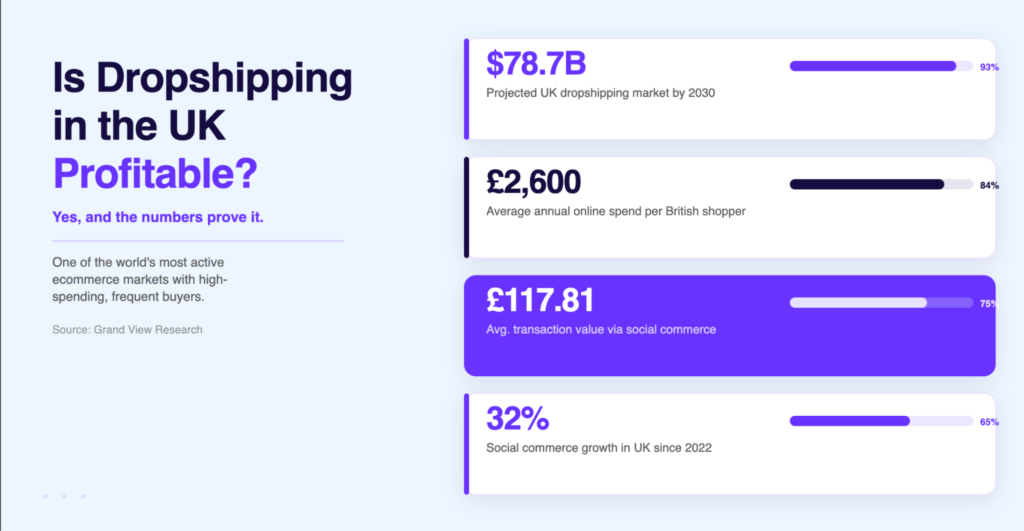
According to Grand View Research, the UK dropshipping market is projected to reach $78.7 billion by 2030. With British shoppers spending an average of £2,600 per year online and mobile commerce already exceeding £100 billion, the market is expected to offer plenty of opportunity to new sellers.
UK consumers are also embracing social commerce at a rapid pace. Shopping via social media has surged 32% since 2022, with consumers making purchases an average of four times a month at an average transaction value of £117.81. For a dropshipper, that kind of built-in buying behaviour means your products are one well-placed ad or viral post away from a sale.
Moreover, fashion leads UK online sales with £67.8 billion, and British shoppers purchase across categories from electronics to beauty and pet products. These numbers indicate that demand exists across a wide range of niches, giving dropshippers flexibility in what they choose to sell.
Pros and Cons of Dropshipping in the UK
Wondering whether you should start dropshipping in the UK? Here’s a list of pros and cons to help you decide.
Benefits of Dropshipping in the UK
The main advantages of dropshipping in the UK include:
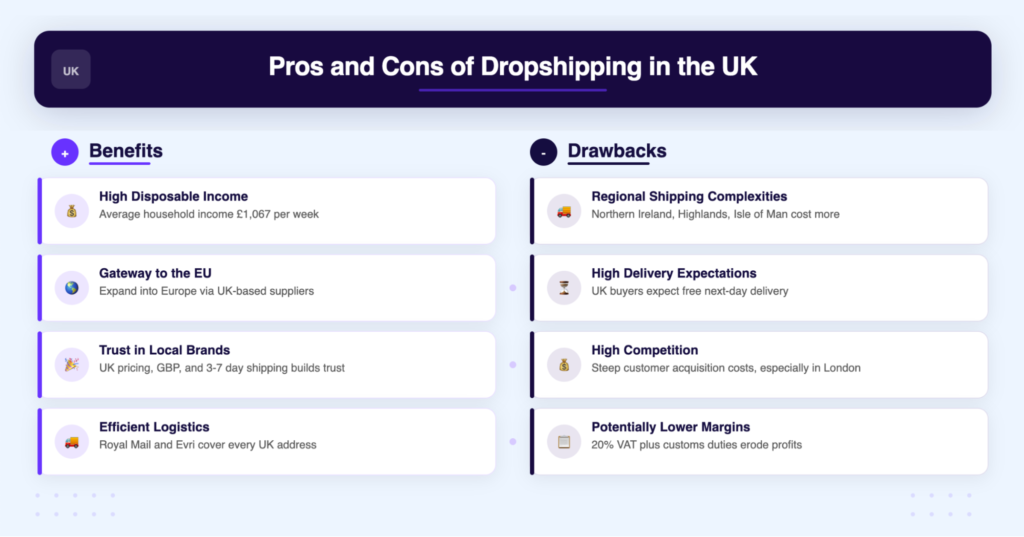
- High disposable income: The UK ranks among Europe’s wealthiest consumer markets. The average household brings in £1,067 per week, and with inflation easing toward the Bank of England’s 2% target, discretionary spending power is expected to grow. That means British wallets are expected to loosen up, even for the quirkiest products in your store.
- Gateway to the EU: Even though the UK officially exited the EU, dropshipping there opens up possibilities to expand into the European market. Many suppliers who hold inventory in the UK also dropship to Europe (and vice versa), meaning you can fulfill orders across both regions without increasing your costs.
- Trust in local brands: UK shoppers value convenience and trust local-feeling websites. Dropshippers can leverage this by using UK-based suppliers, GBP pricing, and 3–7 day shipping to build a trustworthy brand.
- Efficient logistics: Dropshipping to the UK gives you the opportunity to partner with local carriers such as Royal Mail and Evri. These firms cover every address across the country and offer reliable, efficient tracking, helping you meet the high expectations of UK consumers.
Downsides of Dropshipping in the UK
The cons of UK dropshipping are as follows:
- Regional shipping complexities: Although shipping within mainland UK is available at standard rates, shipping to areas like Northern Ireland, the Scottish Highlands, and the Isle of Man can increase costs. Deliveries to these regions may also be slower due to the additional distance and limited carrier coverage.
- Shipping expectations: UK consumers have high expectations for free and next next-day delivery and returns (largely in part to Amazon’s speedy delivery). This “want it now” culture can severely impact profit margins should your suppliers fail to match that pace and quality.
- High competition: The UK e-commerce market is highly competitive and mature. New sellers often face steep customer acquisition costs when advertising in London and the Southeast. You’ll need a solid value proposition if you want to find your footing in this cutthroat environment.
- Potentially lower margin: The UK requires dropshippers to charge 20% VAT at checkout and register with HMRC once turnover hits £90,000. On top of that, goods imported from outside the UK may attract customs duties, adding to your costs. This can lower your profit margins and make it difficult to charge a competitive price.
Best Dropshipping Suppliers in the UK
As I promised earlier, here’s a list of dropshipping suppliers to help you get started selling in the UK.
Avasam
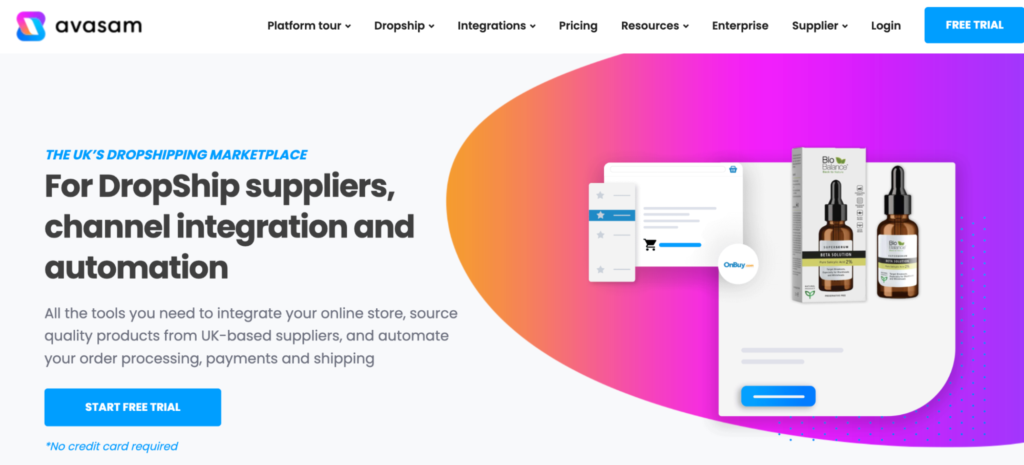
Avasam is a UK dropshipping marketplace that connects online retailers with verified, local suppliers. It integrates directly with platforms like eBay, TikTok, and Shopify to streamline ordering and inventory management across channels. Automated order flows and inventory management free up hours that you could put toward marketing your business.
GoDropship
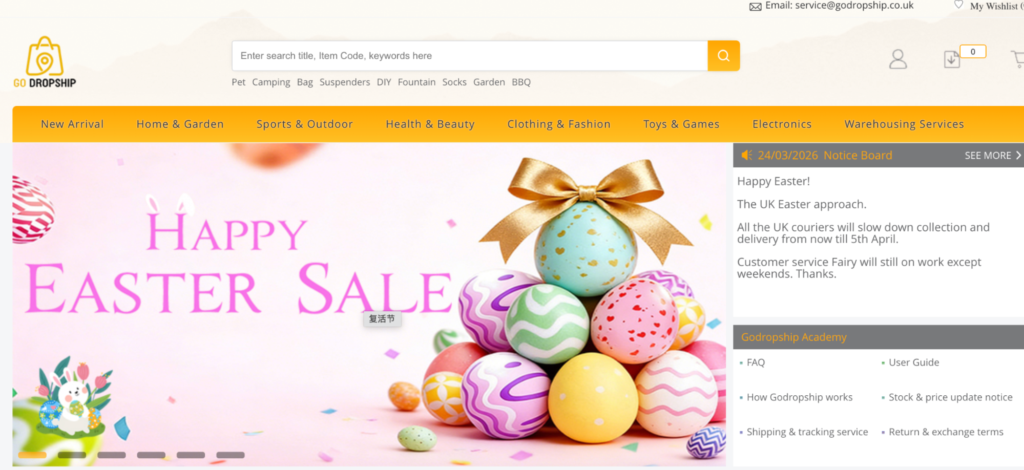
Go Dropship is a dropshipping supplier that stores all its inventory in UK warehouses. This allows it to offer next-day delivery on many items and meet UK customer expectations. Go Dropship specializes in tech, home goods, and general merchandise and doesn’t require users to engage in long-term subscriptions or monthly contracts.
Geko Products
Geko Products is a reliable UK supplier focusing on giftware, home décor, and lifestyle products. It can be a great partner for niche, design-focused boutique stores that deal in such items. With 100% UK warehousing, Geko is able to provide fast shipping along with live inventory updates to its users.
Find more UK dropshipping suppliers.
Find Winning Dropshipping Products for the UK with ZIK Analytics
ZIK Analytics has a suite of tools to help you find and validate winning products for dropshipping in the UK.
However, I’d like to highlight three tools that make it easier to discover what’s selling and how to market it in the UK market:
- Shopify Product Finder is your dropshipping product research tool for finding which products are selling across UK Shopify stores. Search keywords and filter by sales to identify trending items that UK buyers are purchasing.
- Shopify Sales Tracker acts as your dropshipping sales tracker for monitoring successful UK dropshipping stores. Enter a store URL to see daily sales, revenue, and which products are performing best.
- AdSpy shows you which ads competitors are running for UK markets on Facebook and Instagram. Filter by country to see campaigns targeting the UK and save winning ads to reference when building your own.
You can also use the Shopify Store Finder to discover successful UK dropshipping stores by revenue and the Shopify Market Insights to see trending products and niches.
Start your ZIK Analytics trial today and find products that are already generating sales in the UK market.
Frequently Asked Questions About Dropshipping in the UK
In this section, I’ll answer the questions people frequently ask about dropshipping in the UK.
Is dropshipping worth it in the UK?
Yes, dropshipping is worth it in the UK. It allows you to launch a store with minimal upfront investment and test products without financial risk. However, the UK market is highly competitive, meaning you’d need to market your products and build a recognizable brand to succeed as a dropshipper.
Do you pay tax on dropshipping in the UK?
Yes, you pay tax on dropshipping items in the UK. The profits you make are subject to income tax if you’re a sole trader and corporationt tax if you’re a limited company. You may not need to declare sales if your annual revenue is less than £1,000, but must register with HMRC if it exceeds that figure. A turnover of above £85,000 in 12 months requires VAT registration in order to stay complaint.
Are there dropshipping warehouses in the UK?
Yes, there are numerous dropshipping warehouses and suppliers located within the UK. Sourcing from them comes with the benefit of faster shipping and reliable, local service. Some popular options include Banggood UK, VidaXL, DK Wholesale, and GoDropship.