
Did you always dream of starting your own e-commerce brand? A brand that gets customers excited and talking?
If yes, then private label dropshipping is the perfect business model for you.
Compared to standard dropshipping, private label dropshipping lets you create unique, branded products that you can sell as your own.
It also lets you charge higher prices as you’re able to offer exclusivity via customized materials and appearance.
Let’s take a closer look at how this business model works and the steps you can take to launch your own private label dropshipping brand.
Key Takeaways
- Private label dropshipping allows you to sell products at a higher margin and gain long-term loyalty
- It allows you to customize products to a greater extent than white-label dropshipping, which involves selling generic products with minimal customization
- Phone accessories and small kitchen supplies are some of the most suitable products for private label dropshipping
- Dropshipping tools like ZIK Analytics make it easy to validate demand for different items
- Suppliers like Dripshipper and Aliiq allow you to specialize in a certain niche and launch your own brand
What Is Private Label Dropshipping?
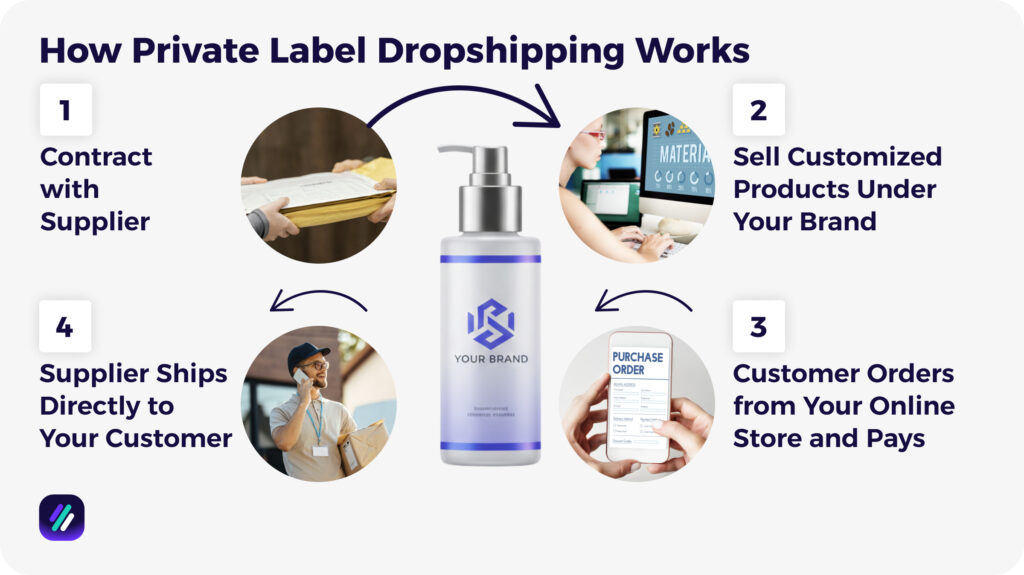
Private label dropshipping is a type of e-commerce where you sell products manufactured by a third-party supplier under your own brand name. This creates the impression that you made the item yourself and makes for a cohesive brand experience. The supplier (often a large wholesaler or manufacturer) manages inventory and shipping directly to the end customer.
Private label dropshipping enables retailers to easily expand into new product lines. You do not need to significantly invest in inventory or manufacturing facilities upfront. The orders are processed only when a customer buys something from your store and pays for it.
Private Label vs. White Label vs. Regular Dropshipping
Private label dropshipping allows you to partner with a factory to create a unique item specifically for your brand. White-label dropshipping involves selling generic, less unique products from a supplier’s catalog under your own brand name. Regular dropshipping is when you sell products directly from a supplier without any customization or branding.
These three dropshipping models work differently in terms of branding, price control, and other factors. Here’s a quick breakdown:
| Aspect | Regular Dropshipping | White Label | Private Label |
| Product | Generic items from supplier catalogs | Mass-produced products (sold by multiple retailers) | Custom products made exclusively for you |
| Branding Control | None (ships with supplier or generic packaging) | You add your logo and packaging | Full control over design and packaging |
| Customization | None | Logo and packaging only | Change specs, materials, design, features |
| Initial Investment | Lowest (no upfront costs) | Low to moderate (branding costs) | Higher (includes product development and MOQs) |
| Time to Market | Immediate | Quick (just add branding) | Slower (takes weeks to months) |
When to Choose Each Model
Due to the reasons above, it makes sense to use private label dropshipping when you want to build a unique, distinguishable brand and are willing to invest time and capital.
White-label dropshipping makes more sense for testing product viability before committing to full customization, whereas regular dropshipping is best for testing many new product ideas quickly without much risk.
Pros, Cons, and When Private Label Dropshipping Makes Sense
Private label dropshipping allows you to take a hybrid approach, combining the advantages of custom branding with the low-overhead benefits of dropshipping. Here are some of its pros and cons:
Pros of private label dropshipping
- Strong brand identity: The private label model allows you to create a unique identity that customers can’t find elsewhere. You can create custom logos, designs, and packaging to differentiate your store from the rest.
- Higher profit margins: With a unique product and brand, you are in a better position to apply premium pricing. You might even get to decide the market price depending on how exclusive and popular your brand gets with customers .
- Increased customer loyalty: When you offer exclusive items under your own brand, it helps build customer trust and loyalty. Customers are more likely to recommend a brand than generic, mass-produced items that don’t have a backstory.
Cons of private label dropshipping
- Significant upfront investment: Private label dropshipping typically requires a greater investment for design, branding, and product customization. Suppliers of private label products also have minimum higher order quantities, increasing the overall investment required to get the business started.
- Increased accountability: As a private label dropshipper, you are fully accountable for the product’s quality and any discrepancies. If something goes wrong, you’ll be the one offering an explanation and providing a resolution.
- Slower launch: Since creating a custom product and finalizing packaging design takes time, you won’t be able to launch as quickly as a traditional dropshipping business. Plus, it can take a while to get customers to trust your new brand.
When private label dropshipping makes sense
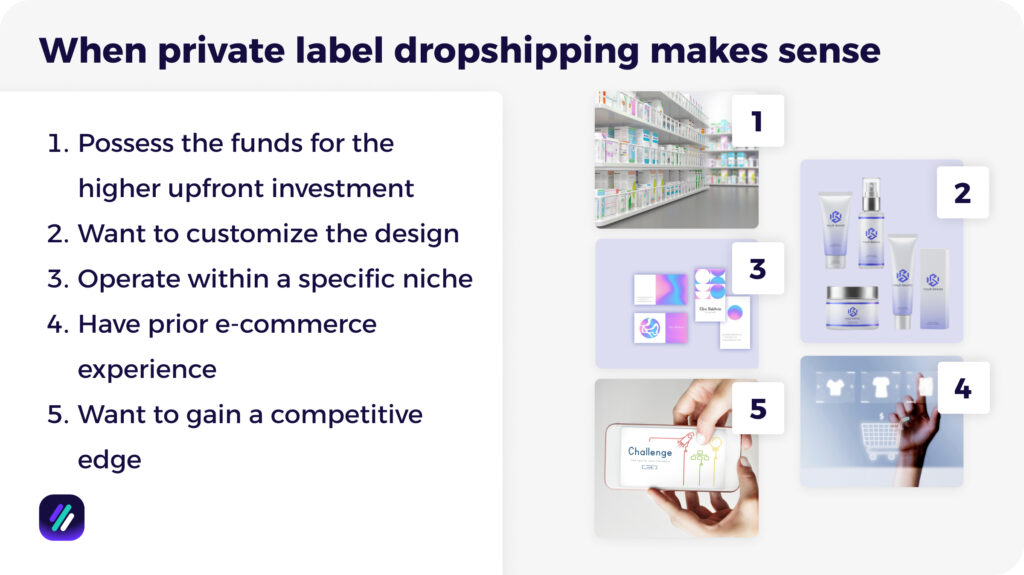
Private label dropshipping makes most sense when your main goal is to build a unique brand identity. It’s ideal if you:
- Possess the funds for the higher upfront investment and MOQs
- Want to customize the design, features, or materials of a specific item to meet a unique need
- Operate within a specific niche where you can become an authority
- Have prior e-commerce experience and understand customer behaviors
- Want to gain a competitive edge by offering a unique product
Private Label Dropshipping Step-by-Step Launch Plan
Excited to launch your own private label dropshipping store? Here are the steps to make it happen.
Step 1: Choose a Profitable Niche
A niche gives you focus and direction in a space where it’s easy to get lost in the crowd. For private label dropshipping, you’ll want to choose a micro niche that caters to a specific audience.
For example, a lot of people are willing to pay a premium for tech products that have AI or certain automation features in them. You can consider selling items that speak to these audiences, as long as there is consistent and growing demand for them.
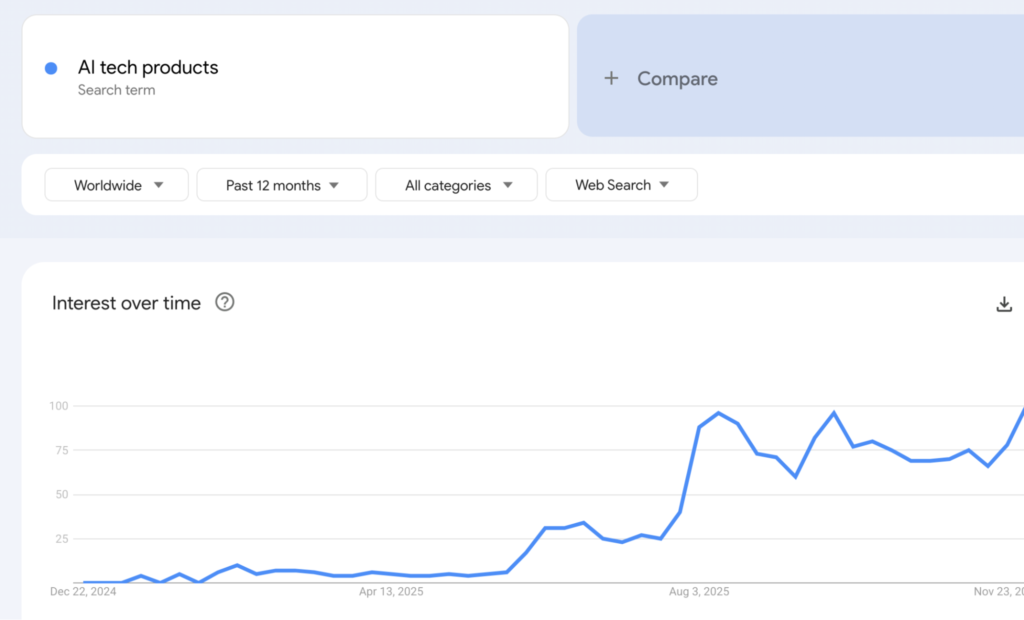
Tools like Google Trends and keyword research tools can help you validate the market size and interest in a particular niche. And while not a strict requirement, having personal interest or expertise in the niche can make everything more enjoyable.
Ideally, you should look into a niche where you can build a compelling brand narrative and improve on existing offerings in the market.
Step 2: Find Winning Private Label Dropshipping Products
The next step is to find unique, desirable items that justify the premium pricing and bring exposure to your brand.
Get your initial ideas from Reddit and niche-specific Facebook groups where people share their demands and wishes.
Then analyze those ideas with Google Trends to see if the items have consistent, year-round demand (indicating that they’re evergreen) or are just a temporary fad.
If you want to dig deeper into a product’s potential, check ZIK Analytics’ Shopify Product Finder tool. This tool provides a data-rich view of how an item fares based on its performance across thousands of Shopify stores.
To use it:
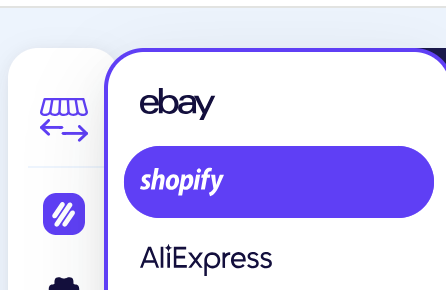
1. Open ZIK Analytics and select Shopify as your marketplace
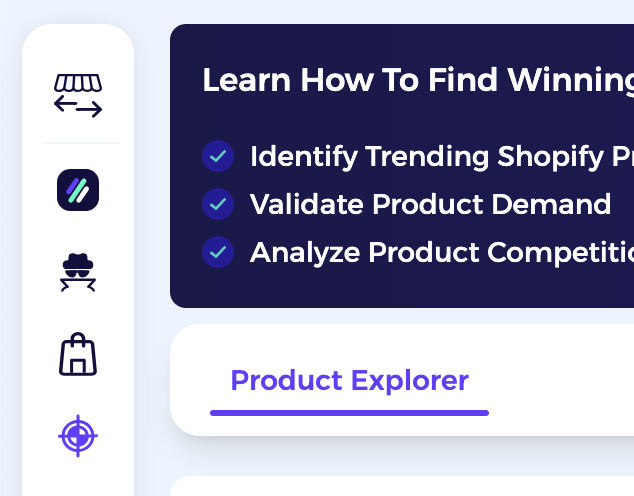
2. Select the Product Explorer tool from the menu on the left
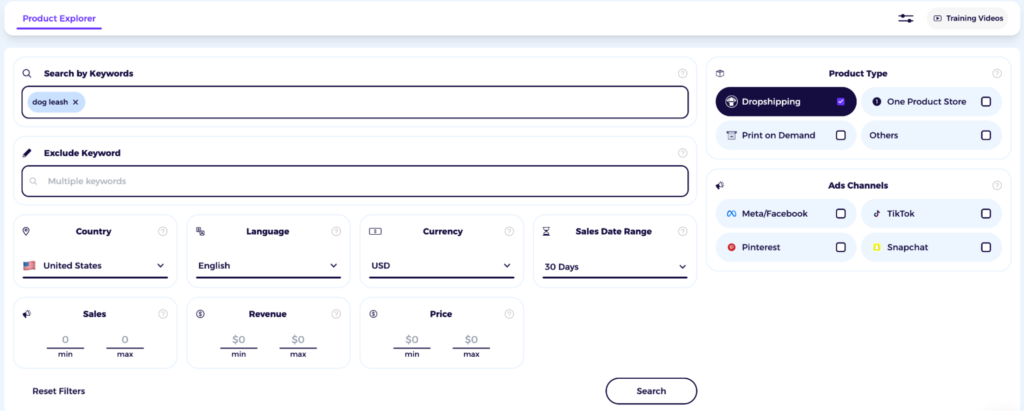
3. Type the name of the product you want to search (you can use different filters like country, language, sales date range, etc.).
4. Click Search and then scroll below to see the product view
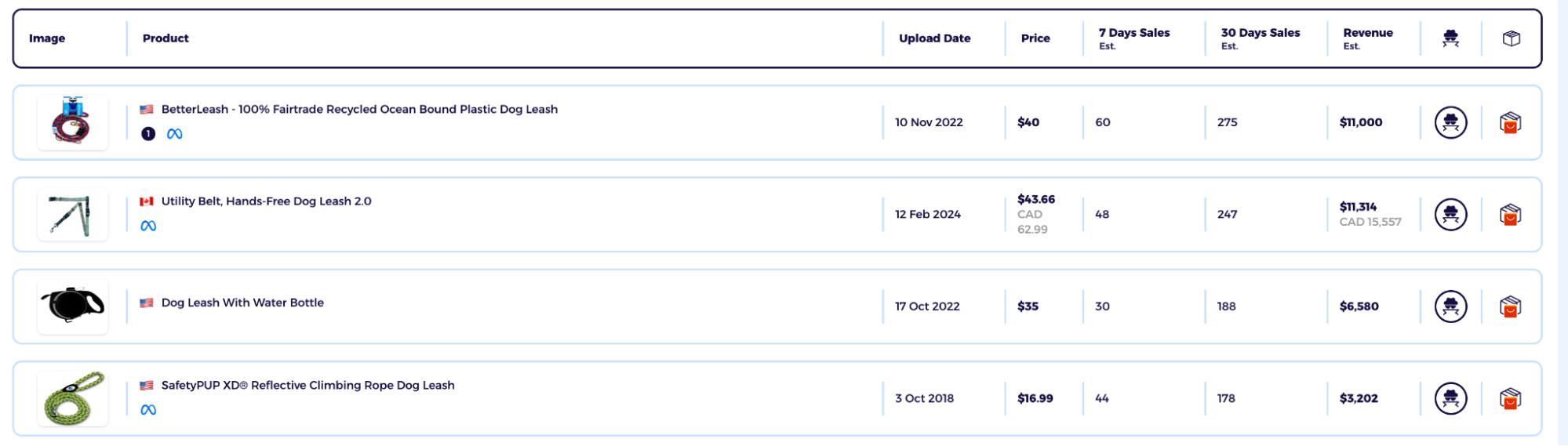
ZIK lets you analyze 7-day and 30-day sales, revenue estimates, upload date, and pricing of each item to make informed sourcing decisions.
Another handy tool from ZIK is the Shopify Sales Tracker. This tool lets you track the bestselling items of any store and reverse engineer the results to find winning items for your own store.
To use it:
1. Open the Shopify Sales Tracker from the left-hand table inside ZIK’s dashboard
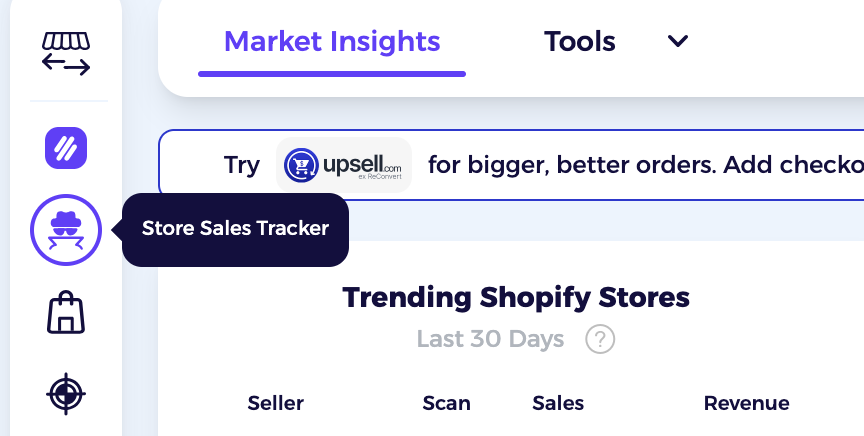
2. Enter the URL of the Shopify store that you want to reverse engineer

3. Click Search, and you’ll arrive at a dashboard showing the social channels, total products, creation date, and other data for that store.
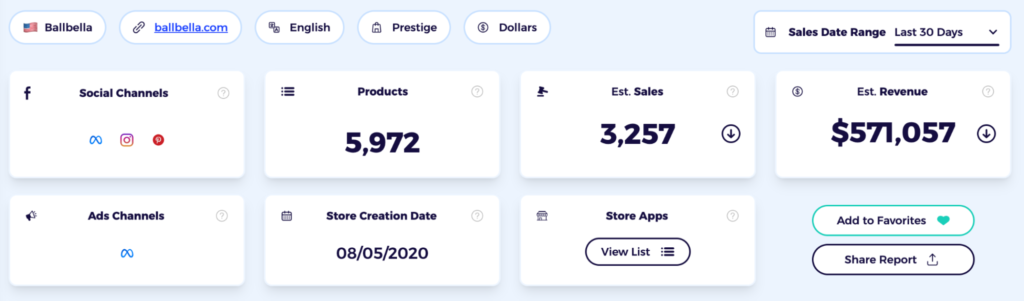
4. In the product view section, see which items the store recently sold, the ones newly added to inventory, and its best-selling items for a quick analysis.

Step 3: Find and Vet Suppliers
Finding dropshipping suppliers who offer private labelling dropshipping comes down to looking in the right places and asking the right questions.
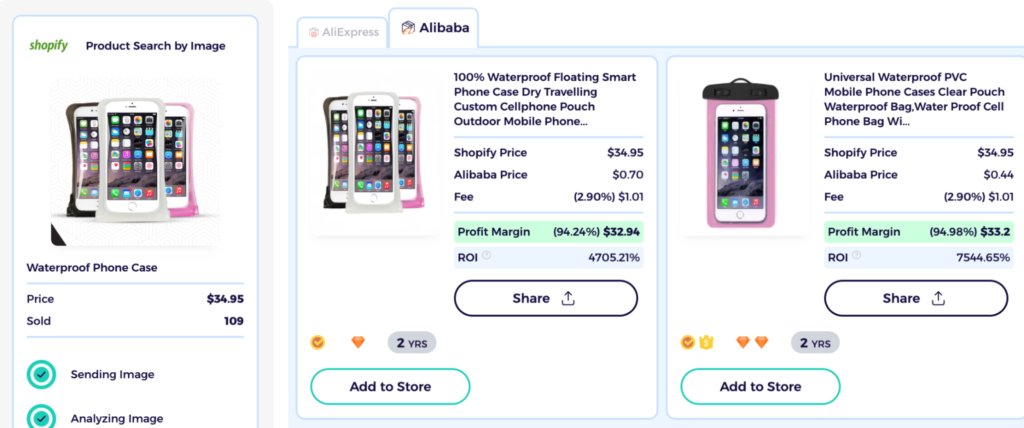
You can begin your supplier search within ZIK. Our Shopify Product Finder tool also lets you match items to Alibaba and AliExpress suppliers using image-based search.
Just click the box icon with the AliExpress logo in the last column of the product view section.
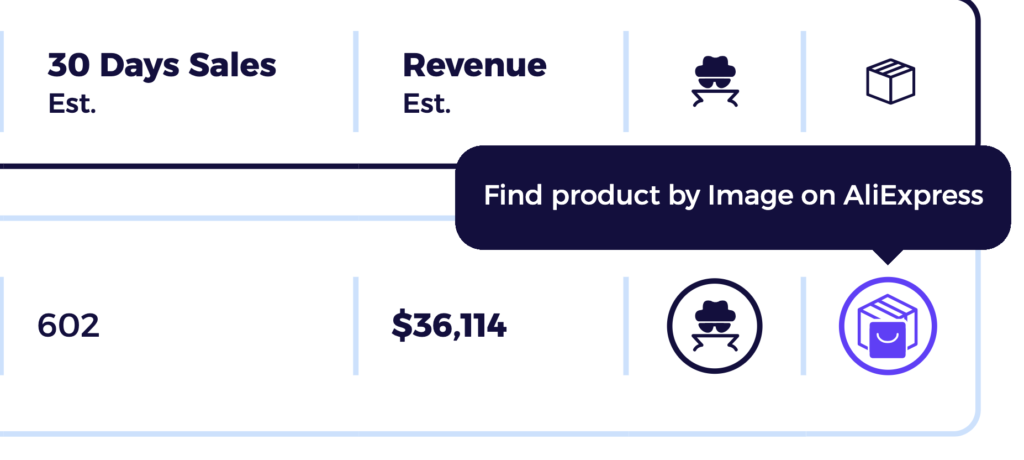
ZIK will then search for the item on both marketplaces by image and share a list of suppliers who have it in stock. Additionally, you’ll see the profit margin and ROI you can make should you decide to dropship the said product through your store.
Other ways to find private label dropshipping suppliers include:
- Using general platforms (DHgate, Syncee, etc.) and directories (Salehoo, HyperSKU, etc.
- Browsing niche forums like /dropship and /ecommerce on Reddit and The Wholesale Forum for user recommendations
- Researching local or regional manufacturers via platforms like InventorySource
In terms of vetting the supplier, you can request samples to check the quality and authenticity of items.
Also, ask whether they can handle your custom packaging and packaging needs. MOQs should be brought up as well, since some manufacturers can have hidden minimums for private labeling.
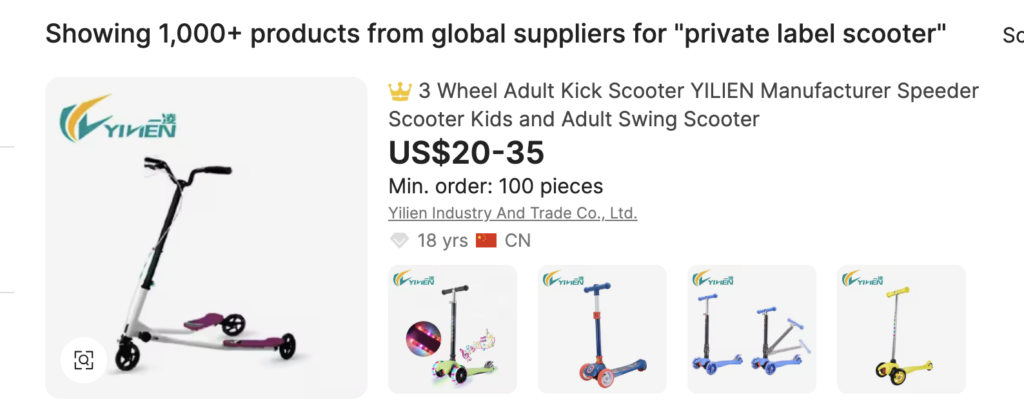
Ideally, you should pick a supplier with good reviews and a fast customer response time for the best results.
Step 4: Specs and Packaging
As you communicate with the supplier, make sure to provide detailed specs that include color, dimension, design, and material preferences. You can also detail any unique treatments required, such as specific assembly instructions or fabric treatments for apparel and home furnishings.
Plus, specify any required certifications (ISP, GMP, or whatever applies to your niche) to ensure quality and compliance.
For packaging, you’ll want to ask about the supplier’s ability to print your logo and brand designs on the boxes. Once confirmed, make sure to provide high-resolution, vector logo files that can be used on both the item and the packaging. As for the type, discuss which options are available from mailers, custom boxes, and inserts.
The packaging also needs to protect during transit while also conveying your brand’s story. Choose suppliers who use sustainable materials or branded inserts to encourage sharing on social media networks.
Step 5: Costing & Unit Economics
Costing and unit economics involve doing some math to figure out whether an item you’re selling will keep things sustainable.
Basically, you take the selling price you have in mind and subtract all the costs that go into selling the product.
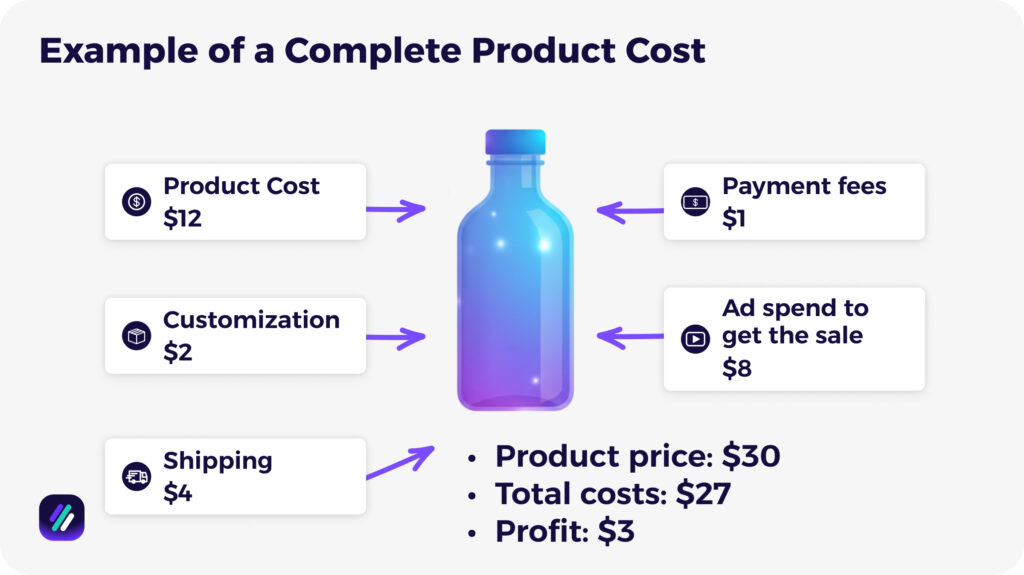
Let’s say you want to charge $30 for a water bottle. Here’s what selling it might cost:
- Product cost: $12
- Customization (your branding/packaging): $2
- Shipping: $4
- Payment fees: $1
- Ad spend to get the sale: $8
- Total costs: $27
- Profit: $3
To calculate your profit margin, divide your profit by the selling price, then multiply by 100:
($3 ÷ $30) × 100 = 10% profit margin
Since a good profit margin for private label is between 50%-70%, your product in this case would need better pricing or lower costs to make sense for your store.
Step 6: Branding & Assets
A major part of private label dropshipping is branding, which requires you to create unique and eye-catching assets that suppliers can add to your products.
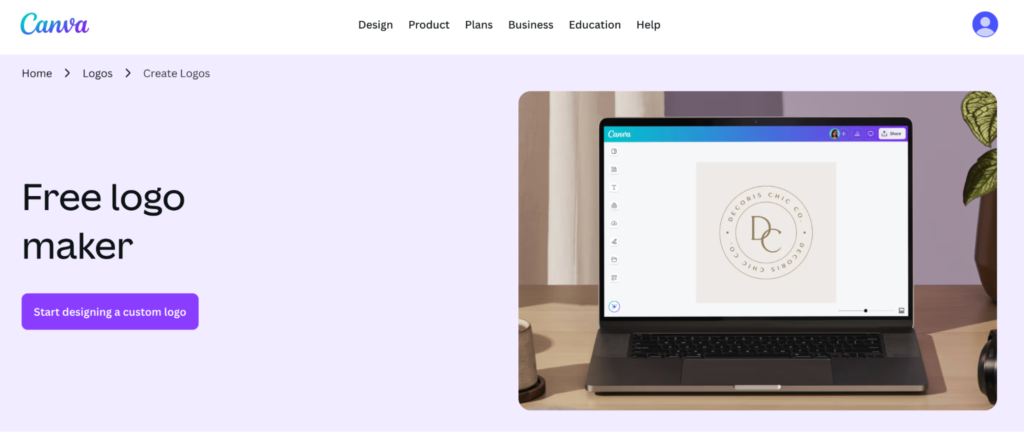
You can use tools like Canva to create a versatile logo that works across different formats. Many business name generators are also available to help you choose a memorable name for your dropshipping business.
You’ll also want to define a unique brand voice and color palette. Take inspiration from the successful e-commerce stores in your niche to come up with something creative and impactful.
Let’s say you plan on selling fast-fashion items through your store. Here’s what your branding might look like:
- Brand voice: Since you’re focused on trendy, affordable style, you’ll want to sound energetic and fun. Try phrases like “Your style, always on trend” or “Fresh looks, great prices” to resonate with the audience.
- Color palette: Fast-fashion brands mostly use bold, eye-catching colors to grab people’s attention. As such, you’ll want to choose something like electric pink and jet black for your branding.
- Logo style: A clean text logo in a modern font or a basic icon like a hanger should work well for your store.
- Packaging: Use bright mailers or boxes with your logo on them. You can even throw in a small card showcasing your latest arrivals and offer a discount on the next purchase.
Step 7: Listing & Store Setup
Once you’ve created some assets, you can work on building your e-commerce store.
Your first step will be to choose an e-commerce platform. Shopify is a great option as it is easy to use and integrates with a variety of dropshipping apps and dropshipping automation tools.
If you don’t want to launch your own ecommerce store immediately, you can also start dropshipping without a website by selling through marketplaces like eBay, Amazon, or TikTok Shop while you test products and demand.
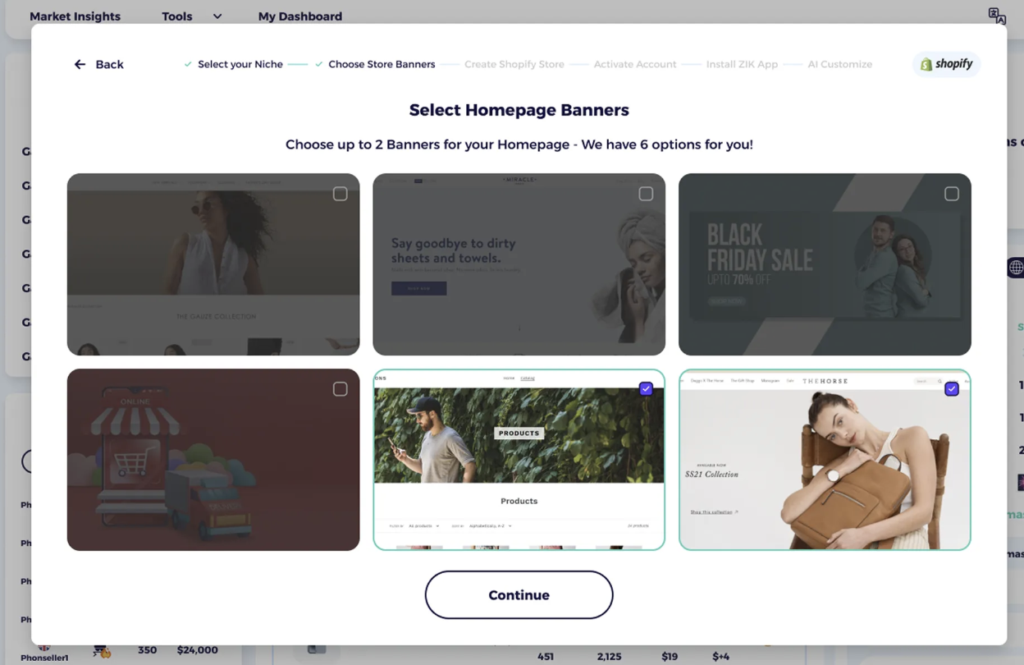
You can use ZIK Analytics’ Shopify AI store builder to design your storefront and pages. Just choose a high-converting niche from its curated list, or let AI pick based on performance data and trends.
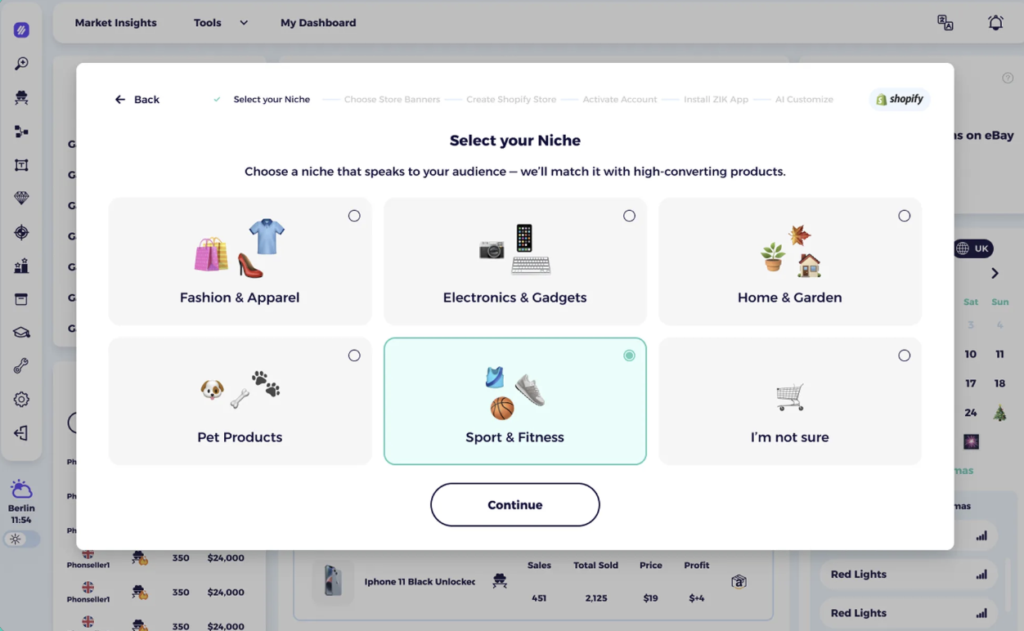
Next, the tool asks you to choose your homepage visuals, after which it automatically builds your branding, layout, and design based on the chosen niche.
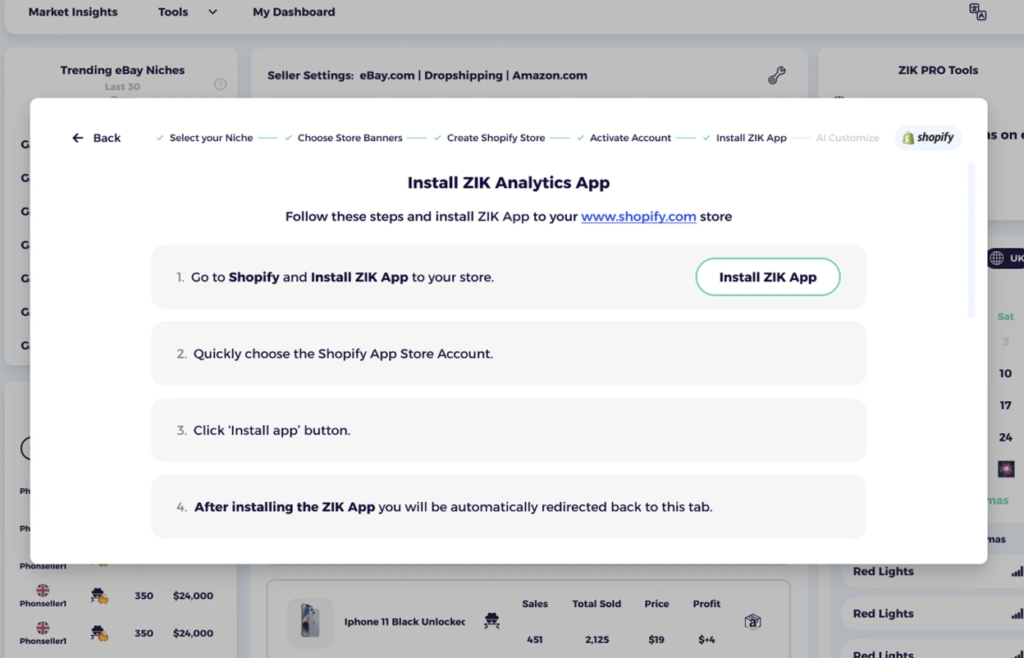
You also get the option to connect to ZIK’s app to carry out dropshipping product research or competitor tracking at this point.
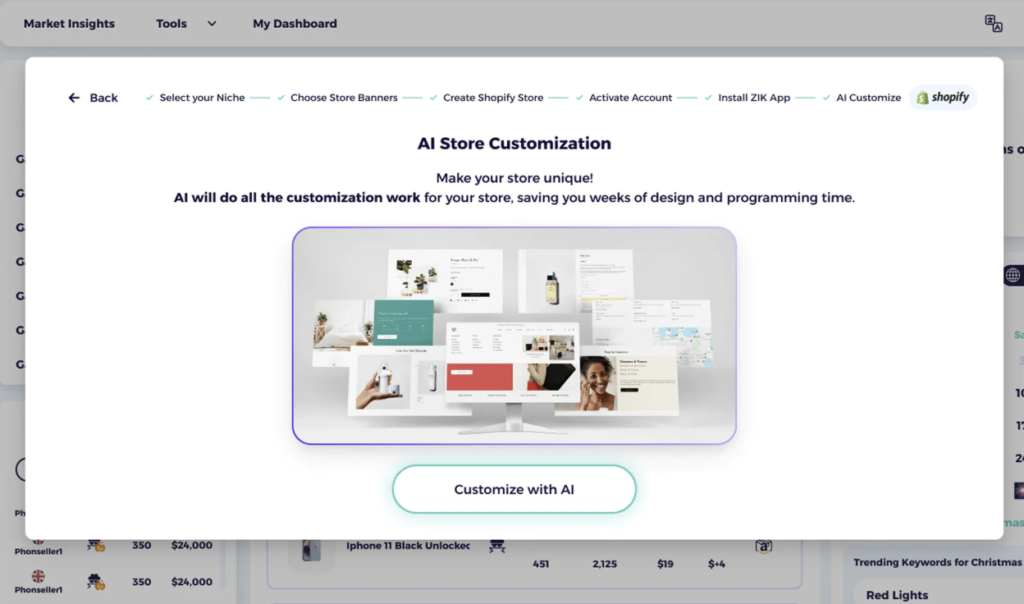
The final step is to publish your store. Once done, you can start uploading proven, data-backed items that are already performing well for other Shopify stores.
Best Private Label Dropshipping Niches and Products
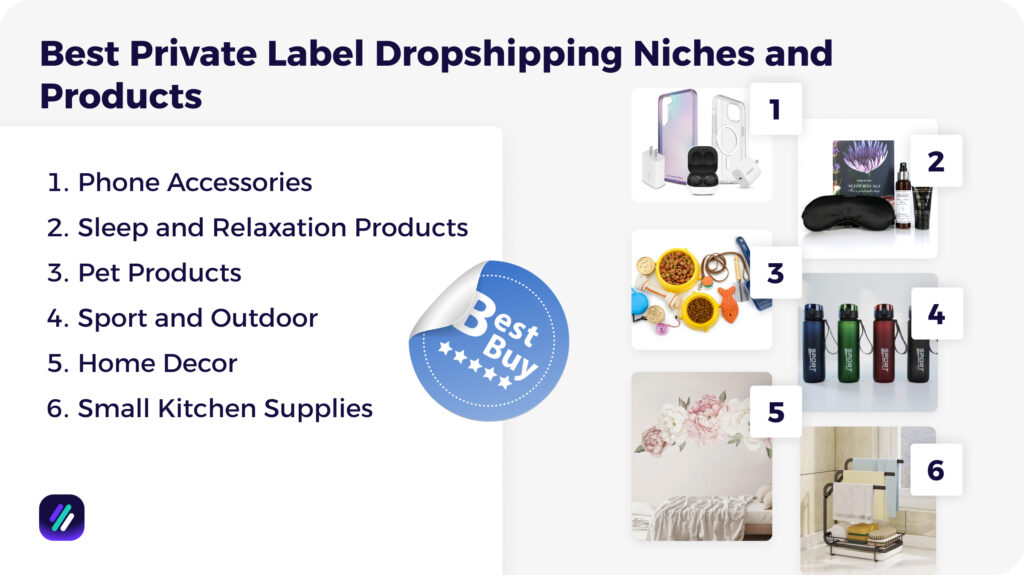
Not every product or niche is a perfect fit for private label dropshipping. But some items offer a blank canvas that you can customize to make your own. These include:
Phone Accessories
Phone accessories offer several opportunities to apply specific design choices and branding. For example, you can choose from materials like silicone, leather, and TPU when sourcing a phone case. You can also apply your logo and have custom packaging for items like phone chargers and screen protectors. Items like mounts even let you engrave your brand’s initials on the outer body for a memorable experience.
Sleep and Relaxation Products
With a growing consumer focus on holistic wellness, dropshippers have the opportunity to launch a private label brand around sleep and relaxation products. This niche has plenty of opportunities, including luxury bedding and smart sleep products. Private labeling means you can benefit from repeat purchases when consumers become accustomed to your offerings.
Pet Products
The pet products market is projected to increase in size and reach 120781.3 million in valuation by 2030. This means now is the right time to introduce your own brand in this space. You can start with existing items like pet toys and add your own logo or packaging. You can also offer personalization via customized collars or engraved tags using certain dropshipping suppliers.
Sport and Outdoor
This is a broad niche that can be broken down into specific categories such as cycling, camping, and specific team sports. You can launch a store targeting one specialization so that you look more attractive to the target audience. With the global sporting goods market projected to reach USD 143.05 billion by 2030, carving out a space in this dropshipping niche can help you enjoy steady sales for years to come.
Home Decor
Home decor is another dropshipping niche highly suitable for private label reselling. You can choose products like throw pillows and work with manufacturers to create unique patterns. Many producers also provide the option to choose the texture and materials (e.g., specific types of cotton). Plus, unique labels and custom inserts can help you differentiate your store in a market projected to cross $432 billion by 2025,
Small Kitchen Supplies
Kitcetns filled with items collected over time often hold sentimental value for people. Small kitchen supplies can help you tap into this emotional aspect of home life. The lower price point of these items allows.
Related read: Best dropshipping niches for beginners to succeed
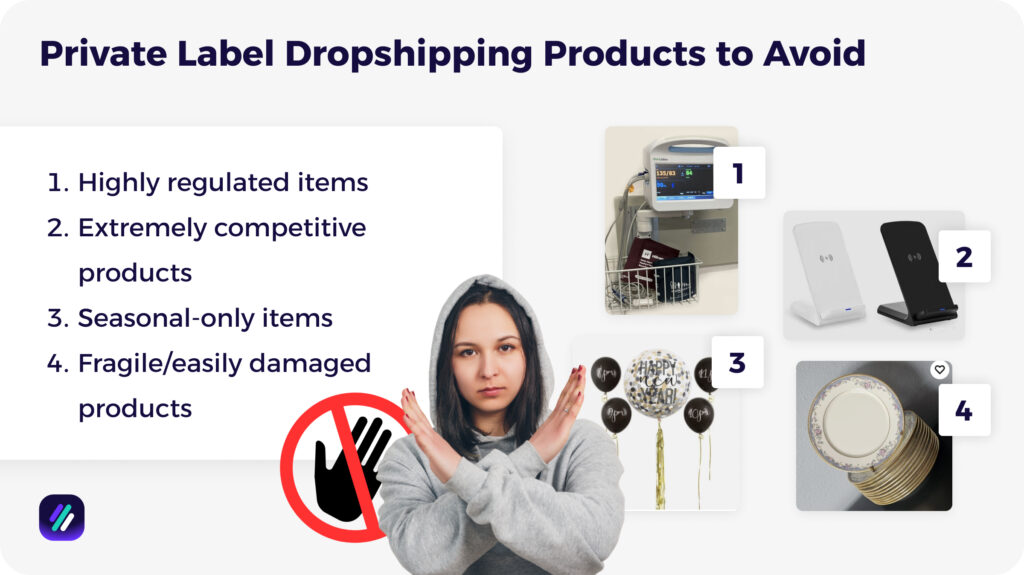
Private Label Dropshipping Products to Avoid
Not every item makes for a good private label product. When choosing which items to dropship, you’ll want to avoid:
Highly regulated items
Regulated items like medical devices require a lot of pre-approvals and certifications. And it’s not easy to vet manufacturers in terms of whether they have up-to-date certifications. Rules can also change, and private labeling means you’ll be responsible for ensuring that your manufacturer consistently meets all requirements. A single safety incident can cause lasting damage to your reputation and customer trust.
Extremely competitive products
Some private-label products make it difficult to differentiate your store. One example is phone charges, which look highly identical except for the minor branding to distinguish them. This lack of uniqueness makes it hard to build a compelling brand identity, as consumers often have little reason to choose one product over another besides the price.
Seasonal-only items
Items like New Year’s Eve party kits have a limited sales window. So, private label manufacturers often have large minimum order requirements to make production beneficial for them. They know that keeping large amounts of inventory that only generates revenue for part of the year can lead to significant amounts of dead stock and cash flow issues.
Fragile/easily damaged products
There’s little reason to have your branding on something that might easily get damaged or broken. Items such as porcelain plates and wine glasses are highly susceptible to damage from tossing and dropping during transit. If you want to avoid negative reviews and feedback that can tarnish your reputation, it’s best to steer clear of such items when choosing products for your store.
9 Best Private Label Dropshipping Suppliers
With the influx of suppliers in the dropshipping space, it can be hard to know which manufacturers offer private labeling as an option without doing extensive research.
To help you get started quickly, we’ve compiled a list of the best private label dropshipping suppliers around. Take a look:
| Company | Product Range | MOQ | Shipping Time | Key Features |
| Dripshipper | Coffee and tea products | No minimum | 2-10 business days (US) | Custom labels, 40+ products, multiple formats |
| Apliiq | Apparel and clothing | No minimum | 2-5 business days | Custom tags, branded packaging, Shopify/Etsy integration |
| Spocket | General products from EU/US suppliers | No minimum | 1-3 business days | Custom invoices, personalized notes, fast shipping |
| Printful | 460+ customizable products | No minimum | 2-5 business days | Branded inserts, custom labels, 12 global facilities |
| BigBuy | General European products | No minimum | 3-6 business days | Neutral packaging, e-commerce sync, Europe-based |
| Modalyst | High-end fashion and luxury goods | Varies by supplier | 2-5 business days | Custom branding, hangtags, US/EU suppliers |
| HyperSKU | General products from verified suppliers | No minimum | 5-12 days | Custom packaging, logo customization |
| CJ Dropshipping | Large catalog with POD options | No minimum | 3-7 business days | POD services, custom logos, personal agent |
| DR.HC | Organic and cruelty-free beauty | 12 units | 2-7 business days | Silicon Valley manufacturing, clean beauty focus |
Dripshipper
MOQ: No minimum order
Shipping: 2-10 business days for the US
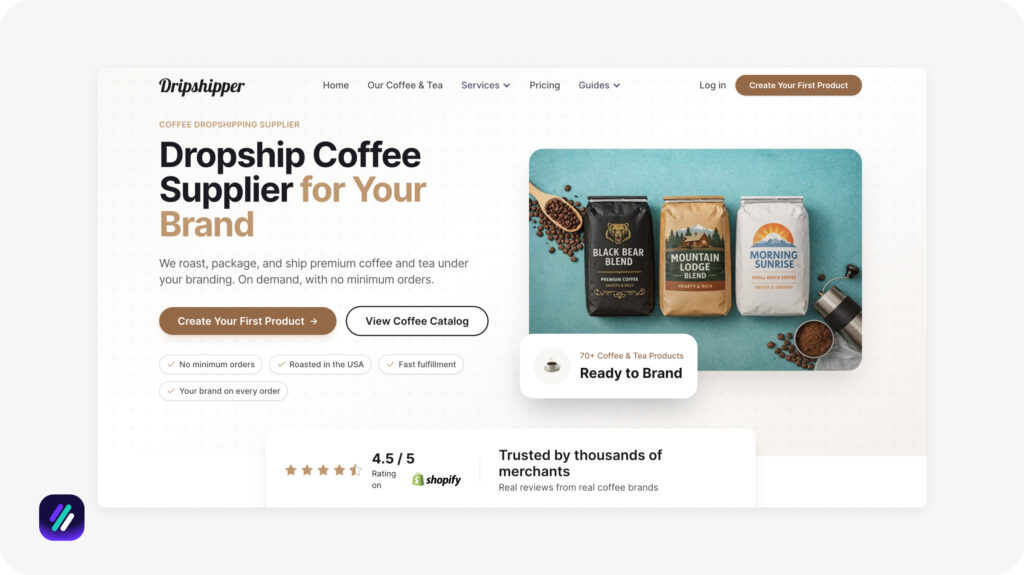
Dropshipping focuses exclusively on the coffee and tea market. It lets you upload your own custom label design on products and choose from different colors and bag sizes to match your aesthetic. You also get over 40 different products to choose from, including coffee types (single origins, flavored, etc.) and formats (K-cup compatible, ground, etc.).
Apliiq
MOQ: No minimum order
Shipping: 2-5 business days
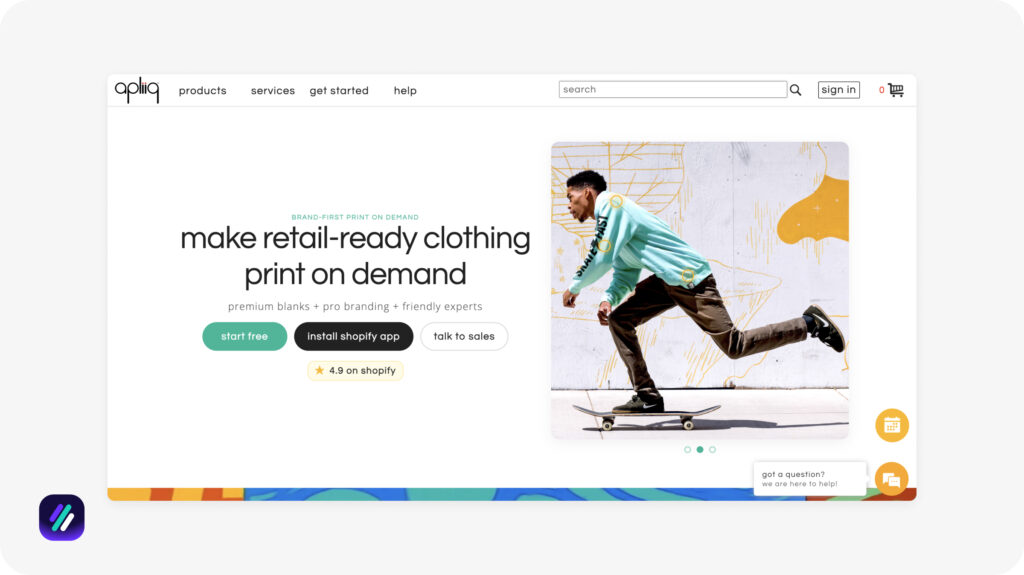
Apliiq is an apparel-focused dropshipper offering private label options like neck tag printing and woven labels. It also offers branded packaging with no minimum order quantities and fast US shipping. Apliiq’s seamless integration with Etsy and Shopify makes it a worthy supplier to consider for starting a private label clothing brand.
Spocket
MOQ: No minimum order
Shipping: 1-3 business days
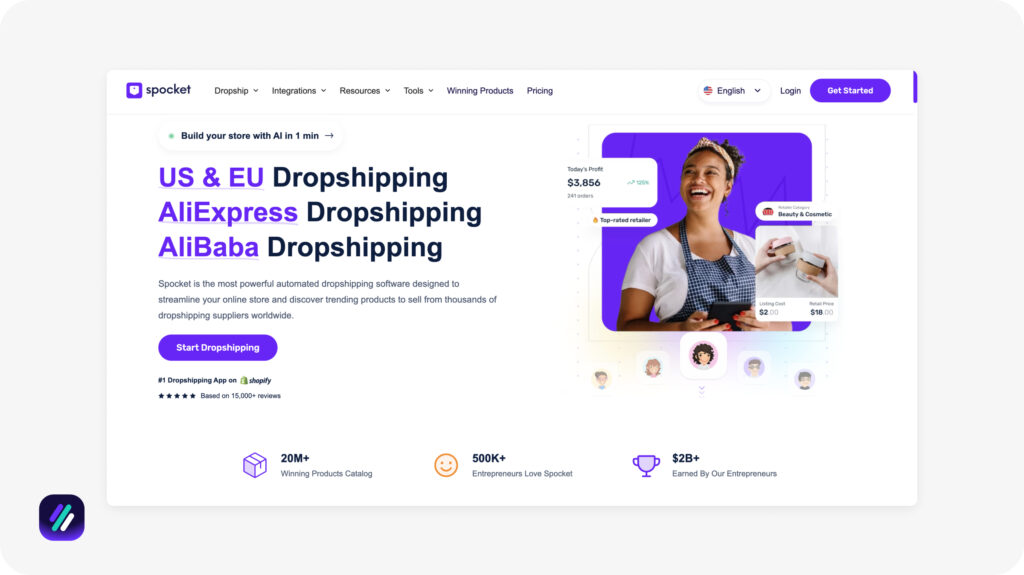
Spocket is a dropshipping supplier popularly known for offering access to EU and US suppliers. But it also provides a range of customization options to help merchants build their brand identity. On certain plans, you can include personalized notes and custom-branded invoices to provide a consistent brand experience.
Printful
MOQ: No minimum order
Shipping: 2-5 business days
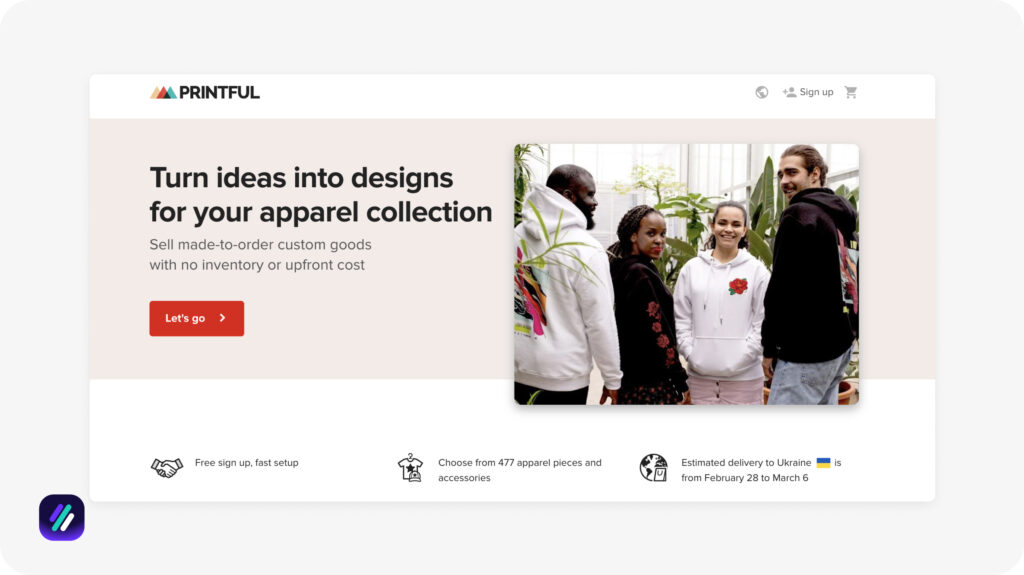
Pritnful gives you a catalog of 460 products that you can customize and sell under your own brand. You can add branded package inserts (e.g., stickers and flyers) as well as custom labels to the items to create a memorable customer experience. Printify has 12 global fulfillment facilities and can route your orders to the location nearest to your customer.
BigBuy
MOQ: No minimum order
Shipping: 3-6 business days
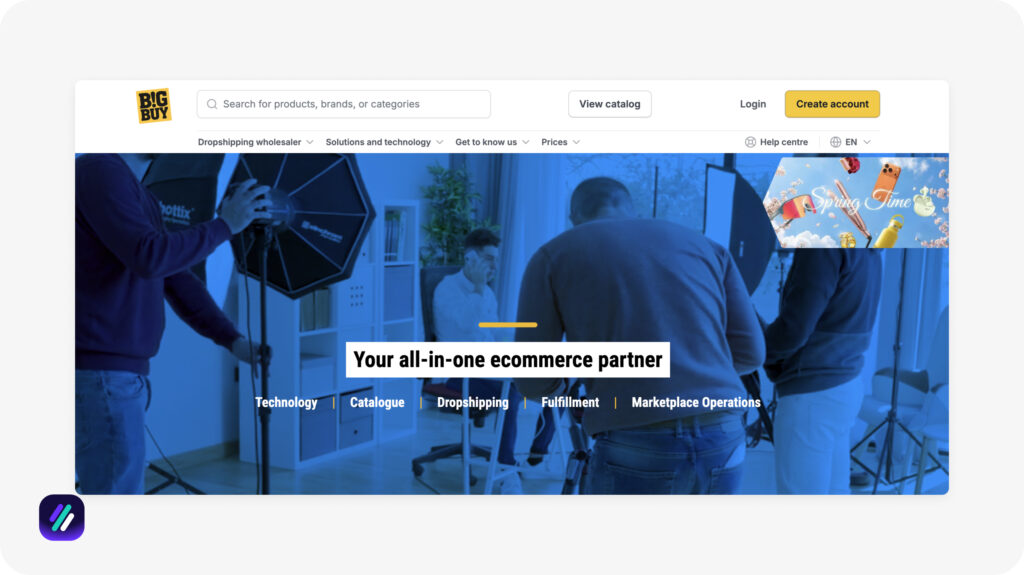
BigBuy is a European dropshipper that offers a few options for private label reselling. For example, you can market the products it sells under your own brand. Products can ship in neutral cardboard boxes without BuyBuy’s branding, and the platform can sync with your e-commerce store to streamline order and brand management.
Modalyst
MOQ: Determined by supplier
Shipping: 2-5 business days
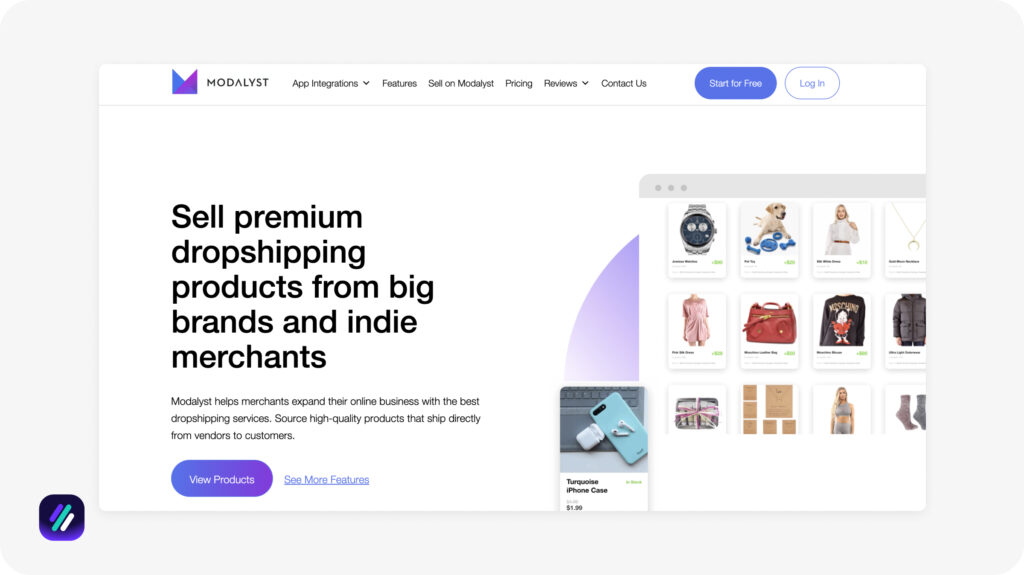
Modalyst is an excellent platform for finding high-end fashion and luxury goods with private label potential. It allows retailers to add custom branding and hangtags to products before they are shipped to customers. Options for branded packaging, such as custom mailers, are also available. Modalyst mainly works with US and EU suppliers, ensuring fast shipping times (usually 4-8 days) for its users.
HyperSKU
MOQ: No minimum order
Shipping: 5-12 days
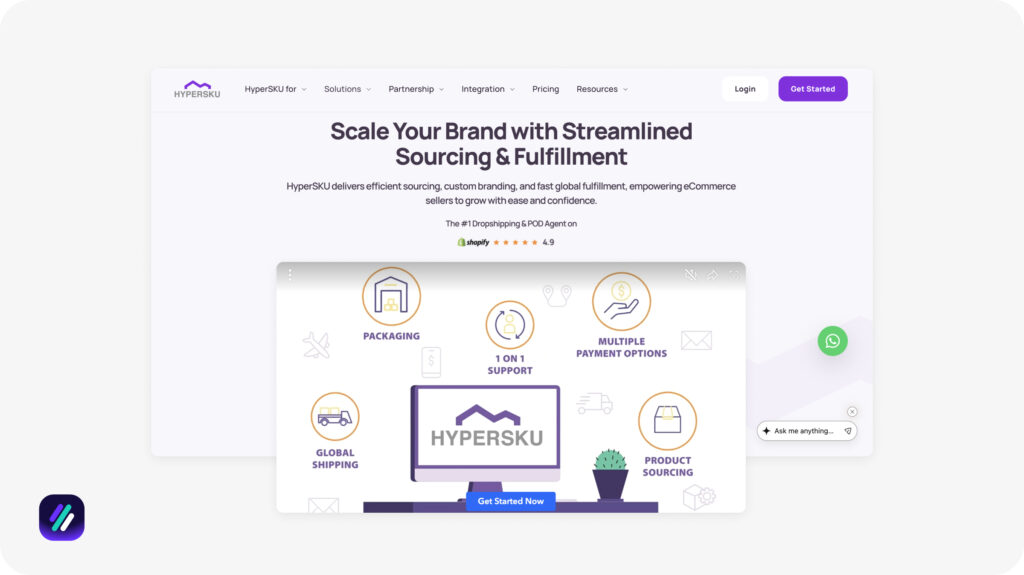
HyperSKU is a global dropshipping platform with a strong focus on private label reselling. This supplier provides options for custom packaging and personalized items like thank you cards and promotional inserts. You can also add your own logo or design to a wide variety of items sourced from the company’s network of verified suppliers.
CJ Dropshipping
MOQ: No minimum order
Shipping: 3-7 business days
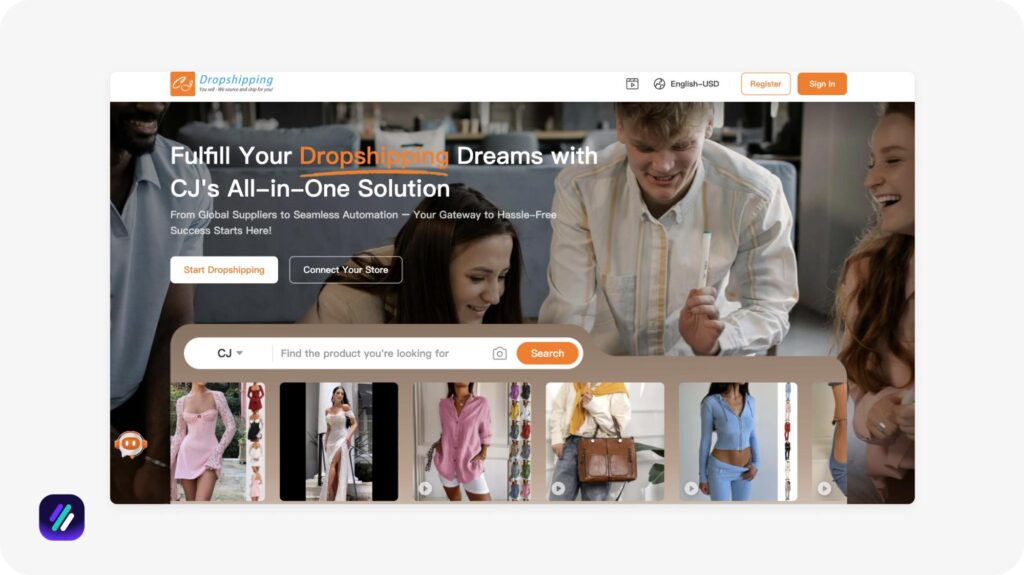
CJ Dropshipping lets you create unique products from its large catalog or source new ones. You can add your own logo to the items or create new designs via print-on-demand services. The supplier also allows you to design custom labels and inserts, making the item uniquely yours. You can also request a personal agent to help you with the setup and sourcing.
DR.HC
MOQ: 12 units
Shipping: 2-7 business days
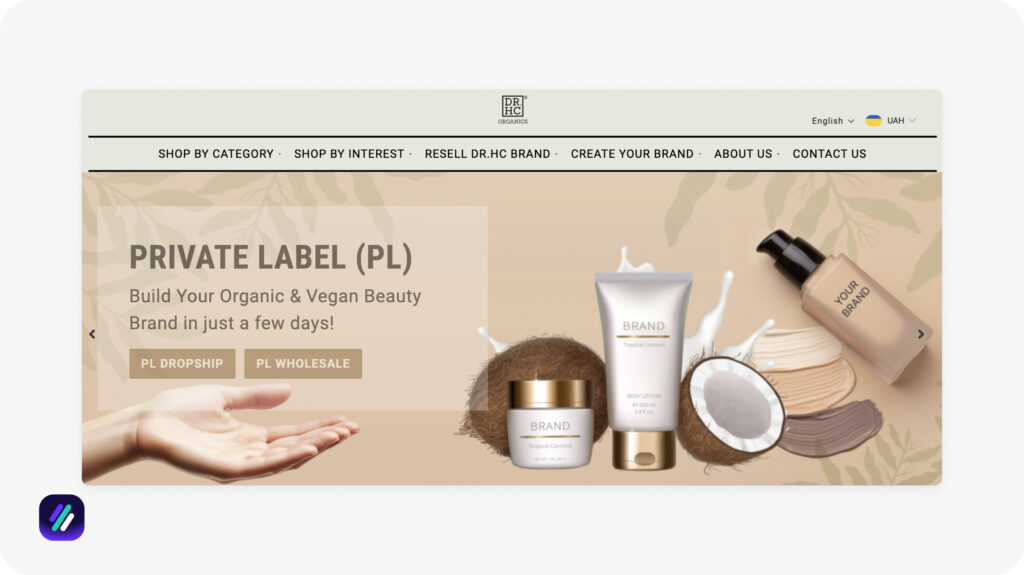
DR.HC is known for its organic and cruelty-free formulations. The company has a manufacturing plant in Silicon Valley, California, and possesses the necessary certifications. With zero-to-low MOQs and fast shipping on domestic US orders, this supplier makes it easy to start a clean beauty dropshipping business.
Find a Winning Private Label Dropshipping Product
ZIK Analytics has a suite of tools to help Shopify store owners find winning dropshipping products for their store.
However, I specifically want to highlight three tools that make it easy to find profitable products online that you can customize and sell as your own:
- Shopify Product Finder shows you which dropshipping products are selling across Shopify stores with real sales data. Search for keywords and filter by sales to identify trending items that work well for private labeling. Match products to suppliers and calculate profit margins automatically.
- AliExpress Product Research helps you find high-demand products on AliExpress that suppliers can customize with your branding. Filter by sales, reviews, and ratings to validate quality before requesting custom packaging or private label options.
- Shopify Sales Tracker lets you monitor successful private label stores to see which products they’re selling and how they position their brand. Track their product launches and pricing strategies over time.
You can also use the Dropshipping Product Finder to match products with suppliers on AliExpress and Alibaba who offer private label and custom packaging services.
Get your ZIK Analytics trial and start building a private label brand with products backed by real marketplace data.
Frequently Asked Questions about Private Label Dropshipping
In this section, I’ll answer the frequently asked questions about private label dropshipping.
Is private label dropshipping profitable?
Yes, private label dropshipping is profitable since it allows you to set your own premium pricing because of brand exclusivity and enjoy higher margins. Owning a brand and fostering loyalty also drives repeat purchases, which further add to your profit. Private label sellers also face less competition than generic dropshippers, reducing the need to practice competitive pricing.
How much does it cost to start private label dropshipping?
It can cost anywhere from a few hundred to thousands of dollars to launch a private label dropshipping business. The exact cost depends heavily on your expertise and how quickly you want to scale your e-commerce brand. A realistic budget for a very lean private label setup is an investment of $1,000. This should be enough to get you a basic, functional store along with some branding and initial testing data via ad spend.
Can I do private label dropshipping on Amazon?’
Yes, you can start a private label dropshipping business on Amazon. However, you’ll need to comply with Amazon’s rules to keep it legal and running. Amazon expects you to be the seller of record and oversee all customer issues yourself. Product packaging must show your business information rather than the info of another retailer. And since you’ll be selling under your own brand, the company expects you to provide top-notch quality and experience.
Is private label dropshipping legal?
Yes, private label dropshipping is 100% legal to pursue and set up. However, it comes with a few responsibilities, including ensuring your supplier complies with industry regulations. You also need to follow the rules around intellectual property and handle marketing and customer service ethically. Adhering to data protection laws like GDPR is also important for building a successful private label dropshipping business.