
With dropshipping, we can differentiate between two ways of doing it: dropshipping without a website and dropshipping with a website.
Obviously, each of them has its pros and cons, but in this blog article, I am going to share with you how you can start dropshipping without a website and what steps you should take, what mistakes to avoid, and much more. So let’s get started
Key takeaways TL;DR:
- You can start dropshipping without a website by selling through marketplaces and social commerce platforms like eBay, Amazon, Etsy, Facebook Marketplace, Instagram Shops, or TikTok Shop.
- The biggest advantage is that these platforms already have buyers, so you can test products faster without building a full ecommerce store from scratch.
- Success still depends on choosing the right niche, finding products with proven demand, calculating your margins properly, and working with reliable suppliers.
- ZIK Analytics can help you find winning dropshipping products, check competitor stores, compare suppliers, and validate whether a product has enough demand and profit potential before listing it.
- Once your store is live, focus on optimized listings, clear shipping and return policies, fast customer service, and native marketplace ads to improve visibility and conversions.
- Dropshipping without a website is a smart beginner-friendly path, but long-term scaling may eventually require automation, multi-channel selling, or your own website once the numbers make sense.

Can I Start Dropshipping Without a Website?
Yes, you can start dropshipping without a website by selling through marketplaces and social commerce channels like eBay, Amazon, Etsy, Facebook/Instagram Shops, or TikTok Shop instead of building your own store.
Not only can you dropship without a website, but you can also make a great profit as these platforms already have buyers. eBay reported 136 million active buyers, Etsy connected 8 million sellers with 96 million buyers, and TikTok Shop drove more than $500 million in U.S. sales during the Black Friday to Cyber Monday period, and Amazon sellers show the money potential too: U.S. sellers averaged over $290,000 in annual sales.
So yes, dropshipping without Shopify (90% of dropshipping websites or on Shopify, based on our own Internal data) or your own site can make money.
Is Dropshipping Without a Website Profitable?
Yes, dropshipping without a website can be profitable, and in fact, hundreds of thousands of dropshippers are making a living out of dropshipping without a website.
But it is not profitable by default. Marketplaces bring the traffic. Your product research, supplier terms, pricing, fees, returns, and listing visibility decide whether you keep the profit or you will be another person claiming that dropshipping is dead on online forums.
Based on our ZIK research, stronger eBay sellers are already doing thousands to tens of thousands in monthly revenue, which shows that marketplace-first selling can work without owning a standalone store.
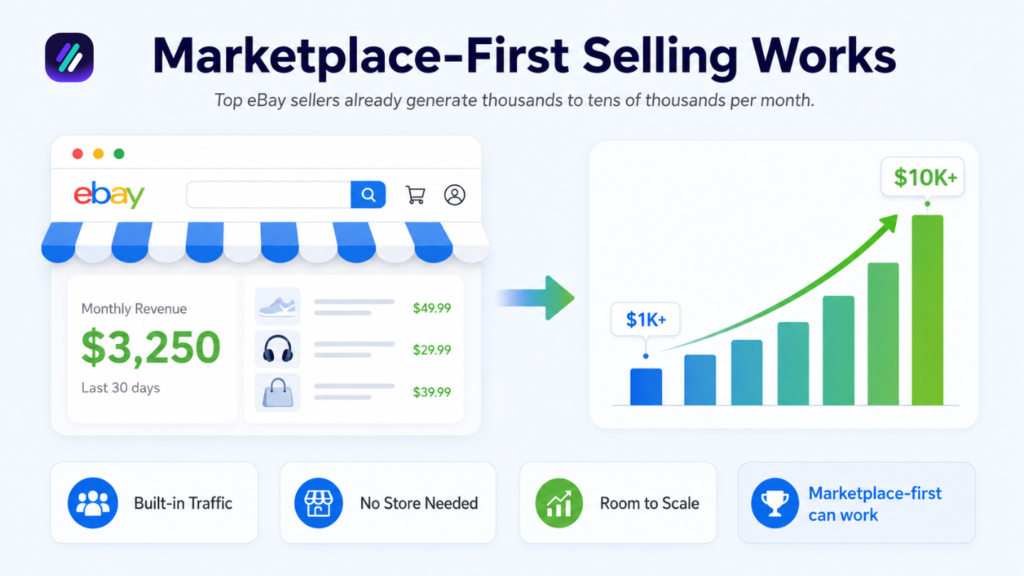
Public marketplace data supports the opportunity, too as eBay reported nearly $80 billion in GMV, with 136 million active buyers and 2.5 billion live listings globally.
Furthermore, our ZIK’s Shopify research also shows dropshipper-flagged stores reaching meaningful 30-day revenue levels, from hundreds of thousands to multi-million-dollar ranges.
That does not mean beginners should expect those numbers fast. It means the model has a real ceiling when product selection, positioning, traffic, and operations are dialed in.
For beginners, the realistic expectation is a testing period first. Your early goal is not massive revenue. It is finding products with demand, clean fulfillment, and enough margin left after platform fees, shipping, refunds, and ads.
Step 1: Select Your Marketplace/Social Commerce
The first step of starting dropshipping without a website is to select where do you want to actually dropship.
There are marketplaces and social commerce platforms that already have buyers and advertising options that are usually the best first way to get started promoting your products.
The trick is choosing the channel where your product, audience, fees, and skillset actually fit.
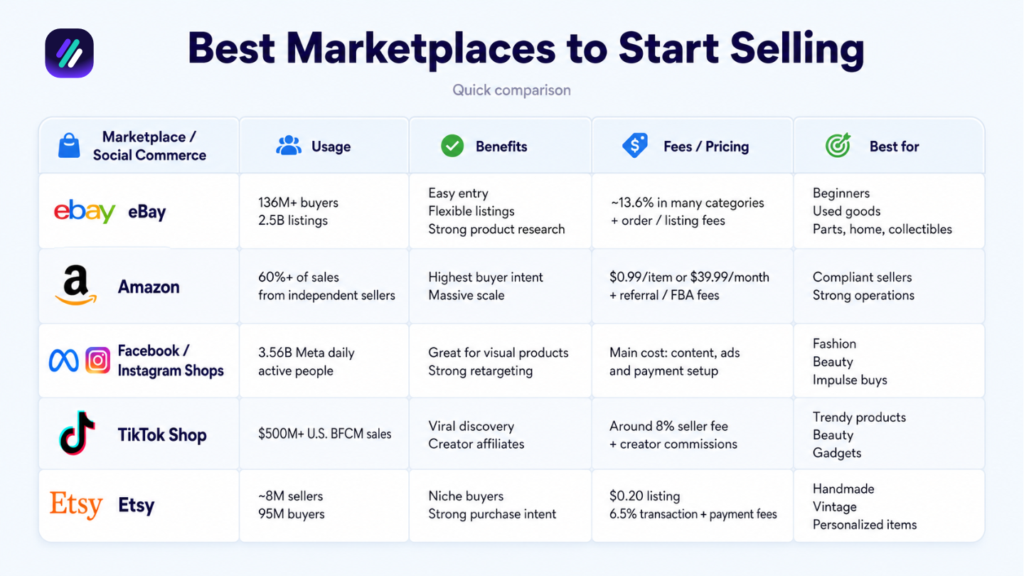
So here I created a quick table overview for you to decide which of the available platforms is the best for you:
| Marketplace/Social Commerce | Usage | Benefits | Fees/Pricing | Best for |
| eBay | 136M+ active buyers and 2.5B listings | Easier entry, flexible listings, strong resale/product research data | 13.6% in many categories, plus order/listing fees | Beginners, used goods, parts, home, collectibles |
| Amazon | 60%+ of sales from independent sellers | Highest buyer intent and scale | $0.99/item or $39.99/month, plus referral/FBA fees | Compliant sellers with strong operations |
| Facebook/Instagram Shops | 3.56B Meta daily active people | Great for visual products and retargeting | Main cost is content, ads, and payment setup | Fashion, beauty, impulse buys |
| TikTok Shop | $500M+ U.S. BFCM sales | Viral discovery and creator affiliates | Around 8% seller fee, plus creator commissions | Trendy products, beauty, gadgets |
| Etsy | ≈8M sellers and 95M buyers | Niche buyers with strong purchase intent | $0.20 listing, 6.5% transaction, payment fees | Handmade, vintage, personalized items |
And there are more options like Poshmark or Walmart.
It all depends on your target audience, niche, and products, but we recommend starting with eBay if you have the easiest learning curve.
Choose Amazon for scale, TikTok for content-driven products, Meta for audience building, and Etsy only if your supplier setup fits Etsy’s creative marketplace rules.
Also, remember, just because you start with one, it does not mean you cannot expand into others with a multi-channel selling strategy.
Step 2: Start Dropshipping Niche Research
To win with dropshipping without a website, you need focus. Usually, a narrow focus.
Beginners often make the mistake of listing random products across random categories because marketplaces already have traffic, so sales should follow, right?
Wrong, the problem is that traffic only helps when the buyer can quickly understand what your store is about.
So before you look for products, choose a niche with clear buyer demand, enough product variety, and room for repeat testing.
For example, instead of selling “home products,” narrow it down to pet grooming tools, small apartment storage, car accessories, or outdoor cooking gadgets.
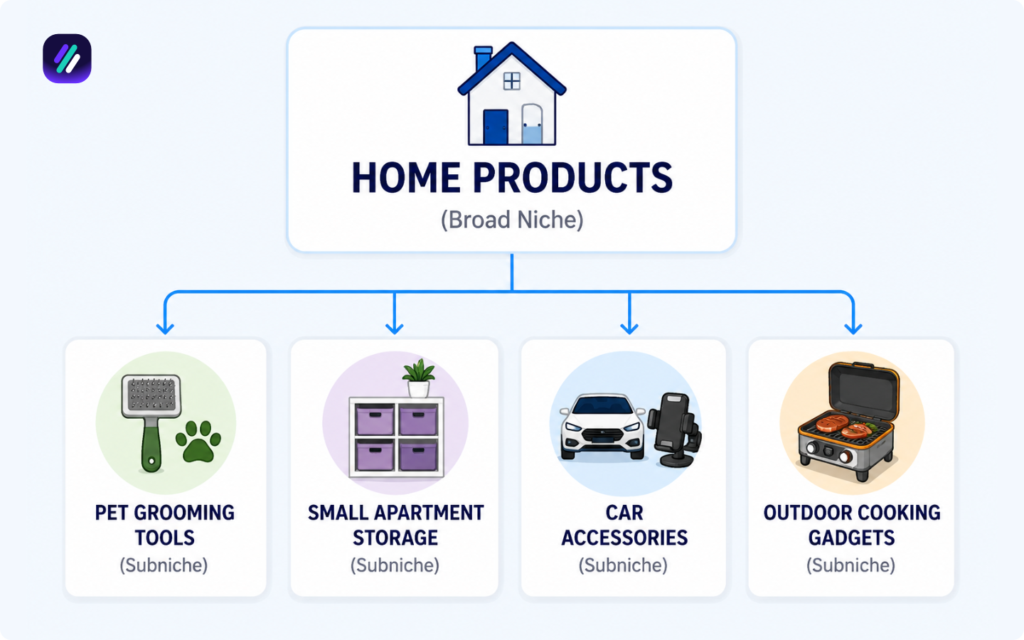
Starting with and narrow niche makes it easier for you to compare competitors, spot pricing patterns, find reliable dropshipping suppliers, build differentiation, and build listings that feel connected.
So with that, a good niche for people who want to dropship without a website should have:
- Multiple products you can test, not just one trending item
- Clear buyer intent on your chosen marketplace
- Products that are not too fragile, oversized, or return-heavy
- Enough margin after shipping, marketplace fees, and refunds
- Suppliers that can deliver consistently
We have an entire article about how to do dropshipping niche research, helping you avoid common issues and find the right niche for your business.
Step 3: Find Winning Dropshipping Products Within the Niche
Once you have your niche, the next step is finding dropshipping products that already show buyer demand.
One of the biggest mistakes I see with beginners is by asking, “What do I like?” Instead, you should ask, “What is already selling, and can I sell it with enough margin?”
With that, let me show you several methods to find winning dropshipping products for your niche.
The easiest way to do this is with ZIK Analytics.
You can use our ZIK’s eBay product research tools to search your niche and see which products are already getting sales on marketplaces like eBay.
For example, in the pet dropshipping niche, one of the dropshipping pet products LED dog collars, is already showing buyer demand on marketplaces like eBay, making them a strong product idea to validate for dropshipping.
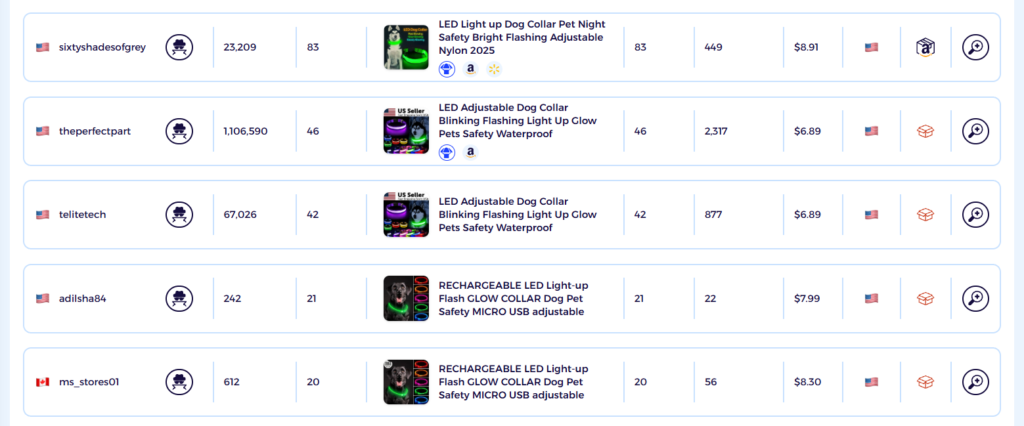
Your goal is to look for items with steady sales, realistic competition, and prices that leave room for profit after fees, shipping, and supplier costs and ideally making it slitgly cheaper than your establish competitors.
You can also check eBay competitors with ZIK’s to check what they sell, how they write titles, what price points they use, and which items keep appearing in their store.
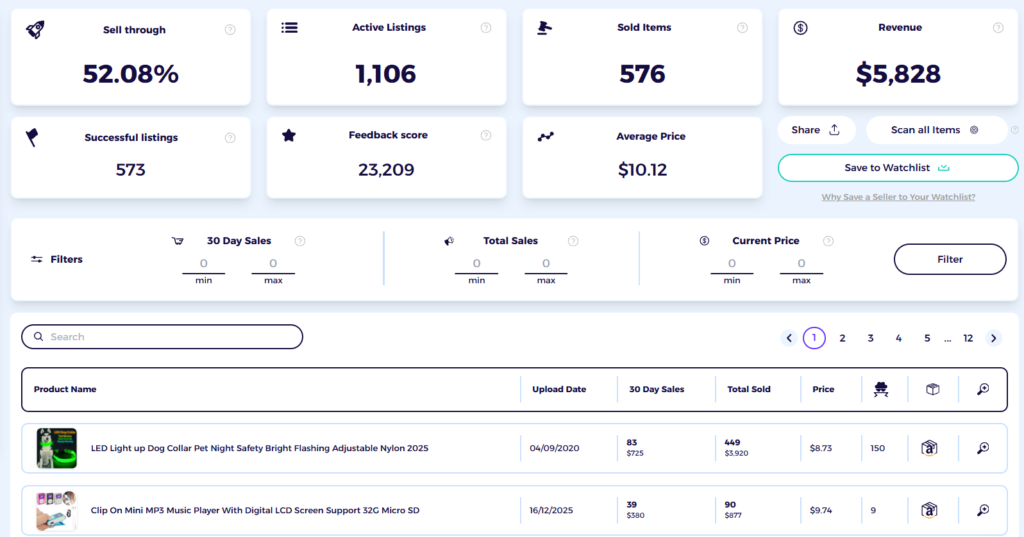
You can also use free methods to validate product ideas:
- You can search your niche directly on eBay, Amazon, TikTok Shop, or Etsy.
- You can sort by sold items on eBay, best sellers, reviews, or trending products.
- Check TikTok and Instagram for products getting repeated engagement.
- Read negative reviews to spot product gaps you can solve.
- Compare supplier prices against marketplace selling prices. Use profit calculators to do that. ZIK has plenty of them for free for eBay, Facebook, Etsy, Poshmark, and plenty more.
Remember, finding a winning product is not just about finding the new “trending” product, but it should have demand, manageable competition, reliable suppliers, simple shipping, and enough margin to make the work worth it.
Step 4: Find and Vet Dropshipping Suppliers
After you find a few products (ideally 4-10 products; remember, not all will work for you), then you need to find dropshipping suppliers that can actually fulfill them properly.
This is where a lot of beginners mess up.
A product can look profitable on paper, but if the supplier ships late, uses poor packaging, runs out of stock, or sends low-quality items, you are the one who gets the bad review.
And these are just some of the issues you can be facing.
With that, to find suppliers for your product, you can use ZIK Item Finder to discover supplier options for products already selling in your niche.
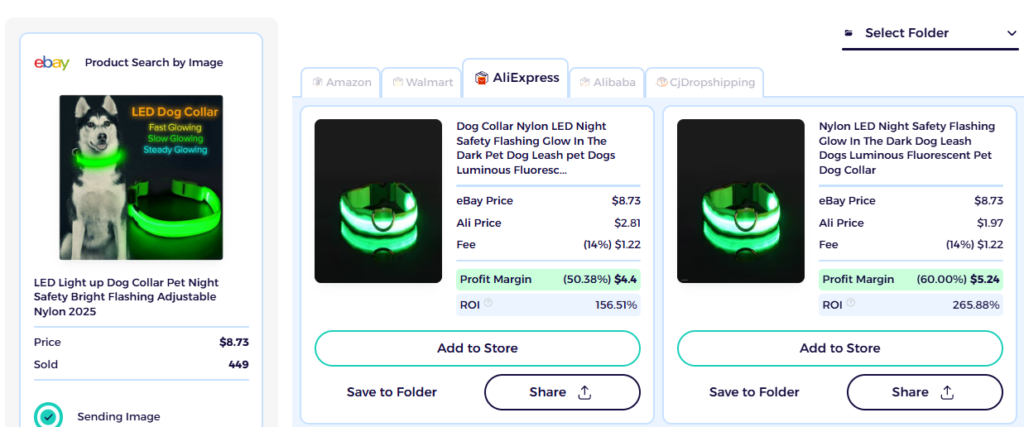
For every product you find via ZIK, we screen suppliers on Amazon, Walmart, CJ Dropshipping, AliExpress, and Alibaba, and match it to suppliers on those platforms, along with selling price, buying price, and profit margin calculation.
This makes it easy to quickly find suppliers, and you can start vetting them.
Additionally, you can also check suppliers manually on niche-specific wholesale sites or dropshipping platforms.
Remember, the goal is not just to find the cheapest option. The goal is to find a supplier you can have a long-term partnership.
Now, when it comes to vetting dropshipping suppliers, there are many unique requirements depending on the niche and type of product, but some of the universal ways of checking are:
- Free sample testing
- Delivery time to your target country
- Recent reviews and order history
- Product photos, descriptions, and variations
- Return and refund policies
- Stock consistency
- Tracking availability
- Final landed cost after shipping
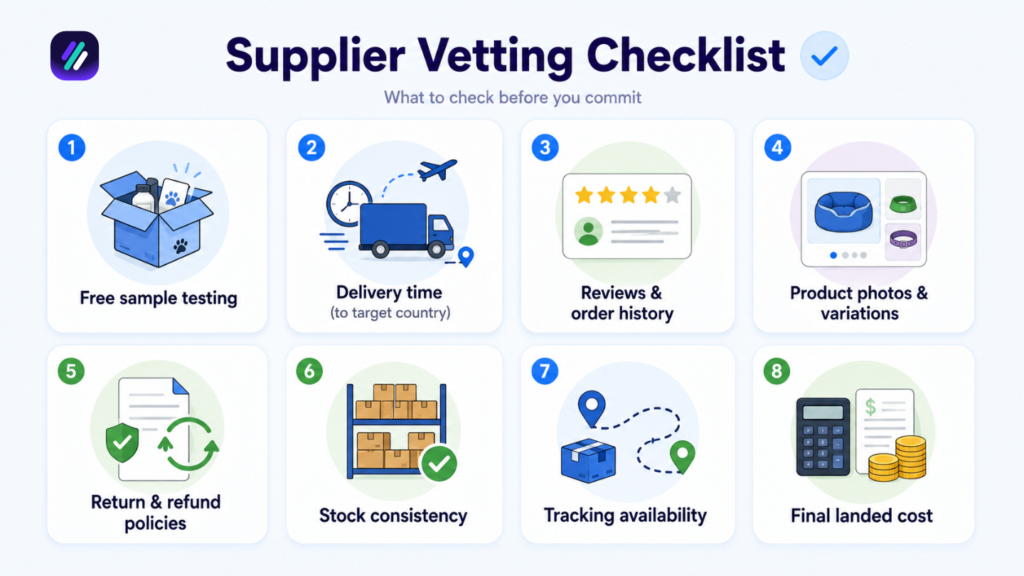
We recommend you spend good amount of time on finding and vetting suppliers and don’t rush it!
Good suppliers protect your margins, your feedback score, and your sanity. Bad ones turn winning products into customer service nightmares.
Step 5: Build Your Marketplace Store
Once your niche, products, and suppliers are clear, it is time to materialize your dream with an actual marketplace store.
Trust me, you’ve done most of the hard work, and now you need a live store where buyers can trust your listings, understand your policies, and place orders without feeling like they are buying from a random account or scammer.
Now, the exact setup depends on the marketplace you choose. eBay, Amazon, Etsy, Facebook Shops, and TikTok Shop all have different rules, seller dashboards, listing formats, and approval steps.
But the basics are usually the same which are:
- Add a clear store name that fits your niche
- Use a professional logo or profile image
- Write a short store description
- Set your shipping, return, and handling policies
- Connect your payment method
- Check the marketplace’s dropshipping and resale rules
If you choose eBay dropshipping, for example, this means creating your seller account, setting business policies, adding payment details, choosing shipping and return settings, and building listings with optimized titles, item specifics, product images, and clear descriptions.
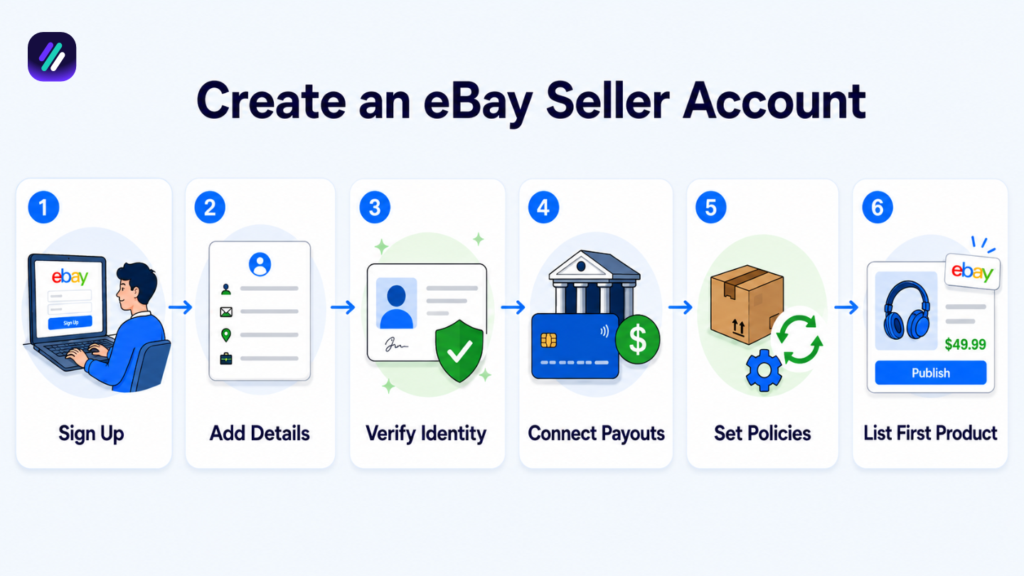
However, whatever marketplace you use, optimization matters.
Your listings should include the main product keyword, relevant product details, strong images, accurate delivery times, and a price that still leaves profit after fees.
Also, it’s very important not to skip policy pages or seller settings, as buyers care about delivery, returns, refunds, and support. Marketplaces care even more.
Finally, a clean, well-designed store setup makes your products look safer to buy, and that can be the difference between getting impressions and getting actual orders.
Download this eBook now and learn how to sell on eBay like a pro.Step 7: Import Your Product Into Store, Calculate Margins, and Optimize the Listings for Visibility
We have already touched upon this, but we find it so vital that discussing this in more detail is essential, and also having it as part of the overall product selection process.
As we said, do not assume a product is profitable just because the selling price looks higher than the supplier price.
We have built free tools to help you exactly with that, like:
- eBay Fee Calculator
- Facebook Marketplace Fee Calculator
- Profit Margin Calculator
- Etsy Fee Calculator
- Poshmark Fee Calculator
These will allow you to check if you can be profitable or if you will be losing money.
For example, if your product sells for $29.99, your supplier cost is $12, shipping is $4, and marketplace fees are around 13%, your fee is about $3.90. That leaves roughly $10.09 profit before ads. If you spend $3 to promote the sale, your real profit drops to about $7.09.
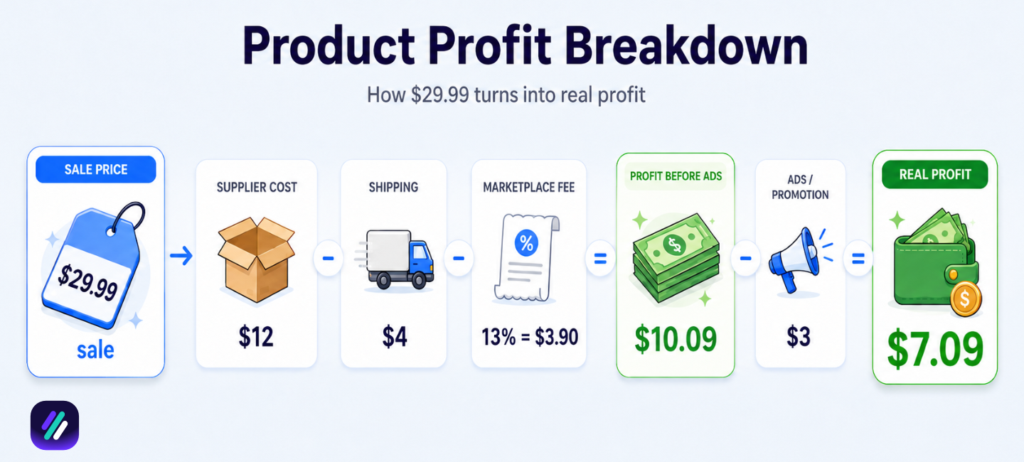
That is why margin matters so you protect profit, avoid products with expensive shipping, high return risk, or tiny price gaps.
Then optimize the listing with a keyword-rich title, clear images, accurate item specifics, realistic delivery times, and a simple benefit-led description.
The simple truth in dropshipping is that visibility gets buyers in, and margins keep you in business.
Step 8: Market Your Dropshipping Marketplace Store
Now, let’s discuss how you can actually bring traffic to your store that is interested in what you’re selling and, most importantly, actually buy.
Luckily, there are many guides on how to do it, and each dropshipping marketing strategy would require a full blog post to teach you, so what I want to share with you are the proven channels and strategies, and let you pick and choose the most suitable for your situation.
However, the best strategy depends on the marketplace you picked.
eBay has Promoted Listings, Amazon has sponsored ads, and TikTok Shop has short-form content, affiliates, and live shopping.
If you are testing TikTok dropshipping, focus on products that are easy to demonstrate in a short video, solve a visible problem, or create an impulse-buy reaction fast.
Facebook and Instagram have paid ads, organic content, and audience-building tools.
So in most cases, you should start with the native promotion tools inside your marketplace first as they yield the best results.
With that, here are the best strategies to promote your dropshipping store:
| Marketing strategy | Best for | How it works |
| Native marketplace ads | eBay, Amazon, Etsy, Walmart | Promote your listings inside the platform so buyers see your products while already searching. Start with your best-margin products first. |
| Marketplace SEO | Any marketplace | Optimize titles, keywords, categories, item specifics, images, and descriptions so your listings show up for the right searches. |
| Facebook and Instagram ads | Visual products and clear audiences | Use paid ads to target buyers by interest, behavior, or lookalike audiences. This is useful when your product has strong visuals or solves a clear problem. |
| Discounts and coupons | Competitive products | Use small discounts, bundles, coupons, or limited-time offers to improve click-through and conversion without killing profit. |
| TikTok organic content | Trendy products, gadgets, beauty, home items | Post short videos showing the product in use, the problem it solves, or a before-and-after result. This works well for impulse-buy products. |
| Creator or affiliate promotion | TikTok Shop, Instagram, niche products | Let creators promote your product for a commission. This can help you get content and reach without paying everything up front. |
| Social media groups and communities | Hobby, pet, home, car, and niche products | Share helpful posts in relevant communities. Do not spam links. Lead with value, then point people toward the product when it fits. |
| Reviews and customer service | Any marketplace | Fast replies, clean delivery, and good reviews improve trust. On marketplaces, trust is part of marketing because buyers compare sellers fast. |
The main rule you need to follow is to match the traffic to your product.
You need to be where your target audience is.
For example, if you sell a visual impulse product, TikTok or Instagram may work well, or if you sell search-based products, marketplace SEO and native ads may be stronger.
Step 9: Managing Orders, Customer Service, and Returns
First of all, if you get to this step, massive BIG UP! This is THE step that we’re working on. It’s the rewarding step, where you know you made an actual sale, all before was just setting things up to get to this point.
So, once orders start coming in, your job is to keep the process clean.
With that, first you should place supplier orders as quickly as possible, add tracking as soon as you get it, and keep buyers updated if there are delays.
Second, create a simple customer service system. Check messages daily, reply clearly, and avoid arguing with customers. Sometimes small loss is a big win for your business.
Third, track stock and price changes. Supplier prices can move, items can go out of stock, and shipping times can change. Luckily, there are tools to help you automate this part of dropshipping.
With returns, ensure to make your dropshipping return policy clear before buyers order. Know who pays return shipping, how refunds work, and what your supplier allows.
A few proven tips:
- Save templates for common replies
- Keep a spreadsheet of orders, tracking, profit, and issues
- Remove products with repeated complaints
- Watch late shipment rates and cancellation rates
- Prioritize customer experience over squeezing every dollar
Good operations protect your seller account, reviews, and long-term profit.
Step 10: Scaling, Multi-Channel Selling, and Next Steps
Once you have your processes established, reliable suppliers, and proven winning products, you can start thinking bigger.
This is where your dropshipping store can move from “testing products online” into a real dropshipping side hustle, or even a full-time business, as you are no longer guessing, but you have data, buyers, and a system you can improve.
So, the first way to scale is by adding more winning products inside the same niche.
Then, you can expand to another marketplace, as I said earlier, you’re not bound to one marketplace, and there are automation dropshipping tools to help you manage that, too.
For example, if a product works on eBay, you may test a similar angle on Amazon, TikTok Shop, Facebook Marketplace, or your own website later.
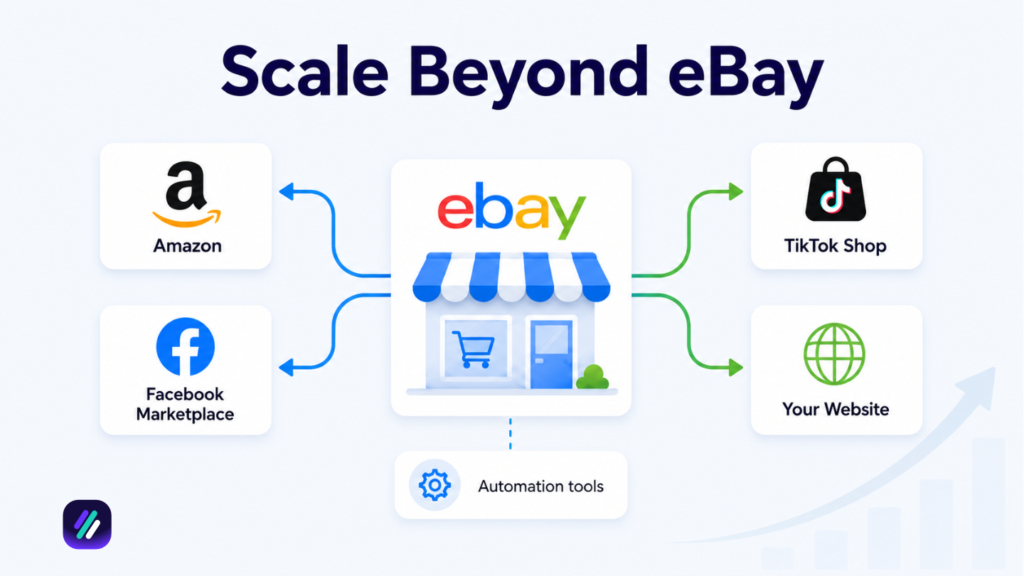
You can also scale by improving the backend:
- Automate product importing, repricing, and stock monitoring
- Use AI tools for listing drafts, customer reply templates, and research
- Hire VAs for order processing, product uploads, and support
- Outsource content, ads, or design once you know what sells
- Track profit by product, not just total revenue
- Remove products that create too many returns or support issues
We have separate guides for these next steps, but the core advice is simple: scale what already works. Add channels, automation, and people only after the numbers make sense.
Guides:
- Dropshipping Automation: 6 Best Ways to Scale Your Store
- How to Create a Dropshipping Website [Step-by-Step Guide]
Pros and Cons of Dropshipping Without a Website
Just like with anything, there are pros and cons of dropshipping without a website, and in this section, I will be sharing the biggest pros and cons of dropshipping without a website.
Pros of Dropshipping Without a Website
Let’s first start with the benefits of starting your dropshipping journey without a website and instead using available platforms to sell dropshipping products:
- Access to an already existing audience with buyer intent: Marketplaces already have people searching for products, which means you do not need to build traffic from zero.
- You can launch in days, not weeks or months: You can create a seller account, upload products, and start testing much faster than building a full ecommerce website.
- Very low startup cost: You do not need to pay for hosting, themes, developers, apps, or a custom store setup before making your first sale.
- Generally, higher trust from buyers: Many buyers feel safer purchasing through platforms they already know, especially when seller reviews, buyer protection, and payment systems are built in.
- Higher protection for both sellers and buyers: Most marketplaces have systems for disputes, payments, refunds, tracking, and fraud prevention.
- No website maintenance or development: You do not need to worry about site speed, checkout bugs, plugins, design updates, or technical fixes.
- Easier to validate a niche cheaply before committing: You can test products and niches first, then invest more once you know what people actually buy.
- Better advertising options with higher ROI: Native marketplace ads can work well because they show your products to buyers who are already searching or shopping.
Cons of Dropshipping Without a Website
With that, it’s not all rosy; there are also disadvantages to dropshipping without a website and relying on platforms:
- Minimum branding options: You have less control over how your store looks, feels, and communicates compared to owning your own website.
- Limited email list building and retargeting options: If you break marketplace rules, get too many complaints, or trigger account reviews, your seller account can be limited or suspended.
- Higher risk of suspension. If you break marketplace rules, get too many complaints, or trigger account reviews, your seller account can be limited or suspended.
- Rules and fees can change rapidly, causing you to lose money: Platform policy changes, fee increases, or new seller requirements can quickly reduce your profit.
- Concentration risk: If most of your sales come from one marketplace, one account issue can hurt your entire business.
- Fees are high: Marketplace fees, payment fees, promoted listing fees, and refund costs can eat into your margins fast.
- Payouts can be delayed: Some platforms hold funds, especially for new sellers, high-risk orders, or accounts with recent issues.
- Platforms always give priority to customers: Buyer protection is great for trust, but sellers can sometimes lose disputes even when the situation is not fully their fault.
- Limited scaling: You can scale without a website, but long-term growth may be harder if you cannot fully control branding, customer data, retargeting, and checkout experience.
Overall, dropshipping without a website can be really beneficial, and it can change your life. Of course, you need to be careful, follow the rules, deliver exceptional experience, and you will be able to make a good living out of this, just like tens of thousands of sellers.
Download this eBook now and learn how to sell on eBay like a pro.Dropshipping Without a Website vs Dropshipping With a Website
So, how does it actually compare dropshipping with and without a website?
In here, I am going to compare the main deciding factors when it comes to building your own dropshipping store or using established platforms:
| Factor | Without a Website | With a Website |
| Experience required | Lower. You can start by learning marketplace rules, listings, suppliers, and fulfillment. | Higher. You need to understand store setup, checkout, apps, traffic, analytics, and conversion optimization. |
| Startup speed | Faster. You can launch products in days once your seller account is ready. | Slower. Building a store, setting up payments, policies, tracking, and pages takes more time. |
| Cost | Lower. You avoid hosting, themes, developers, and many store apps. | Higher. You may need to pay for Shopify, apps, domain, design, ads, and other tools. |
| Branding | Limited. Your store has to fit inside the marketplace layout and rules. | Stronger. You control the brand, design, messaging, offers, and customer journey. |
| Traffic | Built in. Marketplaces already have buyers searching for products. | You must create traffic yourself through SEO, ads, social media, influencers, or email. |
| Control | Lower. Rules, fees, rankings, and account health depend on the platform. | Higher. You control the website, pages, offers, checkout, tracking, and sales funnel. |
| Automation | Available, but limited by platform rules and integrations. | More flexible. You can connect apps, workflows, email, upsells, retargeting, and analytics. |
| Customer data | Limited. Marketplaces usually restrict how much customer information you can use. | Stronger. You can collect emails, build audiences, and use customer data for retention. |
| Retargeting | Limited. You mostly rely on marketplace tools and native ad options. | Stronger. You can use pixels, email flows, abandoned cart campaigns, and custom audiences. |
| Best for | Beginners, product testing, low-cost validation, and marketplace-first selling. | Brand building, long-term scaling, better retention, and stronger customer control. |
Dropshipping without a website is usually better for beginners who want to test products quickly and cheaply.
However, dropshipping with a website gives you more control, branding, and customer data, but it also requires more skill and upfront work.
A smart path is to validate demand first, then build your own store once the numbers make sense.
Build a Profitable Dropshipping Business Without a Website With ZIK Analytics
ZIK Analytics makes it easier for you to start dropshipping without a website. You can easily find what to sell, where to source it, and how to market it before wasting money on random products with features such as:
- Droshipping product research tool: Find products with real demand, sales data, competition insights, and profit potential.
- Dropshipping database: With the largest dropshipping database, discover stores, products, niches, and market trends you can use for smarter decisions.
- AdSpy: See winning Facebook and Instagram ads so you can understand what products and angles are already working.
ZIK Analytics helps you to start with data and avoid guessing!
Dropshipping Without a Website FAQs
Here I am going to answer the most commonly asked questions related to dropshipping without a website:
What is the best platform for dropshipping without a website?
The best platform for dropshipping without a website depends on your product and experience level. For most beginners, eBay is usually the easiest place to start because it has strong buyer demand, flexible listings, and useful product research data. Amazon is better for scale, TikTok Shop for viral dropshipping products, and Etsy for creative or personalized niches.
What’s the cheapest channel to start dropshipping without a website?
The cheapest channel to start dropshipping without a website is usually a marketplace or social platform where you can list products with low upfront costs. eBay, Facebook Marketplace, and some social commerce channels can be affordable starting points. Just remember that “cheap” does not mean free. You still need to account for fees, shipping, refunds, and testing.
Can you legally dropship without a website?
Yes, you can legally dropship without a website as long as you follow the rules of the marketplace you sell on, use legitimate suppliers, provide accurate product information, and handle taxes, returns, and customer service properly. The key is not whether you own a website. The key is whether your selling method complies with platform policies and local business requirements. This is also why marketplace-first selling is often connected to how to start dropshipping with no money, because you can test products before spending on a full website.
How much can you earn dropshipping without a website?
Your earnings depend on your niche, product selection, marketplace, pricing, fees, shipping costs, and how well you manage operations. Some sellers make a few extra dollars per month, while others build serious businesses. As a beginner, focus less on big revenue claims and more on finding products with steady demand, clean fulfillment, and repeatable profit margins.
Can you dropship on Amazon without a website?
Yes, you can sell on Amazon without owning a website, but Amazon is stricter than most beginner-friendly channels. You need a seller account, compliant products, accurate listings, reliable fulfillment, and clean customer service. Do not treat Amazon like a random marketplace testing ground. Check the rules carefully before listing, especially around suppliers, packaging, invoices, and delivery promises.
Can I use one supplier across multiple no-website channels?
Yes, you can use one supplier across multiple no-website channels, but only if the supplier can handle the volume, shipping requirements, tracking, and return rules for each platform. Do not assume one setup fits everywhere. Test the supplier first, monitor stock closely, and make sure your delivery times match what each marketplace promises buyers.
When should I switch from no-website dropshipping to my own store?
You should switch to your own store when you have proven products, repeat sales, stable suppliers, and enough profit to invest in branding, ads, email marketing, and conversion optimization. Do not rush it just because owning a website sounds more professional. Validate demand on marketplaces first, then build your store when you have data behind the decision.
Do I need a business license to dropship without a website?
It depends on where you live, where you sell, and how your business is structured. Some beginners can start testing before setting up everything formally, while others may need a business license, tax registration, or resale certificate. Check your local rules and marketplace requirements before scaling. Once you get consistent sales, treat it like a real business.