
Shopify has become one of the most popular ways to start a dropshipping business, especially if you want to avoid inventory and operational ecommerce headaches. But here’s the problem: what works in one country doesn’t always work in another.
If you apply generic strategies to the UK market, you risk choosing the wrong dropshipping niche or using marketing that simply does not bring you any money. You start wasting ad spend and delivering a poor customer experience.
To be successful with Shopify dropshipping in UK, you need another approach to dropshipping. In this guide, you’ll learn how to choose the right niche, find reliable dropshipping suppliers, build your store, stay compliant with UK regulations, and scale your business the right way.
Key Takeaways
- Localize your strategy for the UK market: What works in other countries may fail badly in the UK. You need to check the existing demand, choose the perfect niche, and adapt your approach to local buying behavior.
- Focus on data-driven product research: Make sure to use tools and data to find winning products for your store. Tools like ZIK Analytics make it easy to analyze competitor performance and validate demand before selling.
- Build a compliant and optimized store: From VAT setup to policy pages and pricing, every detail affects trust and profitability. A proper setup helps you achieve legal compliance and increases the overall conversions of your store.
- Combine marketing and operations to scale: Use paid ads for quick results and SEO for long-term growth. Pair this with reliable UK dropshipping suppliers, fast shipping, and strong customer service to scale effectively.
Step 1: Find Your UK Dropshipping Niche
Choosing the right niche is important as it can make or break your dropshipping business. If you pick a niche that is too competitive and saturated, you risk wasting money and effort on dropshipping products that are oversold or no longer in demand.
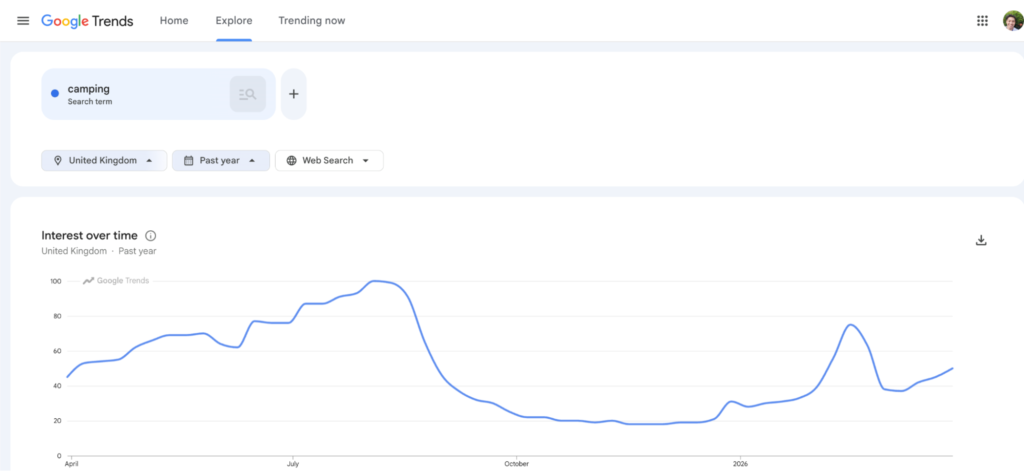
You can begin your dropshipping niche research using Google Trends. This tool gives you a quick overview of interest in a particular keyword over time. You can use it to see which items have risen or fallen in popularity in the past few months
For example, if you explore camping gear, you will notice clear seasonal spikes, with strong product demand during spring and summer. This information alone implies this niche performs best during a certain time period.
But just checking dropshipping trends isn’t enough. You also need sales data to ensure the product you are investing in is actually making people click that checkout button.
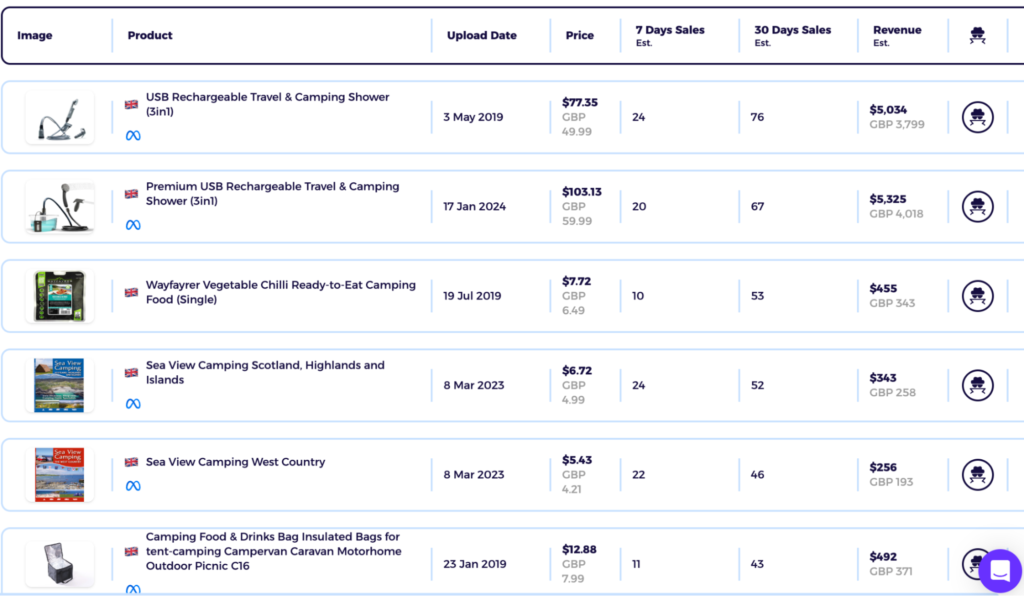
You can use the best product research tool, like ZIK Analytics Product Finder, to do this. Enter your target keyword, set the country to the UK, and adjust the date range to analyze recent performance. This allows you to see which products are actively selling.
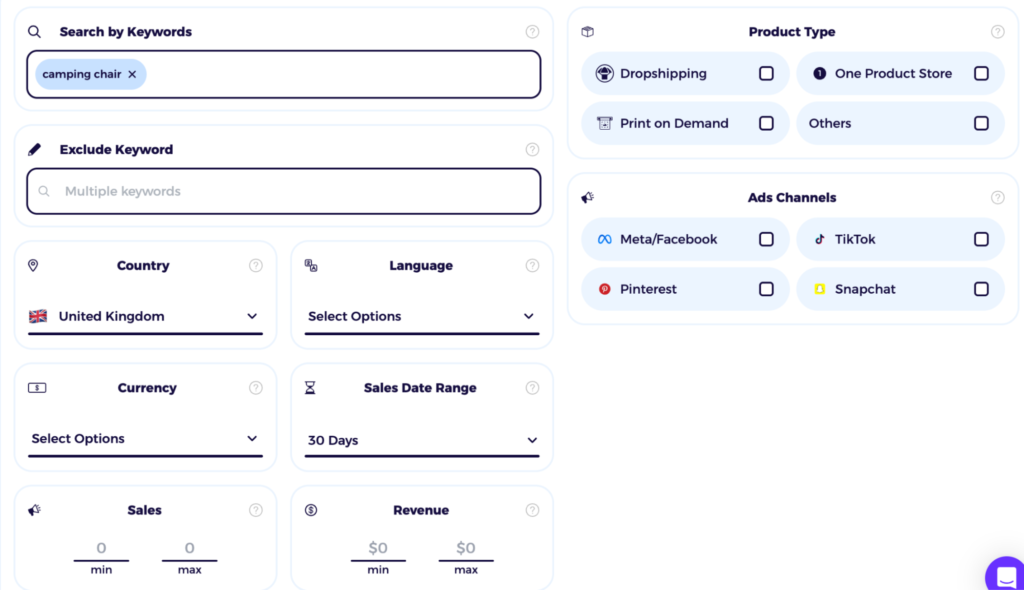
From there, review top-performing listings within your niche. If you consistently see strong sales across multiple products, you are likely looking at a profitable UK dropshipping niche.
Step 2: Find Winning Shopify Dropshipping Products
Once you have chosen a niche, the next step is to identify dropshipping products that are already selling well in the UK market.
You can start by using a product research tool like the ZIK Analytics Product Finder and narrow your search within your niche.
For example, if you selected camping, you can drill down into specific products like camping tents. This will give you a clear insight into the performance of individual items.
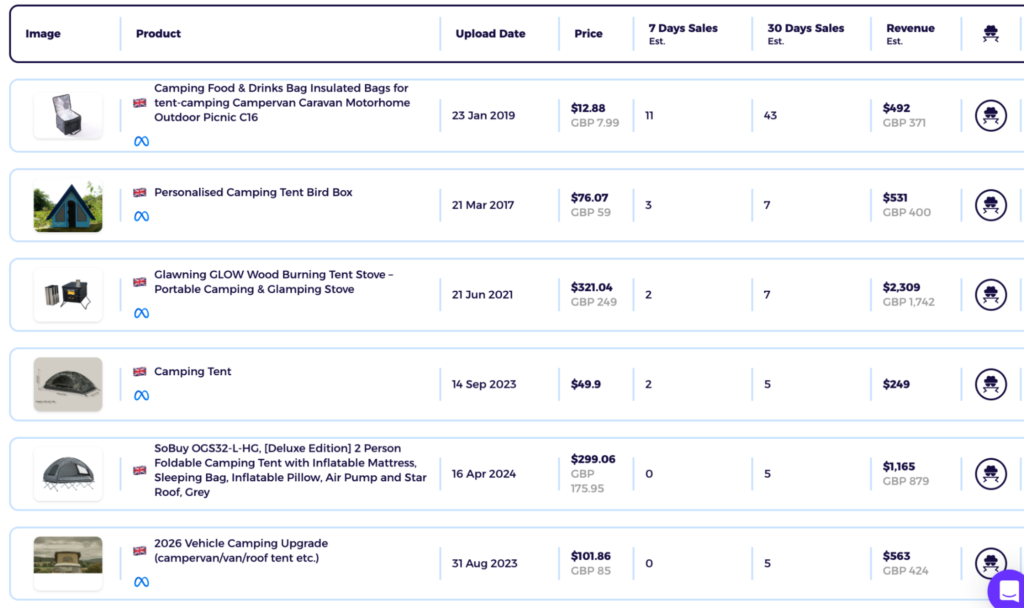
Review recent sales data to validate demand. Even if you are analyzing data during the off-season, consistent sales can still indicate strong potential when peak season arrives.
You should also analyze what other dropshipping stores are selling. Using tools like Shopify Sales Tracker with AdSpy, you can explore competitor stores, see which products they are promoting, and check their Shopify store revenue. If multiple stores are scaling the same product, it is a strong signal that the product is worth testing.
Step 3: Find and Vet Dropshipping Suppliers
Once you have a product in mind, the next step is to find a reliable supplier.
To find a supplier, you need to search around marketplaces like AliExpress or Alibaba. Or if you know some wholesalers in the UK, get in touch with them to ask if they can dropship to your customers.
To make it easier for you and remove any language barrier, you can hire a dropshipping agent to find and vet suppliers for you.
When evaluating suppliers, make sure they meet the following criteria:
- Profitable from a business standpoint
- Offers a wide product catalog across different price tiers
- Provides consistent product quality
- Ships orders on time without delays
- Has a strong logistical reach within the UK for faster delivery
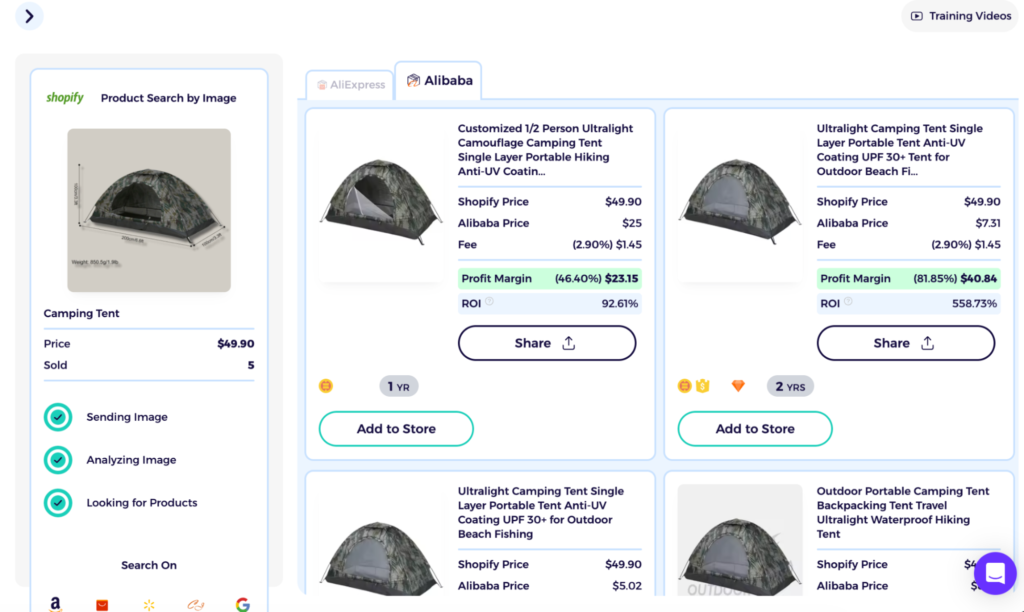
If you want to automate finding suppliers, you can use the search image by AliExpress feature inside ZIK. This allows you to quickly locate exact or similar products from multiple suppliers within the mentioned platforms.
The tools also extract product costs, fees, and estimated margins, helping you assess profitability before committing to a supplier.
Step 4: Sign Up & Build Your Shopify Dropshipping Store
Once your products and suppliers are in place, the next step is to x.
You can set up your store manually through Shopify. After choosing a Shopify plan and answering the setup questions, review a few successful UK dropshipping stores to see which Shopify theme they use, then select a free or paid theme that fits your niche. Add your products, configure your payment details, and your store is ready for optimization.
Creating your homepage, product pages, policy pages, and reviews section requires careful setup, especially if you want a professional-looking store. This process becomes easier if you are running a one-product store.
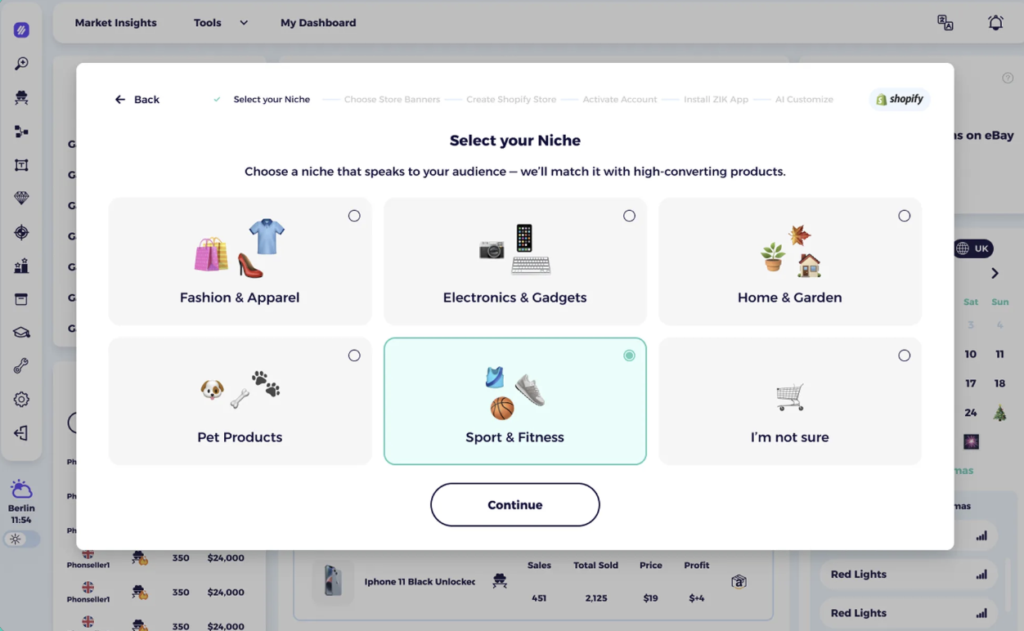
If you want to speed things up, you can use the ZIK Analytics AI Store Builder. Instead of building everything from scratch, you simply input your product and preferences, and the tool generates a ready-to-customize store for you.
Step 5: Import Products Into Your UK Shopify Dropshipping Store
Once your store is fully set up, the next step is to import products into your store.
To do this, connect your chosen suppliers to your Shopify store using Shopify dropshipping software. This allows you to sync their inventory with yours, including any images, descriptions, and pricing.
You can do this manually, but if you have dropshipping automation tools like Spocket or Litcommerce, they will do everything for you, from connecting with suppliers to putting the items in your dropshipping store.
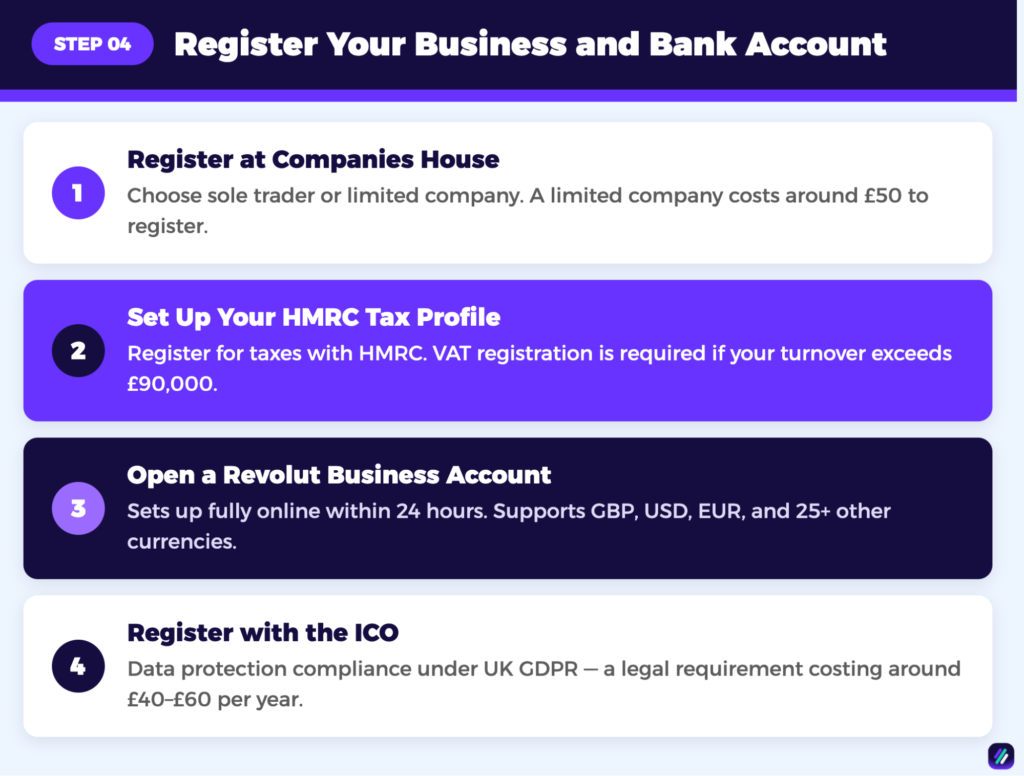
Step 6: Register Your Company & Open a Business Bank Account in the UK
To run a proper Shopify dropshipping business in the UK, you need to register your company in compliance with UK laws. You can operate as a sole trader or a limited company, though many dropshippers choose a limited company for added credibility and structure.
After registration, you will need a UK-based address for your business. If you are operating remotely, you can partner with someone in the UK or use an online formation service that provides a registered business address.
Once your company is registered, Companies House will issue your business number. This makes it easier to open a UK business bank account.
Many dropshippers prefer digital banks like Revolut or Wise, as they allow you to set up and manage your account without going to a qualified branch.
Step 7: Configure VAT/Taxes, Shipping & Policy Pages
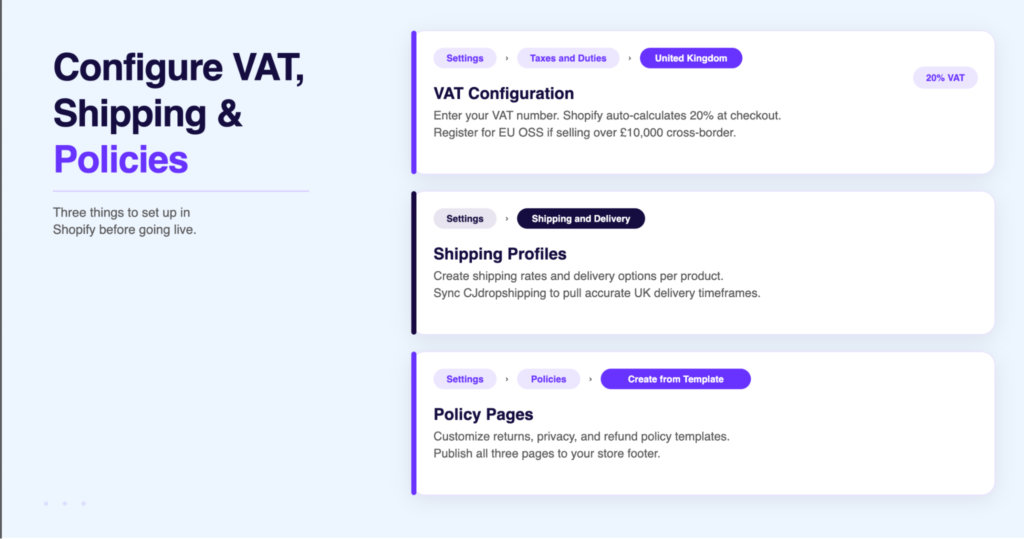
Once your store is set up, you need to configure taxes, shipping, and essential policy pages to stay compliant in the UK.
If you are VAT-registered, you must ensure VAT is properly calculated at checkout. You cannot hide or omit these costs, as this can lead to legal issues and damage customer trust.
You also need to set up clear shipping options. Display shipping costs on both product pages and at checkout. If you sell internationally, you can offer free shipping as a promotional strategy for selected products or periods.
Finally, create all required policy pages, including your privacy policy, refund policy, terms and conditions, and shipping policy. These should be clearly visible so customers are aware of them before completing a purchase.
Step 8: Pricing Your Products for Profit
Pricing your products correctly is the key to running a sustainable dropshipping business.
Your costs go beyond the product itself. You also need to factor in marketing spend, store setup, transaction fees, and ongoing maintenance. Ignoring these can quickly eat into your profits.
A common approach is to start with a 2x to 3x markup. This gives you enough margin to cover expenses while leaving some headroom for paid ads and operational costs. However, this does not mean all of it is profit.
Avoid low margins, those below 15 percent, as this leaves little room for error. You should also keep some margin available for discounts and promotions to stay competitive.
Step 9: Market Your Shopify Dropshipping Store
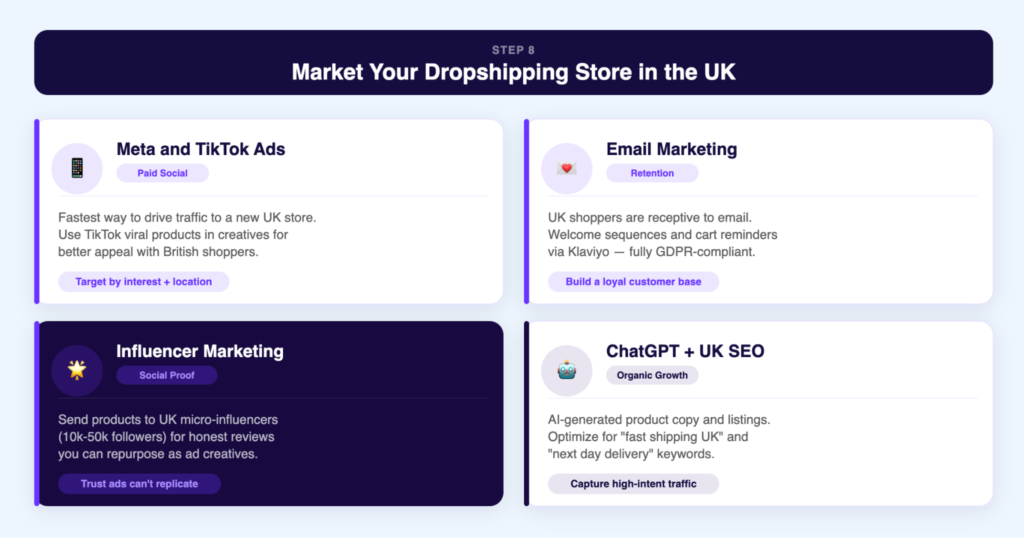
Once your store is live, the next step is to drive traffic and generate sales. There are two main approaches you should focus on: content marketing and paid advertising.
Content marketing includes SEO and social media. With SEO, you create product-related content that answers search queries and helps your store appear on Google over time. This builds long-term visibility and organic traffic. Social media focuses on engagement through likes, comments, and shares, which can lead potential buyers directly to your product pages.
Paid dropshipping advertising, on the other hand, delivers immediate exposure. You can run ads on social media platforms and search engines to reach targeted audiences. While this increases visibility quickly, you pay for each interaction, whether it converts or not.
The most effective strategy is to combine both. Use paid ads for quick results, while building SEO and social media presence for long-term growth and stability.
Step 10: Managing Shipping Your Products
Shipping plays a direct role in customer satisfaction and your store’s reputation. You need to choose couriers that can reliably deliver across the UK.
Focus on providers that are fast, consistent, and have strong nationwide coverage. Delays or poor delivery experiences can lead to negative reviews and refund requests.
You should also pay close attention to shipping costs. High delivery fees can increase your product price and discourage buyers from completing their purchase.
This applies to both international shipments into the UK and domestic deliveries within the UK. Keeping shipping efficient and affordable will help maintain conversions and customer trust.
Grab your Shopify dropshipping eBook and find winning suppliers fast!Step 11: Managing Customer Service, Returns, & Refunds
Customer service is a key part of running a successful dropshipping business. You need a system in place to handle inquiries, returns, and refunds efficiently.
Start by using a helpdesk tool to organize customer messages by category. This allows you to respond faster and manage issues more effectively. As a standard, you should aim to reply within 24 hours.
You also need to follow UK consumer law. Customers have the right to request a return within 14 days, and you must issue a refund within 14 days of receiving the item.
Since you are operating a dropshipping model, handling returns can be complex. Instead of accepting all returns, you need to set clear criteria for whether to accept a return and provide a refund or replacement.
Focus on verifying issues such as damaged or incorrect items and process refunds instead of replacements to avoid operational blockers.
Step 12: Scale Your Dropshipping Store
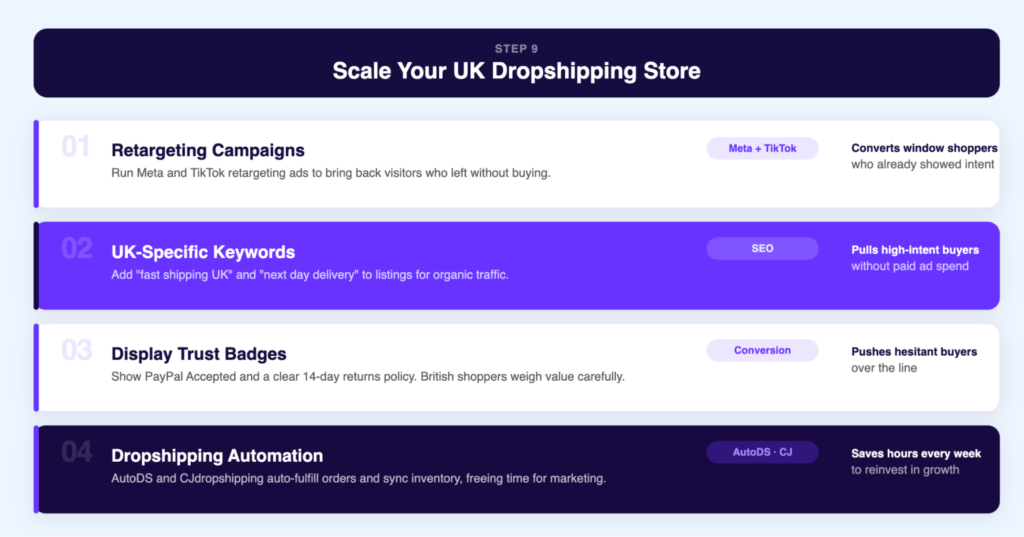
Once your store is running smoothly, think about how you can get more eyes on it.
Many dropshippers start with paid ads on Facebook and TikTok. It can be a fast way to drive traffic to products you already know sell.
Another tactic is SEO. Adding UK-specific keywords like “fast shipping UK” and “next day delivery” to your listings pulls in organic traffic without paying for every click.
Retargeting campaigns bring back visitors who left without buying. Trust signals like PayPal Accepted and a clear returns policy then convert the ones who are still on the fence.
Is Dropshipping Legal in the UK?
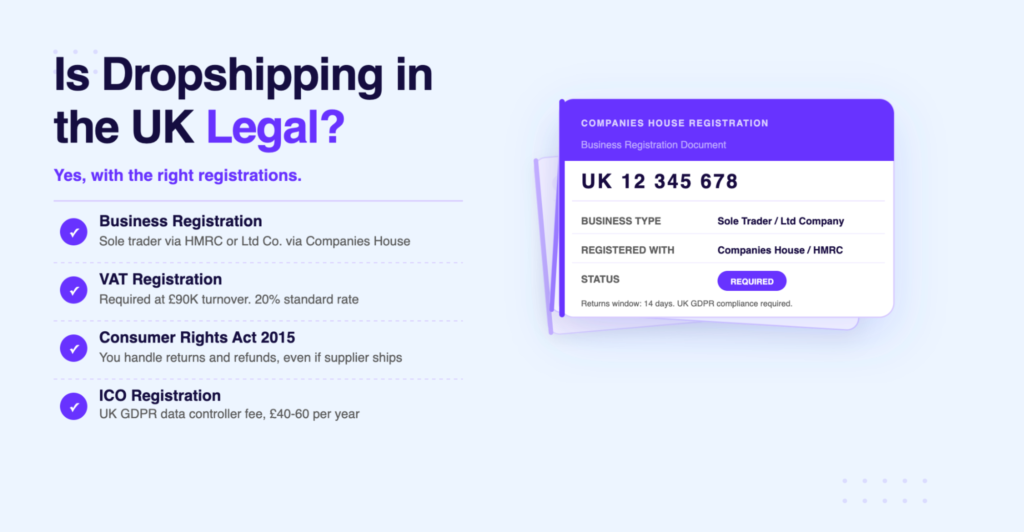
Yes, dropshipping is completely legal in the UK for eBay dropshipping and Shopify dropshipping as long as you follow the right rules.
You need to register your business as a sole trader through HMRC or as an Ltd company through Companies House. If your turnover crosses £90K, you also need to register for VAT at the standard 20% rate.
On top of that, the Consumer Rights Act 2015 makes you responsible for handling all returns and refunds, even when your supplier ships the order directly.
You will also need to register with the ICO as a data controller under UK GDPR, which costs between £40 and £60 per year.
Where dropshipping gets illegal is when sellers cut corners, like selling counterfeit products, misrepresenting shipping times, ignoring refund rights, or avoiding tax altogether.
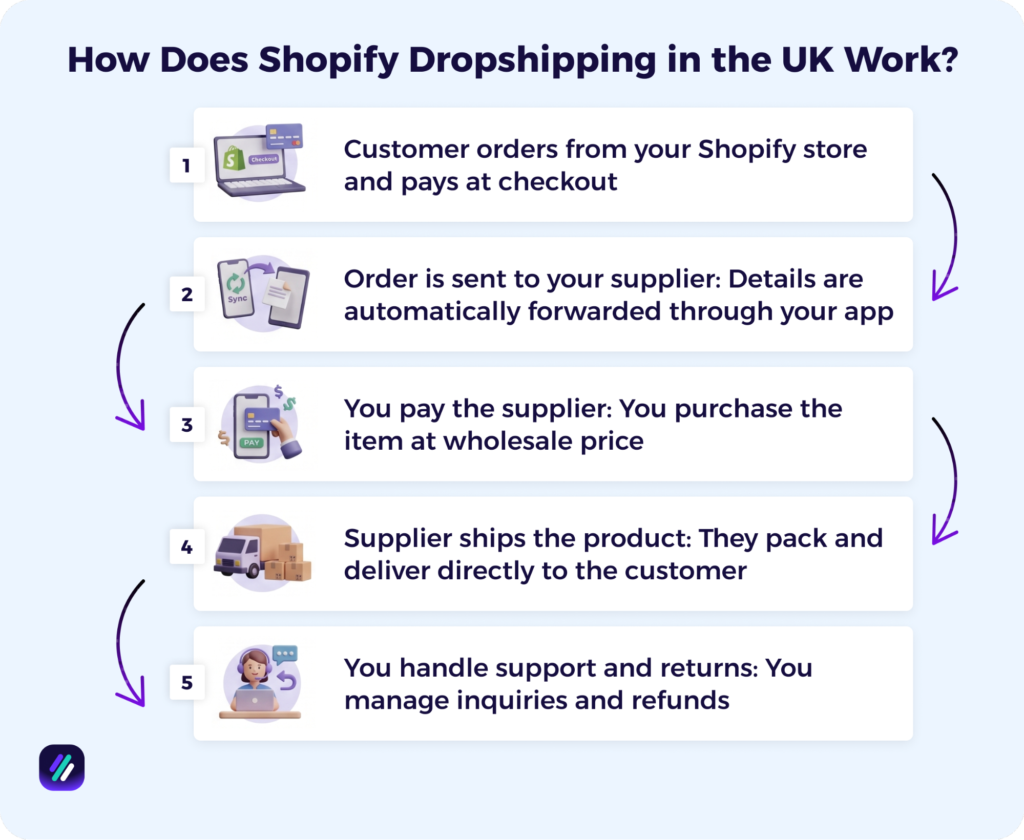
How Does Shopify Dropshipping in the UK Work?
Here is the basic framework of how Shopify dropshipping in the UK works:
- Customer places an order on your Shopify store: A buyer purchases a product and pays you directly through your checkout.
- Order is automatically forwarded to your supplier: The order details are sent to your connected dropshipping supplier through your app.
- You pay the supplier: You purchase the product from the supplier at their wholesale price after receiving the customer’s payment.
- Supplier fulfills the order: The supplier picks, packs, and ships the product directly to your customer in the UK.
- Customer receives the product: Delivery timelines depend on your supplier and shipping method, which must be clearly communicated.
- You handle customer service: You manage inquiries, delivery issues, and returns, even though the supplier ships the product.
- Refunds and returns are processed: You must follow UK regulations like the Consumer Contracts Regulations 2013 when handling cancellations and refunds.
Benefits of Shopify Dropshipping in the UK
Here are some of the reasons why dropshippers are doing business in the UK
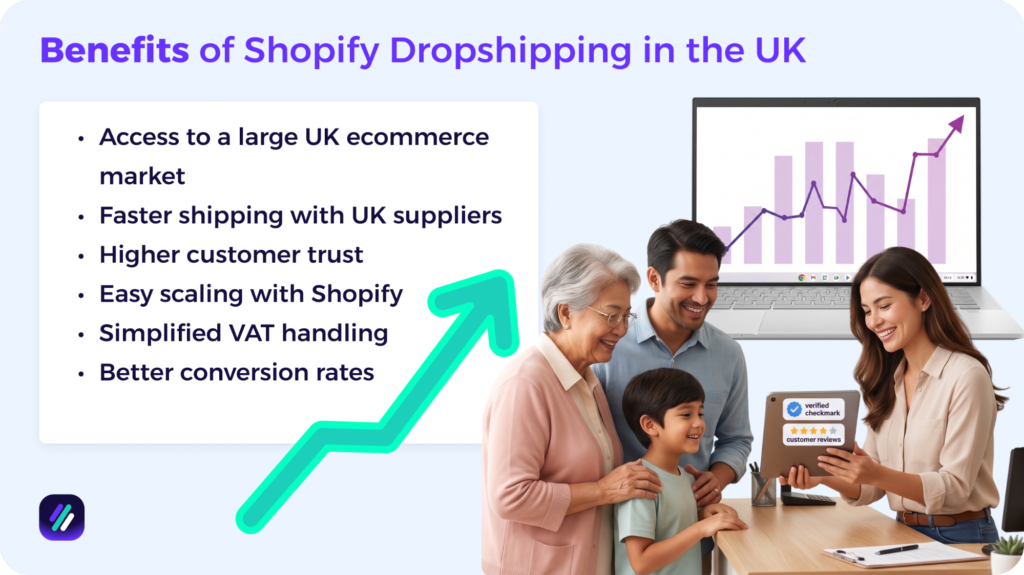
- Access to a large, high-spending UK ecommerce market: You tap into a mature online shopping market with strong purchasing power. This gives you more opportunities to generate consistent sales.
- Faster domestic shipping with UK-based suppliers: Working with local suppliers reduces delivery times significantly. Faster shipping improves customer satisfaction and reduces refund requests.
- Higher customer trust with local delivery expectations: UK customers are more likely to trust stores that offer local shipping. This can lead to better engagement and repeat purchases.
- Seamless integration and scalability using Shopify: Shopify allows you to easily manage, automate, and scale your store. As your sales grow, your operations can expand without major technical barriers.
- Simplified VAT and tax handling within a single market: Operating within the UK makes tax compliance more straightforward. You can manage VAT more efficiently compared to cross-border setups.
- Better conversion rates due to shorter delivery times: Faster shipping reduces hesitation during checkout. Customers are more likely to complete purchases when delivery expectations are clear and quick.
Best Shopify Dropshipping Suppliers in the UK
Here are the best Shopify dropshipping suppliers that are currently being widely used in the UK:
- Alibaba: Ideal for sourcing products in bulk at lower costs, especially if you plan to scale. You can negotiate with suppliers and arrange UK-based fulfillment for faster delivery.
- AliExpress: A popular choice for beginners due to its wide product range and low upfront costs. Some suppliers offer UK warehouses, helping reduce shipping times.
- Avasam: A UK-based dropshipping platform with local suppliers and automated order processing. It is well-suited for faster domestic shipping and easier compliance with UK standards.
- Spocket: Focuses on suppliers from the UK, US, and Europe for dropshipping. It allows you to source higher-quality products with faster shipping to UK customers.
- CJdropshipping: Offers a mix of global and UK warehouse options. It provides sourcing, branding, and fulfillment services, making it a flexible option as you scale.
If you plan to sell on eBay as well, it’s worth comparing these options with our list of UK dropshipping suppliers for eBay. The guide covers supplier platforms and UK-based sourcing options that work well for eBay sellers looking to improve shipping speed and product availability.
Find Winning Dropshipping Products in the UK with ZIK Analytics
ZIK Analytics offers a complete toolkit to help you find profitable dropshipping products tailored for the UK market.
Here are the key tools you should focus on:
- Shopify Product Finder scans thousands of Shopify stores to identify products that are actively selling in the UK. You can view estimated sales, revenue, and pricing, then validate those products with suppliers and calculate potential dropshipping profit margin before listing.
- Shopify Sales Tracker allows you to monitor specific Shopify stores and track their performance over time. You can see which products are generating consistent revenue and use that data to guide your product selection.
- AdSpy helps you analyze competitor ads across different platforms. You can discover which products are being promoted, identify winning creatives, and understand what is currently converting in the UK market.
- Shopify Product Research Tool gives you deeper insights into trending products and niche opportunities. This helps you validate demand and avoid products with low sales potential.
- Shopify Dropshipping Software simplifies the process of importing products, syncing inventory, and managing orders. This ensures your operations stay efficient as you scale.
Start your ZIK Analytics trial today and find winning dropshipping products that are already generating sales in the UK market.
Frequently Asked Questions About Shopify Dropshipping in UK
Here are some frequently asked questions about Shopify Dropshipping in the UK
Is dropshipping allowed in the UK?
Yes, dropshipping is allowed in the UK as a legal business model. However, you must comply with consumer protection laws, tax regulations, and business requirements. This includes transparent shipping times, proper VAT handling, and honoring customer refund rights.
Is the UK good for dropshipping?
Yes, the UK is a strong market for dropshipping due to its large ecommerce audience and high consumer spending. Faster domestic shipping, reliable suppliers, and clear regulations also make it easier to build a scalable and trustworthy online store.
Do dropshippers pay taxes in the UK?
Yes, dropshippers in the UK must pay taxes. This includes income tax or corporation tax, depending on your business structure, and VAT if you meet the registration threshold. You are responsible for reporting earnings and staying compliant with UK tax laws.
Which dropshipping is best in the UK?
The best dropshipping in the UK focuses on high-demand niches and reliable local suppliers. Using UK-based suppliers ensures faster delivery, lower shipping costs, and better customer trust. Combining strong product research, competitive pricing, and effective dropshipping marketing strategies gives you the highest chance of building a profitable and scalable store.
Which country is best for Shopify dropshipping?
The best country for Shopify dropshipping depends on demand, logistics, and competition. Markets like the UK, US, Canada, and Australia perform well due to strong ecommerce activity and high spending. The UK stands out for faster shipping, reliable suppliers, and easier compliance within a single market.
Do I need to register for VAT to dropship in the UK?
You need to register for VAT in the UK if your taxable turnover exceeds the threshold or if you store goods locally. Even below the threshold, VAT may apply to certain sales. Proper VAT setup ensures compliance, accurate pricing, and avoids penalties when running a dropshipping business.
What is the £135 rule for UK import VAT and dropshipping?
The £135 rule means that for orders valued at £135 or less, VAT is collected at checkout instead of at import. You are responsible for charging and remitting VAT. For orders above £135, VAT and duties are typically collected at the border upon delivery.
Do UK customers have a 14-day right to return dropshipped items?
Yes, UK customers generally have a 14-day right to return items under consumer protection laws. This applies to online purchases, including dropshipping. You must accept return requests within this period and issue refunds within 14 days of receiving the returned item.