
A lot of people assume you need Shopify to start a successful dropshipping business. That belief often becomes a problem once you want more control over your store, lower long-term costs, or the flexibility to fully customize your website.
Whether you’re eBay dropshipping business or want to expand beyond marketplaces, relying entirely on Shopify can start to feel limiting.
The good news is that you can build a fully functional dropshipping store using WordPress and WooCommerce without needing advanced coding skills.
With the right setup, WordPress gives you more ownership, customization, and SEO flexibility than many ecommerce platforms.
In this guide, you’ll learn how to start dropshipping with WordPress, set up your store, and understand the pros and cons compared to Shopify and online marketplaces.
Step 1: Select Your Dropshipping Niche
Every successful dropshipping business starts with dropshipping niche research, not building the store itself. You first need to figure out whether there is actual demand for the type of products you want to sell.
One of the easiest ways to do this is by using Google Trends. Search trends give you insight into what people are actively interested in throughout the year and whether a niche has long-term potential or only temporary hype.
Start by researching broad niche ideas instead of specific products. For example, instead of searching for “Pilates socks,” begin with a broader term like “Pilates.” Another example could be “Pickleball.” At this stage, your goal is to understand the audience’s interest first before narrowing down to individual products.
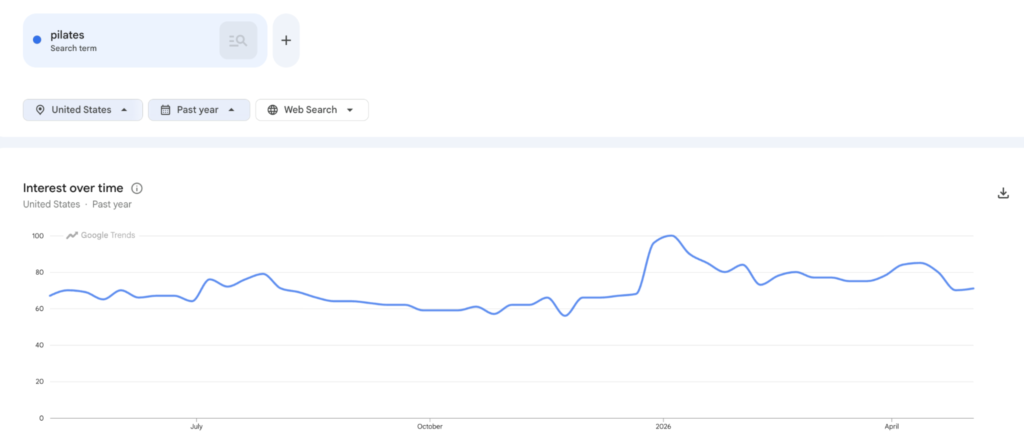
When using Google Trends, set the location to the country or region you plan to target and change the date range to the past 12 months. This helps you identify seasonal patterns and buying behavior.
For instance, pickleball may show stronger spikes during summer months, while Pilates may display a more stable upward trend throughout the year.
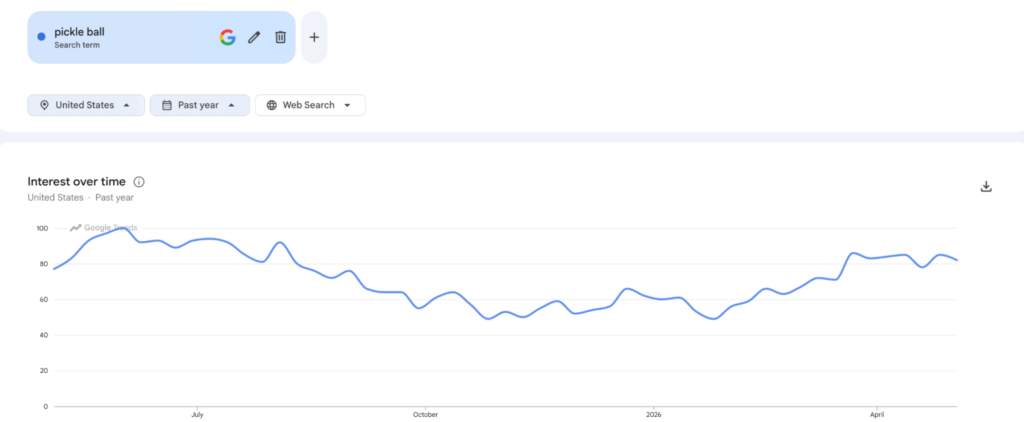
Keep in mind that Google Trends does not show exact search volume numbers. Instead, it visualizes relative interest over time. Even so, it is still one of the best free tools for spotting demand dropshipping trends and comparing dropshipping niches side by side.
If you want deeper validation, check social media platforms like TikTok, Instagram, Pinterest, or Reddit. Look at hashtags, engagement levels, comments, and viral posts related to the niche. If people are consistently interacting with content around a topic, there is a good chance there is buying interest behind it as well.
But if you need niche validation with actual products, then you use the ZIK Analytics Shopify Product Explorer and focus on a niche that can represent a keyword, where you can find if they have actual sale and how much potential revenue does these products have for each seller.
Step 2: Find Trending and Winning Products
Now that you have determined the type of niche you want to focus on, it is time to look for products that fit into it. One of the easiest ways to start is by checking competitors one by one and listing successful Shopify dropshipping stores within your niche.
This gives you an idea of what dropshipping products are currently being pushed in the market and how sellers are presenting them.
As you browse through stores, list down products that you think are good to sell. If a product through social media repeatedly appears in videos, posts, or influencer content with strong engagement, there is usually some level of interest behind it.
The issue with this method is that it is still incomplete. You may see engagement and popularity, but you still have no idea whether the dropshipping product has good profit margin potential until you find the supplier and compare sourcing costs.
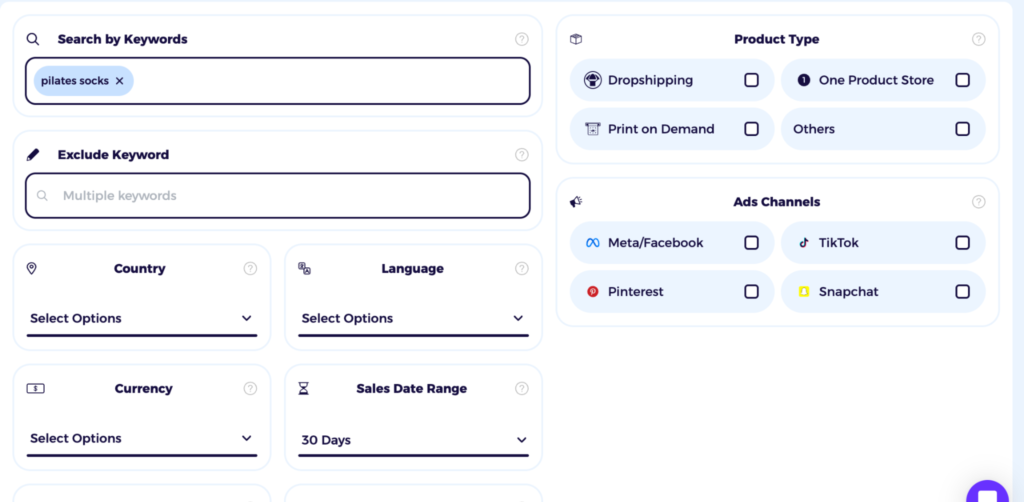
A more reliable way to validate products is by doing a dropshipping product research using the tool ZIK Analytics. Here, you can type a product keyword into the search engine, such as “Pilates socks,” to find related products within the niche.
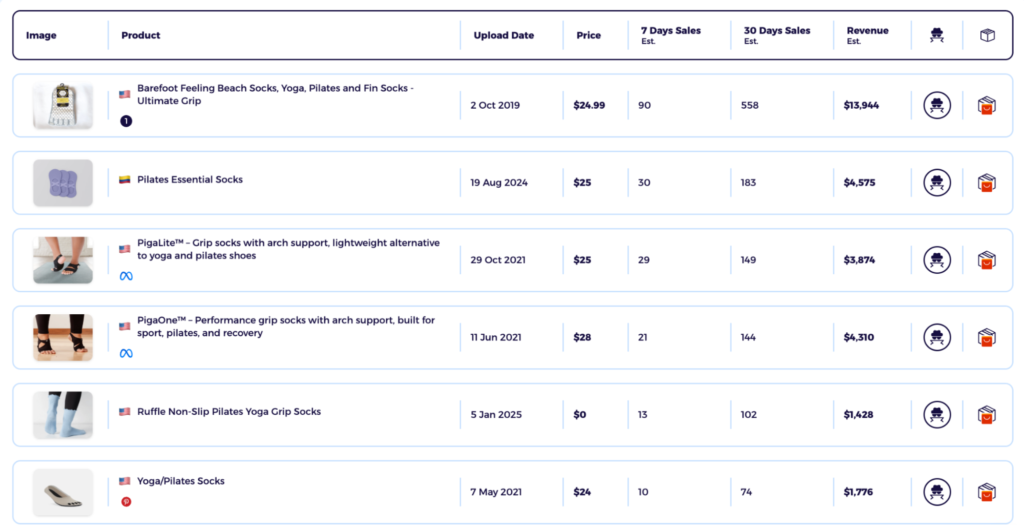
You can also apply filters if you want to narrow the search further, but even the general keyword data already gives you useful information.
The estimated 30-day sales data can help you understand potential revenue and compare products against one another.
For example, you can compare Pilates socks with “Pilates resistance bands” to see whether expanding into related products makes sense for your store.
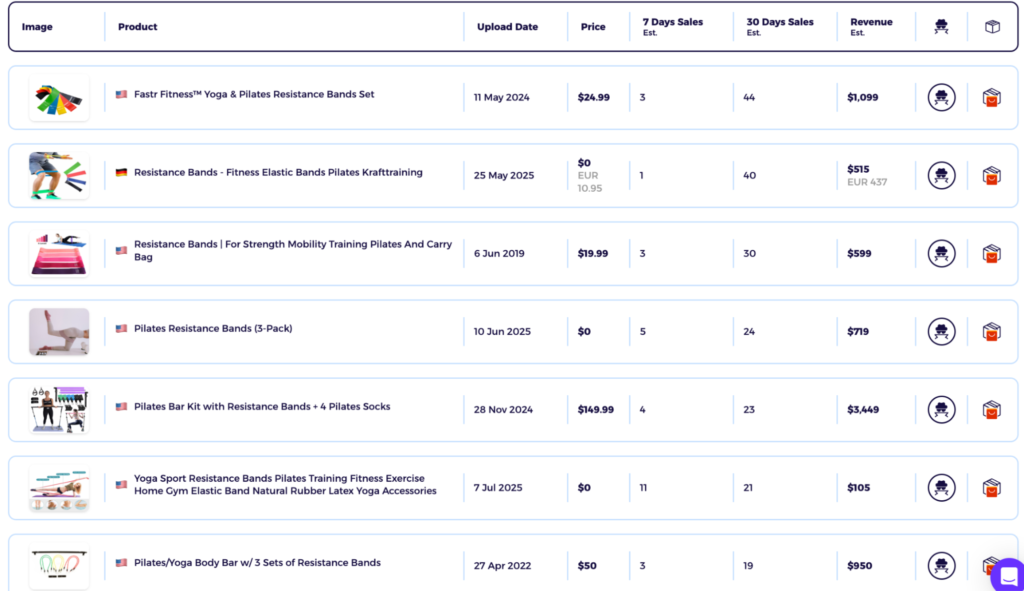
At this stage, you’re using sales data to find products in your selected niche that have proven demand and ideally have potential for improvements or for adding some unique aspects to them.
Step 3: Create Legal Entity with Business Bank Account (Optional)
Now that you have confirmed you have a viable product, the next step is setting up the legal and financial side of your business. While this step is optional when you are just testing products, creating a legal entity and a business bank account can make your dropshipping operation look more professional and easier to manage in the long term.
If you are operating in the United States, you will usually need to register an LLC or corporation, obtain an EIN (Employer Identification Number), and, depending on your state requirements, obtain a sales tax permit. Once these are set up, you can create a business bank account. In many cases, banks require an EIN before allowing you to open one.
Separating your business finances from your personal finances is important. It makes bookkeeping easier during tax season and helps your accountant organize records properly.
If you are selling from the UK, you will generally need similar requirements, such as business registration and a UTR (Unique Taxpayer Reference).
If you are selling internationally, for example, from the Philippines, Pakistan, or the UAE while targeting the US market, you can usually register your business locally first. However, once you reach certain sales thresholds in other countries, you may still become responsible for taxes and compliance requirements within those markets.
You are also still responsible for product compliance, especially for categories like electronics, cosmetics, supplements, and children’s products.
Step 4: Find and Vet Dropshipping Suppliers
Now that you already know what products you want to sell and have the legal side of your business prepared, it is time to look for suppliers.
There are many dropshipping suppliers available, depending on the niche you want to enter. Whether you want pet dropshipping suppliers, cosmetics dropshipping suppliers, or luxury dropshipping suppliers, you will have plenty of options to choose from.
You can also narrow down suppliers by location. For example, you may prefer EU dropship suppliers (if you’re in the EU) for faster delivery times or Chinese dropship suppliers for lower sourcing costs.
Each option comes with its own advantages and disadvantages depending on your target market, shipping expectations, and pricing strategy.
Instead of manually contacting individual manufacturers one by one, platforms like Alibaba and AliExpress are already viable as dropshipping suppliers, and many beginners are using them. They are widely used in dropshipping because of their low pricing and relatively accessible shipping options.
You can use ZIK Analytics to find products first, then source those same products directly from Alibaba, AliExpress, or other suppliers.
You can even use the Alibaba image search tools or AliExpress image search tools on these platforms to locate the exact product you want to source more efficiently.
For example, a Shopify store may sell Pilates socks for around $16.75, while the sourcing cost from a supplier may be less than a dollar by conducting an Alibaba search by image.
Although this guide focuses on WordPress dropshipping, Shopify stores are still one of the best places to conduct product research because a large portion of e-commerce activity happens there.
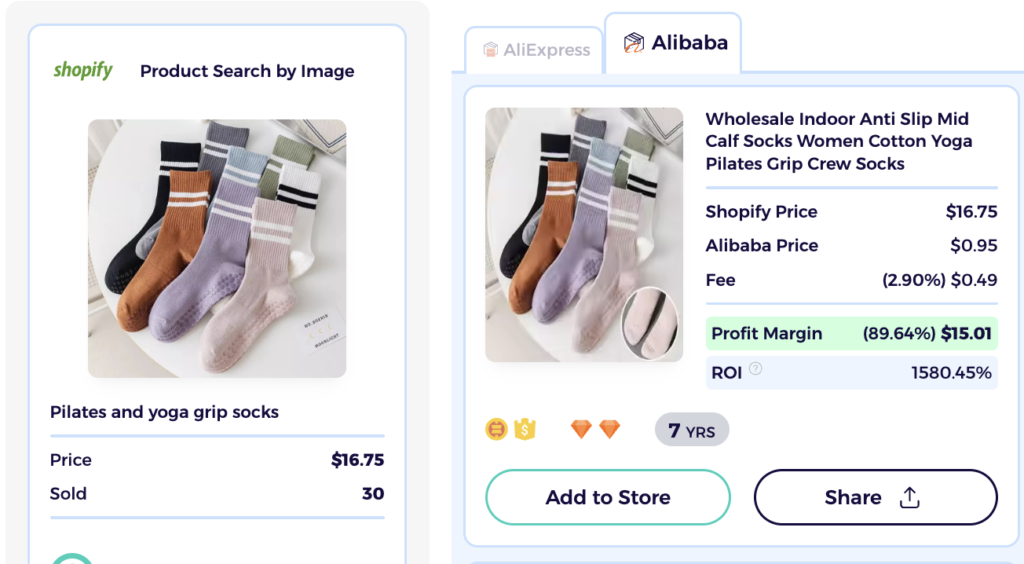
If you do not want to manually work with Alibaba or AliExpress suppliers yourself, you can use a dropshipping automation tool that integrates with WordPress and WooCommerce to streamline fulfillment.
You can also work with a dropshipping agent based in China or Southeast Asia. A good agent can communicate directly with suppliers, negotiate pricing, manage sourcing concerns, and act as your liaison throughout the dropshipping operation.
Step 5: Get Hosting & Create WordPress Store with WooCommerce
Now it is time to build your website.
The first step is choosing a unique domain name. Your domain name represents your entire business, so you want something easy to remember and flexible enough to match your niche long-term.
For example, if your products focus on Pilates or feminine fitness, a name like “PurelyPilates.com” gives a softer, more branded feel that can help build credibility with potential buyers and hugely help with SEO.
Next comes hosting. If you were using Shopify, hosting would already be included, but with WordPress, you will need to choose your own hosting provider. There are many options available, so prioritize speed, reliability, and storage capacity when making your decision.
Once your hosting is ready, you need to install the WooCommerce plugin on your WordPress website.
This is one of the most important steps because WooCommerce is what turns a standard WordPress website into a functional ecommerce store. Without it, you would need to manually hardcode ecommerce functionality yourself.
After installation, you can begin building your store pages, including your homepage, product pages, category pages, reviews page, policy pages, compliance pages, and promotional pages.
Since there are many sections involved, it is important to consider your ecommerce sales funnel and customer journey so that buyers can easily navigate your website.
Make sure to use high-quality images and prioritize page speed throughout the site. A slow or poorly designed store can quickly damage trust and push potential buyers away.
Step 6: Choose Essential WordPress Dropshipping Plugins
Your WooCommerce plugin alone is not going to be enough to fully run your WordPress dropshipping store. If you want to automate your operations and make fulfillment easier, this is the stage where you should start adding the essential plugins your store needs.
One of the most important additions is a dropshipping automation plugin that is compatible with WordPress and WooCommerce.
Instead of manually sending customer orders and shipping information to your supplier every time someone buys from your store, automation software helps bridge the gap between your buyers and suppliers. This speeds up the fulfillment process and makes managing orders much more efficient.
If you also plan to grow your store through SEO marketing, installing an SEO plugin is equally important. These plugins help manage your sitemaps, metadata, schema markup, and other SEO related settings that can help your store rank better in search engines.
There are many other WordPress plugins available that you can explore depending on your needs. However, it is best to stick to only the essential ones. Installing too many plugins at once can increase costs, create compatibility issues, and slow down your website.
Step 7: Marketing Your WordPress Dropshipping Store
Now that your WordPress dropshipping store is ready, the next step is marketing it. There are several ways you can approach this depending on your budget, niche, and how fast you want to grow.
One option is classic SEO. You can optimize your website according to Google’s standards so your pages have a better chance of ranking in search engines. This means optimizing your product pages around the search intent of your potential buyers. You can also publish blog content to attract people who are still researching products and are further up the buying funnel.
However, the fastest way most people market a dropshipping store is through social media. You can create dedicated social media accounts focused entirely on your niche and consistently post content related to your products.
Another option is working with influencers and setting up profit-sharing or commission-based partnerships where they earn a cut from purchases made through their referral links.
If you want faster results and are willing to spend more aggressively, you can also run paid ads. You can advertise through Google, Meta, or Reddit, depending on where your target audience spends time online.
For example, if your niche targets people interested in wellness or fitness, Meta ads focused on Instagram can work very effectively.
Just remember that paid advertising can become very expensive and requires constant monitoring.
These paid ads are based on clicks rather than purchases, meaning people can repeatedly click your ads and visit your store without actually buying anything. Without proper optimization, this can quickly become a costly part of your dropshipping business
Step 8: Shipping, Refunds, and Customer Service
The last step is setting up your shipping, refund, and customer service workflows. These are important because they directly affect customer satisfaction and your store’s reputation. These policies should be clearly visible on your website so customers understand your limitations before purchasing.
For shipping, coordinate closely with your supplier regarding how products will be delivered. In most cases, the closer the supplier’s warehouse is to your target customers, the better the delivery experience will be.
Buyers should also be able to track their parcel’s progress easily, so automated email notifications and tracking updates are ideal.
For refunds and returns, many dropshippers prefer issuing refunds instead of handling returns because returns can complicate the supplier’s workflow. However, your refund policy should still be strict and clearly defined. For example, you can require customers to provide a complete unboxing video showing defects or issues before approving a refund request.
For customer service, AI chatbots can help handle basic inquiries and reduce manual workload. Most customer questions will usually revolve around shipping times, order tracking, or product information, so automation can help filter simpler concerns before human support becomes necessary.
What is WordPress Dropshipping?
WordPress dropshipping is an ecommerce business model where you sell products without handling inventory yourself.
Instead of storing and shipping products on your own, the supplier handles the fulfillment process and ships the products directly to the customer after an order is placed.
This setup is commonly built using a WordPress website together with the WooCommerce plugin, which turns a standard WordPress site into a functional ecommerce store.
Unlike the more common Shopify setup or selling through marketplaces like eBay, WordPress dropshipping gives you more control over your website’s customization, content, and overall store management.
Why Choose WordPress for Dropshipping?
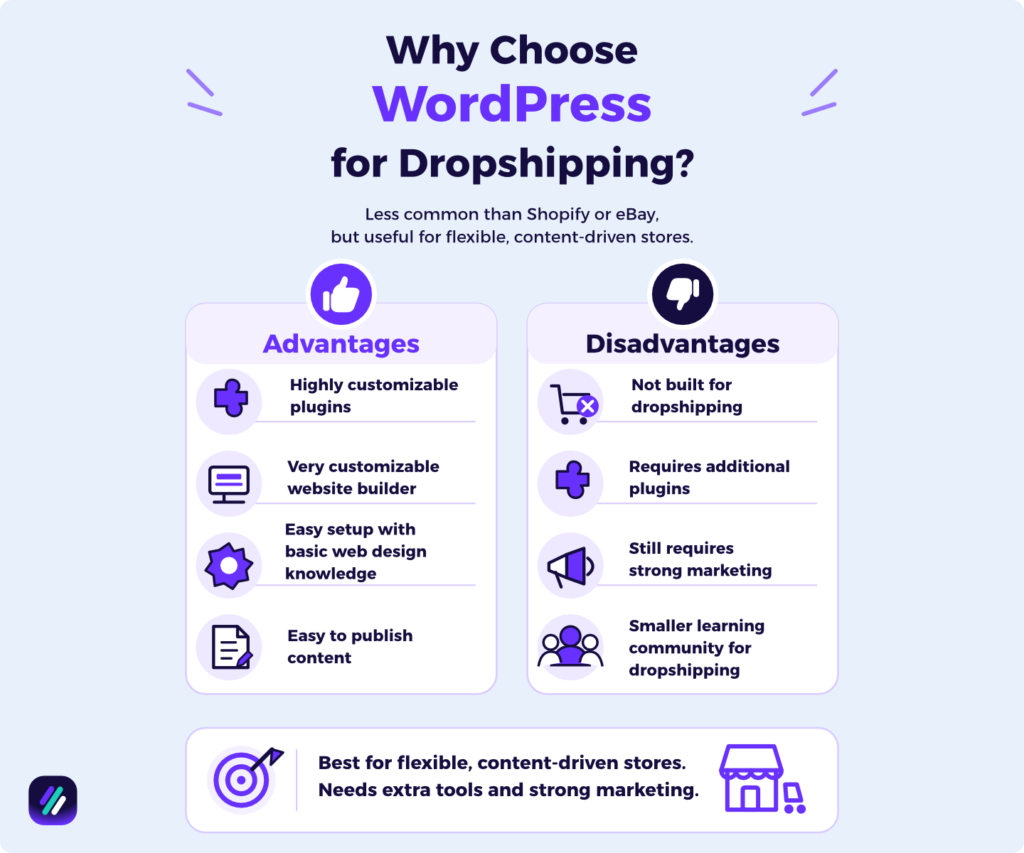
WordPress dropshipping is not the most common way people start a dropshipping business, especially compared to Shopify or marketplaces like eBay. However, it still has its own advantages and disadvantages depending on how you want to run your store.
Advantages
- Highly customizable plugins: You can add different plugins depending on the exact functionality you want for your store, from SEO tools to dropshipping automation software.
- Very customizable as a website builder: WordPress gives you far more flexibility in terms of design, layout, and customization compared to many ecommerce platforms.
- Easy to set up with basic web design knowledge: If you already understand basic website building, working with WordPress and WooCommerce becomes much easier.
- Easy to publish content: Since WordPress was originally built as a content platform, it is very convenient for publishing blog posts and SEO focused content for your store.
Disadvantages
- Not originally built for dropshipping: Unlike Shopify, WordPress is not specifically designed around the dropshipping business model.
- Requires additional plugins: You usually need extra plugins to fully transform WordPress into a functional dropshipping store.
- Still requires strong dropshipping marketing: Even with a well-designed website, you still need SEO, social media, or paid advertising to generate traffic and sales.
- Smaller learning community for dropshipping: Fewer people use WordPress specifically for dropshipping, so it can sometimes be harder to find tutorials, case studies, and community support compared to Shopify
Find Winning Dropshipping Products with ZIK Analytics
ZIK Analytics has a suite of tools to help you research and find winning products for your WordPress dropshipping store.
However, three tools in particular can make product research, store building, and validation much easier:
- Shopify Product Explorer is your dropshipping product research tool for finding which products are currently selling across Shopify stores. You can search keywords related to your niche, filter products by sales performance, and identify products with strong market demand.
- AdSpy helps you see which ads competitors are currently running on Facebook and Instagram. You can search products or keywords to analyze engagement levels, marketing angles, and ad creatives that are already performing well in the market.
- Shopify AI Store Builder can be a useful alternative if you find building a WordPress store too difficult or time-consuming. Instead of manually setting up your store structure, it helps simplify the process of launching a Shopify-based e-commerce store.
You can also use the Shopify Store Finder to discover successful dropshipping stores and the Shopify Market Insights tool to identify trending niches and products.
Start your ZIK Analytics trial and begin researching products that are already generating sales.
Frequently Asked Questions About Dropshipping with WordPress
Here are frequently asked WordPress dropshipping questions:
Is WordPress good for dropshipping?
Yes, WordPress can be good for dropshipping, especially if you want more control over your website customization, SEO, and content marketing. Using WooCommerce allows you to turn a WordPress website into a functional ecommerce store. However, compared to Shopify, WordPress usually requires more setup, plugins, and maintenance to fully automate your dropshipping operations.
Why are dropshippers moving away from WordPress?
Some dropshippers move away from WordPress because managing hosting, plugins, updates, and store maintenance can become time-consuming. Platforms like Shopify simplify many technical aspects by including hosting, security, and built-in ecommerce tools. WordPress also often requires multiple plugins for automation, which can create compatibility issues and slow down store performance over time.
Can WordPress be used for dropshipping?
Yes, WordPress can absolutely be used for dropshipping. By combining WordPress with WooCommerce and compatible dropshipping plugins, you can create a fully functional ecommerce store without holding inventory yourself. Suppliers handle fulfillment and shipping while you manage the website, product listings, marketing, and customer experience through your WordPress store.
What is the best platform to use for dropshipping?
The best platform for dropshipping depends on your goals and experience level. Shopify is usually the easiest option for beginners because it already includes hosting, ecommerce features, and dropshipping integrations. Meanwhile, WordPress with WooCommerce offers more customization and SEO flexibility but requires more setup, maintenance, and technical management.