
Getting started with ecommerce can feel overwhelming. Everywhere you look, you see people selling expensive courses, showing huge ad budgets, and posting flashy “day in the life” videos that make ecommerce look complicated and risky.
For many beginners, that creates the impression that you need thousands of dollars, advanced marketing skills, and paid ads just to start making sales online.
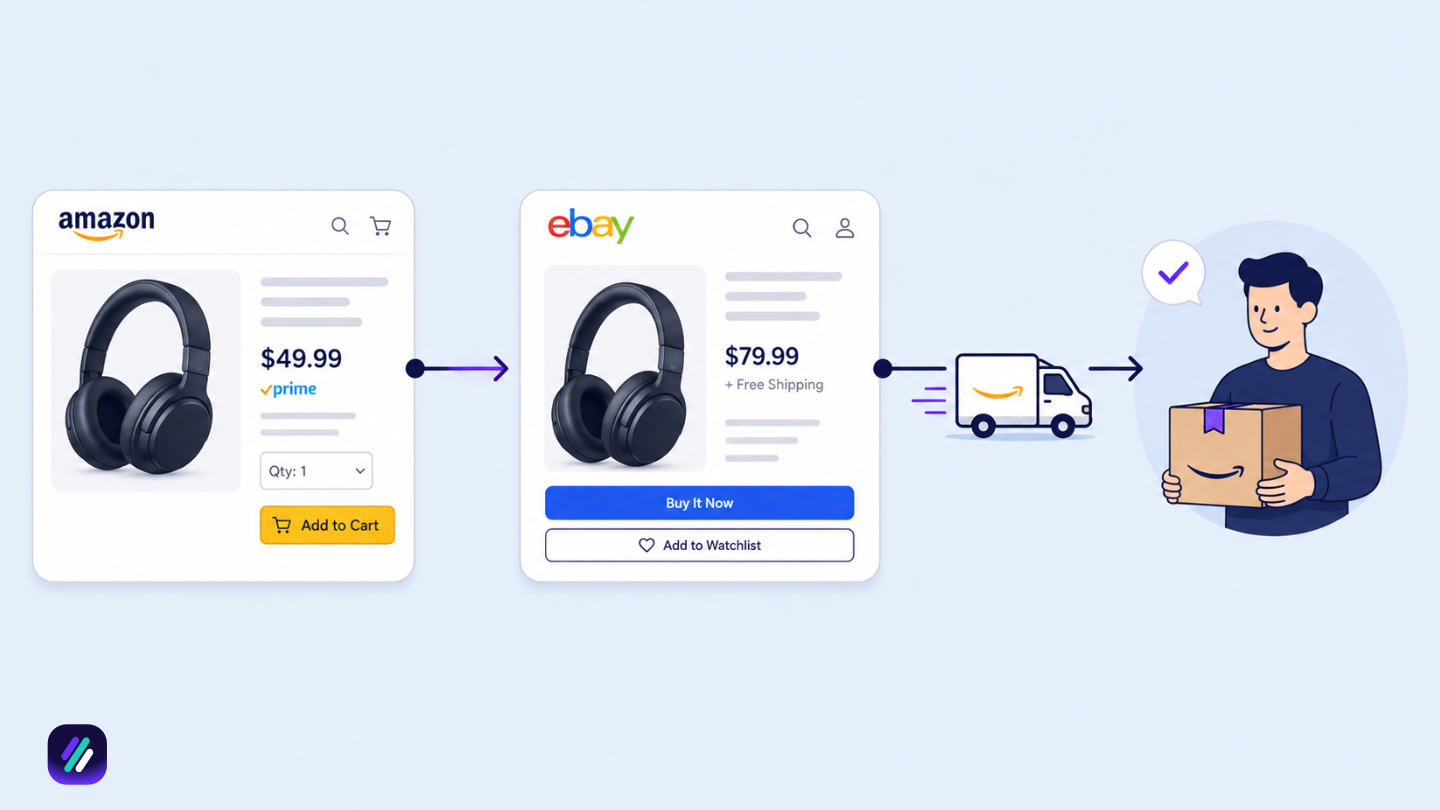
But Amazon to eBay arbitrage is a much simpler entry point. Instead of building a full ecommerce brand from scratch, you use a straightforward model: list products on eBay, source them from Amazon, and profit from the price difference.
In this guide, you’ll learn the basics of Amazon-to-eBay arbitrage, how the model works, and how to approach it safely before moving into more advanced dropshipping strategies.
What is Amazon to eBay Arbitrage?
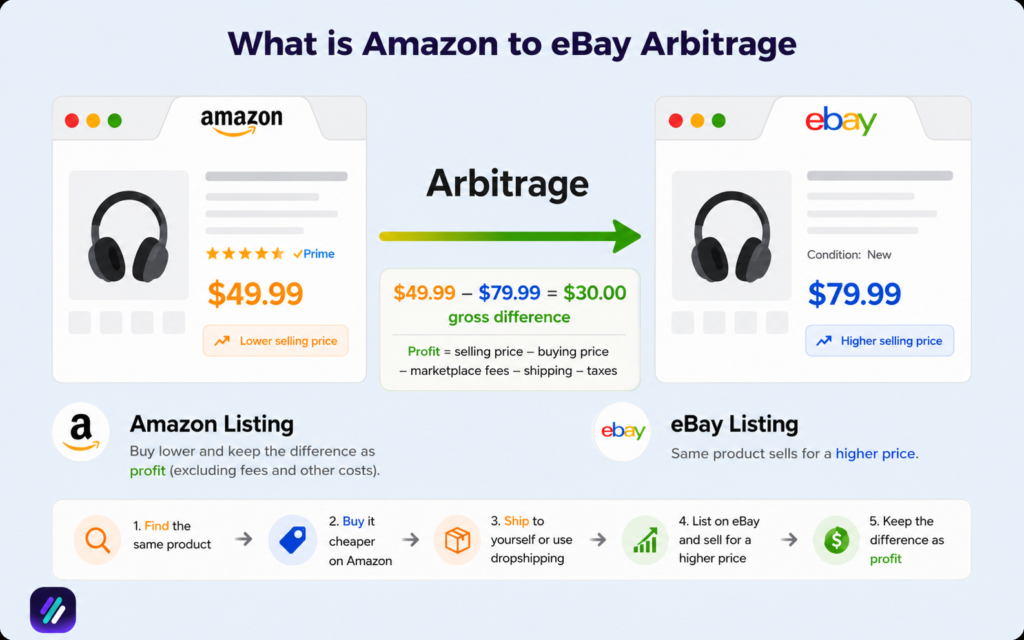
Amazon to eBay arbitrage is a reselling method where you source products from Amazon and sell them on eBay at a higher price for profit.
Retail arbitrage simply means buying a product from one marketplace and reselling it on another marketplace where buyers are willing to pay more. Putting it simply, you act by flipping on eBay and finding them on Amazon.
For example, if you find a product on Amazon selling for $20 and list it on eBay for $35, the price difference becomes your potential profit after fees and expenses.
There are two common ways this works. In traditional arbitrage, you buy the product from Amazon first, receive it yourself, then relist and ship it to the buyer on eBay.
In a dropshipping setup, you only purchase the item from Amazon after someone places an order on eBay. You then enter the buyer’s shipping details during checkout so Amazon ships the product directly to the customer.
Your profit depends on several factors, including eBay seller fees, Amazon shipping costs, taxes, and how competitively you price the product.
Is Amazon to eBay Arbitrage Legal?
Yes, Amazon to eBay arbitrage is generally legal in countries like the United States, the United Kingdom, Canada, and Australia. There are no laws that specifically prohibit buying products from Amazon and reselling them on another marketplace for profit.
As long as you are not selling counterfeit products, violating intellectual property rights, misleading buyers, or breaking local commerce regulations, arbitrage itself is a legal and very popular method.
The real issue comes from marketplace policies, not the law.
eBay allows dropshipping only when products are sourced directly from wholesale suppliers.
According to eBay’s official dropshipping policy, “Drop shipping, where you fulfill orders directly from a wholesale supplier, is allowed on eBay.” This means retail-to-retail sourcing from marketplaces like Amazon is technically against eBay’s dropshipping rules.
Despite these policies, many sellers still practice Amazon to eBay arbitrage. The reason is simple: it remains profitable when managed carefully, and eBay and buyers do not care as long as they receive the correct item fast and you provide great customer service.
However, experienced sellers usually follow best practices to reduce risk.
These include avoiding maintaining fast shipping times, handling customer service properly, monitoring stock levels closely, and avoiding high-risk categories that commonly trigger eBay VeRO complaints.
Is Amazon to eBay Arbitrage Profitable?
Yes, Amazon to eBay arbitrage can still be profitable when you price products correctly and manage your margins carefully.
Unlike traditional dropshipping models that often target very high margins, most arbitrage sellers aim for a more realistic 10% to 15% profit margin because of eBay seller fees, taxes, and shipping costs.
For example, if you source a product from Amazon for $30 and sell it on eBay for $45, eBay fees may take around $5.85, while taxes and miscellaneous costs could add another $2. That still leaves you with roughly $7 in profit from a single sale.
One major advantage is that you usually do not need to buy inventory up front. In a dropshipping setup, you only purchase the product after you receive an order on eBay, which lowers your initial financial risk significantly.
Pros and Cons of Amazon to eBay Arbitrage
Like I already said, there are many users doing this business model and making good money, including many of them who are using ZIK Analytics to do Amazon to eBay arbitrage.
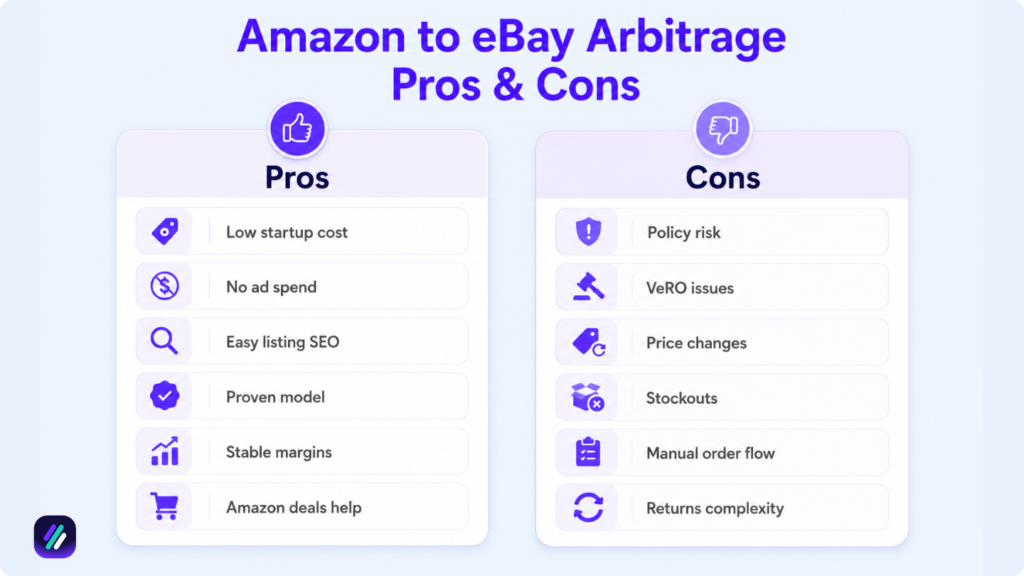
This is, of course, due to the benefits of this model. However, there are also disadvantages, and in this section, we will discuss them both:
Here are some of the reasons why some people do and avoid Amazon to eBay arbitrage:
Benefits of Amazon to eBay Arbitrage
Here are the benefits of doing Amazon to eBay Arbitrage
- Access to Millions of Amazon Products: Amazon’s massive catalog gives you access to millions of products across virtually every category, making it easier to find profitable items without negotiating with suppliers or purchasing wholesale inventory.
- Take Advantage of Amazon’s Discounts: Many arbitrage sellers take advantage of Amazon coupons, Lightning Deals, Prime Day promotions, and seasonal discounts to increase profit margins on products already listed on eBay.
- No Need to Source Private Suppliers: Unlike traditional dropshipping, you can start sourcing products immediately from Amazon without spending time researching manufacturers, wholesalers, or supplier agreements.
- Easy Product Validation: Before listing a product, you can compare Amazon pricing against completed and active eBay listings to identify products with proven demand and existing sales history.
- Wide Product Selection for Testing: Since you do not need to commit to large inventory purchases, you can test multiple products and categories quickly to discover what works best for your eBay store.
Disadvantages of Amazon to eBay Arbitrage
Here are the downsides of doing Amazon to eBay Arbitrage
- Policy Compliance Risk: Retail dropshipping from Amazon may conflict with eBay’s dropshipping policy, which can increase the risk of account restrictions or listing removals if not managed carefully.
- VeRO and Brand Restrictions: Some brands actively monitor eBay listings through the VeRO program and may report unauthorized sellers, resulting in listing removals or account warnings.
- Amazon Price Changes: A product can increase in price on Amazon after you list it on eBay, reducing your profit margin or even turning a profitable sale into a loss.
- Stock Availability Issues: Products can go out of stock on Amazon without notice, leaving you unable to fulfill an eBay order or forcing you to cancel a sale.
- Order Management at Scale: Since each eBay sale often requires a separate Amazon purchase, managing large numbers of orders can become time consuming as your business grows.
- Returns Across Two Platforms: Returns and customer service can be more complicated because you are managing eBay buyers while relying on Amazon’s return and refund process to resolve issues.
3 Amazon to eBay Arbitrage Business Models
Here are the 3 versions of Amazon to eBay arbitrage that have been used now.
Model 1: Direct Dropshipping
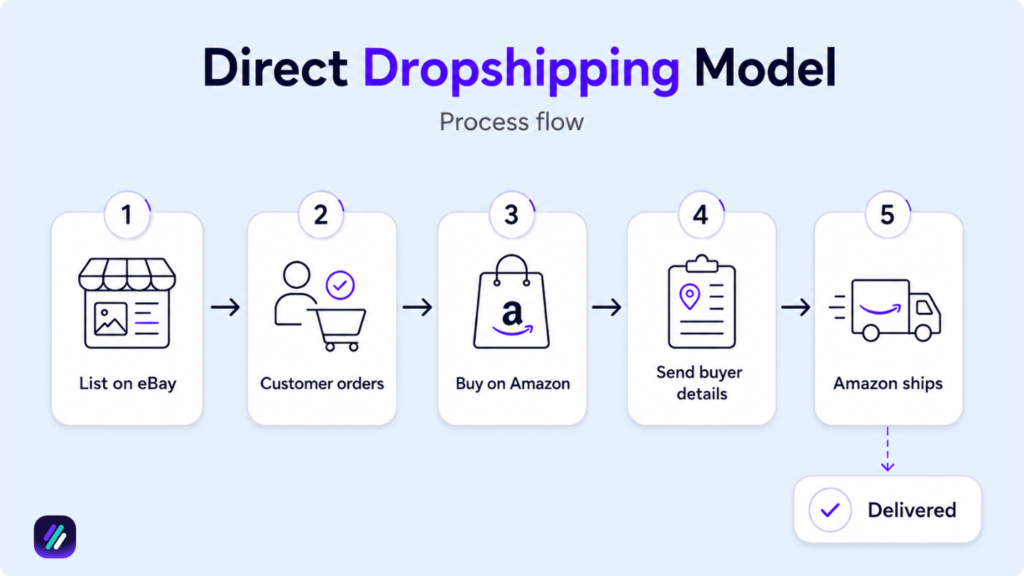
Direct dropshipping is the simplest Amazon to eBay arbitrage model and is where many sellers start.
You list a product on eBay and only purchase it from Amazon after making a sale. Amazon then ships the item directly to your customer, so you never need to hold inventory.
Before scaling, many sellers build feedback by selling personal items or low-cost products. Once their account has some sales history, they begin adding Amazon-sourced products and expanding their listings.
Since only a small percentage of products generate consistent sales, successful sellers often rely on a large catalog rather than a small number of listings.
This model carries risks such as account warnings, listing removals, or suspension. You also need to keep an eye on Amazon prices and stock levels to avoid losing money on a sale or running into fulfillment issues
However, it remains popular because it requires very little startup capital and allows you to test products without purchasing inventory upfront.
Model 2: Multichannel Fulfillment
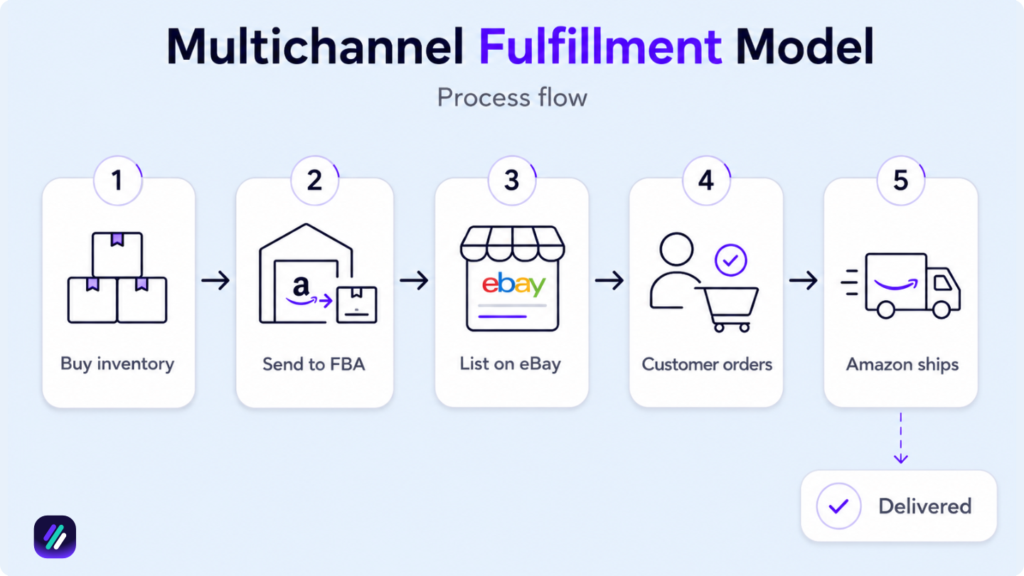
Multichannel fulfillment is a more advanced Amazon to eBay arbitrage model where you own the inventory while using Amazon FBA to store and ship products for you.
Instead of buying products only after a sale, you purchase inventory upfront and send it to Amazon’s fulfillment centers. When an order comes from eBay, Amazon handles the packing and delivery process on your behalf.
This setup is generally safer under eBay’s policies because you are the seller of record and actually own the products being sold. eBay mainly cares that orders arrive on time and customers receive the correct items in good condition.
It also gives you better control over stock management, shipping speed, and customer experience compared to direct dropshipping.
The downside is that this model requires significantly more capital, inventory planning, and operational management. You may need a warehouse and inventory tracking.
This approach works best for established sellers, private label brands, or authorized distributors who want more long-term stability and control over their business.
Model 3: Traditional Online Arbitrage
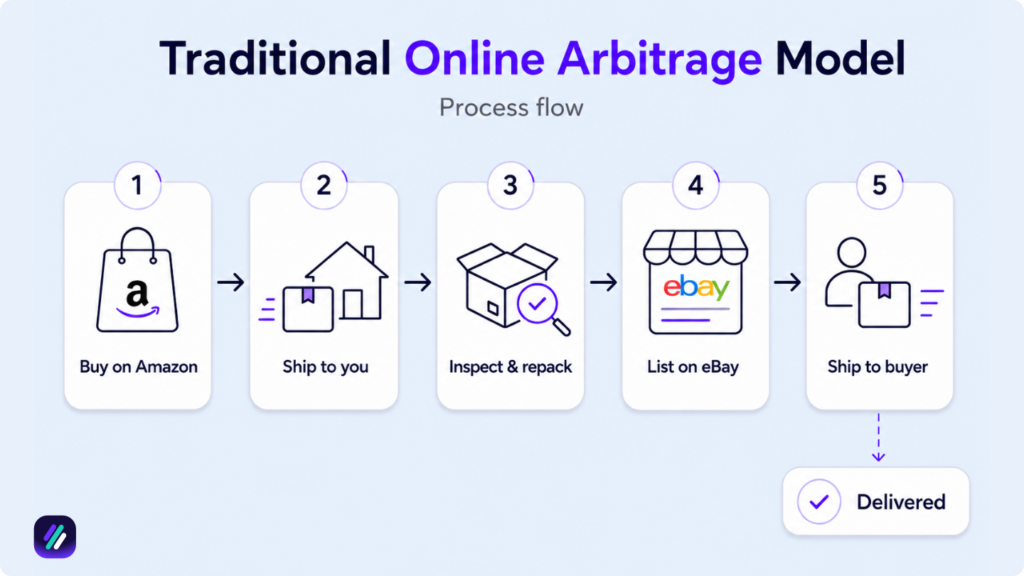
Traditional online arbitrage is the most hands-on version of Amazon-to-eBay reselling. In this model, you buy products from Amazon first, ship them to your own location, inspect and repackage the items, then relist and ship them to buyers yourself.
This method fully complies with eBay’s policies because you personally own and manage the products being sold. It also gives you more control over product quality, packaging, and shipping times. However, it is much slower and requires upfront capital since you need to purchase inventory before making any sales.
The biggest challenge is scalability. Managing storage, packing, and shipping becomes difficult as order volume grows. There is also the risk of buying products that may not sell quickly.
Still, this approach works well for high-value, collectible, or limited-edition products where careful inspection and presentation matter more than speed.
Amazon to eBay Arbitrage Step-by-Step Guide
When you’re first starting with Amazon to eBay arbitrage, the process can feel overwhelming. With millions of products available on Amazon, it’s easy to spend hours searching for items and still wonder whether they’ll get views, generate sales, or leave enough room for profit after fees.
The good news is that most successful sellers follow the same basic process. Once you understand how to research products, evaluate profit margins, and create listings, finding opportunities becomes much easier. Here’s a step-by-step guide to help you get started.
Step 1: Product Research
Everything starts with the product you choose to sell. Before sourcing anything from Amazon, you first need to validate demand on eBay because that is where you will actually make the sale.
One way to do this is by checking active competitors, sold listings, pricing ranges, inventory availability, and whether the product leaves enough room for profit after fees.
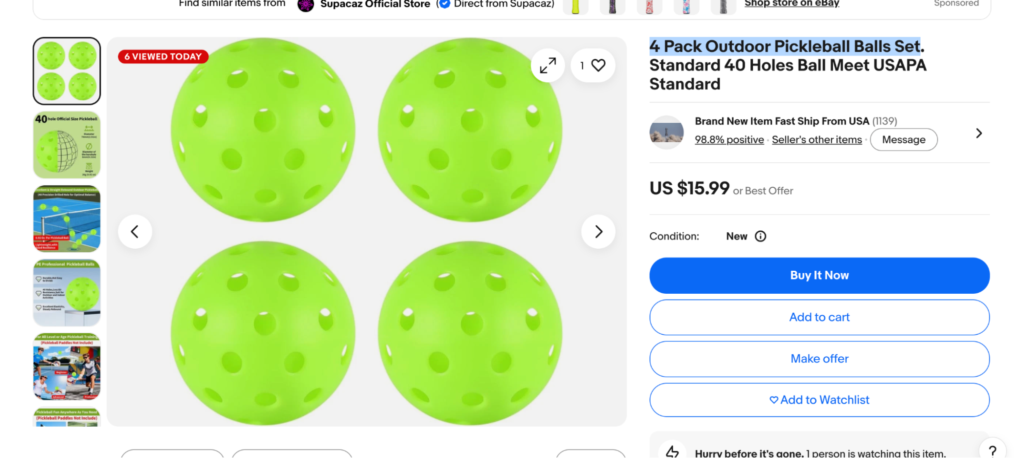
For example, while researching products on eBay, we found pickleball balls commonly sold in packs of 4, 6, and 12. The 4-pack stood out because it had a good balance between demand and pricing flexibility.

On Amazon, the product was available for around $6.59, while similar listings on eBay ranged from $4.99 to $18.99. This suggested there was enough margin to compete while remaining profitable.
Since the niche is competitive, a mid-range pricing strategy often works better than simply being the cheapest seller.
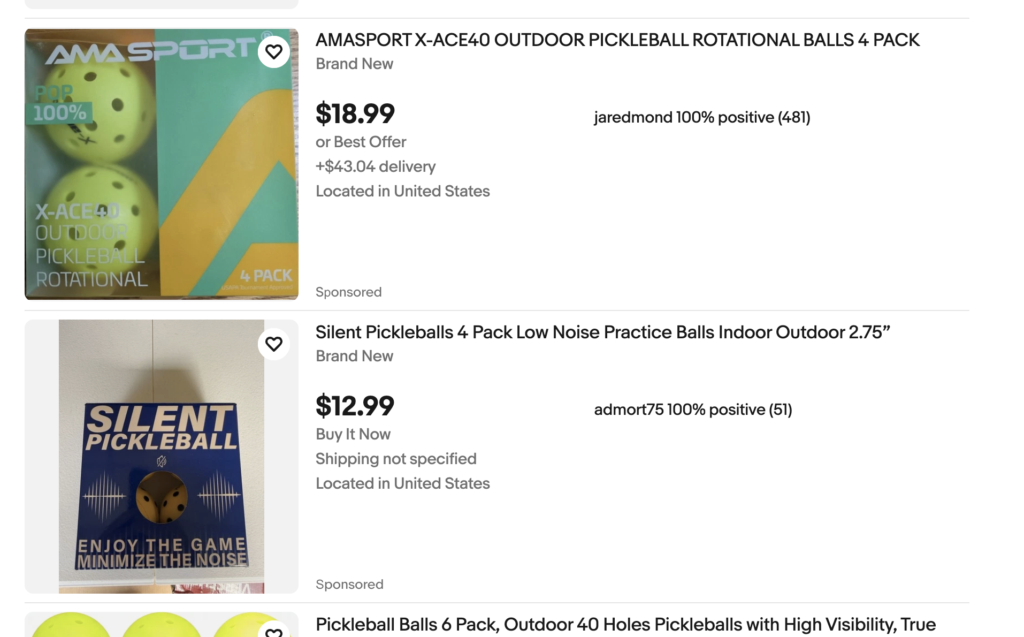
But you can skip this long manual process by just using ZIK Analytics’s Product Research tool. It shows all the data on a particular niche or product that you are searching for. Here you can take a look and find the successful listings on eBay along with their sales metrics.
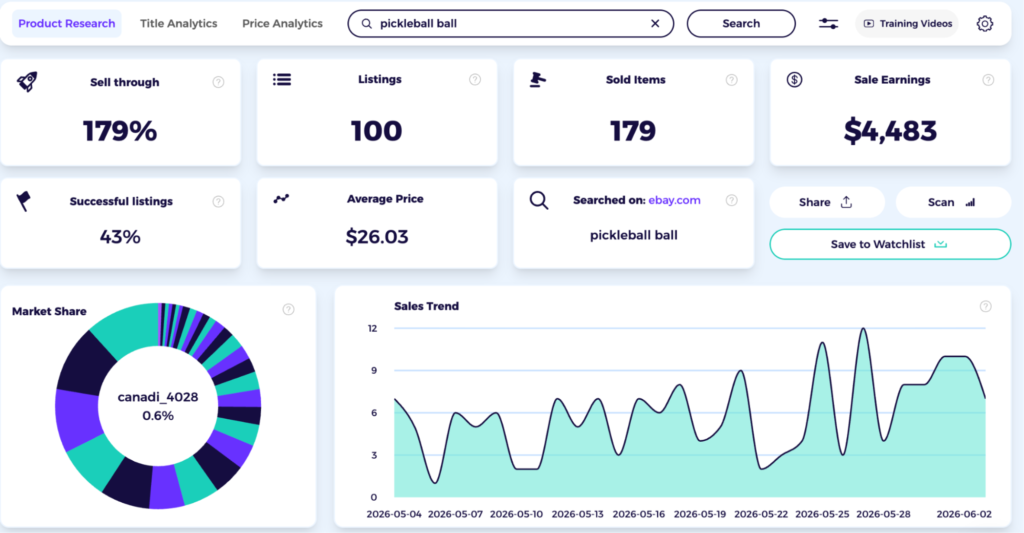
This is the general information about “pickleball balls” and the profit potential for each item.
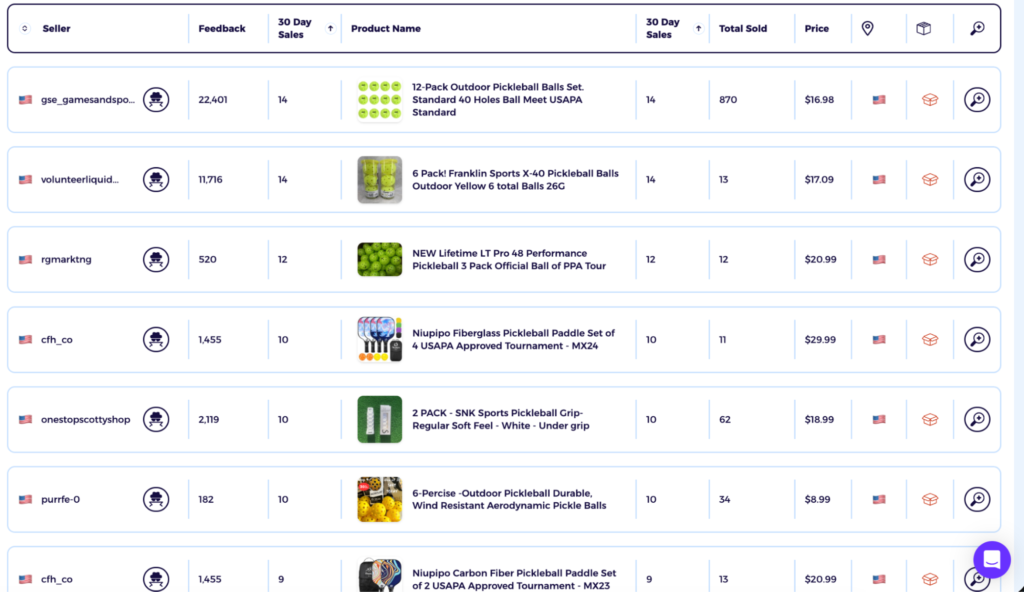
Here’s the top sales products on eBay. Here you can already find the demand for each product, and you can start pricing competitively. It’s also a sign of whether the source you found on Amazon.
Step 2: Fee Calculation
Once you find a product with potential, the next step is calculating whether the numbers actually make sense after fees. Many beginners only look at the Amazon price and eBay selling price, but your real profit depends on eBay fees, taxes, shipping costs, and how competitively you need to price the item.
Let’s start with the pickleball balls example from earlier. The product costs $6.59 on Amazon, and we initially considered selling it on eBay for $15.99.
Pickleball Balls Breakdown
Sale Price: $15.99
Amazon Cost: $6.59
eBay Fees (13.25%): -$2.12
Net Profit: $7.28
Net Margin: 45.5%
ROI: 110.5%
At first glance, the margin looks excellent. However, pricing at $15.99 would likely make the listing less competitive because many sellers are already positioned lower in the market. Instead of maximizing margin, the better approach is to find the lowest price that still keeps you profitable.
To maintain a safer 15% margin:
Sale Price: $9.20
eBay Fees (13.25%): -$1.22
Amazon Cost: -$6.59
Net Profit: $1.39
Margin: 15.1%
This pricing is far more competitive, but the profit becomes extremely tight. While technically profitable, the amount of work involved may not justify such a small return. This is why fee calculation is critical before listing any product.
Air Pump Breakdown
Now let’s compare that to a non-profitable product. We found an air pump selling on Amazon for $50.97, while current eBay listings had dropped to around $48.30 because of discounts and markdowns.
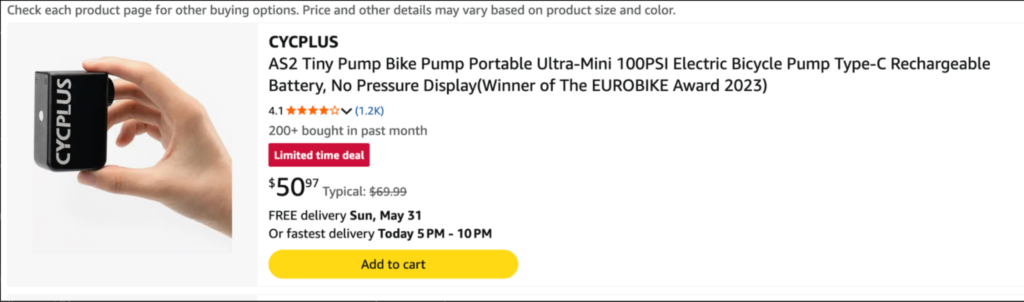
Sale Price: $48.30
Amazon Cost: $50.97
eBay Fees (13.25%): -$6.40
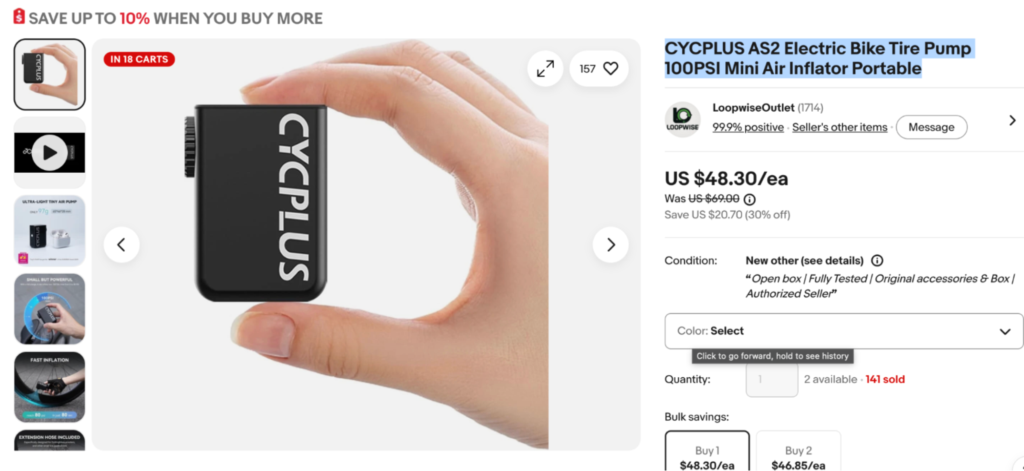
Net Profit: -$9.07
Net Margin: -18.8%
ROI: -17.8%
This product immediately fails the profitability test because you would lose money on every sale. Even if the market price eventually returned to the original $69.00 range, the margins would remain tight.
The product only becomes moderately profitable if the market rebounds, which makes it too speculative and risky for most arbitrage sellers.
Sale Price: $69.00
Amazon Cost: $50.97
eBay Fees (13.25%): -$9.14
Net Profit: $8.89
Net Margin: 12.9%
ROI: 17.4%
Now, let’s look at a much stronger opportunity using a fishing bag set. Amazon priced the item at $42.49 during a limited deal, while the exact same product was actively selling on eBay for $72.99.
Fishing Bag Set Breakdown
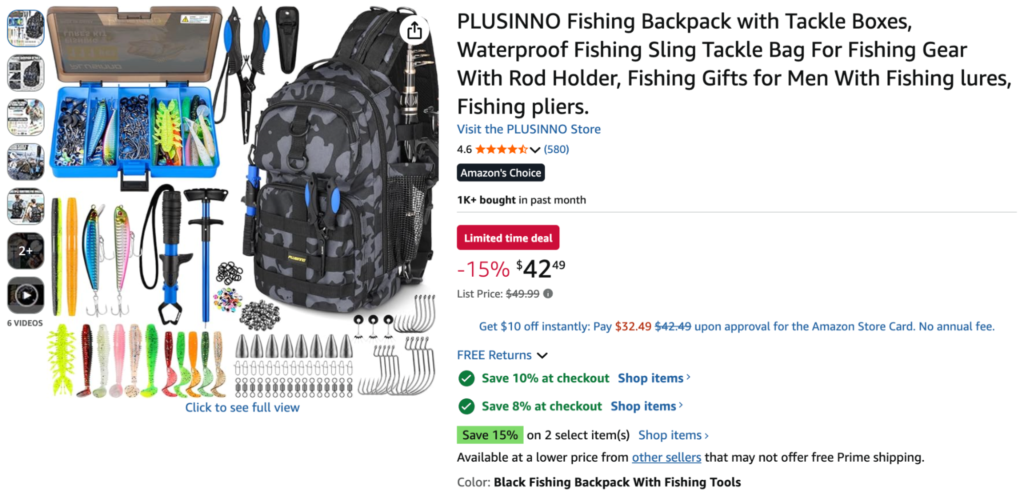
Sale Price: $72.99
Amazon Cost: $42.49
eBay Fees (13.25%): -$9.67
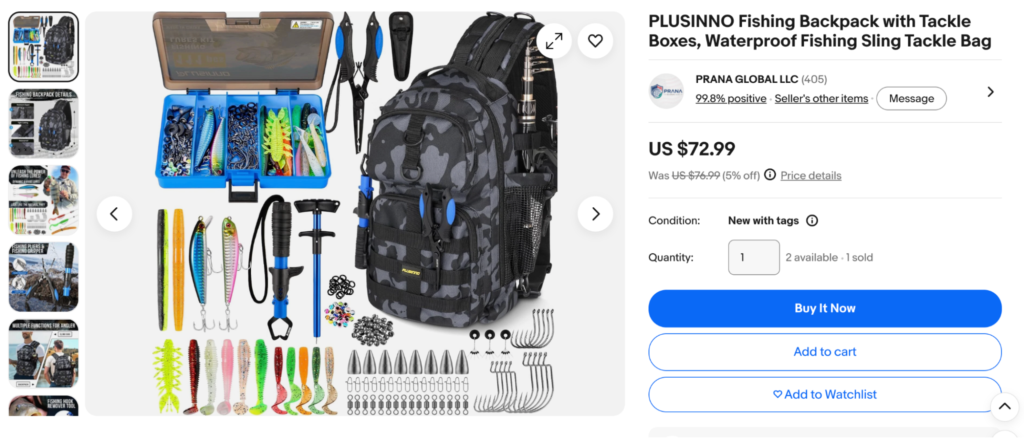
Net Profit: $20.83
Net Margin: 28.5%
ROI: 49.0%
This is a far healthier arbitrage opportunity because the pricing gap leaves room for both profit and competitiveness. Even after reducing your price to stay competitive, the product still performs well. At a safer 15% margin target, the minimum competitive selling price would still be around $57.50, leaving decent room for profit.
To speed up this process, many sellers use an eBay fee calculator like the one from ZIK Analytics. Instead of manually calculating every product, you simply enter the Amazon cost, eBay selling price, shipping expenses, and target margin.
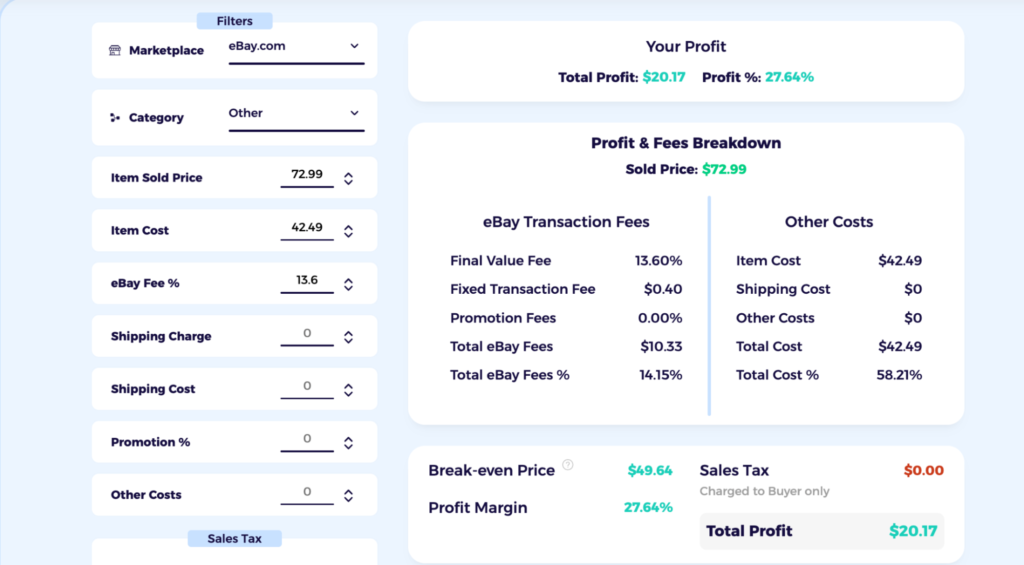
The calculator instantly breaks down fees, projected profit, ROI, and competitive pricing ranges, making product validation much faster before you commit to listing items
Step 3: Sourcing and Purchasing
Once you find profitable products, the next step is sourcing them efficiently from Amazon. For traditional arbitrage setups, you have the first-hand experience right away before the customer receives the product. But for direct dropshipping, you should prioritize products with fast shipping times for dropshipping suppliers to avoid late deliveries on eBay.
You should also take advantage of Amazon Warehouse deals, open-box items, coupons, and limited-time discounts to improve your margins. Events like Prime Day and Black Friday can help you source products at much lower costs, especially if you plan to buy inventory in bulk.
Another simple strategy is using Subscribe and Save discounts for recurring products, along with cashback platforms like Rakuten or TopCashback to reduce your purchase costs even further. Even saving an extra 2% to 5% per product can significantly improve your overall profitability over time.
Step 4: Listing Optimization on eBay
This is where you separate your listing from hundreds of competing sellers on eBay. A well-optimized listing helps you rank better in eBay Cassini search results, attract more clicks, and increase conversions.
There are two major parts to eBay listing optimization: the title and the description.
For the title, you need to include the most relevant eBay keywords buyers are actually searching for while still keeping the listing specific and readable. Avoid stuffing random keywords just for traffic because irrelevant clicks usually hurt conversions.
Instead, focus on clear product details like brand, size, quantity, model, color, and main product features. Using an eBay title builder or SEO tool can help you generate stronger keyword-focused titles much faster.
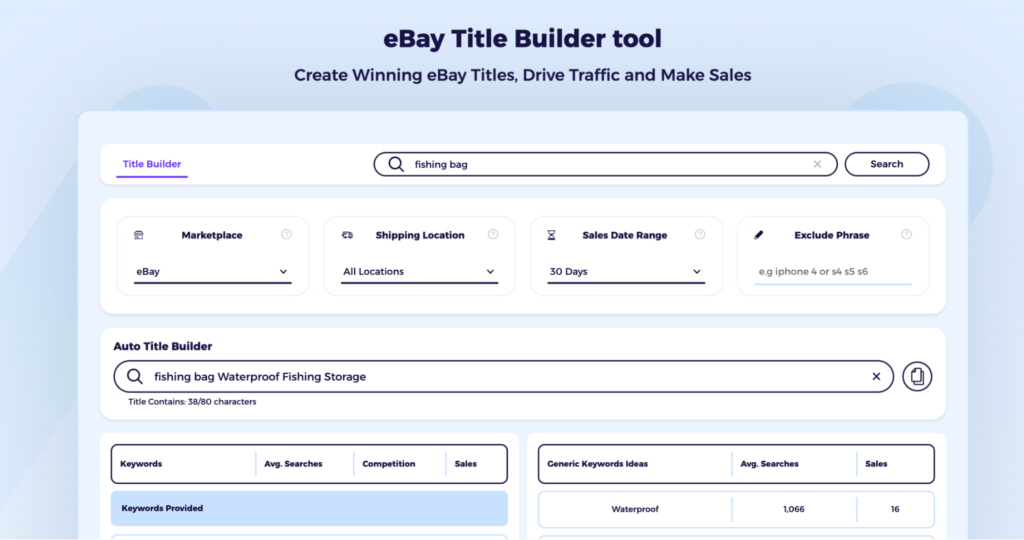
ZIK’s eBay title builder allows your generic title to coordinate with other vital keywords that have strong searches, increasing the potential impressions you have for your product.
Next comes the product description. Fill out every item-specific eBay asks for, including dimensions, weight, condition, brand, compatibility, and material whenever possible. The more complete your listing is, the better eBay understands your product.
A simple structure like this usually works well:
- Features
- Specifications
- What’s Included
- Shipping
- Returns
Images also play a major role in conversions. Use multiple high-quality photos from different angles so buyers can zoom in and inspect the product properly. If you are reusing Amazon images, always download the highest resolution version available. If you are taking your own photos, proper lighting and a modern smartphone are usually more than enough.
One extra strategy many sellers use is adding product variations or bundle options within a single listing. eBay often favors listings with multiple options because they create a better buyer experience and can improve engagement metrics.
Step 5: Fulfillment and Shipping
Your fulfillment process will depend on which Amazon-to-Ebay arbitrage model you choose.
With direct dropshipping, you list the product on eBay first, then purchase it from Amazon after receiving an order. Amazon ships the item directly to your customer.
With multichannel fulfillment, you already own the inventory and store it through Amazon FBA. Once a sale happens on eBay, Amazon handles the packing and shipping for you.
With traditional online arbitrage, you personally receive the product first, inspect or repackage it if needed, then ship it yourself to the buyer.
Step 6: Managing Returns & Customer Service
Returns and customer service will depend on the arbitrage model you use, but the goal is always the same: keep buyers satisfied and avoid account issues on eBay.
When calculating your prices, always leave room for possible returns, refunds, or damaged items. If a returned product is still in good condition, you can often relist it as open box or repackage it for resale.
It is also safer to avoid fragile products or items with sizing variations since they usually create more return requests and customer complaints.
For multichannel fulfillment sellers using Amazon FBA, Amazon may handle the return process for you, but you may not always receive a full reimbursement. Make sure to factor that into your overall profit calculations.
Best Product Categories for Amazon to eBay Arbitrage
Many arbitrage sellers discover early on that category selection can have a major impact on results. Some categories tend to attract steady buyer demand, while others offer fewer opportunities and slower sales.
Based on internal ZIK Analytics marketplace data, the categories below generated some of the strongest sales volumes on eBay over the past 30 days.
Home and Garden
Home and Garden is one of the strongest categories for Amazon to eBay arbitrage, generating 156,843 sales in the last 30 days, according to ZIK Analytics data. Many sellers focus on this category because it offers consistent year-round demand and a large selection of products that are easy to source from Amazon.
Products that help buyers organise, clean, store, or improve their homes tend to perform particularly well.
Toys and Games
Toys are a popular category for Amazon to eBay arbitrage due to their strong sales potential and broad buyer appeal. According to ZIK Analytics research, successful toy listings average 13.5 sales per month per listing, making the category attractive for sellers looking to scale their inventory.
Many arbitrage sellers focus on collectible, branded, and low-cost toys that are easy to source and ship.
Clothing, Shoes, and Accessories
Clothing, Shoes, and Accessories is one of the strongest categories for Amazon to eBay arbitrage, generating 162,544 sales and $3.35 million in revenue over the last 30 days from just 3,968 listings, according to ZIK Analytics data.
The category offers a large pool of potential buyers and consistently ranks among the best-performing opportunities for arbitrage sellers.
Shoes are one of the most popular products within this category, making them a strong option for both new and experienced sellers. If you’re planning to sell shoes on eBay, knowing how to price, list, and ship them properly can help you maximize your profits.
Many sellers focus on affordable apparel, footwear, and fashion accessories because they appeal to a broad audience and can be sourced across a wide range of brands and styles.
Business and Industrial
Business and Industrial is one of the highest-volume categories for Amazon to eBay arbitrage, generating 164,561 sales over the last 30 days, according to ZIK Analytics data. The category performs well because many products serve practical business needs, creating consistent demand throughout the year.
Many sellers focus on replacement parts, consumables, workplace supplies, and small industrial tools because businesses often need to reorder these products regularly.
Health and Beauty
Health and Beauty is a strong category for Amazon to eBay arbitrage, generating 123,851 sales over the last 30 days, according to ZIK Analytics data. Many products in this category benefit from repeat purchases, creating ongoing demand and opportunities for repeat customers.
Many sellers focus on skincare products, grooming tools, beauty accessories, and personal care items that are easy to source and ship.
Computers, Tablets, and Consumer Electronics
Computers, Tablets, and Consumer Electronics continue to provide strong arbitrage opportunities, generating 49,042 and 29,850 sales, respectively, over the last 30 days, according to ZIK Analytics data.
Many sellers focus on accessories rather than larger devices because they are easier to source, store, and ship. Products such as charging cables, adapters, laptop accessories, and other standardized electronics tend to perform well.
eBay Motors
eBay Motors generated 76,389 sales over the last 30 days, making it one of the stronger categories for Amazon to eBay arbitrage, according to ZIK Analytics data. Buyers in this category often search for specific replacement parts and accessories for their vehicles.
Many sellers focus on automotive accessories, maintenance products, and vehicle-specific parts.
Sporting Goods
Sporting Goods remains a strong category for Amazon to eBay arbitrage, according to ZIK Analytics research. Many sellers focus on accessories and smaller sporting products because they are easier to ship and less prone to damage during transit than larger equipment.
Products related to fitness, cycling, outdoor activities, and sports training often attract consistent demand throughout the year.
Product Categories to Avoid or Approach with Caution
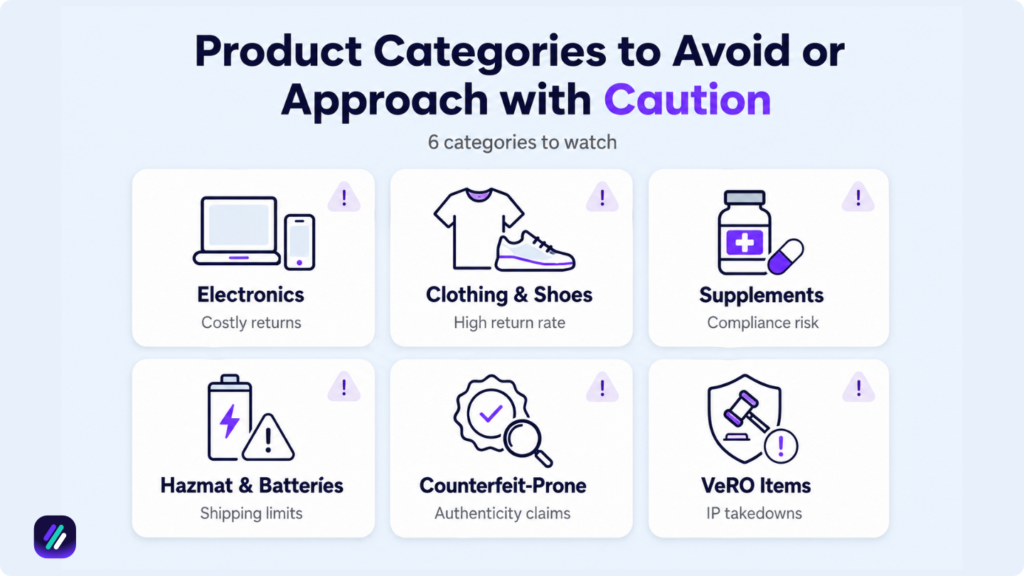
Not all products are made equal in arbitrage. Watch out for these products or avoid them entirely to avoid penalties and legal headaches:
- Electronics: Returns can become expensive because items are easily damaged, defective, or incompatible with buyer expectations. Many brands also restrict unauthorized resellers, which can lead to listing removals or account issues.
- Clothing and Shoes: Return rates are often high due to sizing problems, colour differences, and buyer preference changes. Some brands are strict with unauthorized resellers, and condition-related disputes are also common.
- Supplements and Ingestibles: Legal and compliance risks are higher because some items require FDA approval or proper certifications before sale. Selling unverified substances may lead to eBay account suspensions, customs issues, or legal complications.
- Hazardous Materials, Batteries, and Recalled Items: Shipping restrictions are stricter because these products can pose fire, chemical, or safety risks. Special packaging, compliance requirements, and added shipping costs can make them difficult for beginners.
- Counterfeit-prone categories: Authenticity disputes and fraud claims are common in these categories, especially with branded goods. Violations can result in lawsuits, payment holds, listing removals, or permanent account bans.
- Items Restricted Under eBay’s VeRO Program: Certain brands actively monitor and remove listings that violate their intellectual property or reseller policies. Unauthorized selling can quickly lead to listing takedowns or account suspension.
Best Amazon to eBay Arbitrage Software
When you are now certain about running an Amazon to eBay arbitrage business, these tools can help you maximize and avoid mistakes that can be costly:
- ZIK Analytics: Helps sellers find profitable products, analyse competitors, and validate demand using eBay sales data. Popular for identifying strong arbitrage opportunities before listing.
- 3DSellers: Helps automate listings, customer messages, and store management tasks. Useful for sellers managing larger inventories more efficiently.
- AutoDS: Automates product importing, stock monitoring, and price tracking across marketplaces. Helps reduce manual work and avoid overselling.
- Flippr: Helps Amazon resellers discover profitable products and sourcing opportunities across marketplaces. Designed to simplify product research for flipping and arbitrage.
- FlipMine: Scans retailers to identify products with resale potential and profit opportunities. Helps sellers find trending items faster through automated sourcing research.
Find Winning Products for Amazon to eBay Arbitrage with ZIK Analytics
ZIK Analytics has a suite of tools to help you find, validate, and sell products for Amazon to eBay arbitrage.
These three tools especially make product research and validation much easier:
- Amazon to eBay Software helps you quickly compare Amazon and eBay listings to identify profitable arbitrage opportunities. You can check pricing gaps, estimate margins, and validate whether a product is worth listing before spending money.
- eBay Product Research Tool allows you to analyze demand, competitor performance, sell through rates, and successful listings on eBay. This helps you avoid low demand products and focus on items that already have proven buyers.
- eBay Product Explorer helps you discover trending and high-performing products across different eBay categories. You can filter products based on sales performance, competition, and pricing to find better arbitrage opportunities faster.
You can also use ZIK Analytics to calculate fees, monitor competitors, optimize listings, and simplify your overall Amazon to eBay arbitrage workflow.
Get your ZIK Analytics trial today and start finding products that are already generating sales.
Amazon to eBay Arbitrage FAQs
Here are some frequently asked questions about Amazon to eBay arbitrage:
Is eBay arbitrage profitable?
Yes, eBay arbitrage can still be profitable when you choose the right products and manage your margins properly. Most sellers aim for steady 10% to 15% margins rather than extremely high profits. Success depends on product research, pricing strategy, competition, and keeping fees, returns, and shipping costs under control.
Can I dropship items from Amazon to eBay?
Yes, many sellers dropship products from Amazon to eBay, but it goes against eBay’s dropshipping policy because the products are sourced from another retail marketplace instead of a wholesale supplier. While the model is still widely practiced, sellers risk listing removals, account penalties, or suspension if customer service and fulfillment issues become frequent.
Is Amazon arbitrage illegal?
No, arbitrage itself is generally legal in countries like the United States, Canada, the United Kingdom, and Australia. Buying products from Amazon and reselling them on eBay is not against the law. The main concern comes from marketplace policies, particularly eBay’s dropshipping rules, rather than legality itself.
Is Amazon arbitrage still profitable?
Yes, Amazon arbitrage is still profitable for sellers who focus on strong product research, competitive pricing, and steady margins. While competition and marketplace fees have increased, many sellers still generate consistent profits by finding pricing gaps between Amazon and eBay, especially during sales events, limited deals, and seasonal demand spikes.
Can I sell from Amazon to eBay?
Yes, you can source products from Amazon and sell them on eBay through arbitrage or dropshipping models. Many sellers do this to profit from price differences between the two marketplaces. However, you still need to account for eBay fees, shipping costs, competition, and eBay’s dropshipping policy restrictions when using this strategy.