
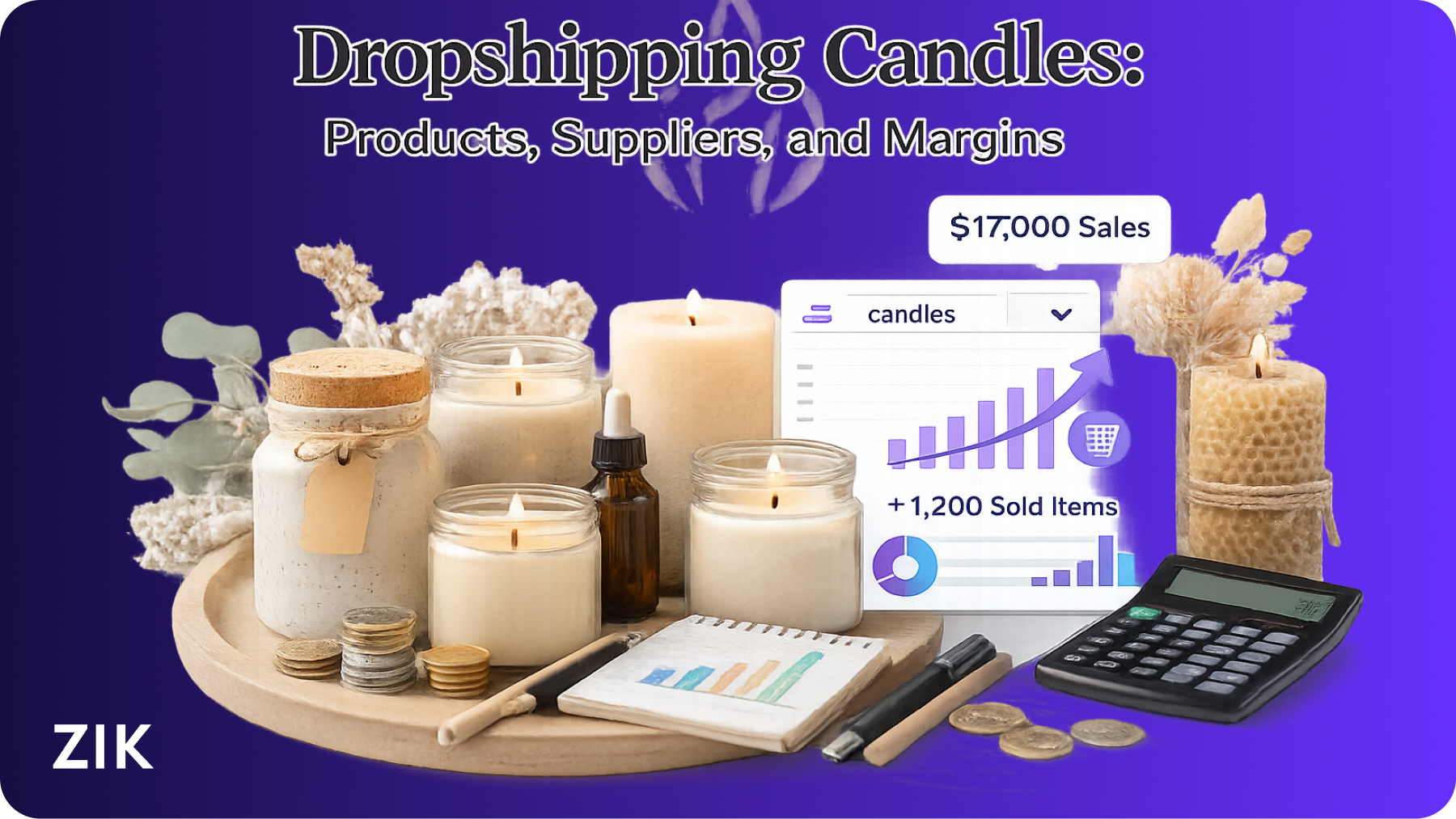
Dropshipping candles can be a profitable business idea, but only if you choose the right products, suppliers, and selling angle from the start, which is not always easy.
But that does not mean every candle is worth selling, as Generic candles are easy to find and hard to differentiate, so if you want to dropship candles successfully, you need to focus on products with real demand, strong margins, safe fulfillment, and clear positioning.
In this guide, we’ll break down how candle dropshipping works, whether it is profitable, the best candles to sell, how to find suppliers, and how to build a store that can actually compete.
Key Takeaways:
- Dropshipping candles can be profitable, but only if you avoid generic products and focus on candles with stronger perceived value, such as gift sets, scented jar candles, beeswax candles, seasonal candles, or LED flameless candles.
- The overall candle market is large and still growing, with strong demand tied to gifting, home décor, fragrance, relaxation, and seasonal shopping. This gives sellers multiple angles to test instead of relying on one basic candle product.
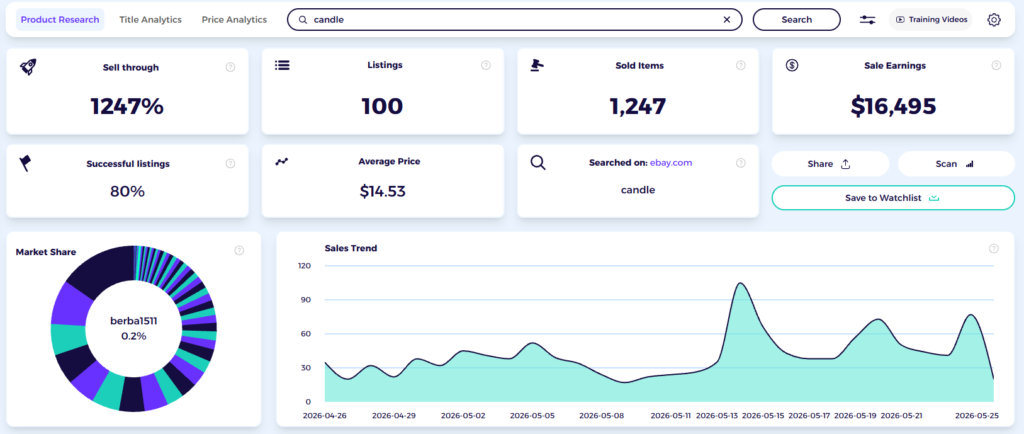
- ZIK Analytics data shows real buyer activity in candle-related products, including more than 1,200 sold items and around $17,000 in recent eBay sales earnings across candle-related listings.
- Scented jar candles are one of the strongest long-term categories because they combine fragrance, décor, gifting, and brand-building potential. However, competition is high, so packaging, scent story, bundles, and product photography matter a lot.
- The biggest risks in candle dropshipping are fragile shipping, supplier quality, compliance, labeling, and refund handling. Before scaling, order samples, check packaging, confirm safety labels, and build a refund reserve into your pricing.
Is It Legal to Dropship Candles?
Yes, it is legal to dropship candles, but you cannot treat them like a random low-risk home décor product as you need to meet the product safety, labeling, and consumer protection rules in every country you sell to.
For example in the US, the CPSC says metal-cored candlewicks and candles using them cannot contain more than 0.06% lead by weight, and candles with hazardous substances must carry cautionary labeling.
Additionally, CPSC also points sellers to ASTM candle standards covering fire-safety labels, glass containers, visible emissions, candle fire safety, and candle accessories.
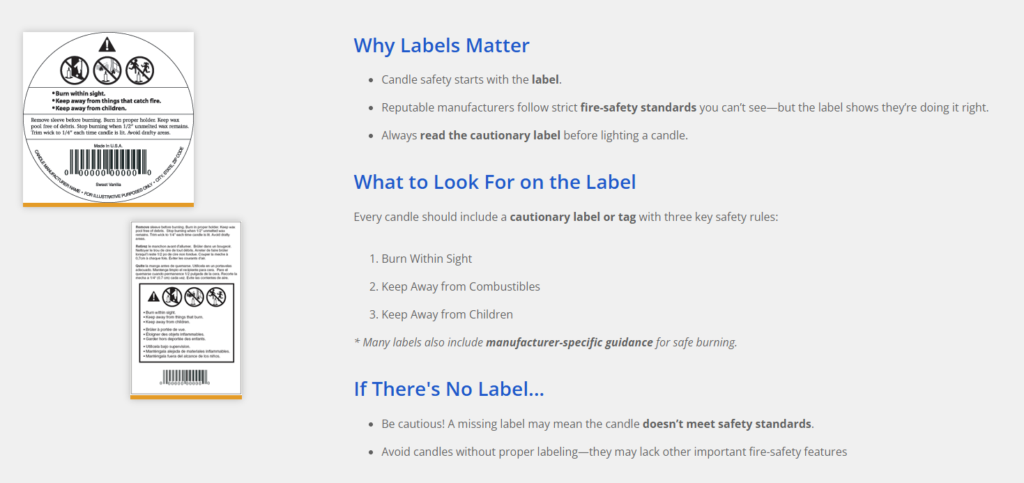
At a basic level, every candle should have a safety label. The National Candle Association says labels should include three warnings: burn within sight, keep away from combustibles, and keep away from children.
Of course, rules vary by country.
For example, in the UK, businesses that make, import, distribute, or sell consumer products are responsible for product safety and labeling.
Or in the EU, the General Product Safety Regulation requires only safe products to be sold, including through online marketplaces.
Of course, most of this is done by the actual supplier, but you’re responsible for checking they comply, as the law clearly states the seller/business is responsible for products being sold to consumers.
Is Dropshipping Candles Profitable in 2026?
Yes, dropshipping candles can be profitable in 2026, but only if you sell products with enough perceived value to cover supplier costs, shipping, marketplace fees, refunds, and advertising.
But you should keep in mind that generic, cheap candles are harder to win with, and giftable, scented, seasonal, personalized, and premium-style candles give dropshippers more room to build margin and differentiation.
With that, demand is strong for candles.
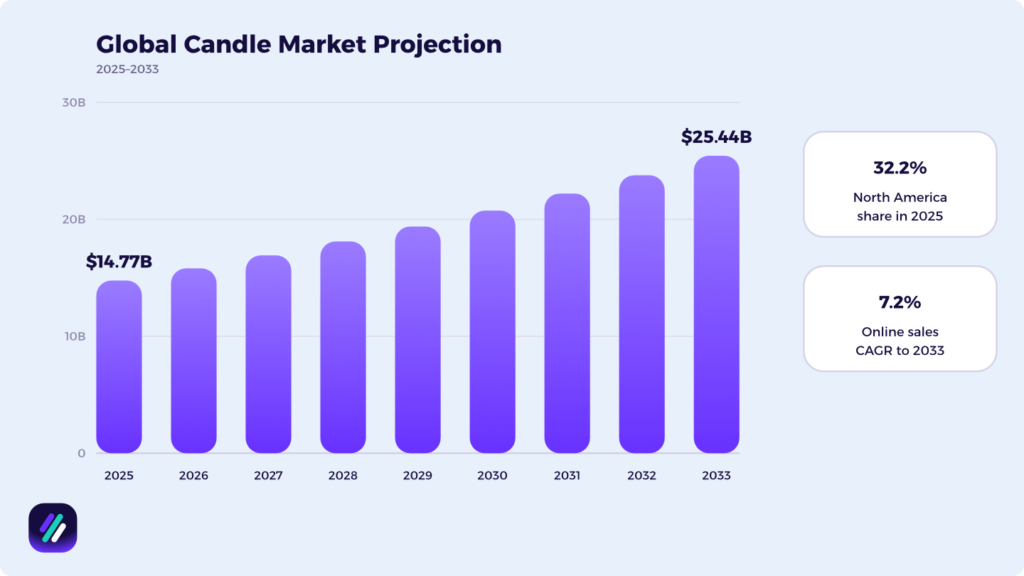
Grand View Research estimates the global candle market at $14.77 billion in 2025, with a projected value of $25.44 billion by 2033 and a 7.3% CAGR from 2026 to 2033. North America held 32.2% of the global market in 2025, while online candle sales are projected to grow at a 7.2% CAGR through 2033.
Additionally, in US specifically, there is plenty of room for niche candle products.
The National Candle Association estimates annual US retail candle sales at about $3.14 billion, with around 35% of sales happening during the Christmas/holiday season.
If you plan to capitalize on holiday demand, expanding beyond candles with other proven Christmas dropshipping products can help increase your average order value and reach more seasonal shoppers. Many top-performing holiday categories experience the same annual demand spike, making them worth researching alongside candles.
It also notes that jar/container candles are the most popular candle type, and fragrance is the most important purchase factor for candle buyers.
There is also upside in premium candles.
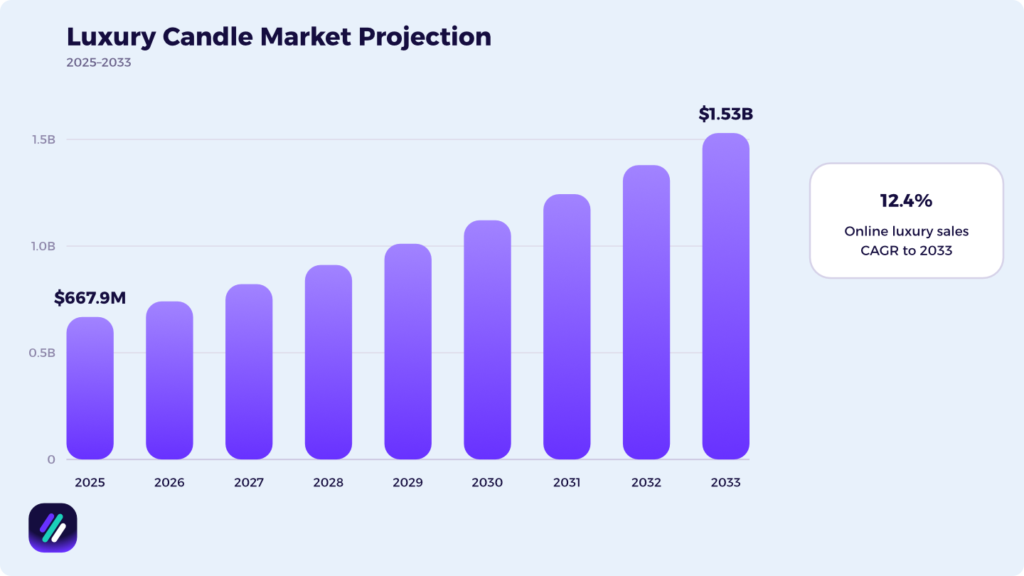
Grand View Research values the luxury candle market at $667.9 million in 2025, projected to reach $1.53 billion by 2033, growing at 10.8% CAGR. Online luxury candle sales are projected to grow even faster at 12.4% CAGR.
And ZIK Analytics data also shows active dropshipping demand on eBay US, with candle-related products generating around $17,000 in sales earnings and 1,200+ sold items in the last 30 days.
Pros and Cons of Dropshipping Candles
Dropshipping candles has many strong upsides, even for those who are not entirely familiar with the industry and products.
This is unlike many other dropshipping niches, where having a certain amount of experience is often crucial to effectively operate in that dropshipping niche.
But it also comes with real operational risks around shipping, safety, supplier reliability, and compliance.
Benefits of Dropshipping Candles
First, let’s discuss the actual benefits of candle dropshipping:
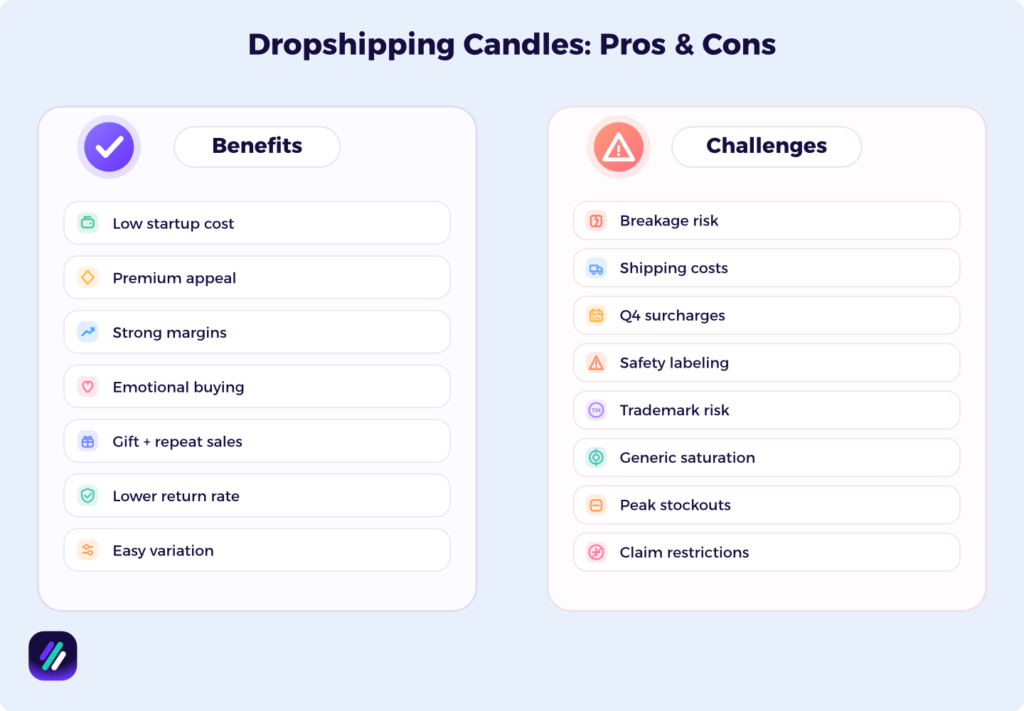
- Low startup cost: You do not need to buy bulk inventory, rent storage space, or handle fulfillment yourself. This makes candles easier to test compared to private-label or handmade candle production.
- High perceived value: Candles feel premium when the scent, packaging, jar design, and product photography are strong, and a simple candle can sell for more when positioned as décor, self-care, or a gift.
- High profit margins: Candles can support solid margins when sold as bundles, gift sets, personalized products, or premium scented candles. The key is avoiding generic products that compete only on price. Again, much easier to do in this niche.
- Emotional purchase category: People buy candles for mood, comfort, relaxation, home styling, memories, and seasonal atmosphere. That emotional angle makes them easier to market than purely functional products.
- Strong gifting + repeat dynamics: Candles work well for birthdays, holidays, housewarming gifts, weddings, and self-care routines. Buyers may also reorder favorite scents if the product quality and delivery experience are good.
- Low return rate: Candles usually have lower return intent than fashion or electronics because sizing, compatibility, and technical expectations are simpler. Most issues come from damage, scent mismatch, or late delivery, which is much easier to avoid.
- Unlimited variations: You can test endless combinations of scent, wax type, jar style, color, season, occasion, and personalization. This gives sellers room to differentiate without reinventing the product category.
Challenges of Dropshipping Candles
Now, dropshipping candles is not all rosy (even if you’re selling rose scents, haha…). Some drawbacks come with dropshipping candle products:
- Higher breakage and refunds: Glass jars, wax, lids, and gift packaging can arrive damaged if the supplier uses weak packaging. Always test delivery quality before listing fragile candle products at scale.
- Shipping cost sensitivity: Candles can be heavy, especially jar candles and gift sets. If shipping is too expensive, it can kill your margin or make the listing less competitive.
- Q4 carrier surcharges erode holiday peak profit: Holiday demand is great, but Q4 shipping delays and carrier surcharges can reduce profit. Price seasonal candles with extra margin before scaling Christmas or gift campaigns.
- Fire safety labeling compliance overhead: Candles need proper warning labels, burn instructions, and safe-use information. Dropshippers must confirm that the supplier includes compliant labeling before advertising or shipping products to customers.
- Possible trademark violations: Avoid copying brand names, designer-inspired scents, celebrity references, or protected fragrance names. Candle listings can still trigger intellectual property issues, even when the product looks generic.
- Market saturation on generic soy candles: Basic soy candles are everywhere, so sellers need a sharper angle. Scent story, packaging, personalization, bundles, or niche use cases can help avoid pure price competition.
- Supplier inventory stockouts during peak: Popular scents and gift sets can run out fast during Q4, Valentine’s Day, and Mother’s Day. Stockouts hurt ads, rankings, customer trust, and delivery promises.
- Health/therapeutic claim restrictions: Be careful with aromatherapy claims. You can describe scent, mood, and relaxation routines, but avoid saying candles treat anxiety, insomnia, headaches, or any medical condition.
Luckily, many of these challenges can be minimized or totally eliminated, and down the road, I will share with you useful tips to reduce them. For now, let’s move on.
Most of the useful dropshipping tips here come down to testing samples, protecting margins, and choosing suppliers carefully.
Best Candles to Dropship
There are plenty of candle sub-niches, so honestly, a generic list won’t do much service for you. What works depends on your target audience, selling channel, supplier, pricing, and how you position the product.
That said, based on ZIK Analytics data and open-source market research, these are 7 candle sub-niches worth looking at for dropshipping candles as basic candles can sell, but they are also highly competitive, so the goal is to find products with stronger buyer intent, better visuals, or a clearer reason to purchase.
1. Floating Candles With Magic Wand
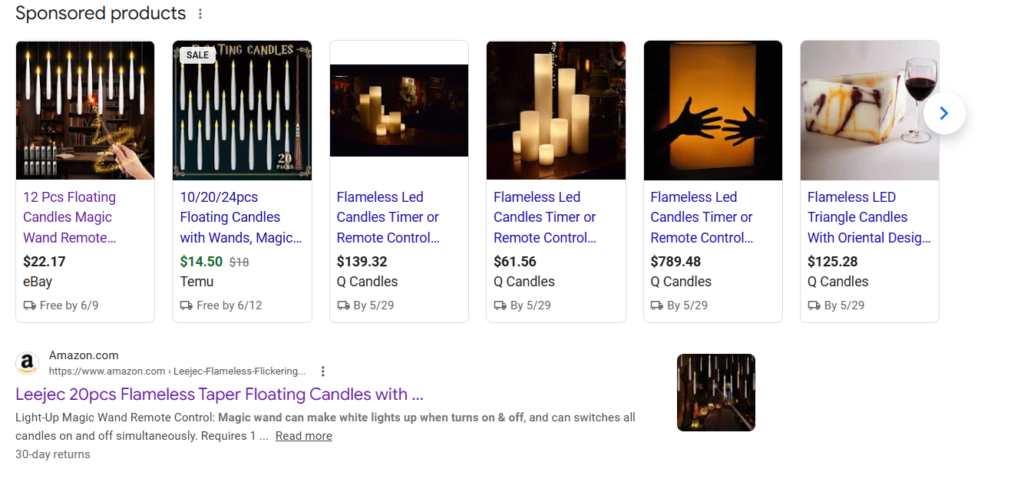
Floating candles with a magic wand are among the more interesting products in the dropshipping candles niche because they are not just candles; they are a novelty décor item, a gift, and a visual product that can work well in short-form video ads.
ZIK data shows strong recent demand for this angle, with over 1,000 sales in the last 30 days and more than $91,000 in 30-day revenue across tracked listings.
That makes it a strong option if you want to dropship candles with a “wow factor” instead of competing against every generic jar candle seller.
Really, the main upside is easy marketing as the product is visual, giftable, and impulse-friendly.
But the downside is that it is more trend-based than evergreen, so it is better for fast testing than building your entire candle dropshipping brand around it.
2. Pure / Natural Beeswax Candles
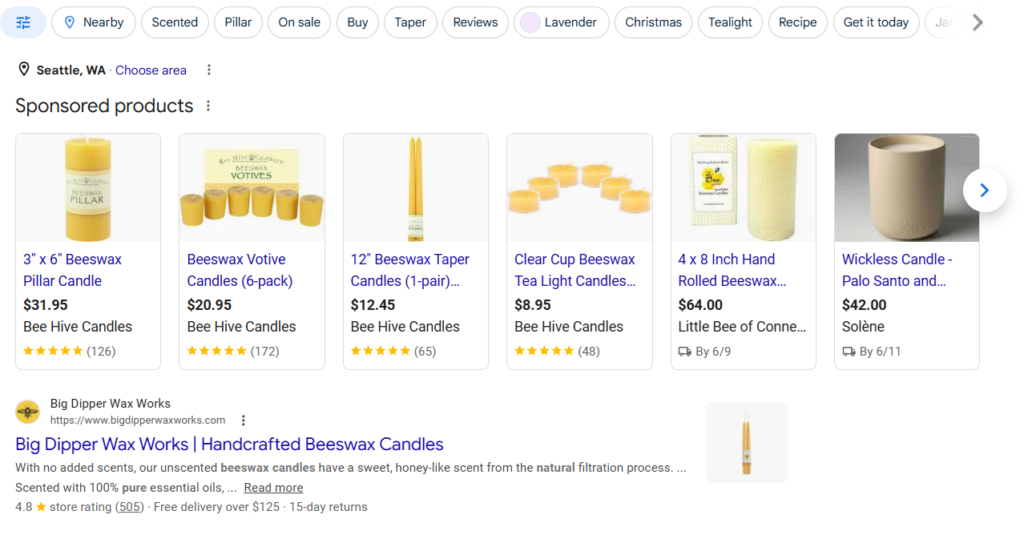
Pure and natural beeswax candles are a strong option if you want to dropship candles with a cleaner, more premium product story. Unlike novelty candles, this niche is less about the “wow” factor and more about trust, natural materials, and simple everyday use.
ZIK data shows solid demand here, with over 2,300 sales in the last 30 days across tracked listings. The median price is around $16.45, which makes beeswax candles easier to position as an affordable natural product rather than a luxury impulse buy.
The main benefit is that the angle is easy to explain because buyers understand “natural beeswax,” especially if they care about handmade-style products, eco-friendly gifts, or simple home décor.
However, the downside is that you still need differentiation. Generic beeswax listings can blend together fast, so focus on bundles, reusable holders, handmade presentation, or specific use cases like dinner tables, rituals, and gifting.
3. Votive Candles
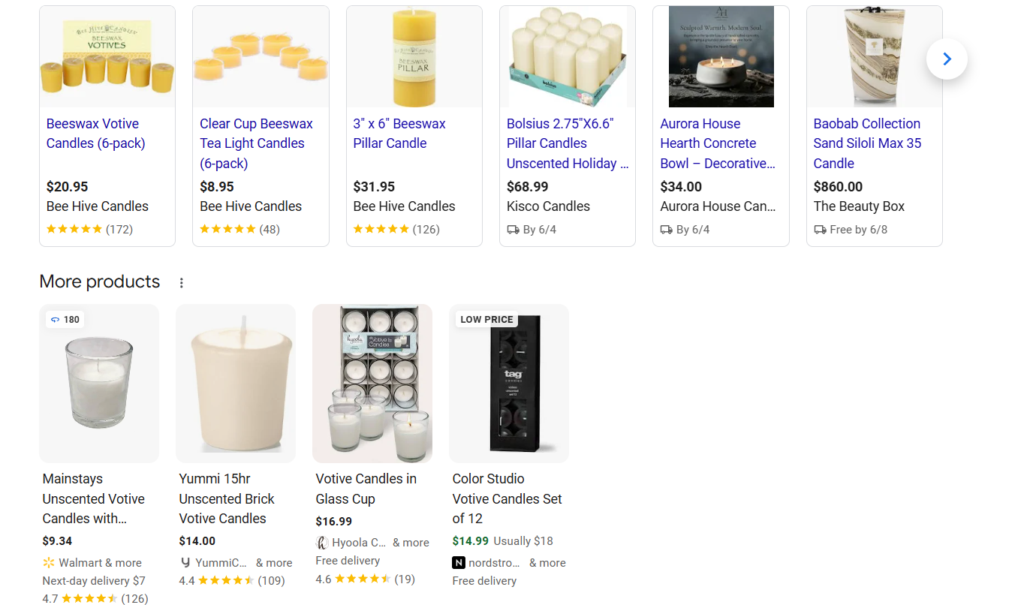
Votive candles are a strong candle dropshipping category because they are practical, easy to bundle, and useful for more than one buyer type, as people buy them for home décor, weddings, dinner tables, religious use, events, and simple ambient lighting, basically having a really wide range of use.
ZIK data shows steady demand for this niche, with more than 650 sales in the last 30 days across tracked listings.
The median price is around $15.95, but the 80th percentile price reaches $56, which shows there is room to sell bundles, reusable holders, or more premium sets instead of single low-ticket candles.
The main upside is repeat and bulk potential, as a buyer may need multiple votive candles at once, especially for events or table setups.
But the downside is that plain votives can feel too basic, so the better angle is usually a set, holder bundle, beeswax version, scented version, or occasion-based pack.
4. Scented Candles
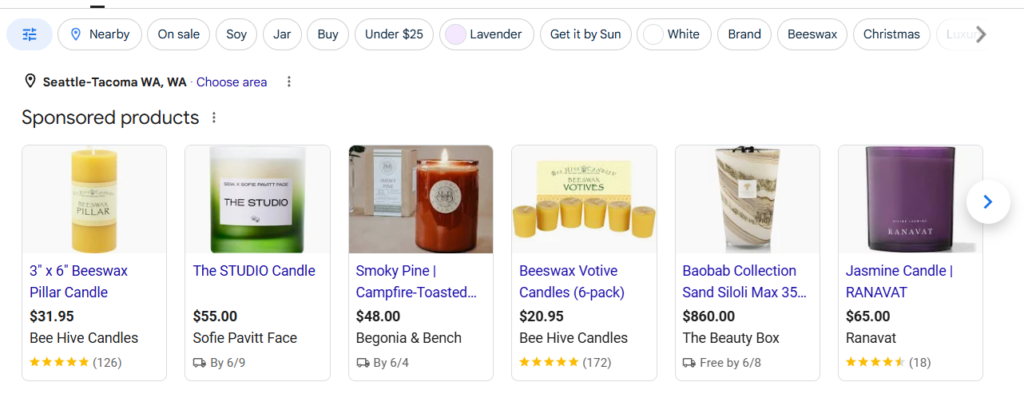
Scented candles are one of the biggest candle dropshipping categories, but they are also one of the most competitive as the demand is clearly there, but you need a stronger angle than simply listing “vanilla candle” or “lavender candle” and hoping it sells.
ZIK data shows scented candles have serious revenue potential, with more than $400,000 in 30-day revenue across tracked listings. The median price is around $26.86, which is a more realistic benchmark than the average price, since this category includes some major premium outliers.
The main benefit is buyer intent because people already buy scented candles for relaxation, gifting, home décor, holidays, and self-care routines, and being really established in the market.
The downside is that generic candle dropshipping listings can get buried quickly so to compete, focus on scent stories, gift packaging, premium jars, bundles, seasonal scents, or funny message candles that feel more specific than another basic soy candle.
5. Scented Jar Candles
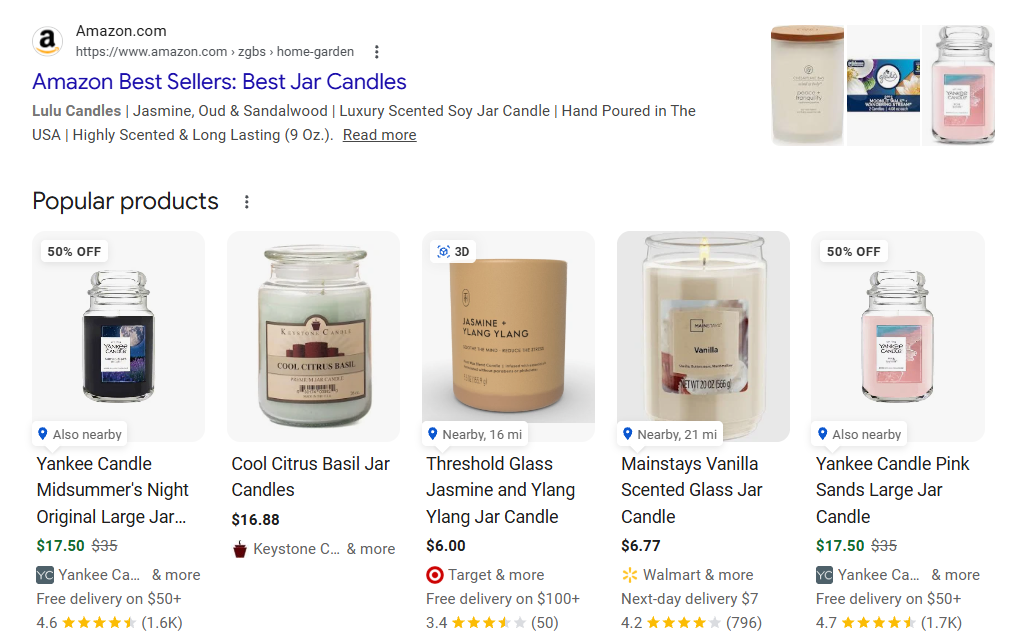
Continuing with scented candles, jar candles are probably the strongest category if you want to build a real candle dropshipping brand rather than just testing short-term novelty products, because they combine the biggest buyer motivations into one product: fragrance, home ambiance, gifting, décor, and self-care.
ZIK research shows this is a commercially stable category, especially for Shopify-style stores. Internal Shopify data for scented jar candles shows 198 listings, 19 stores, 160 sales in the last 30 days, and $6,528.42 in 30-day revenue.
The median price is around $29.95, which is a more realistic benchmark than the average price because a few extreme outliers inflate the category.
The main upside is brand potential, as you can sell scented jar candles as singles, duos, bundles, seasonal collections, or gift sets.
The downside is competition. If the jar, scent story, packaging, or offer feels generic, you are likely competing on price, and the glass shipping risk is also real, so supplier packaging needs to be tested before scaling.
6. Candle Gift Sets
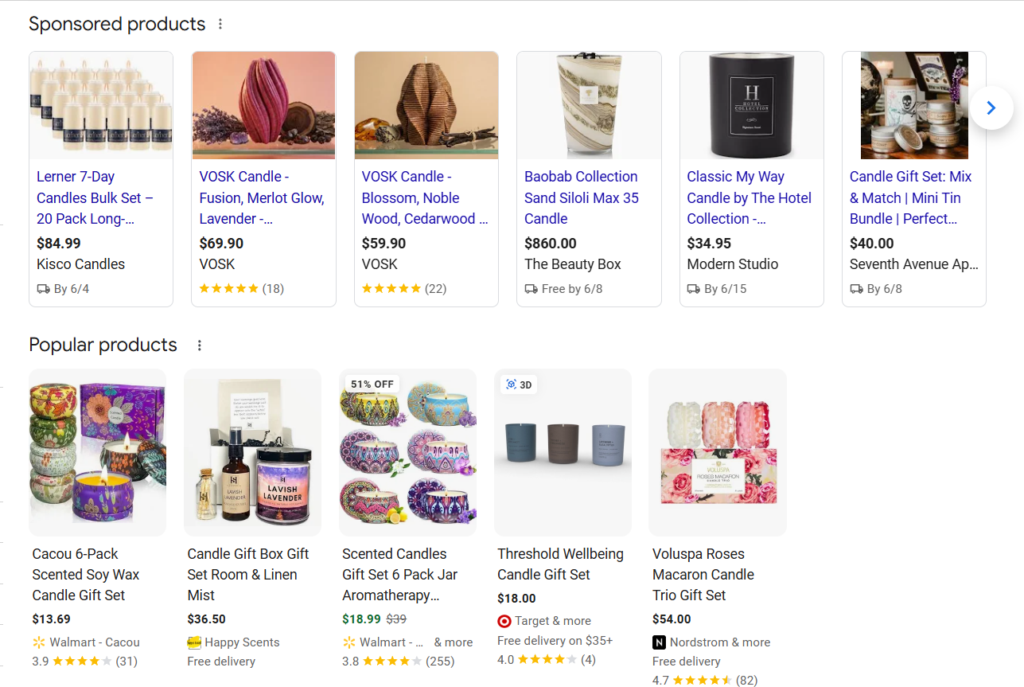
Candle gift sets are one of the better options for dropshippers who want a higher average order value instead of selling one low-ticket candle at a time, because the appeal here is simple: buyers do not have to think too hard. A set already feels complete, giftable, and ready for birthdays, holidays, housewarming gifts, or self-care packages.
ZIK data shows this is a smaller niche than scented jar candles or aromatherapy candles, but still a valid one. On Shopify, candle gift sets show a median price of around $29.90, while eBay shows a similar median price of around $29.56. That gives sellers a realistic pricing benchmark without relying on inflated averages from premium outliers.
The main benefit is packaging power. You can sell themed sets, seasonal sets, note-card bundles, or premium gift boxes.
The downside is that demand can be more seasonal, especially around Q4, and generic gift sets can become easy to copy fast.
7. LED Flameless Candles
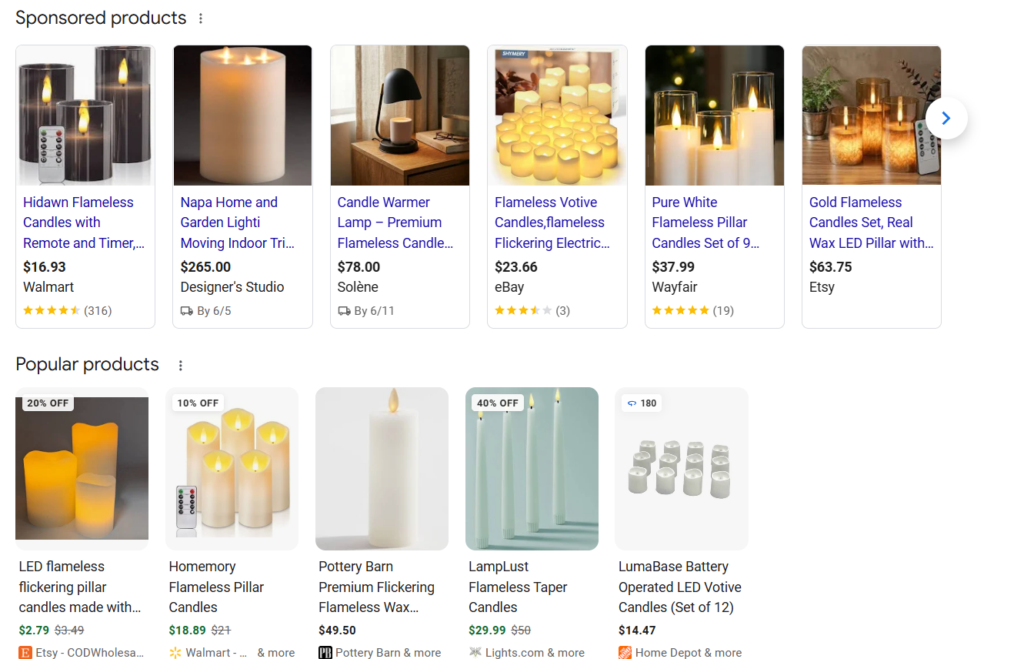
LED flameless candles are a different type of candle dropshipping product because buyers are not mainly paying for scent, but they are paying for safety, convenience, décor, and bulk use.
So that makes them especially useful for weddings, restaurants, venues, holiday displays, and homes with kids or pets.
ZIK data shows this category performs better on Shopify when sold as bundles or higher-AOV sets. Shopify data shows 138 sales and $13,916.37 in 30-day revenue, with a median price of around $62. On eBay, the median price drops to around $22.99, suggesting more competition in cheaper multi-packs, tea lights, and commodity-style listings.
The main upside is that these candles avoid the usual wax, scent, and glass-breakage problems.
However, the downside is price compression, so to win, focus on remote-control sets, timer features, realistic designs, event packs, or premium décor bundles.
How to Dropship Candles to Make a Profit
Now, here we come to the actual process of how you can make money with dropshipping candles: choosing the right products before you choose a supplier.
Remember, a candle can look nice, but that does not mean people are actively buying it, searching for it, or willing to pay enough for you to keep a healthy margin after shipping and fees.
With that, here is the exact process for you to follow to start a dropshipping business for candles REGARDLESS the country or your background:
Step 1: Research Trending & Winning Candles to Dropship
The first step is to start finding candle products that already show buyer demand.
There are several methods to do that, and here I am going to share with you some:
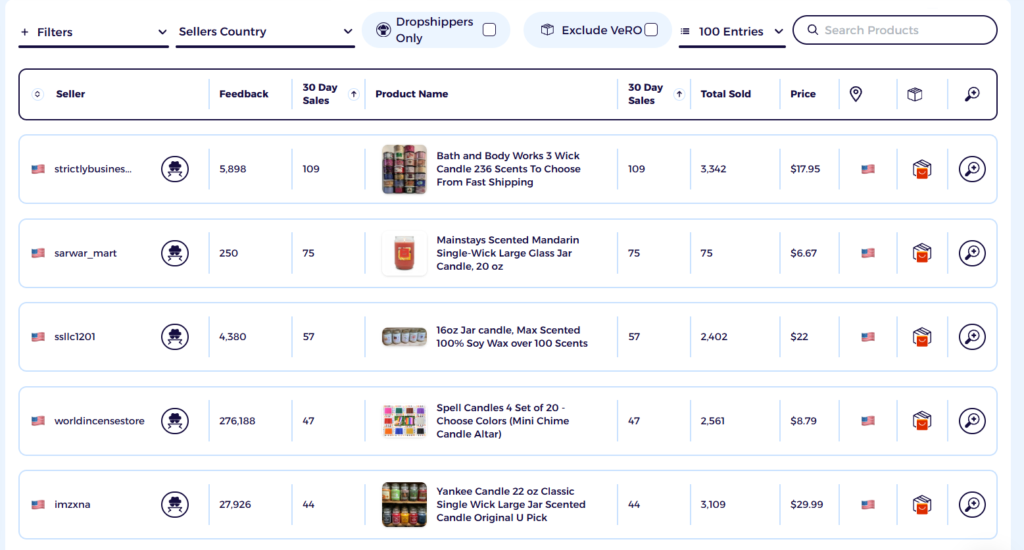
Remember, just because we’re checking eBay data, it does not mean you have to be selling on eBay, and even if you are not doing eBay dropshipping, eBay data can still show what candle buyers are already purchasing.
This part is only finding what sells well and then deciding where you want to sell it.
For eBay, you can use ZIK’s eBay product research tool to check what candle listings are selling, how many units are moving, and which price points are working, and even what exact products are being sold, for how much, and how many.
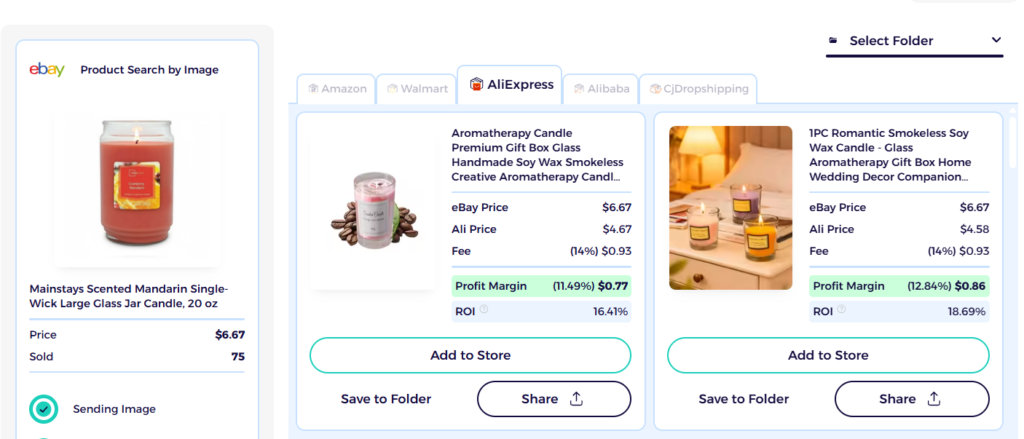
ZIK also provides a feature called Item Finder that finds suppliers for a selected product. Again, this does not mean it’s only for eBay. Those suppliers are dropshipping in general, but backed with real data.
ZIK also provides a similar solution called Shopify Product Explorer to study what products are selling well on Shopify stores, and even study candle stores that are already getting traction.
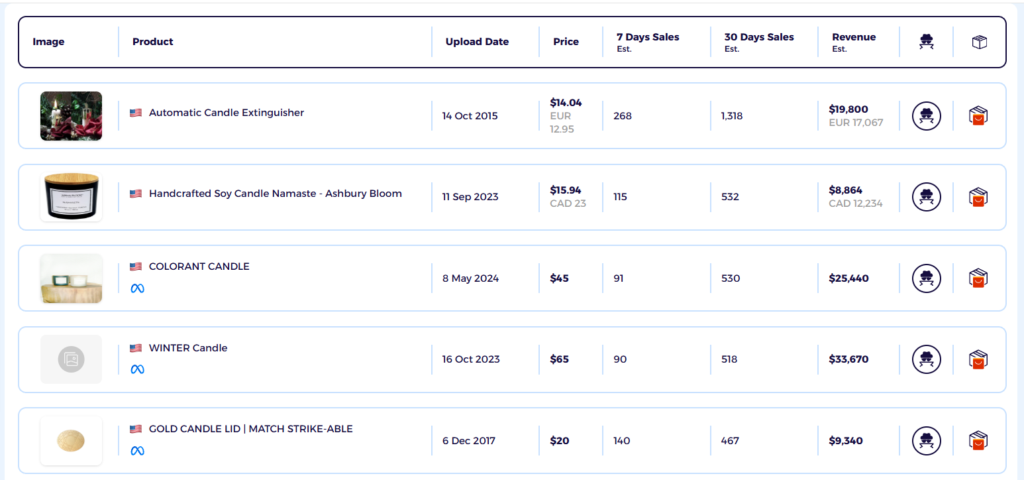
Here you can see the product angle, pricing, bundles, landing page style, and whether the store is selling scented candles, gift sets, LED candles, personalized candles, or seasonal products.
A free method to check demand is to cross-check your ideas with Google Trends.
This helps you confirm whether a scent or candle type is rising, seasonal, or already declining. For example, pumpkin spice, pine, peppermint, and cinnamon candles may spike before Q4, while lavender or vanilla may have steadier year-round demand.
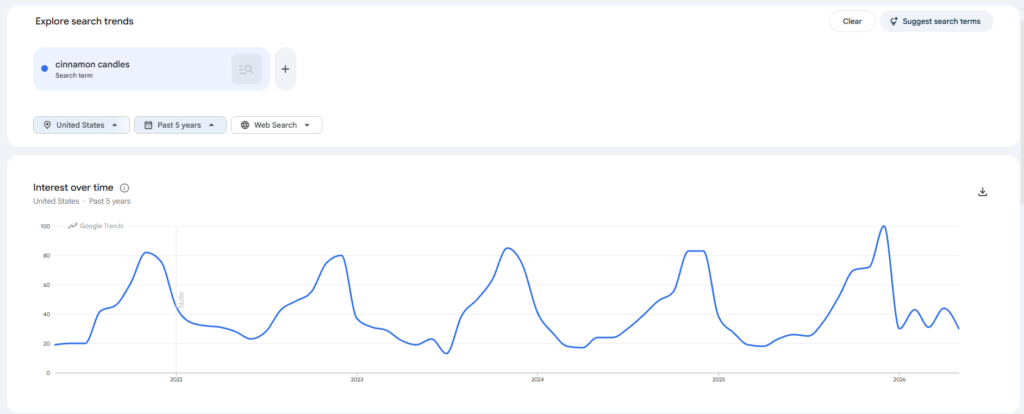
From this, we can clearly see that cinnamon candles are seasonal, with peaks in November and December with very predictable demand.
Of course, the issue is that it only shows the search demand, but it does not provide actual products and their sales data. Ideally, you should check both sources.
Your goal is not to pick one random product but to build a shortlist of 3 to 5 candle SKUs with clear demand evidence, pricing potential, and supplier availability before moving to the next step.
Step 2: Ensuring Compliance & Insurance
Before choosing a candle supplier, check whether you are legally allowed to sell that candle in your target market.
Candle compliance depends on where you sell, where your customer is located, what ingredients are used, what claims you make, and which marketplace you list on. Even in the US, some states can add extra requirements.
So, we cannot list every candle rule for every country here. The goal is to cover the general checks most dropshippers should research before selling.
In the US, the CPSC says candles with metal-cored wicks cannot contain more than 0.06% lead by weight, and candles containing hazardous substances may need cautionary labeling. It also points sellers to ASTM candle standards, including ASTM F2417 for candle fire safety and ASTM F2058 for fire-safety labeling.
If you sell to California customers, check Prop 65 requirements for applicable fragrance compounds or other listed chemicals. California notes that warnings may be required when exposures exceed safe harbor levels.
For UK sales, businesses that make, import, distribute, or sell consumer products are responsible for product safety, labeling, records, safe-use instructions, traceability, and reporting known safety risks.
GOV.UK also notes that product liability insurance is separate from general business insurance.
For EU sales, check the General Product Safety Regulation and Safety Gate guidance, since the EU requires only safe products to be placed on the market and also monitors dangerous products sold through online shops and marketplaces.
Also, you should check platform rules as eBay and Amazon can remove unsafe or non-compliant listings, while Shopify makes merchants responsible for following the laws where they do business.
At minimum, research: product safety labeling, business registration, resale certificate or sales tax requirements, VAT registration for EU/UK sales, product liability insurance, platform policies, and whether your supplier can provide compliance documentation before you list the candle.
This might seem overwhelming, but with a little research and communication with suppliers, you can quickly find out what’s required.
Step 3: Finding and Vetting Candle Dropshipping Suppliers
Once you have a shortlist of candle products and you know what the requirements are, the next step is finding suppliers that can actually fulfill them safely and consistently.
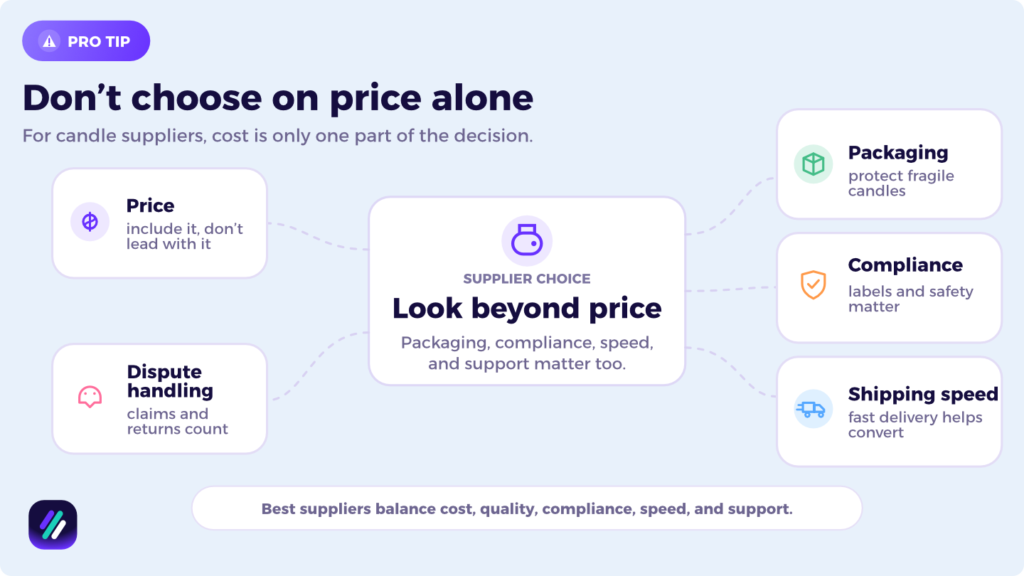
Pro tip: Do not choose a candle dropshipping supplier based on price alone; with candles, packaging quality, compliance, shipping speed, and dispute handling matter just as much as product cost.
Now there are 6 methods to find dropshipping suppliers, such as:
- Using ZIK’s Item Finder Tool: For every product that you find with ZIK Analytics, you can match those products to several suppliers, and in AliExpress or Alibaba, you will often get tens of different suppliers in seconds.
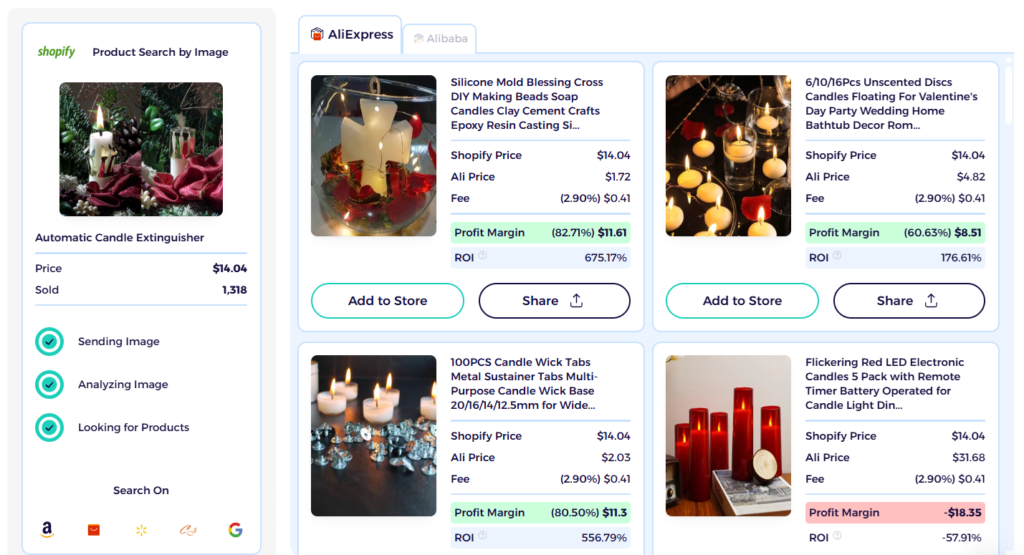
- Search supplier marketplaces: You can go on platforms like AliExpress, Alibaba (these are useful places to compare China dropshipping suppliers), Spocket, Printify, Faire, and Modalyst to compare candle suppliers by product type, shipping region, reviews, and pricing.
- Reverse-search winning products: Take product images from successful candle listings and use image search to find similar suppliers or manufacturers.
- Search wholesale and private label directories: Look for candle manufacturers that offer white label, private label, or wholesale fulfillment, especially if you want higher-margin branded products.
- Contact manufacturers directly: Search for USA dropshipping suppliers, UK/EU suppliers, or China candle manufacturers, blind shipping, custom packaging, or low-MOQ fulfillment.
- Search it: Lastly, and most obviously, you can simply go to Google, ChatGPT, or Perplexity and search for dropshipping candle suppliers. You will find plenty of them!
Once you have a supplier, you need to vet them, and that’s arguably the hardest part. Now, because candles are a higher-risk product, your vetting process should also include strict compliance protocols and more. So here is our vetting checklist for dropshipping candles:
- Order samples first: Send samples to multiple addresses to test packaging, delivery speed, scent quality, and breakage risk.
- Check compliance: Ask for ASTM safety information, warning label photos, and any available COA or product documentation.
- Confirm shipping times: Make sure delivery times match the promise you will make on your store.
- Test packaging quality: Glass jars, lids, wax, and gift boxes need to survive normal carrier handling.
- Review dispute handling: Ask who pays for replacements when candles arrive broken, melted, late, or mislabeled.
- Check inventory reliability: Avoid suppliers with no API feed, no stock updates, or vague answers during peak seasons.
- Watch red flags: No COA, no samples, no clear refund process, poor communication, or copied brand/trademarked scent names.
I cannot stress enough how important vetting is. If you want to have a successful dropshipping business, then having a reliable supplier is paramount!
Step 4: Selecting and Building Your Shop/Marketplace
The next step is to decide where you want to sell your candles.
There are three main ways to sell dropshipping candles: marketplaces, your own ecommerce store, or social commerce channels.
| Selling channel | Best for | Pros | Cons |
| Marketplaces | Fast product testing | Built-in traffic, easier demand validation, quicker first sales | More competition, seller fees, stricter platform rules |
| Your own store | Building a candle brand | Full control over branding, bundles, upsells, email, and customer experience | You need to drive traffic through ads, SEO, or content |
| Social commerce | Trend-driven products | Great for viral candles, gifts, UGC, TikTok Shop, Facebook, and Instagram sales | Requires consistent content, creator testing, and fast fulfillment |
For most beginners who want to dropship without a website, marketplaces like eBay are the easiest place to test candle demand because you can compare competitors and validate products with ZIK’s eBay research tools.
However, if you want to build a long-term brand, Shopify dropshipping is usually the better option because candles depend heavily on scent storytelling, packaging, gifting, and lifestyle visuals.
Social commerce works best once you have a visual product angle, such as personalized candles, seasonal gift sets, or aesthetic home décor candles.
Step 5: Pricing Your Products
Pricing your candle products is another essential step, and your pricing strategy should start with margin, not vibes.
For dropshipping candles, aim for at least a 35% to 55% gross margin after product cost and shipping, because fragile products can create extra replacement, refund, and support costs.
Now, when it comes to pricing strategy, we could write the whole book about it, but to simplify it for the sake of this, we narrow it down to this simple process:
- Calculate your landed cost: Add supplier cost, shipping, platform fees, payment fees, packaging upgrades, and a small damage/refund reserve.
- Set your target margin: Use this formula: selling price = total cost ÷ (1 – target margin). So if your cost is $12 and you want a 45% margin, your price should be around $21.82.
- Anchor against competitors: Compare similar candle listings on the same channel. Do not price a Shopify-branded gift candle against a basic eBay soy candle.
- Use bundles to raise AOV: Sell 2-packs, 3-packs, scent sets, or gift boxes. Shopify notes that bundle pricing can increase average order value and improve perceived value.
- Decide your shipping model: Either bake shipping into the price and offer “free shipping,” or charge shipping clearly at checkout. Avoid surprise fees, since hidden costs can reduce trust and make comparison shopping harder.
Here, your goal is to be competitive with your competitors while maintaining healthy margins to support your costs, marketing, and other expenses.
But this is where the dropshipping product research is so important in any niche, as you will already have a good idea of the general prices and how to price your products, and whether the supplier pricing is doable.
Step 6: Marketing Your Dropshipping Store
The next step is to market your dropshipping store. We recommend starting with one paid channel and one owned/organic channel.
To validate the product, you can start as low as $300 to $500 total spend to see if it converts, and how well.
There are several marketing channels you can choose from, which really depend on how comfortable you are with the ad platform, where you’re selling, and on what platform, etc.
If you’re using marketplaces, then I recommend starting with the platform’s own advertising channel, such as eBay promoted listings.
With that, here are the most popular dropshipping marketing strategies:
| Channel | Best fit | Minimum validation budget |
| Meta Ads | Broad product testing is generally the best platform | $500-$800 |
| Google Shopping | Gift buyers, search intent, usually has the best ROI on proven products | $500-$1,000 |
| TikTok Ads | Wellness, viral products, UGC | $300-$500 |
| Home decor, gifts, visual products | $150-$300 | |
| SEO Content | Gift guides, scent guides | Time + tools |
| Email/SMS | Post-purchase, seasonal reactivation | $0-$100 |
If you’re using advertising channels to test your products, ensure you let it run at least 14 days, and then kill non-performers by day 14 if CTR, add-to-cart, or CPA is clearly below target.
Step 7: Managing Shipping, Refunds, and Customer Service
Once your candles start selling, your biggest job is preventing small shipping problems from turning into bad reviews, which can kill your business.
Because candles are fragile, create your breakage policy before you scale and publish it clearly on your store, and explain what customers should do if a candle arrives broken, melted, delayed, or with the wrong scent.
Then set the same rules with your supplier:
- Who pays for damaged orders?
- Who ships the replacement?
- What photo proof is required?
- How fast do they respond to claims?
- Do they refund you or resend the product?
Here goes deep into the industry’s best practices. Of course, the supplier will try to offload as many of the responsibilities onto you, so you need to know what to expect from them.
This is where many beginners lose money. They make the customer happy first, then find out that the supplier will not cover the replacement.
Also, choose carriers by region, not just price. A cheaper shipping option is not cheaper if it creates broken jars, late deliveries, and angry customers.
Lastly, bake a refund reserve into your pricing.
For candle dropshipping, keeping 3% to 6% of gross revenue aside for damage, replacements, and dropshipping returns gives you breathing room without destroying your margin.
Step 8: Scaling Your Dropshipping Store
And the final step is to scale your dropshipping store, the most favorite part of every entrepreneur.
Scaling your store comes down to dropshipping automation, doubling down on what works, removing repeat tasks from your plate, hiring VAs, part-time, or employees to manage the increased workflow.
It also means using more marketing channels, getting more products, and expanding your presence across different marketplaces.
With automation, we recommend automating the basic first steps, such as:
- Low-stock alerts for winning candle SKUs.
- Order notifications to your supplier or VA.
- Abandoned-cart emails.
- Customer tags for repeat buyers.
- Refund or damage claim tracking.
Then hire help only where human judgment is needed. A VA can handle customer replies, supplier follow-ups, listing updates, review checks, and order issue tracking, but give them SOPs, templates, and refund limits so they do not guess.
Of course, keep finding and testing new products, test new scents, bundles, gift sets, and seasonal candles every month instead of relying on one winner.
Best Candle Dropshipping Suppliers
The best candle dropshipping supplier depends on what you’re trying to build. Some are true private label dropshipping suppliers, some are better for wholesale sourcing, and some are mainly useful for testing product angles before you scale.
So here are some of the top candle dropshipping suppliers to check out:
- Candle Builders: Best for private label candle dropshipping if you want your own brand without inventory. They hand-pour in New Hampshire, support ecommerce integrations, keep 20,000+ candles ready, and ship U.S. orders in 1 to 2 business days.
- Wax & Wick: Best if you want premium American soy candles with a limited-client dropship model. They offer blind dropshipping, let you set your own retail price, and use sales-based discounts from 15% to 25%.
- Daniella’s Candles: Best for giftable and higher-perceived-value candles, especially jewelry candles. They offer U.S. drop shipping with no supplier branding on the package, plus private label candles, reed diffusers, room sprays, and fragrance oils.
- Wixology: Best for unique handcrafted candles where the product feels more boutique than generic marketplace stock. This works well for gift buyers, home décor shoppers, and sellers who want scent story, packaging, and handmade appeal.
- Candles 4 Less: Best for event-driven candle products, not premium scented branding. Their catalog leans into bulk candles, holders, vases, wedding supplies, and tablescape products, which can work well for B2B, wedding, and venue buyers.
- Makesy: Best if you want to build or private-label your own candle line instead of reselling finished products. Makesy lists over 500 candle-making supplies, including 400+ fragrance options, wax, wicks, vessels, packaging, and private label resources.
- AliExpress: Best for product discovery and low-cost testing, especially unusual jars, LED candles, and seasonal gift ideas. Use it carefully, as seller quality varies and regulators have raised concerns around illegal or unsafe marketplace goods.
- ACDC Co: Best for luxury-style candle sourcing where premium packaging, scent quality, and perceived value matter more than the lowest unit cost. Use it for higher-ticket candles, gift sets, or private label dropshipping tests.
- Amazon: Best for market research, price benchmarking, and backup sourcing, not long-term blind dropshipping. Amazon’s seller tools can still help brands scale through Amazon FBA, ads, Brand Registry, and marketplace demand validation.
- Walmart: Best as a backup source for mainstream candle trends, bundles, and emergency stock checks. Walmart Business also supports bulk business buying and fast delivery, which can help local sellers validate demand before supplier negotiations.
- Printify: Best for personalized or funny-message candles where the design matters more than the scent. Printify lists candles in its catalog, supports major store integrations, and reports 10M+ sellers, 1,300+ products, and global delivery.
- Spocket: Best for sellers who want a dropshipping platform with more U.S. and EU dropshipping supplier coverage. Spocket promotes automation, inventory, and order tracking, has no MOQs, and says 80% of its suppliers are U.S. or EU-based.
Remember, your best move is not to pick one supplier and hope; you ideally want to have several reliable suppliers for a variety of your products.
Also, don’t find this to be the truth, because “best” supplier is really relative and it depends on many factors, including your location, target audience, and needs.
But it’s definitely a good starting point, and most importantly, to give you an idea of what a typical good supplier provides.
Find Winning Candles to Dropship with ZIK Analytics
Finding a candle supplier is only half the game so before you list anything, you need to know which candles people already buy, which price points work, and which angles are getting traction.
This is where ZIK Analytics comes into play:
- Dropshipping product research tool: Use it to validate candle ideas before listing them. Check demand, competition, price ranges, seller ratings, and product performance so you avoid guessing on scents, bundles, or jar styles.
- Dropshipping database: Use ZIK’s database to spot product patterns across a much larger market. ZIK lists 1B+ products, 15M+ stores, and 25M+ advertisers in its database.
- AdSpy tool: Use AdSpy to study real Facebook and Instagram ads for candle offers, creatives, hooks, and product angles before spending money testing your own campaign.
The goal is simple: find candles with proven demand, match them with reliable suppliers, then test the strongest product angles before scaling.
Dropshipping Candles FAQs
Before you start selling candles, it helps to clear up the common questions around profitability, legality, compliance, and product risk. Here are the basics.
Are candles good for dropshipping?
Yes, candles can be good for dropshipping because they have strong gifting appeal, repeat-purchase potential, and enough product variety to avoid selling the same generic item as everyone else. The best options are usually scented candles, gift sets, seasonal candles, personalized candles, and premium-style candles, because they give you more room for branding and margin.
Can I dropship candles?
Yes, you can dropship candles, but you should treat them as a higher-risk product than basic home décor. The main things to check are supplier reliability, packaging quality, safety labels, shipping speed, and refund handling. Before scaling, order samples and confirm the supplier can replace broken, melted, mislabeled, or delayed candles without creating losses for you.
Can I sell candles online without a license?
In many cases, you do not need a special candle-specific license, but you may still need a business license, sales tax registration, resale certificate, insurance, or local permits depending on where you operate and sell. The SBA notes that license and permit requirements vary by business activity, location, and government rules, so check your state, county, and city before selling.
What is the 8:10 rule for candles?
The 8:10 rule is a home-fragrance guideline, not a legal or safety rule. It means using one 8-ounce candle every 10 feet to spread scent more evenly through a room instead of relying on one strong candle in one corner. For sellers, it can help explain candle size, room coverage, and scent throw in product descriptions.
Can I legally sell homemade candles?
Yes, you can legally sell homemade candles, but they still need to be safe, properly labeled, and compliant with the rules in your selling region. At minimum, use proper warning labels, safe materials, clear burn instructions, and product liability insurance. If you sell online, remember that you are responsible for what reaches the customer, even if the candle is handmade.