
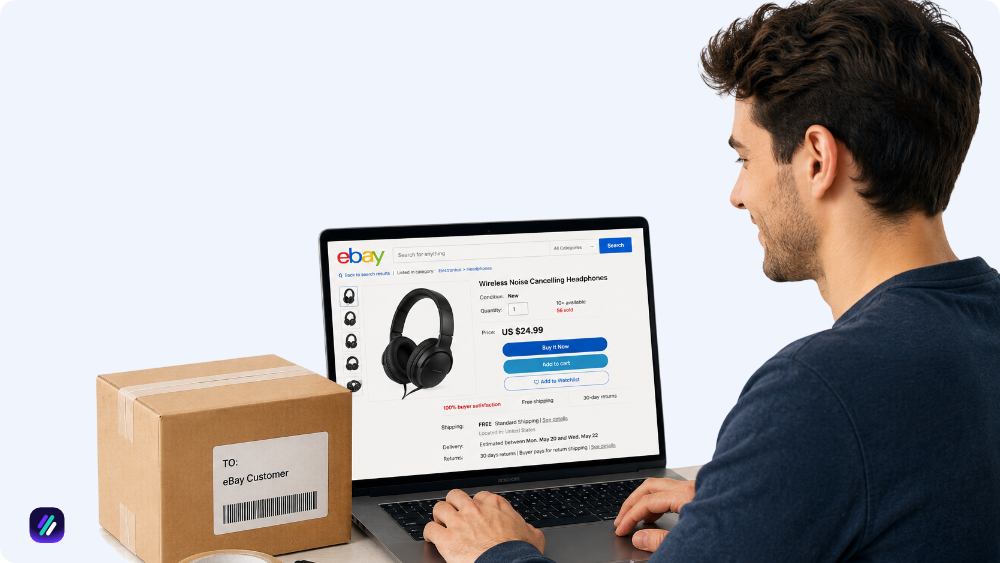
Plenty of new sellers ask the same nervous question: Can you dropship on eBay without getting your account banned? They have heard the platform outlaws it, or that sourcing a single order from Amazon will get them shut down overnight.
So they either skip the easiest marketplace to start on, or they quit after one spooky forum thread.
That fear costs people the cheapest, lowest-risk way into e-commerce there is.
The honest answer is yes, and in this guide, I will show you what eBay’s policy actually says, what it really enforces, how much sellers make, and how to start without putting your account at risk.
Key Takeaways
- Yes, you can dropship on eBay, and dropshipping on eBay is allowed as long as you deliver what you listed on time. eBay’s rules target poor seller behavior, not where you source from.
- eBay’s written policy is framed around wholesale suppliers, yet tens of thousands of sellers source from Amazon, Walmart, and other retailers without trouble, because enforcement follows delivery and accuracy.
- Margins are thin, so eBay dropshipping rewards volume and sharp product selection far more than big markups.
- The opportunity is liquid: From our ZIK Analytics marketplace research shows more than 10,000 sellers moving over 850,000 of these items in a single month, and that’s just a small part of the overall eBay dropshipping volume.
- Most of the money sits at low price points, with more than 75% of listings in the sample selling for under $25.
- Running the numbers before you list is non-negotiable. Checking actual sold prices, sell-through, and competition with ZIK Analytics is what separates profitable sellers from hopeful ones.
- You can start with almost no money, no LLC, and no warehouse, which is what makes eBay the lowest-risk way to learn selling online.
Does eBay Allow Dropshipping from Amazon, Walmart, or Other Retailers?
Yes. eBay allows dropshipping, and in practice, that includes sourcing from Amazon, Walmart, and other retailers. The written policy favors wholesale suppliers, but what gets sellers in trouble is late delivery, inaccurate listings, and poor service, not where they buy from.
eBay’s official policy permits dropshipping in two cases: when you have a wholesale supplier agreement, or when you own the items before listing them. The same policy says that listing an item and then buying it from another retailer that ships straight to the buyer falls outside the written wording.
Taken literally, that sounds like Amazon to eBay dropshipping is off the table. In reality, it is one of the most common models on the platform.
The gap between the written rule and what happens day to day is enforcement: eBay polices whether buyers get what they paid for, on time, and as described.
From our in-house eBay sellers at ZIK, the accounts that get restricted are almost never flagged for buying from Amazon or Walmart. They get flagged for orders that arrive late, arrive wrong, or never arrive at all.
In a single slice of this market, ZIK Analytics data already shows more than 10,000 active sellers, so retail sourcing here is mainstream, not a fringe loophole.
The rule of thumb: eBay polices whether the buyer gets what they paid for, not where your stock comes from.
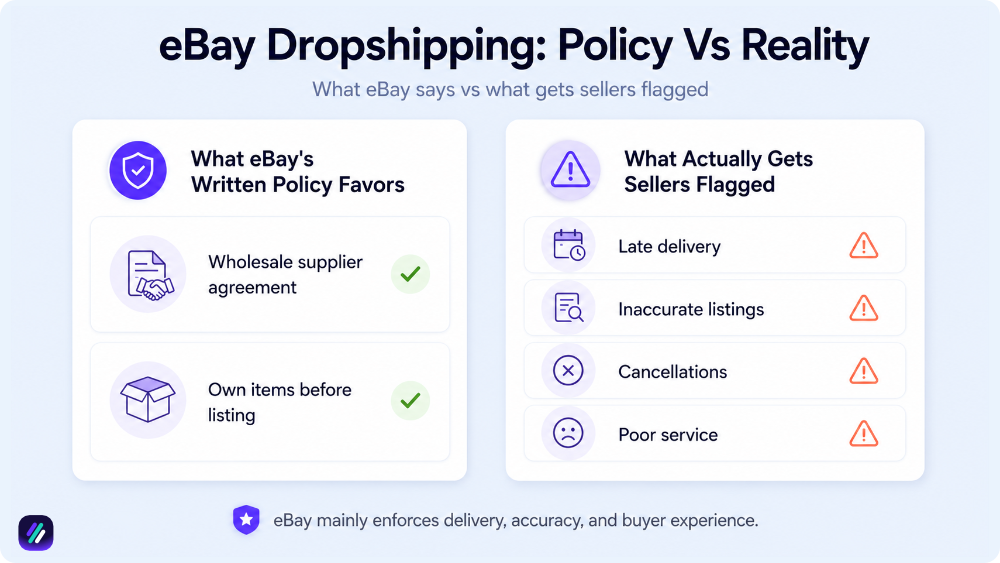
So treat the written eBay dropshipping policy as a quality standard rather than a sourcing ban. Keep in mind that the exact rules and fees can differ by country marketplace, so check your local eBay site and sellers actually selling there.
Is AliExpress to eBay Dropshipping Allowed?
Yes, AliExpress to eBay dropshipping is allowed, but it is the riskiest of the common models, because the long shipping time from China is exactly what damages your seller metrics.
Of course, the model itself is fine. The danger is that a two-to-four-week transit time pushes you toward late shipments and impatient buyers, which is where defects and disputes start.
If you go this route, you should set honest handling and delivery dates, choose suppliers with faster or US-based warehouses, and lean on tracking so buyers can watch their parcel move.
Sourcing this way through AliExpress to eBay dropshipping works best when you pair slower overseas items from AliExpress with faster domestic ones, so a single slow order never sinks your whole account.
Can You Make Money Dropshipping on eBay?
You can make money dropshipping on eBay, and the proof is in the data: the buyers are already there. You tap into existing demand instead of paying to create it. The catch is thin margins, so product choice and volume matter more than markups.
That demand is easy to underestimate. eBay reaches around 135 million active buyers and moves nearly $80 billion in gross merchandise volume (GMV) a year, according to its annual report.
You are listing in front of people already searching to buy, instead of building an audience from zero, the way a brand-new store of your own would have to.
Where beginners go wrong is in expecting big margins on top of that demand. Most eBay dropshipping sales are low-priced, commodity-style products, so you are not pocketing $50 a sale. You are earning a few dollars many times over.
So the money comes from picking products with proven demand and low competition and stacking lots of small, reliable sales, rather than finding one magic item to mark up. With that framing, the real question is not “can you make money” but “how much, realistically.”
How Much Can You Make Dropshipping on eBay?
Most eBay dropshippers earn a side income before a full-time one. ZIK Analytics data on one market slice shows over $1,000 in monthly revenue per active seller, though that is revenue, not profit, so take-home on thin margins is far smaller.
This snapshot from ZIK Analytics covers a sample of eBay listings in the low-cost, high-volume range where most dropshippers compete:
- More than 10,000 active sellers are competing in just this one slice of the market.
- Over 850,000 items sell every month, generating more than $10 million in revenue across the niche.
- The average sale price sits around $18, and more than 75% of those listings are priced under $25.
- That works out to more than $1,000 in monthly revenue per seller, spread very unevenly between hobbyists and full-timers.
Two things jump out. First, this is a liquid market where items change hands every day, so a well-chosen listing will sell rather than gather dust.
Second, the money lives at low price points, which is the whole game: you are not flipping one $400 item, you are moving a lot of $15 to $25 products on slim margins.
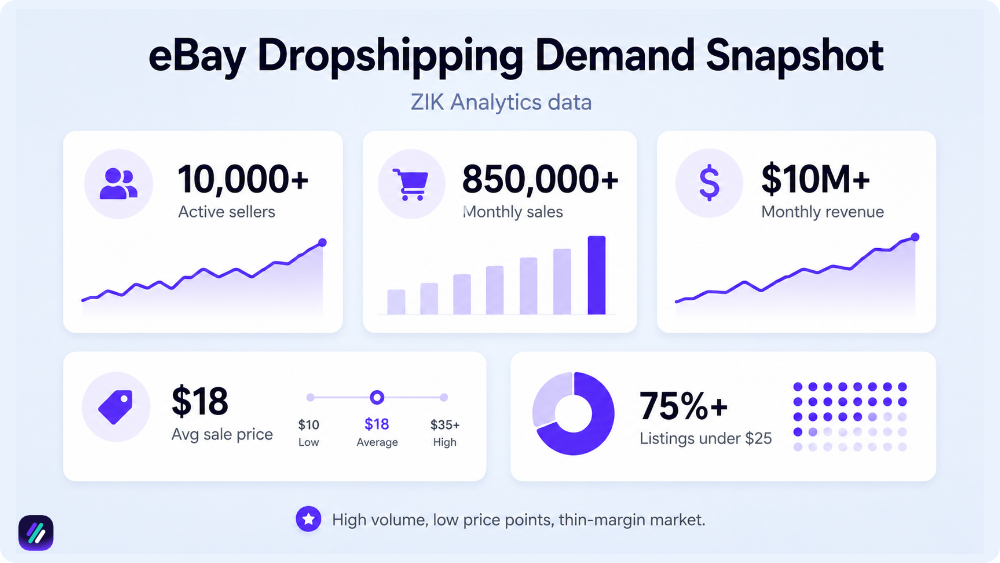
Remember, these figures come from a sample of the listings ZIK Analytics tracks, so the full eBay market is larger still. The realistic path looks less like a jackpot and more like a ramp.
Your first months are about learning which products actually sell and keeping your metrics clean, and income grows as you reinvest into more winning listings.
To find which products sit in that profitable band, the eBay product research tool shows you sold prices, sell-through rate, and how many competitors you face on any keyword.
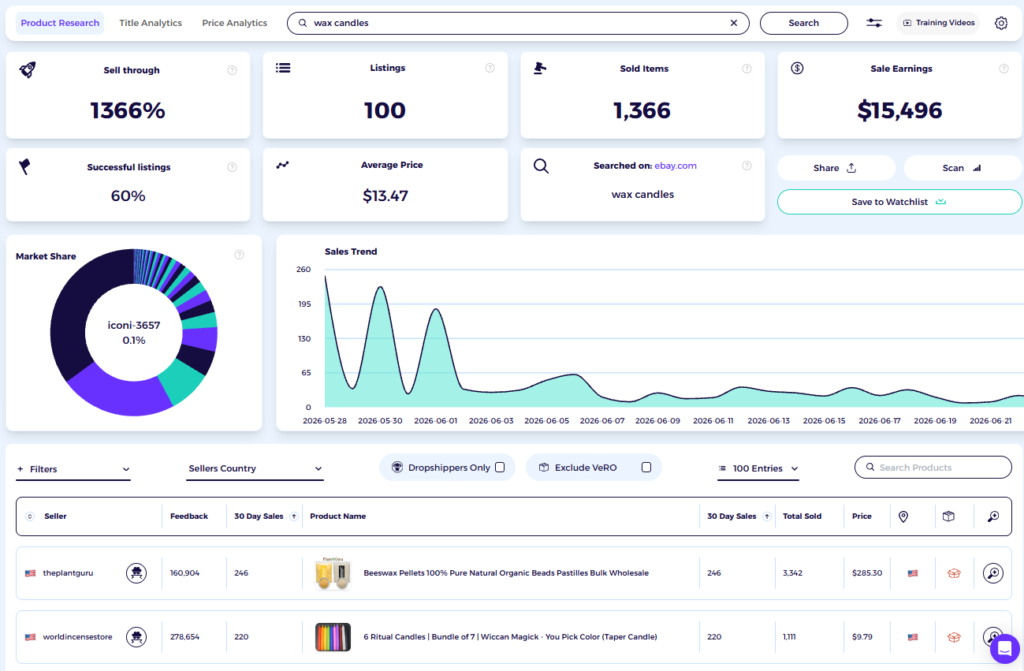
Picking from sold data, which is the heart of how to find profitable products to dropship on eBay, is what turns an average seller into an above-average one.
Is eBay Dropshipping Worth It?
For most beginners, yes. eBay dropshipping is worth it as a low-risk way to learn e-commerce: you start for almost nothing and sell into built-in demand. It stops being worth it only if you expect passive, high-margin income without doing the research.
The honest version is that eBay is a brilliant training ground and a tough place to get rich quickly. You will learn eBay product research, supplier management, and customer service with very little on the line.
So those skills transfer to anywhere you sell next, which is the lasting payoff. Now, let us weigh both sides properly.
eBay Dropshipping Pros
The appeal of eBay dropshipping comes down to how little you risk for how much reach you get:
- Low startup cost: you pay for stock only after a customer has already paid you, so you are not gambling on inventory.
- Built-in buyer demand: eBay’s audience is already searching for products, which gives you organic buyer traffic you would otherwise pay for with ads.
- No warehouse needed: your supplier holds and ships the stock, keeping the whole business inventory-light and easy to run with eBay dropshipping software.
- A cheap testing ground: you can list a product idea, see if it sells, and drop it if it flops, all without committing money up front.
- A proven, low-risk model: sellers have run this on eBay for years, so you are following a path that already works rather than inventing one.
Taken together, that is an unusually forgiving way to start a business. The downside of a bad product is a dead listing, not a garage full of stock you cannot move.
eBay Dropshipping Cons
The trade-offs are just as concrete, and ignoring them is how beginners burn an account:
- Thin profit margins: after eBay fees, supplier cost, and shipping, a $20 sale might net only a dollar or two, so small mistakes hurt.
- Supplier-driven shipping delays: you do not pack the box, so a slow supplier becomes your late shipment, and late shipments hit your seller metrics.
- Out-of-stock surprises: if your supplier sells out, you are forced to cancel orders on eBay, and cancellations damage your standing fast.
- Returns and disputes: around 19% of online purchases get returned, and on a dropshipped order you are the one eating the return logistics and the refund, so a clear eBay return policy matters.
- Account risk from misreading the policy: limited control over packaging and quality makes a cluster of poor experiences easier to trigger, which can push you below standard.
None of this makes eBay dropshipping a bad model, just one that punishes carelessness, which is exactly why the steps below matter.
Based on our dropshipping team at ZIK, the most common reason new sellers fail is not a banned product but a slow, unreliable supplier they never properly vetted.
How to Dropship on eBay Legally Step by Step
Knowing you can dropship on eBay is one thing; doing it without tripping a policy is another. This is how to dropship on eBay legally, in the order we would actually run it: policy first, then research, sourcing, the math, the listing, and daily management.
We will lean on data at every step, because guessing is what gets beginners into trouble.
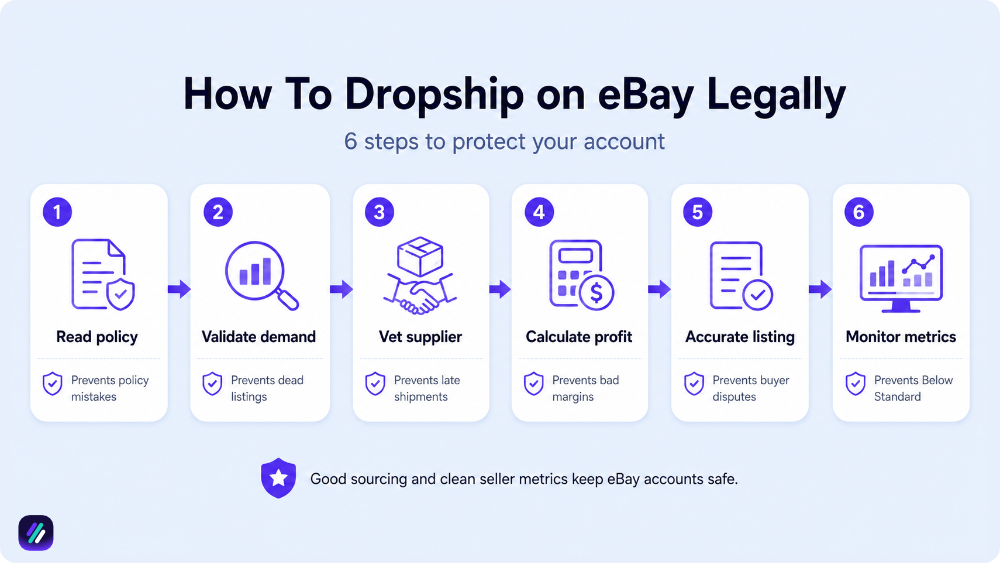
Step 1: Read eBay’s Dropshipping Policy Before Listing
Before you list anything, you should read eBay’s policy yourself so you are working from the source, not a forum rumor. eBay’s official dropshipping policy allows dropshipping when you fulfill orders through a wholesale supplier, or when you own the items before listing them.
The part people miss is the distinction eBay draws. Sourcing through a wholesale agreement is squarely inside the written policy.
Listing an item and then buying it from another retailer that ships straight to your buyer sits outside the written wording, even though, as we covered above, eBay’s day-to-day enforcement focuses on whether you deliver accurately and on time.
What this means for you is simple: you can use retail sources, but the burden is on you to control delivery, accuracy, and the customer experience.
You only need to read it in full once, since it is short. Keep in mind that the exact rules can vary by country marketplace, and five minutes here removes most of the fear that keeps beginners off the platform.
Step 2: Validate Product Demand Before You List
With the policy clear, the next job is proving that people actually buy a product before you commit to it.
The metric that matters most is sell-through rate, the share of listed items that actually sell, because high sell-through means buyers are reaching for it right now.
You should check completed, sold listings rather than active asking prices, then weigh the average sale price, how many competitors already sell it, and whether it ships easily with a low return risk.
To judge how saturated a niche is, the eBay competitor research tool lets you analyze a top seller’s revenue, sold items, and best products, so you can size demand against competition.
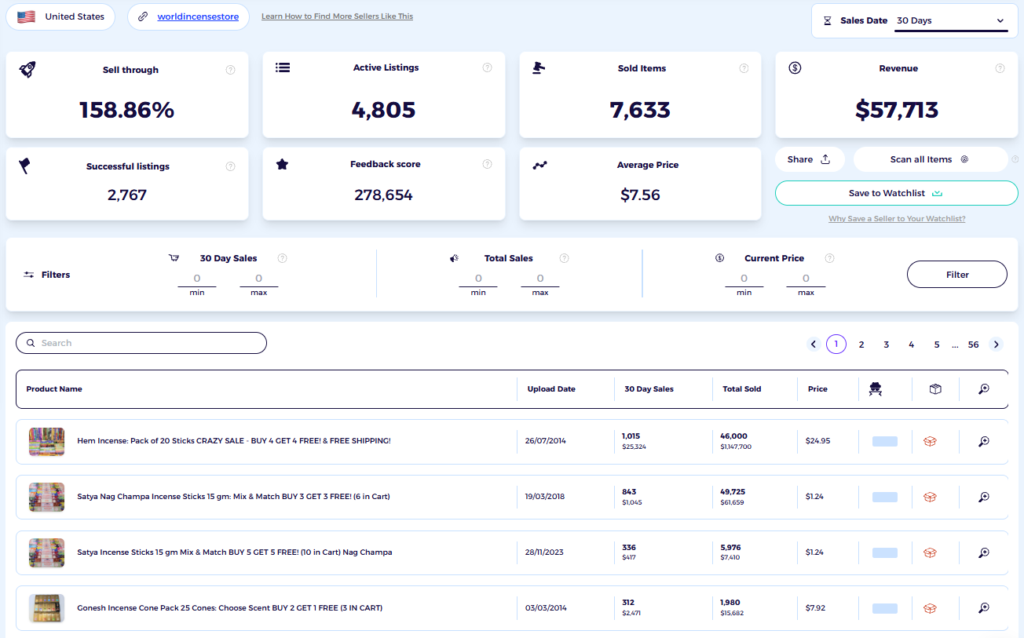
Some products are simply not worth it. You should steer clear of counterfeit, restricted, fragile, and high-return items: check eBay’s restricted items list, and avoid trademarked goods that can trigger an eBay VeRO (Verified Rights Owner) takedown.
Sourcing products with demand, rather than ones you personally like, is the decision that separates winners from the rest.
Step 3: Find a Supplier You Can Actually Rely On
Your supplier is effectively your fulfillment department, so picking a reliable one decides whether you succeed or drown in cancellations.
So, before you commit, you should vet each option on a few things:
- The right to sell: a wholesale agreement or a retailer you can consistently buy from at a stable price.
- Shipping speed and tracking: fast dispatch with a tracking number you can upload to eBay.
- Returns and quality: a clear returns process and consistent product quality, since you never see the item yourself.
- Inventory communication: a supplier who warns you when stock runs low before you sell something you cannot deliver.
Where to source depends on your model. Retailers suit fast US delivery, while CJ Dropshipping, Alibaba, and Wholesale2B suit wholesale and overseas sourcing.
To match a product to a supplier and check the margin automatically, ZIK’s sourcing tools, like the Amazon to eBay dropshipping software, find the supplier price and ROI (return on investment) for you.
Based on our in-house sellers at ZIK, vetting suppliers is the step that beginners rush, and the one that causes the most early failures.
Step 4: Calculate Profit Before You Publish the Listing
A listing only makes sense if the math works before you publish, and on thin margins, that math is unforgiving. You should price backward from your costs, not forward from hope. The costs to subtract from your sale price are:
- Supplier cost and shipping: what you pay to buy the item and get it to the buyer.
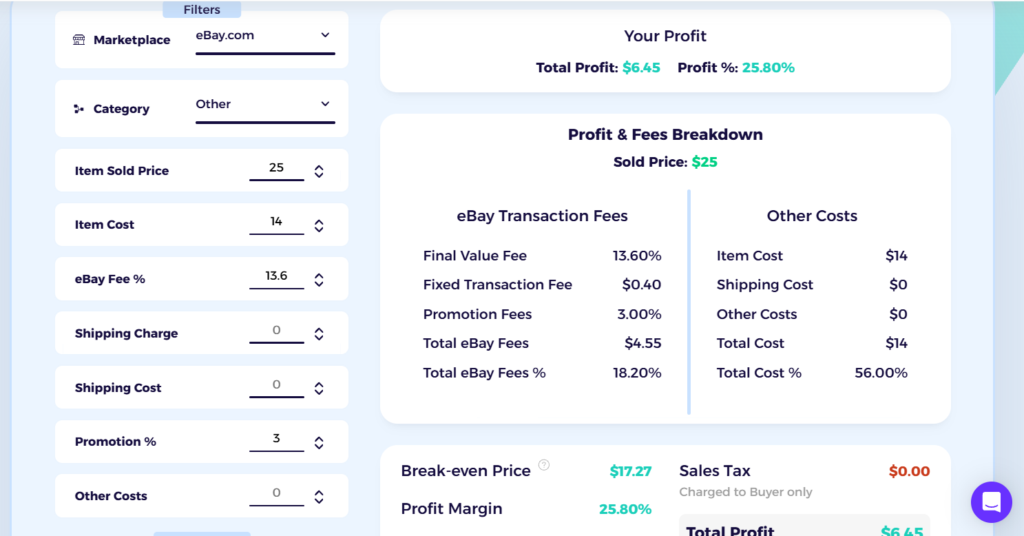
- eBay final value fee (FVF): for most categories, eBay takes 13.6% of the total sale plus a $0.40 per-order fee, and that percentage now includes payment processing, so there is no separate PayPal fee.
- Promoted listings: the ad rate you set on eBay promoted listings to get seen, often a few percent of the sale.
- Returns reserve: a small buffer for the refunds that will inevitably happen.
An example makes the math concrete. On a $25 sale, eBay takes about $3.80 in fees, your supplier might cost $14, and a 3% ad rate adds roughly $0.75, leaving you somewhere near $6 before returns.
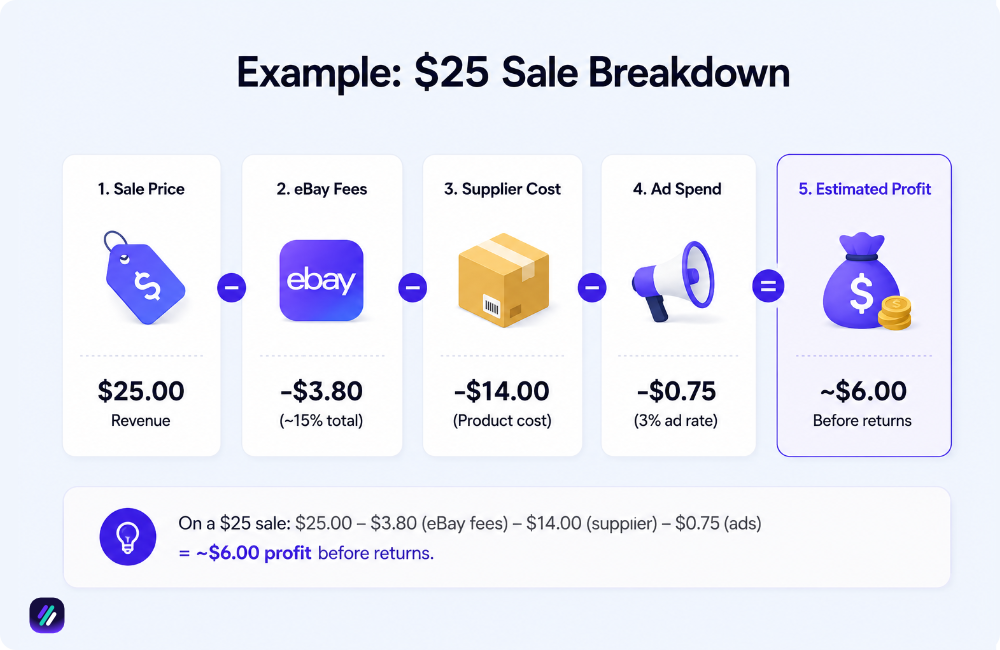
The eBay fee calculator runs this for you, so you can see your true take-home before you ever list. Fees vary by category and by country marketplace, so always model your own numbers.
Step 5: Create Listings That Match the Product Exactly
A policy-safe listing is one where the buyer gets exactly what the page promised, so accuracy here is what keeps your account healthy.
Your title should be packed with the words buyers actually search, since eBay’s search engine matches listings to those terms. The eBay keyword tool shows the actual search terms and competition behind a keyword, so you build a title around what buyers type instead of what you assume.
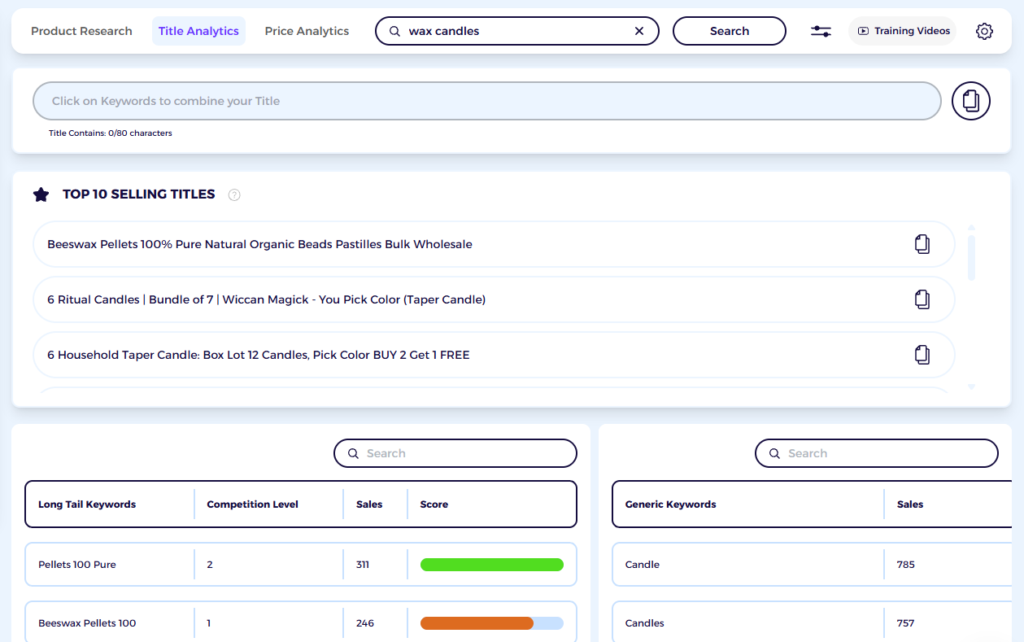
Beyond the title, a few habits keep a listing both findable and compliant:
- Item specifics: fill every relevant field, because they feed eBay search directly.
- Accurate images and description: use supplier-approved photos and describe the actual item, with no misleading brand claims.
- Honest delivery dates: set handling and delivery times you can hit even on a slow supplier day.
- A clear return policy: state it up front so a return becomes a routine, not a dispute.
Getting this right is most of eBay listing optimization: a listing that matches the product exactly ranks better and gets returned less.
Step 6: Monitor Orders, Tracking, Returns, and Seller Metrics
The work does not stop when an item sells; this is where your account is won or lost. As soon as your supplier ships, you should upload the tracking number to eBay quickly, because tracking on time protects you in disputes and feeds your seller rating.
From there, you are watching a short list of numbers that eBay grades you on. eBay expects sellers to keep a defect rate under 2% and late shipments under 3%, so even a handful of slow or cancelled orders can pull you Below Standard.
You should keep talking to your supplier about stock, and revise or end a listing the moment an item is no longer reliably available, rather than risk a cancellation.
Catch a slipping rating early and fix below standard on eBay becomes a quick correction instead of a long climb. Staying Above Standard is mostly about doing the boring things, tracking, and communication, every single day.
Conclusion
You can call eBay dropshipping a loophole or a scam, and you will be wrong on both counts. It is simply one of the few businesses where you can test a genuine product idea this week without risking your savings, and that is rarer than it sounds.
The sellers who last rarely found a secret supplier. They won by treating thin margins with respect, researching demand, vetting suppliers, and watching their metrics like the business they actually are.
So start smaller than you think you should: list a few well-researched products, get your delivery and communication tight, and let the data tell you what to scale.
And the platform rewards consistency over cleverness, which is good news, because consistency is the one thing you fully control. Once that is in place, the question stops being whether you can dropship on eBay and becomes how far you want to take it.
Start Your eBay Dropshipping Profitably with ZIK Analytics
Every step above comes back to one habit: deciding from data instead of hope. That is the part ZIK Analytics handles for you:
- Use the eBay product research tool to see actual sold prices, sell-through, and competition on any product before you list it.
- Run a top seller’s username through the eBay competitor research tool to see their revenue, best products, and sell-through, then stock toward what already works.
- Plug your numbers into the eBay fee calculator to see your true take-home before you commit to a product.
You can try all of it on a $1 trial that runs for 7 days. See what is actually selling first, then source with confidence instead of guesswork.
Can You Dropship on eBay Frequently Asked Questions?
A few quick answers to the questions new eBay dropshippers ask most.
Is dropshipping on eBay worth it?
For most beginners, yes. It is a low-risk way into e-commerce, since you can start for almost nothing and sell into eBay’s built-in demand. It is less suited to anyone expecting passive, high-margin income, because margins are thin and the model rewards consistent research and good customer service over clever shortcuts.
Can I make $10,000 per month dropshipping?
It is possible, but it is the exception rather than the norm. Reaching $10,000 a month in revenue takes a large catalog of researched products, reliable suppliers, and clean seller metrics, usually built over many months. Most sellers grow there gradually by reinvesting profit, not in their first few weeks on the platform.
Is $1000 enough to start dropshipping on eBay?
Yes, $1,000 is more than enough to start, and many sellers begin with far less. Because you only buy stock after a customer pays, your main early costs are a research tool, eBay fees, and a small buffer for returns. The bigger investment is the time you put into product research before listing.
Can eBay ban you for dropshipping?
eBay will not ban you for dropshipping itself, but it can suspend you for the problems that come with doing it badly. Late deliveries, inaccurate listings, cancellations from out-of-stock suppliers, and selling restricted items are what trigger account action.
Can you dropship on eBay with a personal account?
Yes, you can dropship on eBay with a personal account, and many sellers start that way. Once you sell regularly, a business account is worth the switch for higher selling limits, cleaner bookkeeping, and tax handling. eBay also applies eBay selling limits to newer accounts, so expect to grow into higher volume over time.
Can you dropship on eBay for free?
Almost, but not entirely. Opening an account and listing is free up to a monthly limit, and you only pay your supplier after a sale, so you need very little upfront. You will still pay eBay’s fees on each sale, and a research tool quickly pays for itself, so “free” really means low-cost rather than zero-cost.
Do you need an LLC to dropship on eBay?
No, you do not need an LLC to dropship on eBay. You can sell as an individual sole proprietor, which is how most people start, and report the income on your taxes. An LLC (limited liability company) can add liability protection and tax flexibility as you grow, but it is optional, not a requirement to begin. Rules vary by country, so check your local requirements.