
Slow eBay sales describe a sustained drop in listing views, conversion rate, or completed orders across a seller’s store. eBay reported 136 million active buyers in Q1 2026 against an estimated 17.6 to 18.3 million active sellers, which produces persistent listing competition across 2.5 billion active listings. Sales drop when one of seven factors changes: seller rating, market saturation, seasonal demand, Cassini algorithm updates, listing quality, economic conditions, or platform-wide competition.
This guide covers the seven causes of slow eBay sales, the eBay product research data that prevents them, and 15 recovery strategies built around sell-through rate, competitor analysis, and listing optimisation.
Updated 16 May 2026.
Why are eBay sales going down?
Seven factors account for most slow-sales diagnoses on eBay. Each one reduces listing visibility or buyer conversion through a different mechanism, and the recovery strategy depends on which factor applies.

Low eBay seller rating
Low eBay seller rating describes an account scoring below 98% positive feedback or above eBay’s defect and late-shipment thresholds. Accounts in this state lose visibility in Cassini search results and trigger “Above Standard” or “Below Standard” performance status, which suppresses listings regardless of price or photo quality.
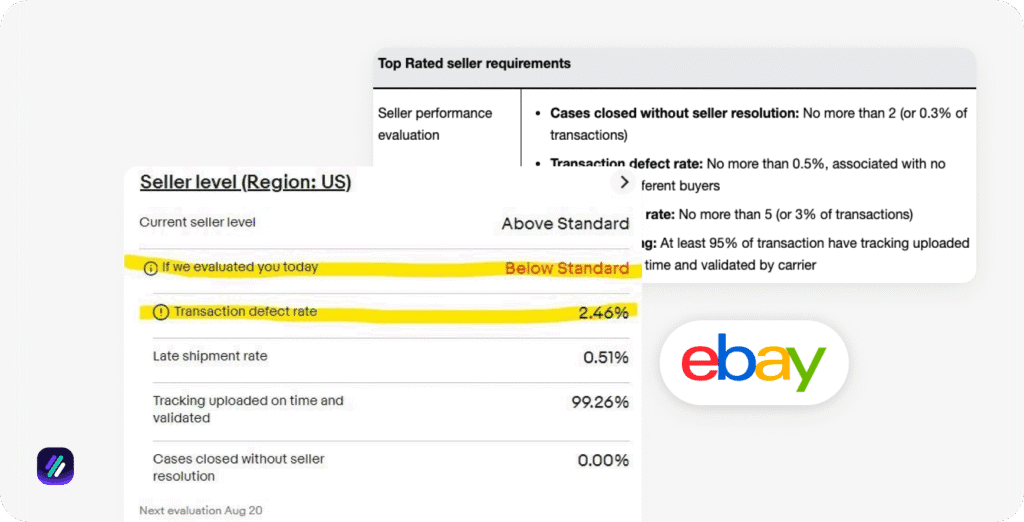
eBay tracks four metrics that determine seller rating status:
- Defect rate. The percentage of orders with problems including wrong items shipped, missing packages, or returns processed outside the standard return window.
- Late shipping rate. The percentage of orders shipped after the handling time advertised on the listing.
- Unresolved cases. Customer disputes closed by eBay rather than the seller, typically because the seller failed to respond or resolve the case directly.
- Negative feedback. Public reviews from buyers reporting unsatisfactory transactions.
When any of these four metrics exceed eBay’s published thresholds, the platform applies search visibility penalties, reduces listing impressions, and downgrades the account’s performance status. The cumulative effect: fewer buyers see the listings, and those who do convert at lower rates because of the visible poor rating.
Market saturation
Market saturation describes a niche where the number of active listings for a product exceeds available buyer demand. Categories with 5,000 or more active listings for a single search term (phone cases, HDMI cables, fitness bands, Bluetooth earbuds) produce saturation, where buyers cycle past dozens of near-identical listings before converting on the lowest-priced option.
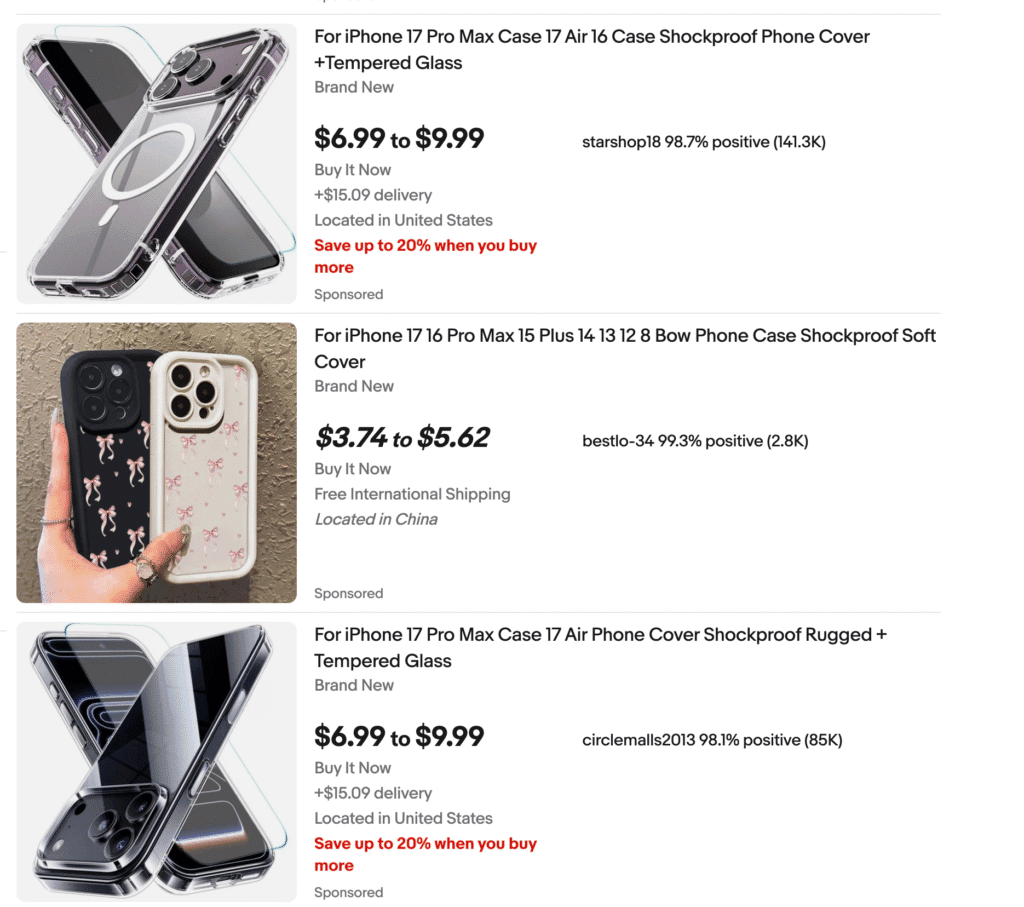
Saturated categories produce three predictable outcomes: race-to-the-bottom pricing, reduced per-listing conversion rates, and diminishing returns on promotion spend. Discounts and Promoted Listings produce minimal recovery because the underlying problem is supply density, not visibility.
The recovery path moves the seller out of the saturated niche. Three options apply: shift to lower-competition sub-niches with under 200 active listings per search term, bundle the saturated product with complementary items to create a differentiated SKU, or rotate inventory into adjacent categories identified through product research data.
Seasonal demand drops
Seasonal demand drops describe predictable sales decreases tied to buyer behaviour cycles across the calendar year. Summer months produce the lowest eBay engagement in most non-seasonal categories, while major holiday weeks redirect buyer spending to gift categories and away from general inventory.
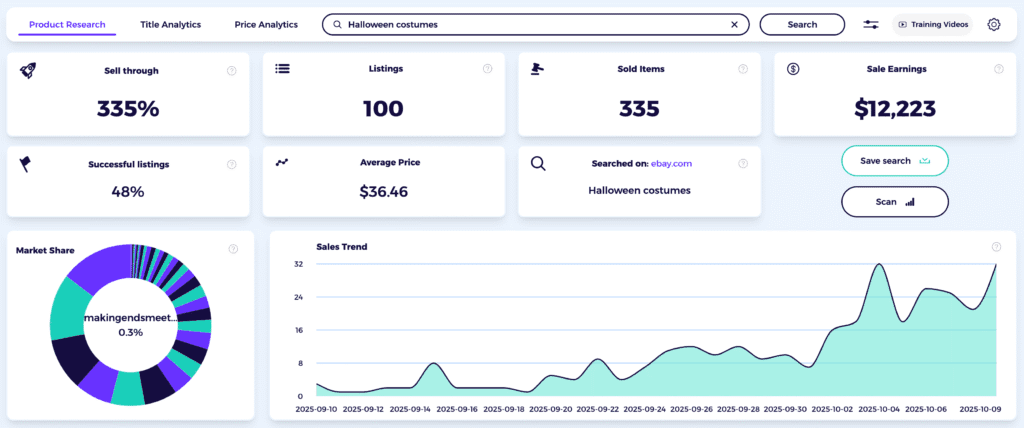
Seasonal product categories experience the steepest drops outside their selling window. Halloween costumes sit unsold from January through August. Pool supplies and beach gear lose roughly 80% of demand from October through February. Even non-seasonal everyday categories see 15 to 25% volume drops during major holiday weeks because buyer attention concentrates on gift purchases.
Calendar-driven economic events compound seasonal demand drops. Tax season reduces discretionary spending in February and March. Back-to-school spending pulls budget away from collectibles and hobby categories in August. Post-holiday months produce the largest non-essential purchase decline as households recover from December spending.
eBay Cassini algorithm updates
eBay Cassini algorithm updates change how listings rank in search results. eBay Cassini evaluates listings against seller performance, listing quality, price competitiveness, and historical conversion data, with the weighting of each factor adjusted periodically through algorithm updates.
Three recent Cassini behaviours affect seller visibility:
- Seller history weighting. Listings from accounts with 12 or more months of sales history rank above identical listings from accounts under 6 months old, even at lower price points.
- Price stability scoring. Listings with prices adjusted more than 3 times in 14 days receive reduced visibility because frequent price changes trigger an instability signal in the algorithm.
- AI-driven query expansion. Cassini surfaces semantically related results that may not match the original query exactly. Buyers searching for vintage leather jackets receive modern denim alternatives, which reduces conversion on the precisely-matched listings.
Sellers with strong product research and entity-aligned listings absorb Cassini updates with less visibility loss than sellers relying on price competition alone. The algorithm rewards listings with complete item specifics, keyword-aligned titles, and consistent sales velocity.
Poor listing quality
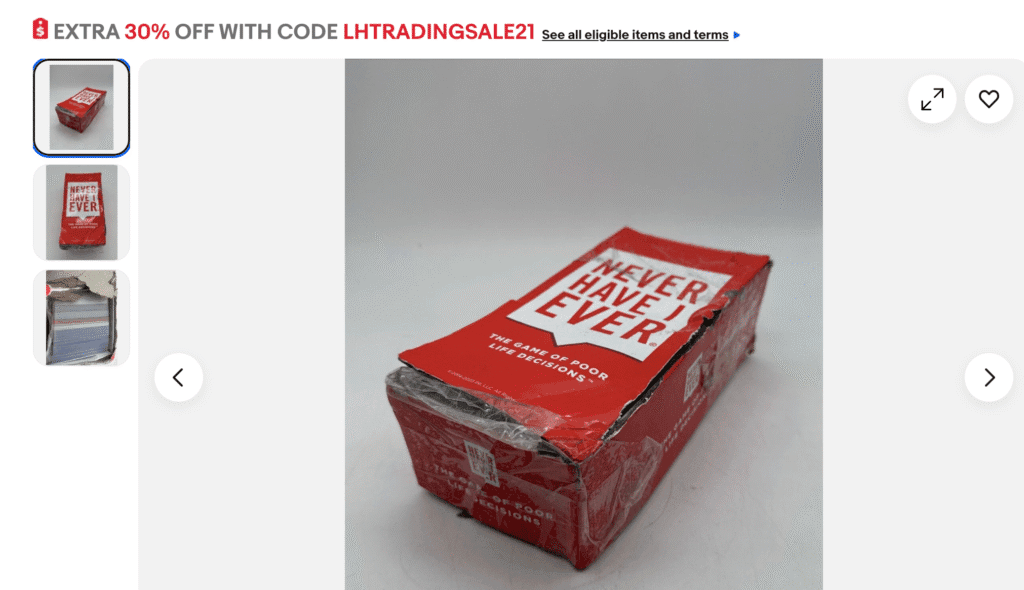
Poor listing quality describes listings that miss eBay’s ranking criteria: keyword-aligned titles, complete item specifics, accurate categorisation, and clear product images. Listings failing two or more of these criteria receive reduced visibility in Cassini search results and lose impressions against compliant competitor listings.
Four listing quality failures account for most ranking losses:
- Low-resolution photos. Blurry images, busy backgrounds, or insufficient lighting reduce click-through rates and trigger lower Cassini quality scoring.
- Weak titles and descriptions. Missing keywords (brand name, model number, size, condition) prevent the listing from matching the queries buyers actually type.
- Wrong category placement. Listings in incorrect categories never appear in the category filters most buyers use to narrow results.
- Incomplete item specifics. Missing details on size, brand, colour, material, or condition exclude the listing from buyer filter selections, reducing impressions.
Economic downturn
Economic downturn affects eBay sales when reduced consumer disposable income shifts buyer spending toward essential categories and away from collectibles, luxury items, and discretionary purchases. Interest rate increases, inflation, and job market contractions each reduce non-essential purchase volume across the platform.
Interest rate increases compound the effect. When central banks raise rates to control inflation, household mortgage and car payment obligations increase, which reduces the discretionary budget available for eBay purchases. Households facing higher debt servicing costs prioritise essentials and delay discretionary categories.
Three eBay category groups experience the steepest declines during economic downturns: luxury goods (designer apparel, premium watches, branded electronics), collectibles (trading cards, memorabilia, vintage items), and high-ticket discretionary purchases above $200. Practical everyday categories (parts, tools, household basics) hold demand better through downturns and produce more stable seller revenue.
High eBay platform competition
eBay hosts 17.6 to 18.3 million active sellers worldwide, listing across approximately 2.5 billion live items. The seller base concentrates heavily in three countries: 31% United States, 29% United Kingdom, and 15% Germany, which intensifies regional competition for the same buyer pool.
High competition produces two pressure points on seller revenue. The first is price erosion: competing sellers reduce prices to clear inventory faster, which forces a choice between matching the lower price (eroding margin) or losing the sale. The second is conversion drop: buyers comparing 5 or 10 near-identical listings split their purchases across multiple sellers, reducing per-seller volume.
Even niche categories produce competition pressure. Vintage watches, rare collectibles, and specialised parts attract experienced resellers who use product research data to enter the niche before it saturates. eBay competitor analysis identifies which competing sellers dominate a niche, what they price, and which gaps remain unserved.
Download this eBook now and learn how to sell on eBay like a pro.How does product research prevent slow eBay sales?
Product research prevents slow eBay sales by validating buyer demand, identifying low-competition niches, and benchmarking competitor pricing before a listing goes live. Three of the causes listed above are direct symptoms of skipping the research stage: market saturation, poor listing quality, and high platform competition.
Slow sales are a product selection problem before they are a marketing problem. A listing with strong photos, fast shipping, and competitive pricing underperforms when the underlying product has a sell-through rate under 30% or sits in a category with 5,000 active competitors. Product research moves the decision upstream: the seller picks demand-validated products instead of rescuing weak ones with promotion.
What product research data prevents slow sales?
Four data points filter out the products that cause slow eBay sales:
- Sell-through rate. The percentage of listings for a product that resulted in a sale within 30 days. A sell-through rate above 50% indicates sufficient buyer demand to support a new listing. ZIK Analytics calculates this metric for any eBay product or category in under 10 seconds.
- Active listing count. The number of competing sellers in a niche. Categories with under 200 active listings for a search term indicate manageable competition; categories with 2,000 or more listings indicate saturation.
- Average sale price. The median price at which a product converts on eBay. Pricing 30 cents below the competitor average attracts buyers without eroding margin.
- Successful competitor inventory. The products that high-volume eBay sellers list and sell consistently. Analysing top performers in a niche reveals which products generate steady sales and which categories are unprofitable to enter.
Sellers who validate these four metrics before listing avoid the inventory decisions that produce slow sales 6 to 12 weeks later. The eBay product research workflow replaces guesswork with data. ZIK Analytics surfaces these same metrics inside the platform.
How do you recover declining eBay sales?
Declining eBay sales recover through a sequence of fifteen tactical adjustments to listings, pricing, customer service, and product mix. Each strategy below addresses a specific failure point identified in the seven causes above.
eBay listing optimisation
eBay listing optimisation describes the process of restructuring titles, descriptions, item specifics, and photos to align with Cassini ranking factors and buyer search behaviour. Listing optimisation is the highest-leverage recovery strategy for sellers whose visibility has dropped without an underlying product or pricing issue.
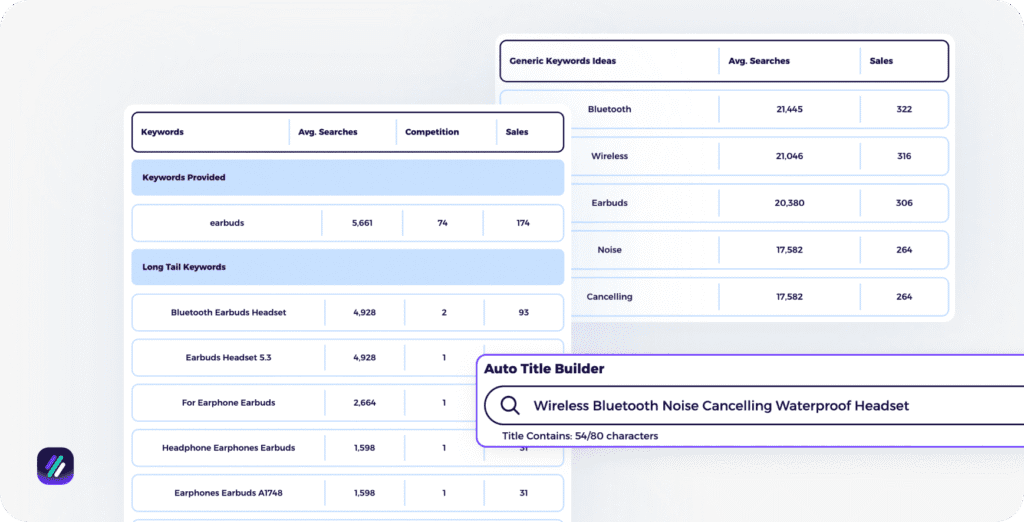
Title optimisation produces the largest visibility gains. ZIK’s eBay title builder tool and eBay Keyword Tool identify the keywords that drive search volume and conversions in a specific category. Title construction follows three rules: front-load the highest-volume keyword in the first 30 characters, use all 80 characters available, and exclude filler words (“wow”, “look”, “rare find”) that consume character budget without contributing to ranking.
Description optimisation reduces buyer drop-off after the click. Descriptions answer the questions buyers ask before purchasing: exact measurements, materials, condition details, included accessories, and shipping terms. Listings that pre-empt these questions reduce buyer hesitation and produce higher conversion rates.
A/B testing isolates which optimisation produces results. Test eBay titles against each other on similar listings, review the listing analytics, and standardise on the variant generating more views and sales.
eBay product photography
eBay product photography describes the visual presentation of a listing, comprising 1 to 24 photos that show the product from multiple angles, in accurate lighting, with a clean background. Listings with high-resolution photos in all 24 slots convert higher than listings with single or low-quality images, regardless of title or pricing.
The cost of poor photography is direct: blurry images, busy backgrounds, and inadequate lighting reduce click-through from search results and increase buyer drop-off on the listing page. Buyers assume that sellers presenting products with low-quality images carry the same low standard on packaging, shipping, and customer service.
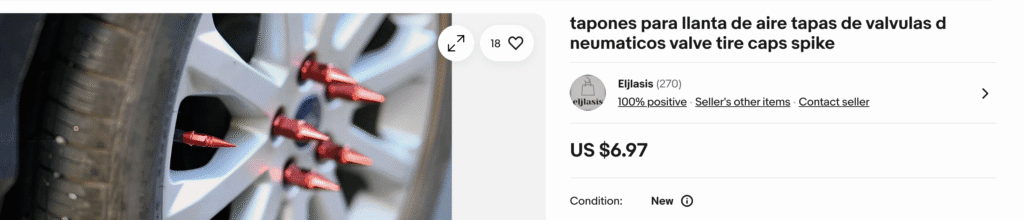
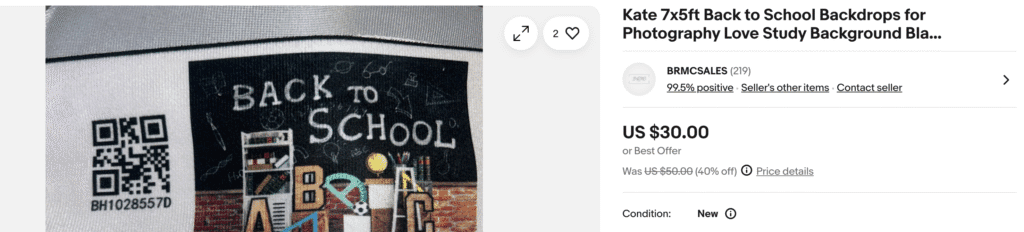
Professional-grade eBay photography requires no specialist equipment. A smartphone manufactured within the last three years produces sufficient image quality. Three settings produce listing-ready images: natural daylight from a window, a plain neutral background, and angles capturing the front, back, sides, top, and bottom of the product.
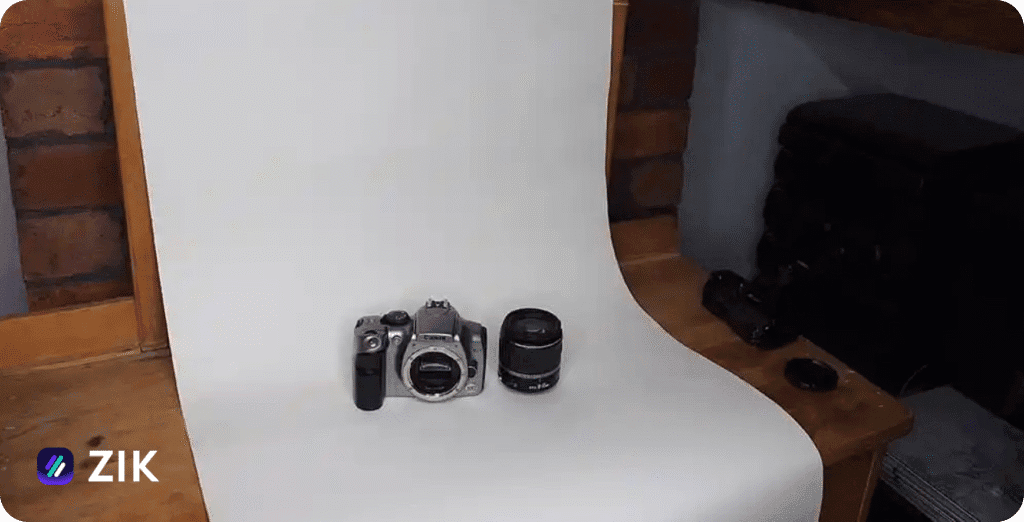
Listings using all 24 photo slots convert higher than listings using 5 or fewer. Additional photos build buyer confidence: close-ups of brand tags, condition details, included accessories, and any visible wear remove pre-purchase uncertainty that otherwise stalls conversion.
Competitive pricing analysis
Competitive pricing analysis describes the process of identifying the median sold price for a product across the active competitor set, then positioning the seller’s price within the demand-capturing range. Pricing decisions based on completed-listing data outperform decisions based on guesswork or active-listing copying, which often reflects unsold inventory.
The pricing baseline comes from eBay’s advanced search filtered to “sold items” only. Reviewing sold listings in the same condition (new, used, refurbished) reveals the actual conversion price, not the asking price. Four data points refine the baseline:
- Condition matching. Compare only to sold listings in identical condition. Used items priced at new-item levels fail to convert.
- Shipping cost inclusion. Total buyer cost (item price plus shipping) matters more than item price alone. Free shipping above $25 produces higher conversion rates in most categories.
- Seller rating tier. Top-Rated Sellers and Above Standard accounts command 3 to 8% pricing premiums against identical listings from lower-rated accounts.
- Sale timing. Seasonal categories show 15 to 40% price variance between peak and off-peak weeks. Pricing based on annual median misses the seasonal premium window.
Once you know the market rate, calculate your total costs before setting your price. Include eBay’s final value fees (around 12-13%), payment processing fees, and shipping supplies.
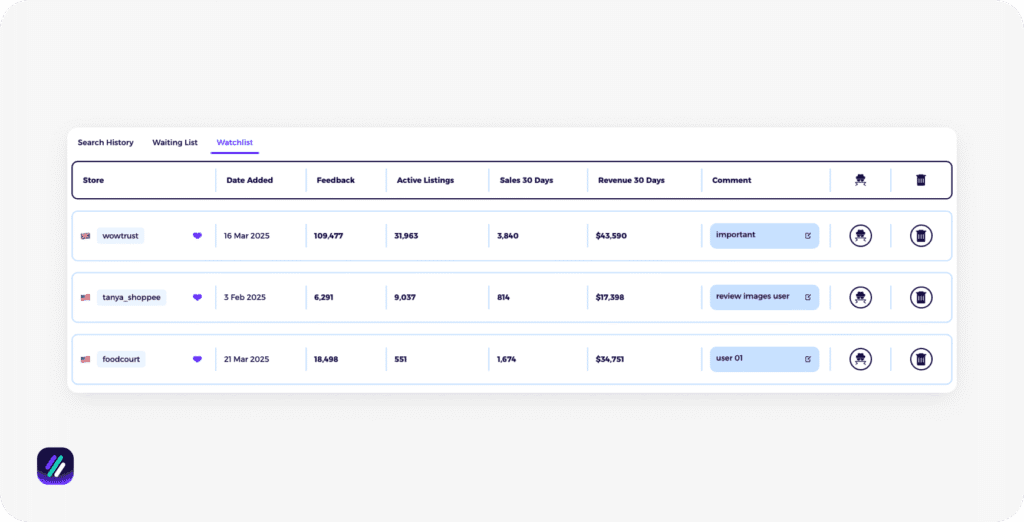
You can also use ZIK Analytics’s eBay Competitor Research Tool to analyze competitor pricing:
- Find a seller in your niche by using the spy icon or entering their seller ID
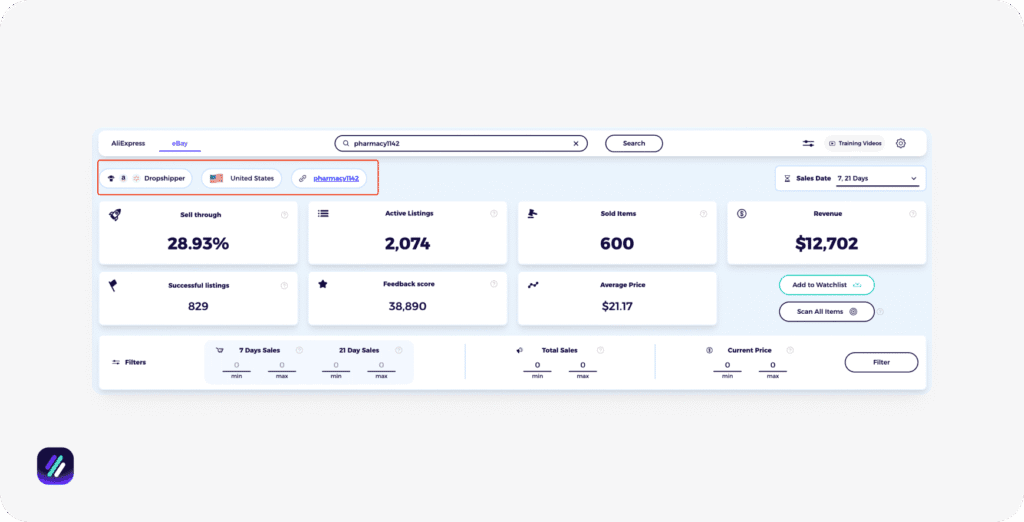
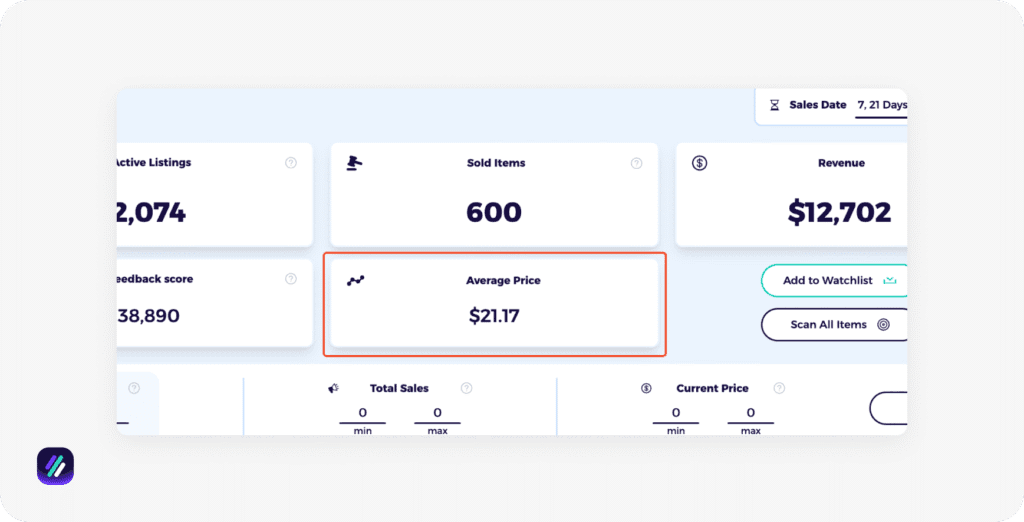
- Look at their “Average Price” metric to see typical selling prices
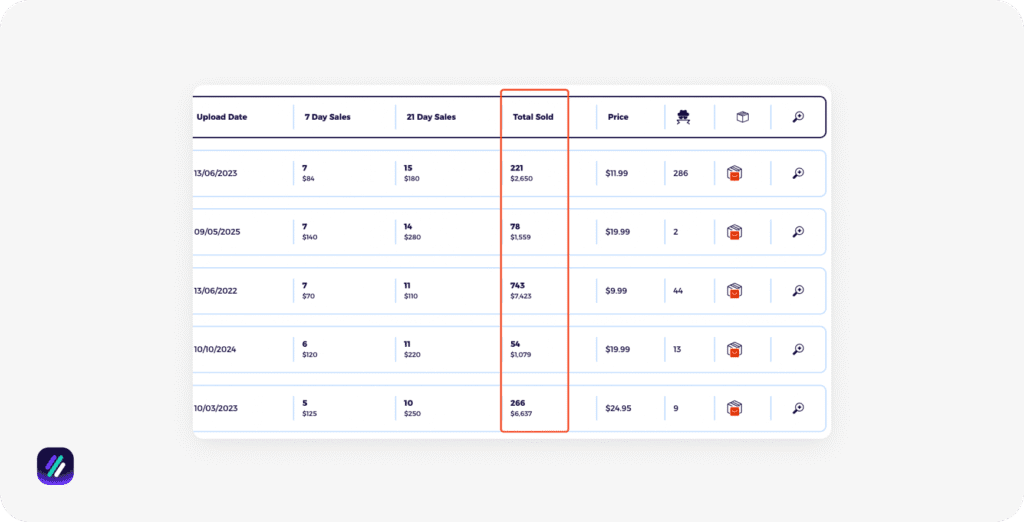
- Filter for products with at least 2 sales in the past 7 days to focus on their best-sellers
- Price your items slightly lower (even 30 cents less) to attract buyers
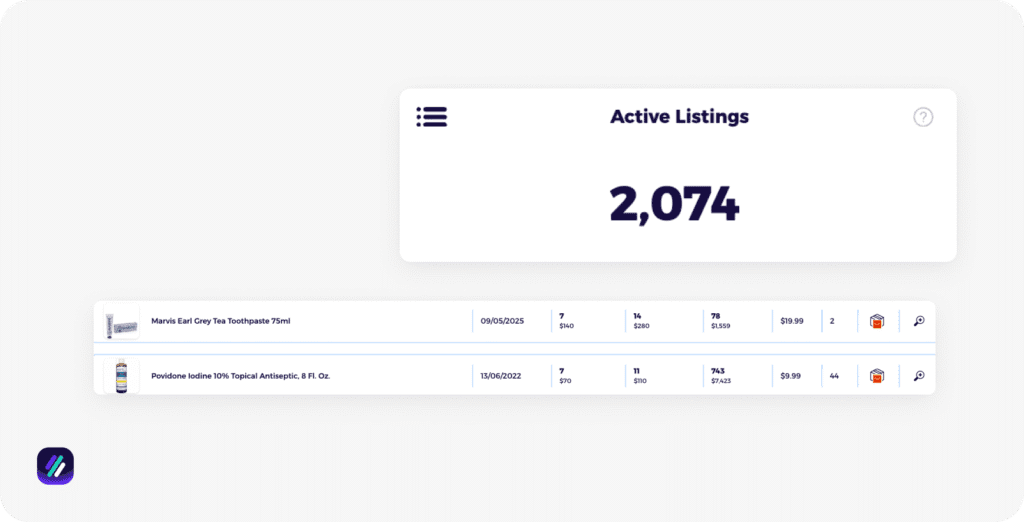
- Save top sellers to your watchlist and rescan every 2 weeks to track pricing changes
eBay customer service improvement
eBay customer service improvement describes the operational changes that reduce buyer complaints, resolve disputes faster, and convert one-time buyers into repeat customers. Improved customer service feeds back into Cassini ranking through reduced defect rates, lower negative feedback, and higher positive review volume.
Two operational standards produce the largest customer service gains. Ship every order within 24 hours of payment receipt, with tracking numbers uploaded to the eBay order page on the same day. Respond to buyer messages within 12 hours, even when the response is an acknowledgement that the question is being investigated.
Three further practices reinforce the customer service baseline:
- Message response time. Reply to buyer questions within 12 hours regardless of complexity. Holding response until the answer is complete loses sales to faster competing sellers.
- Clear return terms. Use eBay business policies to publish return windows, item condition requirements, and refund timelines on every listing. Pre-disclosed terms reduce disputes.
- Professional dispute handling. Accept returns within the published window without contesting, process refunds within 48 hours, and avoid arguing with buyers in messages or feedback responses.
Review requests reinforce the feedback flywheel. Request a review after every resolved interaction, including refunds. Positive reviews on refund cases demonstrate dispute-handling quality to future buyers reviewing the seller’s feedback history.
eBay Promoted Listings
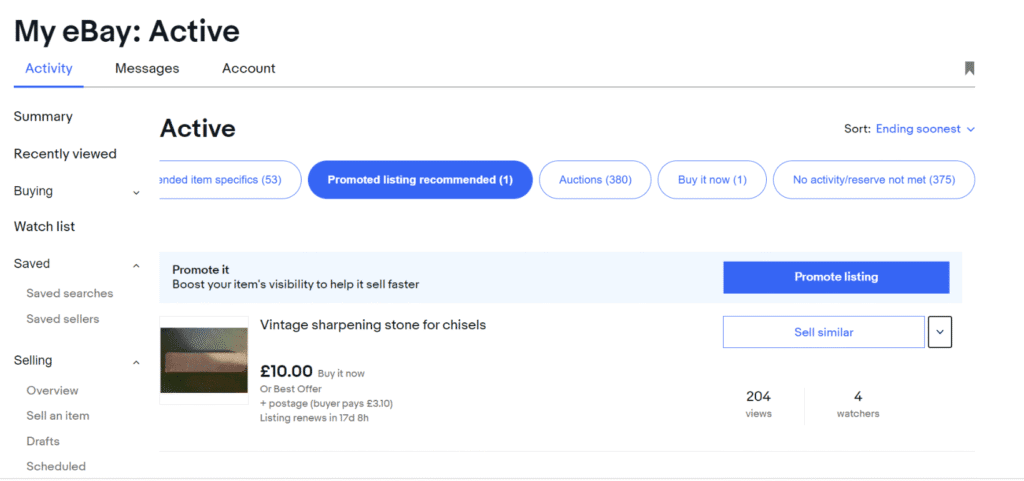
eBay Promoted Listings describe paid placements that push selected listings to the top of search results and into “Sponsored” slots throughout eBay’s discovery surfaces. The seller pays an ad rate (percentage of the final sale price) only when a promoted click converts into a sale.
Promoted Listings configuration follows four steps in Seller Hub. Open Marketing, select Promoted Listings, choose “promote individual listings”, and skip the off-site option (which charges per click regardless of sale outcome).
The ad rate setting determines campaign profitability. eBay defaults to a “dynamic ad rate” of 15 to 18%, which erodes margin in most categories. Switching to a “fixed ad rate” at 2.5 to 3% preserves margin while still capturing the visibility lift. The fixed rate charges only on attributed conversions, not on every impression or click.
Promote selectively. Listings already optimised for photos, title, and price respond to promotion. Listings with underlying optimisation issues consume budget without converting. Review the Promoted Listings dashboard weekly; pause any listing producing clicks without sales and redirect budget to higher-converting listings.
Product range diversification
Product range diversification describes expanding a seller’s catalogue across multiple product types and categories to reduce dependency on any single product line. Diversified stores absorb category-level demand drops or competition spikes without losing total revenue, because alternative product lines continue producing sales.
The diversification path runs through adjacent categories first. Sellers expanding from sneakers test athletic apparel, sports equipment, and athletic footwear accessories before moving into unrelated categories. Reviewing sold listings on eBay in adjacent categories identifies which products show demand without requiring new supplier relationships.
The testing cycle uses small inventory commitments. Add 5 to 10 SKUs in the new category, track which produce sales over 4 to 6 weeks, and expand the winning SKUs while dropping the underperformers. This approach contains capital risk while validating the new category against real buyer demand.
Product variations within existing listings provide a second diversification lever. Adding variations on eBay creates size, colour, and style options on a single listing, which extends the listing’s appeal to broader buyer segments without requiring new SKUs.
Mobile listing optimisation
eBay selling tips consistently rank mobile optimisation as a top priority. 61% of eBay sales happen on mobile devices, so listings must render correctly on small screens to capture that majority of buyer traffic.
Three formatting decisions determine mobile readability. Use black text on a white background with a minimum 12-point font size. Break the description into paragraphs of 2 to 3 sentences maximum. Avoid embedded HTML tables and decorative graphics, both of which break on mobile rendering.
Item specifics carry disproportionate weight on mobile. eBay’s mobile interface formats item specifics (size, colour, brand, material, condition) into a structured product card that buyers scan before opening the full listing. Fully populated item specifics increase mobile click-through rates and reduce buyer drop-off.
Image weight affects mobile load speed. Upload images under 2MB each. Listings that load slowly on 4G or LTE connections lose buyers before the product detail renders. eBay applies automatic image compression, but oversized source files still produce delayed initial loads on slower connections.
eBay Store subscription features
eBay Store subscription features are seller tools bundled into eBay’s monthly store subscription tiers (Starter, Basic, Premium, Anchor, Enterprise). Subscribers who use the full feature set extract higher per-listing value than non-subscribers paying for listings individually, but a large share of subscribers leave the included features unused.
Five features produce the largest revenue impact:
- Store categories. Custom categories organise the store inventory into browsable groups (electronics, clothing, accessories), which extends average session length and increases the chance of multi-item purchases.
- Promotional tools. Markdown sales, volume discounts, and order-level discounts apply directly from Seller Hub and accelerate inventory turnover during slow periods.
- Custom store design. A branded storefront with header, logo, and consistent colour scheme increases buyer recall and produces direct repeat traffic.
- Email marketing. eBay’s built-in email tools send promotional messages to previous buyers and store followers without a separate email service provider.
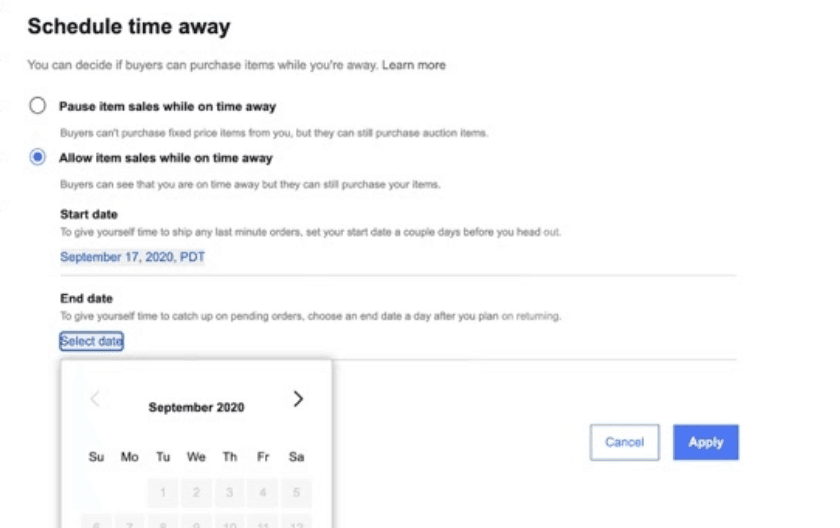
- Time Away mode. Pausing the store during holidays or operational gaps prevents late-shipment penalties that otherwise damage seller metrics.
eBay cross-selling techniques
eBay cross-selling techniques describe the placement of related product offers inside or alongside an active listing to increase average order value. A buyer viewing a listing has already passed the awareness and interest stages, which makes the listing page the highest-conversion location for adjacent product offers.
Three cross-selling mechanisms apply to most eBay stores. Pair complementary products on the listing page (a phone case listing surfaces screen protector and charger options). Use Seller Hub promotional tools to create bundle discounts and multi-item offers. Configure combined shipping discounts that activate when buyers add a second item to the cart.
eBay’s “related items from this seller” module displays automatically at the bottom of every listing in a store. Cross-category sellers benefit from this module less than focused-category sellers, because the algorithm surfaces tightly-related items based on the parent listing’s category.
eBay performance monitoring
eBay performance monitoring describes the regular review of seller metrics, listing traffic, conversion data, and account health indicators through Seller Hub. Sellers monitoring metrics weekly identify problems 2 to 3 weeks earlier than sellers monitoring quarterly, which materially reduces the duration of any sales decline.
Three Seller Hub reports produce the most actionable signals. The traffic report shows which listings receive impressions and clicks. The conversion report shows which listings turn views into sales. The detailed eBay Seller Hub guide walks through every metric and the action triggered by each threshold.
Traffic source attribution identifies which marketing channels produce paid conversions. Seller Hub breaks impression sources into eBay search, external search engines (Google, Bing), and Promoted Listings. Tracking the source split prevents over-investment in low-return channels.
Account health monitoring catches Cassini-affecting issues before they suppress visibility. Late shipment rate, defect rate, and cases closed without resolution all feed back into search ranking. Sellers checking these metrics weekly resolve issues before they trigger ranking penalties.
Download this eBook now and learn how to sell on eBay like a pro.Seasonal inventory planning
Seasonal inventory planning describes aligning purchase, listing, and clearance decisions to predictable demand cycles across the year. Reviewing historical eBay analytics for the seller’s own store identifies which products produced sales in which months, which determines inventory commitments for the coming cycle.
Five seasonal selling periods structure most eBay calendars:
- January to February. Fitness equipment, home organisation products, tax software.
- March to May. Gardening supplies, outdoor furniture, spring cleaning items.
- June to August. Beach gear, camping equipment, back-to-school supplies.
- September to October. Halloween costumes, autumn home decor, cold-weather clothing.
- November to December. Holiday gifts, electronics, toys, winter accessories.
Seasonal clearance prevents capital lock-up. Apply markdown sales to remaining seasonal inventory 4 to 6 weeks before the season ends. Holding unsold seasonal stock for the following year incurs storage costs and ties up capital that would produce returns in the next active category.
Customer loyalty building
Customer loyalty building describes the operational practices that convert one-time eBay buyers into repeat purchasers. 86% of customers stop buying from a brand after loyalty is broken, which means loyalty maintenance carries more revenue weight than new-buyer acquisition for established stores.
Repeat eBay buyers produce higher lifetime value than one-time buyers. Repeat purchasers bypass competitor price comparison on subsequent visits, which removes the price-pressure conversion barrier that affects first-time buyers. Loyal customers also generate disproportionate positive feedback volume, which strengthens Cassini ranking signals.
Three operational practices reinforce buyer loyalty: ship every order within 24 hours of payment, respond to messages within 12 hours, and package items with care that exceeds the buyer’s expectation for the price paid. Buyers receiving fast, well-packaged orders remember the seller’s store on subsequent purchases in the same category.
eBay’s built-in tools support the loyalty workflow. Email past buyers through the eBay marketing tools with new product announcements and seasonal promotions. Apply combined shipping discounts to incentivise multi-item purchases. A branded storefront with custom categories and consistent visual design produces buyer recall on the second and third visits.
International eBay expansion
eBay operates across 190 markets globally, with international revenue accounting for 46% of total Q4 2025 revenue. Enabling international visibility on a seller’s best-performing products opens access to demand pools that don’t exist in the seller’s primary market.
The eBay Global Shipping Program handles the operational complexity of international fulfilment. The seller ships items domestically to eBay’s shipping hub; eBay manages customs forms, import duties, and final international delivery. This removes the international shipping barrier that otherwise prevents sellers from accessing non-domestic buyers.
Three product categories produce reliable cross-border demand: brand-name electronics with regional pricing gaps, US-specific collectibles (sports memorabilia, vintage Americana, US-only product variants), and seasonal items where Northern and Southern Hemisphere cycles invert. eBay’s site visibility settings show listings on multiple country sites without requiring duplicate listings.
The expansion testing approach mirrors product diversification. Enable Global Shipping on the seller’s 5 to 10 best-performing listings, track which countries generate orders over 4 to 8 weeks, and prioritise inventory toward the markets producing consistent demand.
Social media promotion
Social media promotion describes driving external traffic from off-eBay platforms to a seller’s eBay store or specific listings. External traffic supplements eBay’s internal search traffic and reaches audiences who would not have searched eBay directly for the product.
Five platforms produce measurable referral traffic to eBay stores:
- TikTok. Short product demonstration videos and unboxing content with eBay keywords in captions and store links in the bio.
- Instagram. Product photography, behind-the-scenes content, and Stories with shopping tags directing to listings.
- Facebook Marketplace and Groups. Listings shared in niche buy/sell groups and collector communities where target buyers congregate.
- Pinterest. Product category boards positioned for buyers actively searching for items to purchase, with direct purchase-intent traffic.
- YouTube. Product reviews, hauls, and how-to videos with eBay store links in video descriptions.

What mistakes do sellers make when diagnosing slow eBay sales?
Six diagnostic mistakes account for most misidentified slow-sales causes. Each one leads sellers to apply the wrong fix, which extends the slow-sales period instead of resolving it.
- Ignoring seller performance metrics. Defect rate, late shipment rate, and unresolved case rate directly affect Cassini ranking. Sellers who miss these metrics treat the resulting visibility drop as a Cassini algorithm change, not an account health issue.
- Underestimating title and image quality. Poorly optimised titles and low-resolution images produce lower click-through rates at the search-results stage, which reduces total listing impressions and conversions.
- Overpricing combined with shipping issues. Items priced above the sold-listing median, combined with slow or inaccurate shipping estimates, push buyers to lower-priced competing listings.
- Skipping mobile-rendering checks. 61% of eBay sales happen on mobile devices. Listings that render poorly on smartphones lose the majority of potential conversions before the buyer reaches the description.
- Leaving item specifics blank. Empty item specifics exclude the listing from buyer filters (size, brand, condition, colour), which reduces visibility in narrowed searches.
- Skipping competitor listing analysis. Sellers who don’t review what competing listings show, price, and emphasise base decisions on guesswork rather than the data available from sold listings and competitor stores.
Unaddressed diagnostic mistakes compound. A seller missing two or three of the six produces sustained low performance metrics that eventually trigger an eBay account suspension review.
How does ZIK Analytics help recover and prevent slow eBay sales?
ZIK Analytics surfaces the four product research data points that prevent slow eBay sales: sell-through rate, active listing count, average sale price, and successful competitor inventory. Sellers using ZIK move product selection decisions from guesswork to data-validated commitments.
The software for eBay product research from ZIK identifies products with proven demand, surfaces real sales data and competition levels, and returns profitable price points. Sellers experiencing active sales declines use the tool to identify which existing inventory categories to expand or rotate out of.
The eBay dropshipping software applies the same data to dropshipping-specific workflows. The tool reveals which products top dropshippers list, how they structure their stores, and which niches they dominate. Sellers replicate winning strategies and identify unserved gaps in the competitive landscape.
The recovery path runs from data review to inventory adjustment to listing optimisation. Start with the product research tool to validate current and prospective inventory, then apply the listing, pricing, and competitor analysis tools to recover visibility on the highest-potential SKUs.
Frequently asked questions about slow eBay sales
Are eBay sales slow right now?
eBay sales velocity varies by category, country, and seller. eBay reported 1% active buyer growth and 17% revenue growth in Q1 2026, indicating overall marketplace health, while individual sellers in saturated categories or US-based dropshipping niches reported sustained visibility declines in 2024 and 2025. Sellers experiencing slow sales should diagnose the cause against the seven factors above before applying recovery strategies.
Is the eBay Cassini algorithm broken?
eBay’s Cassini algorithm functions as designed. Recent updates to mobile-first ranking and AI-driven query expansion have reduced listing visibility for many US-based sellers and dropshipping stores in the US, which generates the perception of a broken algorithm. Sellers regaining visibility focus on keyword-aligned titles, complete item specifics, and the listing quality factors Cassini weights most heavily.
How long does a sales slump last on eBay?
Sales slumps on eBay last between a few days and several months depending on the underlying cause. Seasonal slumps resolve at the end of the off-peak period (typically 6 to 12 weeks). Algorithm-driven visibility losses persist until the seller adjusts listings to match new Cassini weightings. Account-health-driven slumps continue until the seller’s defect and shipping metrics return to “Above Standard” status.
Do eBay Promoted Listings increase sales?
eBay Promoted Listings increase listing visibility in search results, which produces more sales on listings already optimised for photos, title, and price. Promoted Listings produce minimal lift on listings with underlying optimisation issues, because the additional impressions still convert at the same low rate. Optimise first, then promote the listings that already convert well organically.
What is a good eBay sell-through rate?
A good eBay sell-through rate (STR) is 50% or higher, with high-performing sellers targeting 70 to 80% in fast-moving categories. The benchmark varies by category: electronics and fashion produce higher STRs than furniture or industrial parts. A sell-through rate above 50% indicates strong demand, competitively positioned pricing, and inventory turnover aligned to category dynamics.
Why is eBay restricting my sales?
eBay restricts seller accounts for five reasons:
- Unpaid fees or unresolved refunds on the account.
- Policy violations such as listing in incorrect categories or shipping without tracking numbers.
- Suspicious activity that triggers eBay’s account security flags.
- New account selling limits (typically 10 items or $500 per month) until performance history justifies an increase.
- Outdated verification details that prevent eBay from confirming account identity.
The restriction message sent to the seller’s eBay inbox specifies which reason applies and the steps required to lift the restriction.
Does eBay limit how much you can sell?
eBay applies selling limits to both new and experienced sellers. New accounts start at 10 items or $500 in sales per month. Account performance is reviewed monthly, with limits automatically increased when seller metrics (defect rate, late shipment rate, positive feedback) meet eBay’s published standards. Sellers can also request a limit increase manually after building a positive sales record.