
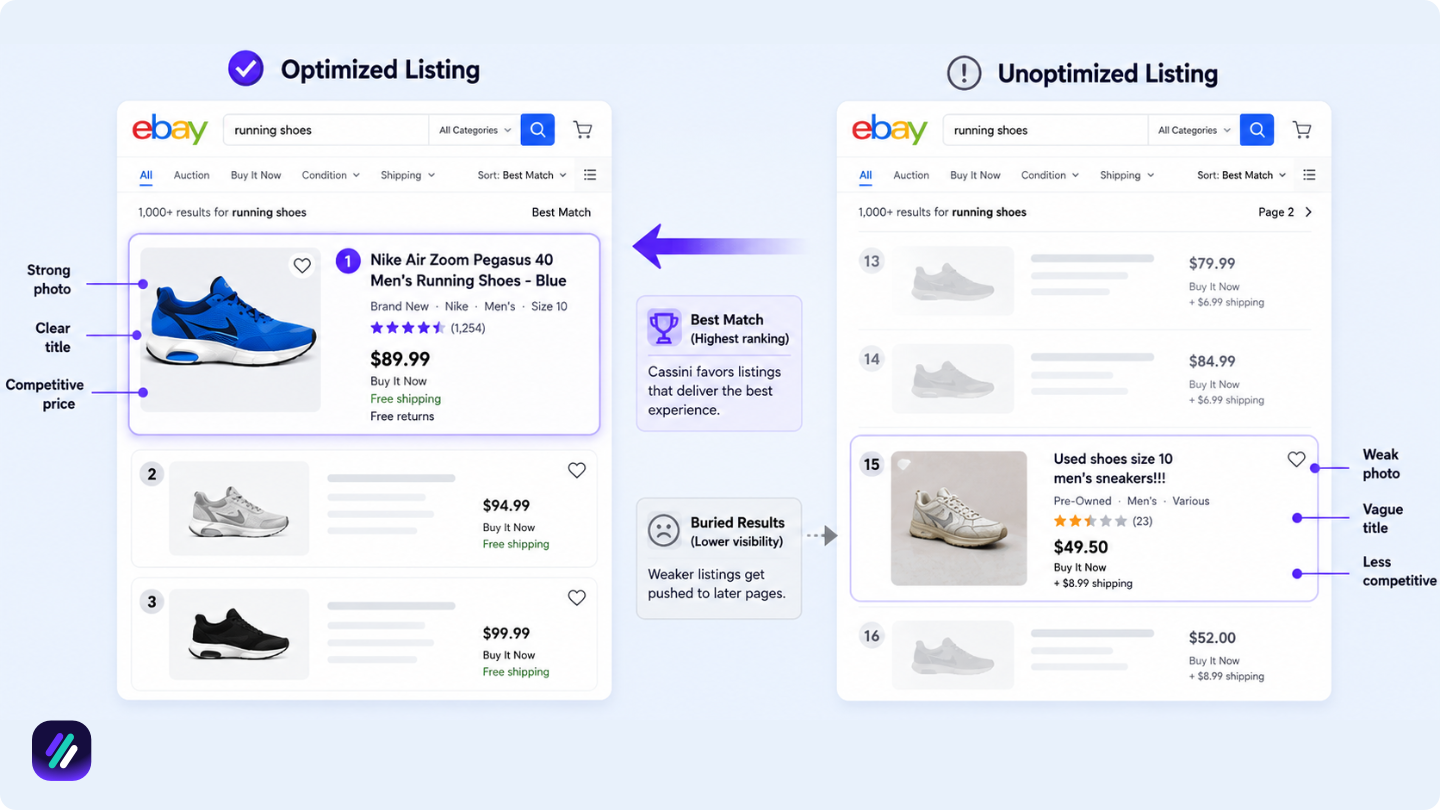
The eBay Cassini algorithm controls what buyers see first and who gets the sales, and most sellers know it exists, but very few understand what actually moves the needle.
You can have a great product at a competitive price and still sit on page three while a worse listing from a competitor ranks at the top, essentially winning the customer.
And this matters because buyers rarely scroll past the first page, so if Cassini does not surface your listing early, most of the traffic never finds you.
In this article, I am going to walk you through how the eBay Cassini search engine works, what it rewards, and what kills your visibility without you realizing it.
Key Takeaways
- Cassini has been eBay’s core search engine since 2013, built around one goal: predicting which listing a buyer is most likely to actually purchase, not which was listed most recently or at the lowest price.
- The three main ranking pillars are relevance to the buyer’s search query, seller performance (defect rate, late shipments, cases closed without resolution), and listing quality (item specifics, photos, title keywords).
- Sell-through rate is one of the most powerful Cassini signals: a listing that converts consistently earns better placement, which drives more impressions, which drives more sales. The reverse is equally true.
- Cassini compares your total cost (price plus shipping) against competitors, not your item price alone. Free shipping listings get an additional small ranking boost on top of that.
- With the eBay Title Builder, you can build Cassini-optimized titles from actual buyer search data and competition scores, removing the guesswork from keyword selection entirely.
- Keyword stuffing your title and leaving item specifics incomplete are two of the fastest ways to suppress your visibility without ever knowing why.

What is eBay Cassini Search Engine?
eBay Cassini is eBay’s internal search engine, launched in 2013 to replace the older Voyager system. It powers the Best Match default sort and ranks listings by predicting which result is most likely to lead to a completed, satisfying transaction.
Before Cassini, eBay ranked results primarily by recency and price. Newer listings rose, older ones fell, and the incentive was to relist constantly rather than maintain quality. Sellers gamed the system by ending and relisting every few days just to stay visible.
Cassini changed that entirely.
The algorithm, built by Hugh Williams, then VP of eBay’s Experience, Search and Platforms, asks a different question: which listing will this buyer actually purchase?
The answer was clear for him: a listing with strong sales history, complete item specifics, and a clean seller track record can outrank a newly listed item that costs less.
According to ZIK Analytics eBay statistics, eBay now has 135 million active buyers competing for attention across 2.3 billion live listings.
With that level of supply, Cassini’s job is to filter an enormous catalog down to the handful of results a buyer sees on page one, and your job, as a seller, is to be one of them.
So, for anyone serious about eBay SEO, understanding what Cassini actually scores is the starting point.
But there is a question sellers ask constantly, so let us address it directly.
Does eBay Promoted Listing affect eBay Cassini?
eBay promoted listings and organic Cassini rankings run on separate tracks.
Paid placement pushes your listing above the organic feed for targeted search queries, but that paid position does not change where you rank organically.
That said, there is an indirect effect worth understanding.
When a promoted listing earns more impressions and clicks, those engagement signals (watches, add-to-cart, purchases) feed into Cassini’s organic model.
A new listing with no sales history can use a short promotion window to generate its first engagement data, which gives Cassini something to score.
Now, think of it as a flywheel: promotion gets you the impressions, impressions generate engagement, engagement builds your organic rank, and that organic rank sustains visibility after you stop promoting. Pulling your ad does not hurt your organic position. What you built stays.
From our in-house eBay sellers at ZIK, the most effective use of promoted listings is for new products in the first two to four weeks, or in high-competition categories where organic rank has stagnated.
In 2026, eBay raised its promoted ad rates, which makes organic ranking more valuable than it has been in years. That is exactly why building it properly matters.
How Does the eBay Search Engine Work?
From my research, I can see that most guides explain Cassini as a ranking algorithm, and while that framing is technically accurate but misses the point.
Cassini is better understood as a buyer-intent prediction engine. Every time a shopper enters a search query, Cassini is not asking “which listing has the most keywords?” It is asking “which listing will this buyer actually purchase?”
And this distinction is super important because it explains why two sellers with near-identical listings can end up on entirely different pages of search results.
With this ranking system, the product is not always the differentiator, but it’s the scored history behind each listing that is.
To simplify this for you, we can say that the way Cassini processes a search breaks into three stages:
- Retrieval: Cassini pulls every listing that matches the search terms based on title keywords, item specifics, and category assignment.
- Scoring: Each listing receives a relevance score (how well it matches the query) multiplied by a quality score (how likely this seller is to complete a good transaction). These two scores combine.
- Ranking: Results are sorted by the combined score. Best Match displays the highest-scoring listings first.
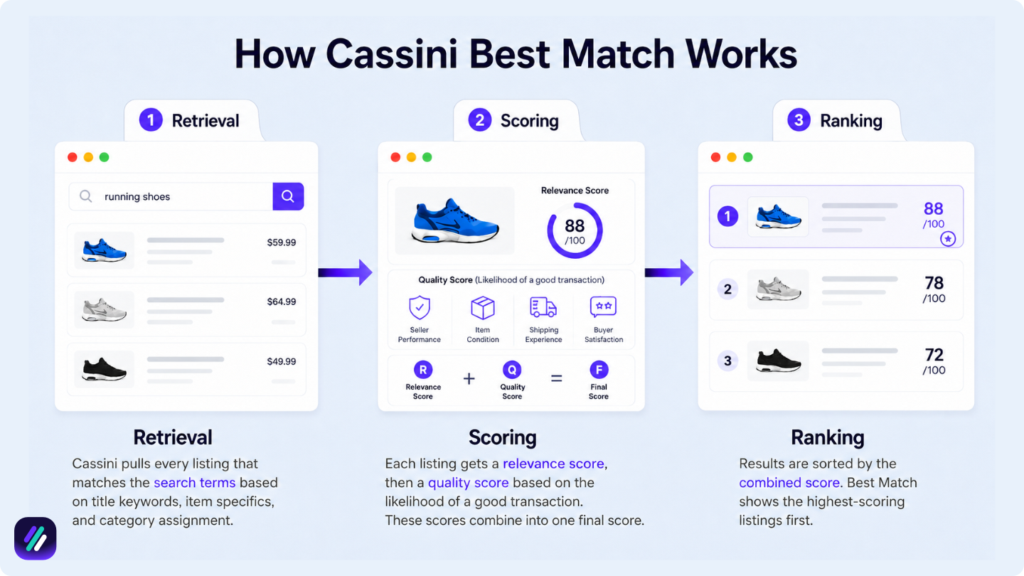
What’s very important for you to know is that best match is not a static result as it always refreshes continuously based on real-time engagement data.
That’s why a listing that picks up a burst of purchases and watches can move significantly in rankings within 24 to 48 hours, while a neglected listing loses ground at the same speed.
So, the right eBay keywords solve the retrieval problem while converting browsers into buyers solves the scoring problem. Both are required to rank consistently among the best selling things on eBay.
Lastly, as you can see, the work never finishes, and you need to consistently refine and update your listings once you get your product in top-ranking positions on eBay.
eBay Cassini Ranking Factors (What Actually Moves Listings Up or Down)
The eBay Cassini ranking factors are split into three categories:
- Listing-level SEO signals
- Listing performance signals
- Store-level trust signals
From our observations, we can see that most sellers invest all their time in the first category and ignore the other two.
And this imbalance costs sellers’ rankings every day, often without a visible symptom until sales start declining and panic sets in.
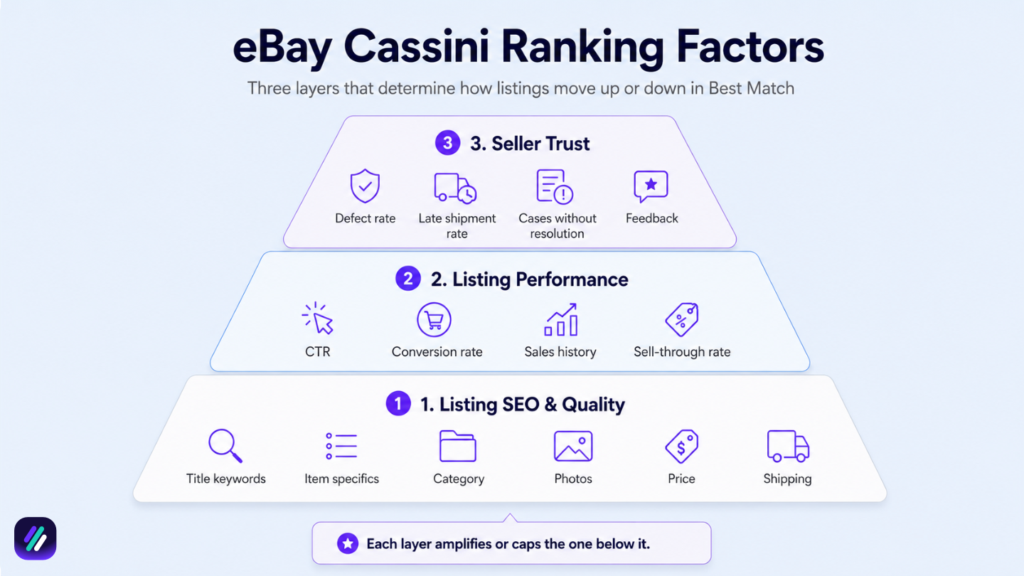
Search Engine Optimization
Cassini reads your listing’s SEO signals before a buyer ever sees it.
These signals determine whether your listing appears in a given search at all, so getting them wrong means your listing is absent from the search results and most importantly, losing the sale.
Listing Quality Signals
Your title is Cassini’s highest-weighted SEO input, and the first five to seven words carry the most weight in keyword matching. Your primary keyword needs to appear near the front of your 80-character title and should not be buried after secondary terms.
Item specifics are where most sellers quietly lose visibility without even realizing it.
When a buyer filters by brand, condition, size, or color, Cassini only serves listings that have those attributes filled in; that’s why missing a field removes you from that filter’s result set entirely, not just lowers your rank.
Pricing
Cassini compares your total cost against competitors, not your item price in isolation. Total cost means your list price plus your shipping charge, which is how a listing at $18 with free shipping competes differently from one at $15 with $5 shipping.
Free shipping also earns a small dedicated ranking boost beyond the pricing calculation, but the cheapest listing does not automatically win: a well-performing listing at a moderately higher price often outranks a lower-priced one with no sales record.
Remember, eBay is on your side. They want to make a sale just as much as you, and higher pricing also means more money for them too, so it’s not always a bad thing to have slightly higher pricing if your engagement signals support it.
Shipping and Return Policies
Fast handling times through quick dropshipping suppliers and eBay Guaranteed Delivery eligibility push your listing higher in searches filtered by delivery speed and increase conversion from buyers comparing on delivery promise alone.
A generous eBay return policy improves conversion over time, feeding Cassini’s scoring indirectly.
For sellers managing dropshipping returns through a third-party supplier, make sure your stated return window is one your supplier can actually honor: an unreachable return policy is worse for your account than a strict one.
From our in-house eBay sellers at ZIK Analytics, completing every optional item-specific (not just the required fields) alongside fast, reliable shipping is the combination that moves the needle most reliably in eBay listing optimization.
If you’re selling internationally, pairing reliable handling times with the eBay Global Shipping Program can simplify overseas deliveries while giving buyers more confidence in estimated delivery dates.
Listing Performance
Once your listing is live, Cassini watches what buyers actually do with it.
These performance signals are the hardest to control directly, but they carry more ranking weight than most sellers expect.
Click-through rate
Click-through rate (CTR) tells Cassini how often buyers click your listing when it appears in search results. A low CTR signals that buyers see your listing and choose a competitor’s instead, which Cassini reads as evidence that your title, thumbnail, or price is not compelling for that query.
Your primary photo has more impact on CTR than most sellers realize. On mobile (the majority of eBay traffic), a clean, well-lit photo against a white background consistently outperforms cluttered or dark thumbnails, and that difference shows up directly in your ranking over time.
CTR is one of the best relevance signals any algorithm can use, and it’s one of those metrics you should obsess over.
Conversion Rate
Conversion rate is the percentage of buyers who click your listing and complete a purchase.
Cassini treats this as one of its strongest signals because it directly measures how well your listing matches buyer intent and whether they trust you and the listings.
Poor conversion usually traces to misleading titles, missing item specifics, weak photos, or a return policy that creates friction.
And these factors also reduce your CTR, so fixing them improves both signals at once.
Sales History
Sales history tells Cassini how consistently your listing converts over time. A listing with a long, steady record earns better placement, which generates more impressions, which produces more sales.
The reverse is equally true. A listing whose velocity drops loses placement gradually, and this compounding slide explains many situations where sellers blame an external cause when the actual driver is a declining performance signal that the eBay ranking algorithm has already acted on.
Download this eBook now and learn how to sell on eBay like a pro.Store Performance and Seller Trust Signals
Here is another thing most sellers overlook: even a perfectly optimized listing is capped by your store-level performance.
Now, think of it as a multiplier: strong listing signals on a healthy account rank well; those same signals on a damaged account do not.
So to become a top-rated seller, your metrics should look like this:
| Seller Level | Defect Rate | Late Shipment Rate | Cases Closed Without Resolution |
|---|---|---|---|
| Top Rated | 0.50% or below | 3% or below | 0.30% or below |
| Above Standard | 2% or below | 7% or below | 0.30% or below |
| Below Standard | Above 2% | Above 7% | Above 0.30% |
Sell-through rate
Sell-through rate (STR) measures the percentage of your inventory that actually sells within a period, and an STR of 80% or higher is widely considered the target for strong organic Cassini placement.
The compounding effect is the part most sellers miss: a declining STR triggers ranking drops, ranking drops reduce impressions, and fewer impressions drop your STR further, and catching an STR problem early is significantly easier than recovering from an established decline.
Customer Service
Your customer service record signals to Cassini how reliable you are as a seller: resolving disputes before they escalate to eBay cases and maintaining a strong feedback score both contribute directly to your account health and well you’re trusted as a seller.
So to increase eBay seller rating meaningfully, the most effective approach is proactive communication, not a reactive apology. The cases-closed-without-seller-resolution threshold is 0.30%, so even a small volume of disputes left unresolved can push you over the line.
Defect and Late Shipment Rate
Your defect rate and late shipment rate determine your eBay seller level, and your seller level directly affects how Cassini ranks your listings across your entire catalog.
So if you fall below the Above Standard, your account suppression applies to every listing, not just the ones with issues.
Also, late shipments are the most common cause of performance problems for sellers running supplier-dependent fulfillment.
The reliable fix is building a realistic handling time buffer into every listing, not promising same-day dispatch when your supplier needs 48 hours.
How to Optimize Listings for eBay Cassini (Step-by-Step)
Now that we have covered what Cassini measures, let us work through the specific optimization steps you can act on. The order here matters: each step builds on the previous one.
Keyword Research for Cassini
Keyword research for eBay is different from keyword research for Google.
You are not just looking for search volume data or link competition scores but you are looking for the exact terms buyers use when they are ready to purchase, not when they are browsing or comparing.
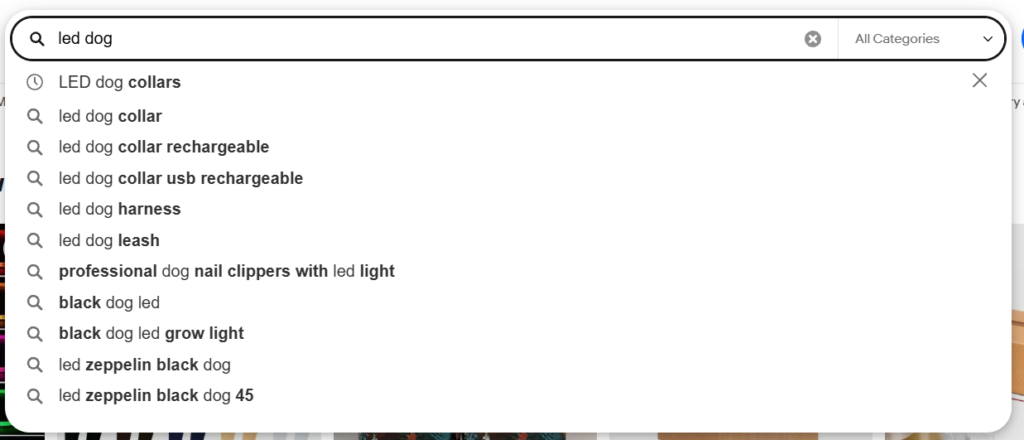
So to find the right eBay keywords, you can start with the most direct method, which is eBay’s own search autocomplete.
To do that, you can start by typing your core product term into the search bar and noting every suggestion that appears. These are drawn from real buyer searches, which makes them more accurate for eBay optimization than any third-party keyword tool.
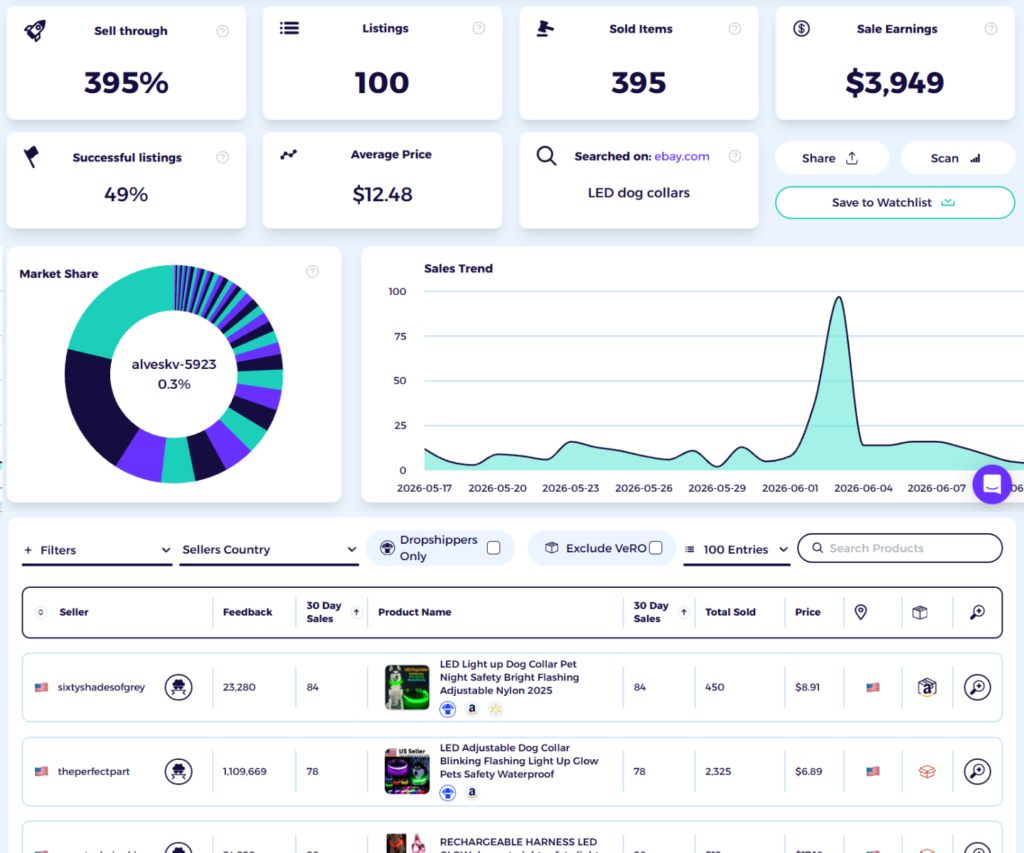
For deeper analysis, the ZIK eBay product research tool for sellers lets you search for any keyword and see actual sales volume, sell-through rate, competition level, and average selling price.
You can see not just whether buyers search for a term, but whether they actually buy when they search for it, which is the entire point of eBay keyword research.
Additionally, you can also use the Title Analytics inside this tool, which gives you the top 10 selling titles for the keyword, and the best performing long-tail and generic keywords with competition level, sales, and score on how promising the keyword is in terms of competition and sales.
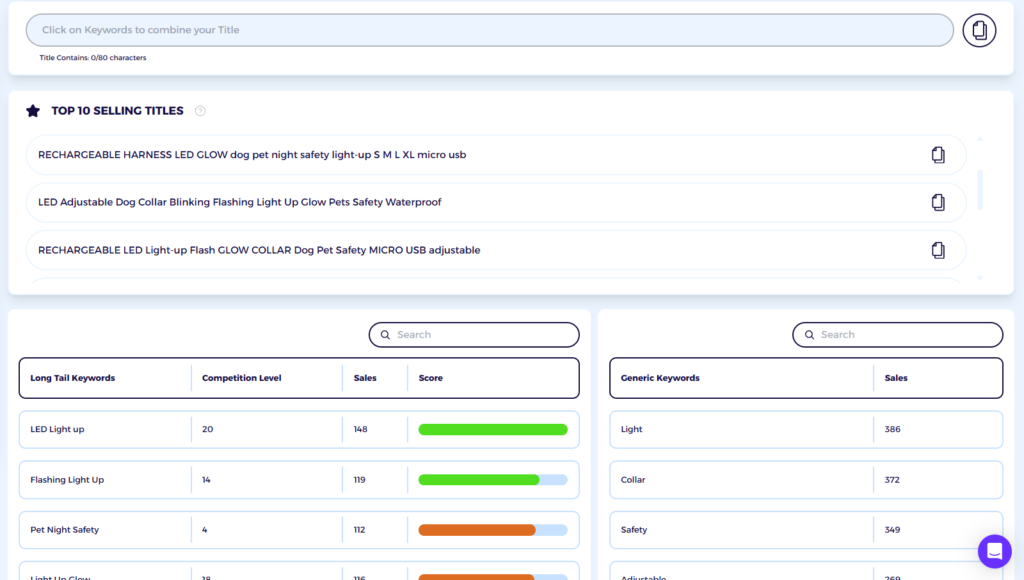
And you can also use this feature to build your own SEO optimized title, but more on this later, and we will use those keyword insights in the next step to build your title.
Utilize Keyword Placement in the Item Title and Description
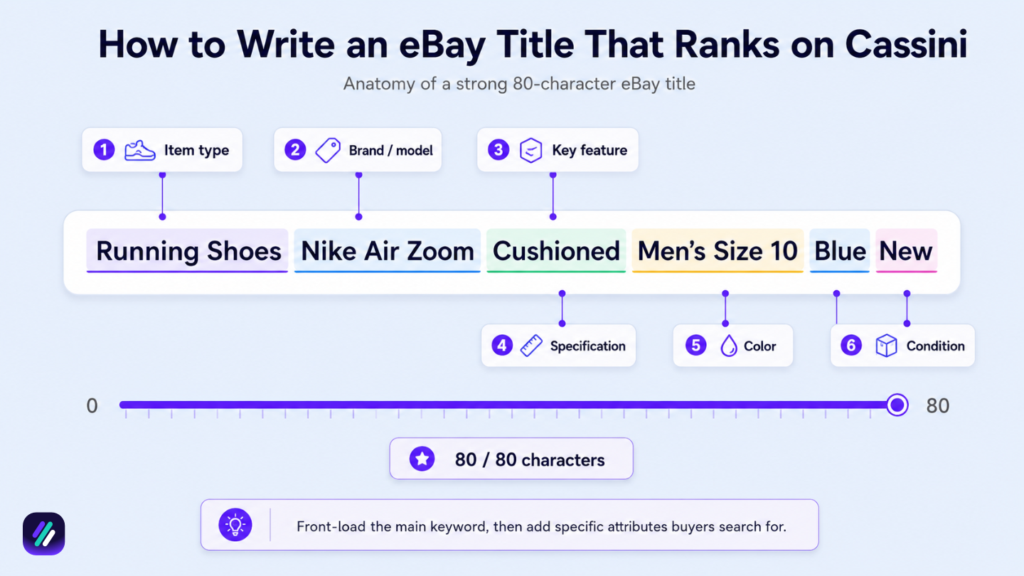
Your eBay title is 80 characters, and everyone matters. The structure that consistently performs well in Cassini is: primary keyword first, then key attributes (brand, model, size, condition, color), then secondary keywords to fill the remaining space and increase your visibility.
A practical before-and-after for a laptop stand:
- Before: “GREAT DEAL! Premium Adjustable Stand for Laptop Computer MacBook Desk Holder NEW”
- After: “Adjustable Laptop Stand Desk Riser Aluminum MacBook Compatible Portable Foldable”
The first version leads with a promotional phrase that Cassini penalizes and wastes the first 11 characters. The second leads with the primary buyer search term and uses attributes to capture secondary queries.
As I said, you can use the ZIK’s Title Analytics feature or ZIK’s free eBay title builder to build your optimized eBay titles for Cassini.
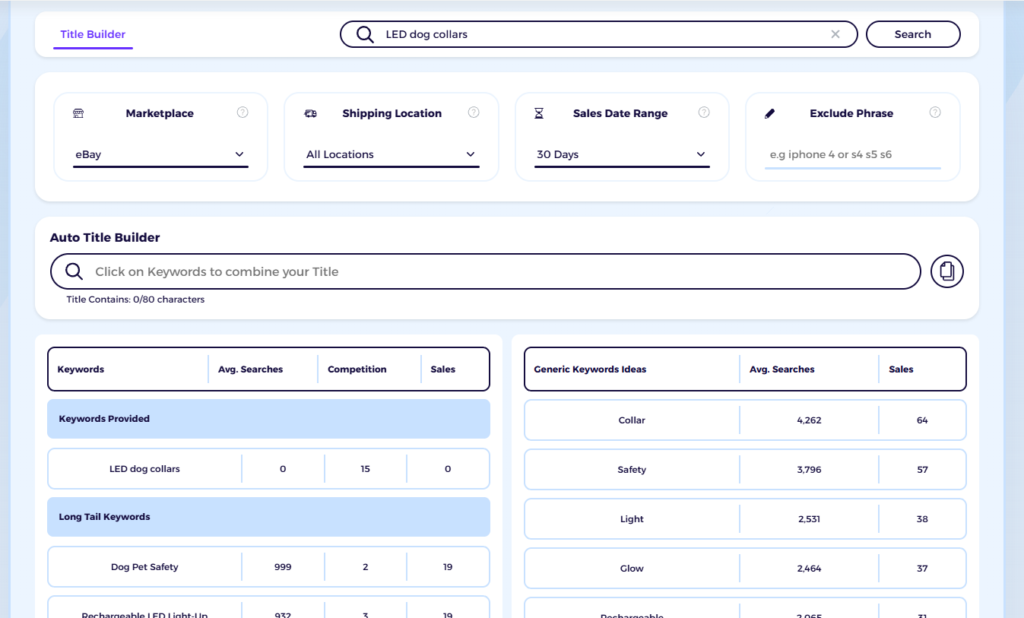
Your eBay title should read like a buyer’s search query because that is exactly how Cassini reads it.
Your description is lower priority for keyword matching, but it affects conversion so you should keep it scannable with short paragraphs and bullet points for specs, and avoid heavy HTML formatting that slows mobile load performance.
A great way to build your descriptions is to use ZIK Title Analytics data, feed it into any AI chatbot like Claude or ChatGPT, and let it produce an optimized description. Just ensure it’s correct in terms of the actual product description, and it didn’t hallucinate any information.
Assign Proper Item Tags and Categories
Category selection determines which buyer segments see your listing in filtered searches.
Listing in the wrong category does not just look unprofessional, but it also removes you from the category-filtered browsing that many buyers use instead of keyword search.
You should use eBay’s suggested category as a starting point, but verify it against what top-performing competitors are using.
You can run a search for your primary keyword, sort by Best Match (not price low to high), and look at which categories the first-page listings use.
If they are all in one category and you are in a different one, that discrepancy is worth fixing.
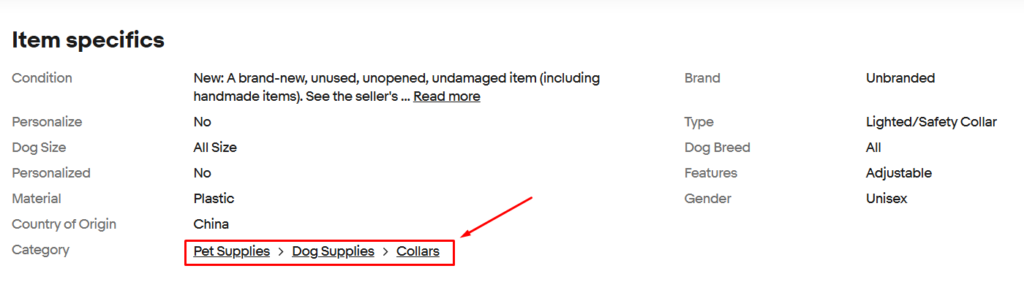
As we covered in the ranking factors section, a missing item-specific removes you from filtered results entirely.
You should fill in every field eBay makes available, including the optional ones, because, especially in competitive categories, optional specifics like color, material, and compatibility are what separate you from sellers who treat them as optional and significantly improve your chances of ranking.
Put Clear and Complete Images of the Product
eBay requires at least one image, but one is rarely enough to compete effectively. Your first image is your search result thumbnail, and your CTR depends directly on how it competes against neighboring thumbnails at a glance.
Your lead image should be a clean, well-lit shot against a white background.
Additional images should cover different angles, include accessories, close-ups of relevant features, and the product in use if that fits your category.
Additionally, for used items, photos of actual wear or defects are not optional.
Concealing condition issues leads to buyer disputes, returns, and performance hits that compound in your Cassini score. A buyer who knows exactly what they are receiving is less likely to open a case than one who gets a surprise.
Pro tip: Create unique photos for your best sellers. If you’re sourcing your products, it’s most likely that other buyers are having the same suppliers and probably using the same images, so differentiate yourself and make it harder for others to find your suppliers.
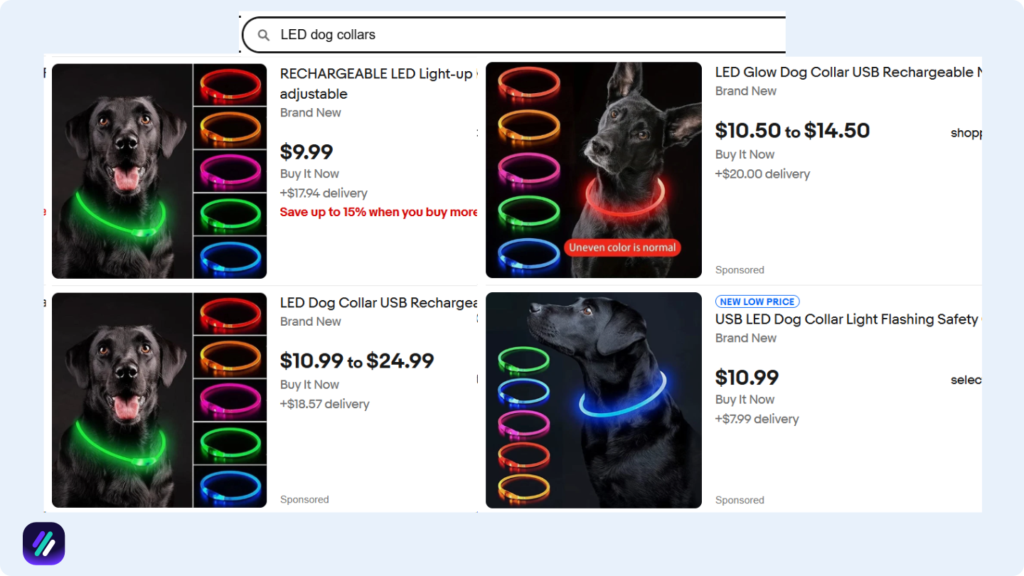
Strategic and Dynamic Pricing
Your price needs to be competitive against the total cost of every competing listing, not just the item price.
To do this, you can run a search for your primary keyword, sort by Best Match (not price low to high), and look at the top five listings.
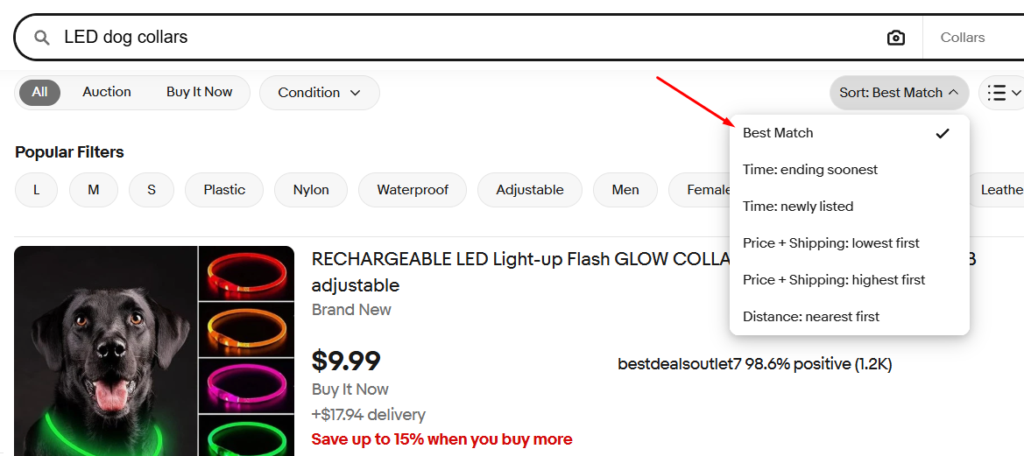
You want to understand what their total cost is, including shipping, as that is the benchmark you are pricing against.
For dynamic repricing, the goal is not to be the cheapest, as I already said.
It is to stay within a competitive range. Based on what our ZIK team observes across thousands of eBay listings, a measured price reduction when a listing’s STR starts to decline is often enough to rebuild momentum without destroying margin.
A price adjustment also signals to Cassini that the listing is still active and competitive.
You do not need to end and relist to achieve this effect, and ending a listing would destroy the sales history you earned.
Consistent but Controlled Store Listing Updates
Small, steady improvements to your listings build ranking signals over time, and large, sudden changes often times work against you.
So, changing your primary keyword entirely in a title can reset the keyword history Cassini has built for that listing, costing you the ranking you earned.
But ending and relisting is more damaging still, as Cassini has no memory of a listing once it is ended, and the new listing starts from zero, with no sell-through history and no engagement record.
That’s why you should use “Revise Item” to make improvements, not “End and Relist,” unless the listing genuinely has no sales history worth protecting.
Common Mistakes that Affect eBay Cassini Rankings
Here is where most sellers lose ranking on eBay without understanding why.
Some of these mistakes suppress visibility immediately, while others compound quietly over weeks until the seller wonders why their store traffic dried up.
With that, let me share with you the most common Cassini ranking mistakes eBay sellers make:
- Keyword stuffing: Cramming a title with repeated or barely related terms signals low listing quality to Cassini and reduces CTR. Promotional phrases like “LOOK” or “MUST SEE” actively lower your rank, so you should focus instead on relevant search terms buyers actually type when they are ready to buy.
- Incomplete item specifics: Leaving attribute fields blank removes your listing from every filtered search that uses that field. This is the most impactful silent visibility killer in most categories, and it costs nothing to fix.
- Incorrect categories: Listing in the wrong category means your listing does not appear in category-filtered browsing at all. Buyers who browse by category rather than keyword search never encounter you.
- Poor seller performance: Late shipments, unresolved cases, and defect rates above threshold suppress your entire catalog, not just problem listings. A well-optimized listing on a Below Standard account will not rank as well as a moderately optimized listing on a Top Rated account.
- Frequent major listing changes: Changing your title to a completely different keyword or ending and relisting to “refresh” your position destroys your sales history. The ranking you built disappears along with it.
- Poor image quality: Low-quality thumbnails reduce CTR, which Cassini treats as a signal that buyers find your listing uncompelling. On mobile, which is the majority of eBay traffic, a dark or cluttered thumbnail is often the only reason a buyer skips past your listing.
So if you are dealing with eBay slow sales, audit your listings against this list before assuming the problem is your product or the market.
The fix is inside your listings more often than not. Understanding how to get more views on eBay starts with fixing these six points.
eBay Cassini vs Google SEO
Most sellers who have done any Google SEO arrive at eBay expecting similar principles.
And while some carry over. Many do not.
Conflating the two is one of the fastest ways to optimize for the wrong signals on eBay.
Here is how the two systems compare:
| Factor | eBay Cassini | Google SEO |
|---|---|---|
| Goal | Predict which listing the buyer will purchase | Surface the best answer to a search query |
| Authority signals | Seller feedback, defect rate, sell-through rate | Backlinks, domain authority, and content depth |
| Primary content signals | Title keywords, item specifics, category | Page headings, body text, and semantic relevance |
| Engagement signals | CTR, conversion rate, watches, sales history | Dwell time, bounce rate, SERP click-through |
| Fresh content value | Low, sales history outweighs recency | High, fresh content often ranks faster |
| Backlinks | Not a ranking factor | One of the top three ranking factors |
| Price | Direct ranking factor (total cost vs. competition) | Ranking factor only for product-related keywords |
But the clearest frame for understanding the difference: Google tries to answer a question while Cassini tries to complete a sale.
And eBay SEO lives entirely within the transaction data you accumulate, and Google SEO depends heavily on what the rest of the internet says about you.
With 135 million active buyers and 2.3 billion live listings, eBay search is a numbers game at scale.
Unlike Google, there are no backlinks to build, no domain authority to accumulate, and no content strategy to execute. Your rank is entirely a function of how well your listing matches buyer intent and how consistently your account performs.
For sellers running eBay dropshipping alongside other channels, the key distinction is this: treat eBay SEO as transaction optimization, not content optimization.
Every metric that moves your rank is inside your seller account and your listings.
Conclusion
The eBay Cassini search engine is not a mystery.
But it does reward sellers who understand it differently from every other platform they have sold on, as there are no backlinks to earn, no content calendars to fill, and no domain authority to build over the years.
What Cassini cares about is simple in principle and demanding in practice: sell consistently, list completely, price competitively, and maintain a clean account.
It wants you to make a sale, because your win is eBay’s win too! That’s why it focuses on listings most likely to make a sale based on the historical data it has.
But the sellers who struggle with Cassini are usually optimizing the wrong layer.
They chase title keywords while ignoring item specifics. They invest in promoted listings while a declining defect rate quietly erodes their organic placement. They end and relist to “refresh” listings that had sales history worth protecting.
So, get the foundations right: keywords in the right places, item specifics filled in, a competitive total cost, and a seller account above Above Standard. Cassini was built to surface the listings most likely to result in a completed sale, and your goal is to make yours one of them.
Use ZIK Analytics to Optimize and Research Products to Rank in eBay Cassini Search Engine
With that in mind, ranking in eBay Cassini comes down to two decisions made before you list: which products you choose and how you optimize them. ZIK Analytics gives you data for both.
- The ZIK tool for eBay product research shows you actual sell-through rates, sales volume, competition levels, and average selling prices for any keyword. You can identify products with genuine demand and realistic ranking potential before you invest time optimizing them for Cassini.
- The eBay title builder analyzes real buyer search data to suggest the exact keywords your title should include, ranked by search volume, competition score, and actual converted sales. So instead of guessing which terms to front-load your 80 characters with, you are building titles from what buyers are already searching and buying.
Try ZIK Analytics for $1 and see what is actually selling in your category before you list another item. [This section should have 3 suggested features or solution pages, with description as you did that’s great. Additionally, it should always have links to the features/solution pages even if it was already mention, this is kinda independent section from the internal linking rule, just it has to follow the context of the section]
Frequently Asked Questions About eBay Cassini
These are the questions sellers ask most often about how the eBay Cassini search engine works and what it means for ranking on eBay.
Does eBay still use Cassini?
Yes. Cassini remains eBay’s core search engine. eBay has made incremental updates to its weighting and added personalization signals over the years, but the fundamental architecture has not changed: listings rank based on buyer intent prediction, seller performance, and listing quality signals. There is no indication eBay is replacing the Cassini framework.
How does eBay Cassini work?
Cassini works by scoring every listing against a buyer’s search query and predicting which result is most likely to lead to a completed transaction. It retrieves listings based on title keywords, item specifics, and category, then scores them on seller performance (defect rate, feedback), listing quality, and engagement history (sell-through rate, conversion rate). Best Match displays the top-scoring results.
Is eBay still worth it in 2026?
Yes, for the right sellers. The platform has 135 million active buyers and over 2.3 billion live listings. For sellers running eBay dropshipping operations or specializing in defined categories, eBay remains one of the most accessible platforms for consistent revenue. It works best when you understand Cassini, specialize in a category, and maintain clean seller performance metrics.
Is eBay losing popularity?
eBay’s active buyer count has stayed roughly stable at around 135 million. It is not growing at the rate of newer platforms, but it has not collapsed either. The platform’s continued strength is in used goods, collectibles, and hard-to-find items where buyers specifically seek eBay over alternatives. For sellers in those spaces, the audience is still there.
How to crack eBay algorithm?
There is no shortcut. Sellers who rank consistently share the same profile: titles built from actual buyer search data, complete item specifics, competitive total pricing, fast shipping, clean feedback, and products with proven demand. Use the eBay Title Builder to build keyword-optimized titles from real search data, use the eBay Product Research Tool to validate demand before listing, and keep your seller account above Standard. That is the full playbook.
Is eBay sniping allowed?
Yes, eBay sniping (placing a bid at the last second of an auction) is completely permitted. eBay does not prevent last-second bids, and many buyers use sniping tools to avoid getting drawn into extended bidding wars. If you sell via auction, you should set a reserve price that ensures profitability regardless of when the final bid lands. Fixed-price Buy It Now listings eliminate the sniping dynamic.