

You listed the item, and now it just sits there. A few watchers, maybe a question or two, but days and weeks pass, and nobody buys.
eBay slow sales cost more than patience, and every day an item sits, your cash stays locked up, the listing slides down eBay’s search results, and a cheaper competitor lands the sale that should have been yours.
In this article, I will show you 19 proven tips on how to sell fast on eBay, from pricing off sold data to the listing and shipping settings that decide who sees you first.
Key Takeaways
- Speed on eBay comes down to two levers: how many buyers see your listing, and how fast a viewer decides to buy. Every tip here moves one or the other.
- Your prices should come from sold listings, never active ones. What other sellers ask is a wish; what items actually closed at is the market talking back.
- Buy It Now sells the moment a buyer decides, which makes it the fastest format for most everyday items. Auctions only win on speed for genuinely scarce or hyped pieces.
- The biggest lever on speed is demand itself. ZIK Analytics shows you the sell-through and competition on any keyword before you list, so you put your effort behind items that already move.
- Free shipping, same-day handling, and complete item specifics are not busywork. Each one feeds eBay’s Best Match ranking and pushes your listing in front of more buyers.
- The sellers who move stock fastest treat it as a system, not luck: research demand, list cleanly, price sharply, then nudge watchers and promote what earns it.

Tip 1: Price Against Sold Listings, Not Active Ones
The fastest way to stall a sale is to price off what other sellers are asking. Those active listings are wishes, and plenty of them will sit unsold for months.
What you want instead is eBay’s sold and completed filter, which shows what buyers genuinely paid and how recently, and when you anchor to a recent sold comp in the same condition, you are pricing to the market instead of to hope.

Checking sold items on eBay takes thirty seconds, and it saves you weeks of a listing going nowhere.
Tip 2: Turn on Best Offer to Close Hesitant Buyers
A buyer who likes your item but balks at the price will often leave without a word. Best Offer hands that person a way to act instead of clicking away, so it turns silent browsers into a negotiation you can win.
You set a floor with automatic accept and decline rules, and any offer below your walkaway number gets rejected without you lifting a finger.
For commodity items with heavy competition, that little “Make Offer” button is frequently the nudge that closes the sale today rather than next month.
Tip 3: Use Promoted Listings
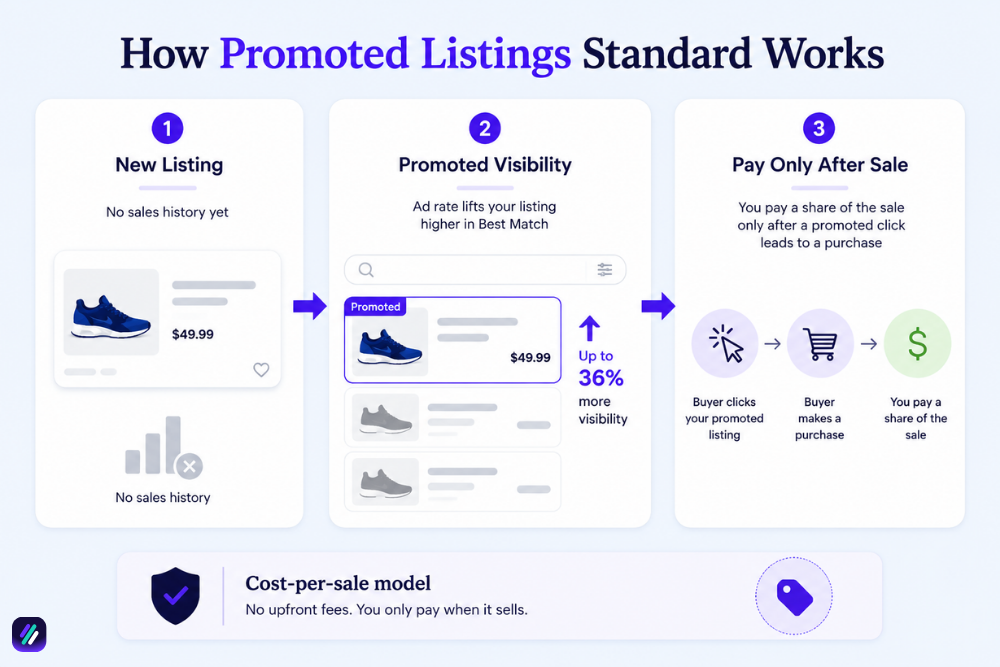
The blunt reality of eBay search is that the first page is crowded, and a brand-new listing arrives with no sales history to rank on, and that’s why Promoted Listings buys you visibility while you build that history, lifting your item higher in results for a share of the sale you only pay when it sells.
eBay says the placement can boost a listing’s visibility by up to 36%, and because the standard model is cost-per-sale, there is no upfront risk.
That makes eBay Promoted Listings one of the few paid levers that genuinely pay for themselves on a fast-moving item. So a modest ad rate on your best items is the sensible place to start.
Tip 4: Offer Free Shipping
Nothing kills a sale at the finish line like a surprise postage charge. Baymard Institute found that unexpected extra costs, the shipping and fees revealed at checkout, are the single biggest reason shoppers abandon a cart, ahead of every other factor.
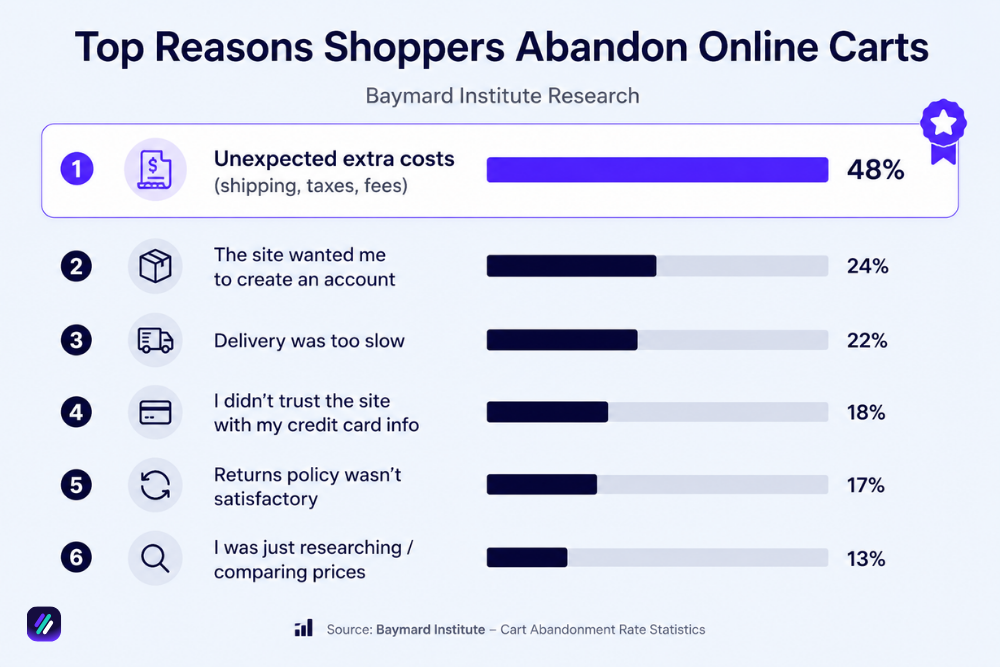
So you want to build the postage into your item price and show “free shipping” instead, because a buyer comparing two identical listings almost always clicks the one with no add-on at the end.
One thing to watch: eBay’s final value fee of about 13.6% applies to the shipping you charge as well as the item. Postage baked into the price is charged the same either way, which makes the call an easy one.
Tip 5: Set One-Day Handling and Ship Same Day
Handling time is the gap between a buyer paying and you dispatching, and eBay reads a short one as a strong quality signal.
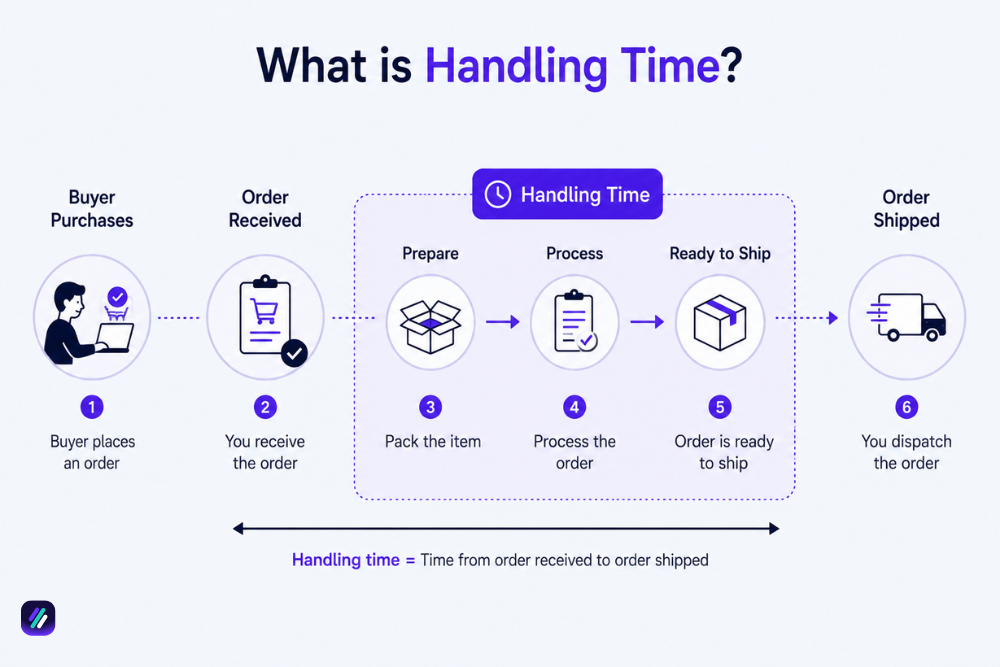
When you set one-day handling and actually ship the same day, your listing earns estimated-delivery dates that look fast to buyers, which lifts conversion and helps your Best Match standing.
Buyers filter and sort for quick delivery, so a listing promising two-week dispatch loses to one promising tomorrow before the price even matters, but you have to keep the promise, because a late shipment hurts the very ranking the fast handling earned you.
Tip 6: Properly Optimize for eBay Cassini
eBay’s search engine, informally called Cassini and officially named Best Match, decides the order every buyer sees, so ranking well in it is the closest thing to free traffic on the platform.
It rewards listings that match the search closely, sell steadily, and give buyers a complete, low-friction experience: an accurate, keyword-rich title, filled item specifics, competitive price and shipping, and a clean seller record.
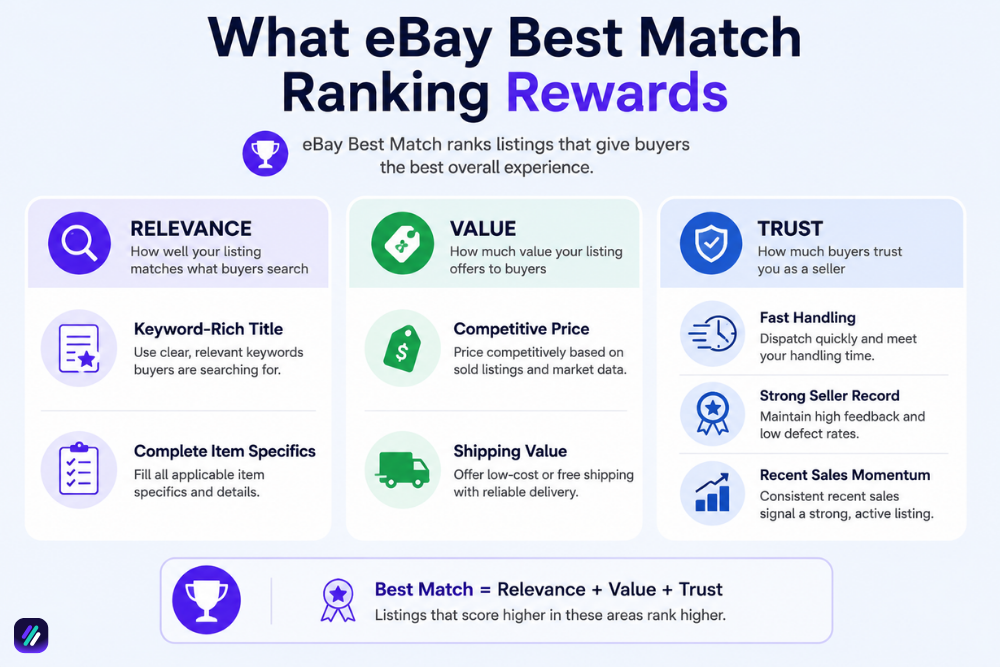
All of it just gives eBay a reason to trust your listing over the next one, and getting the fundamentals of eBay Cassini right once pays off on every listing you make afterward.
Tip 7: Fill In All Item Specifics
Every blank field in your item specifics is a search you never show up in. These structured fields, brand, size, color, and model, are what eBay uses to match your listing to filtered searches, and eBay is explicit that the more of them you fill in, the better it can surface your item.
A buyer who filters by “brand: Nike” only ever sees listings that declare it, so a missing specific hides your item from the exact shopper who wanted it.
Thorough eBay listing optimization is mostly this: giving eBay complete data to work with, even in the optional fields your competitors leave blank.
Tip 8: Photograph the Item Properly
Your photos are the whole sensory experience of the item, since the buyer cannot pick it up, so weak pictures cost you the sale no matter how good the product is.
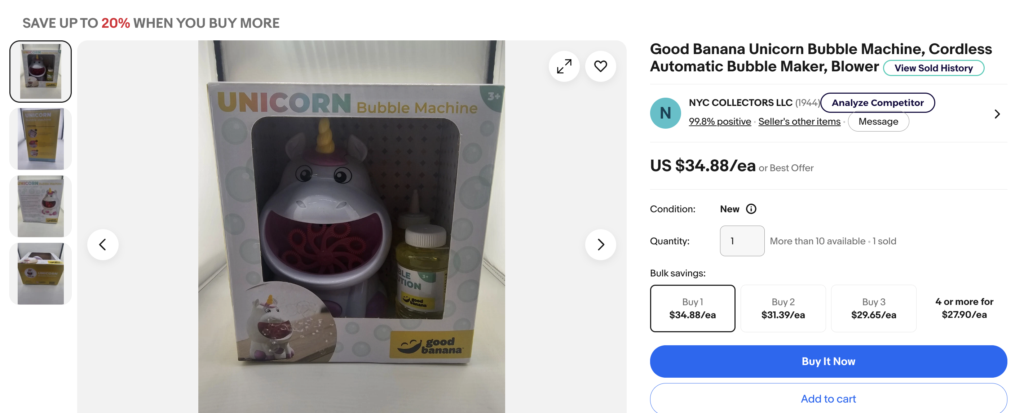
You shoot the actual item, not a stock image, on a plain background in bright natural light, and you cover every angle a buyer would want to inspect.
Clear photos do double duty: they win the click on a crowded results page, and they cut “not as described” returns by setting honest expectations before the buyer pays.
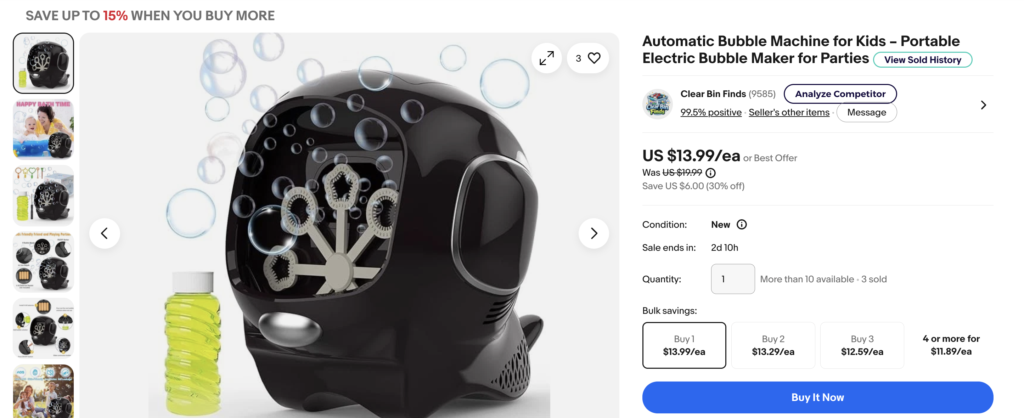
For anything with wear or fine detail, close-ups of the flaws build the trust that actually closes a hesitant buyer. Nailing the basics of taking pictures for eBay is some of the cheapest speed you can buy.
Tip 9: List When Buyers Are Active
Timing your listing to go live when buyers are actually online gives it an early burst of views, and early engagement is exactly what Best Match reads as momentum.
For most general merchandise, evenings and weekends are when browsing peaks, so a listing that ends or refreshes then catches more eyes than one buried at 3am on a Tuesday. (Source)
This matters most for auctions, where the closing time is when bidding heats up, but it helps fixed-price items too, since a fresh listing gets a small visibility bump the moment it posts. You do not need to obsess over the clock, only to avoid launching your best items into dead hours.
Tip 10: Build Trust Signals and Seller Rating
A buyer deciding between two similar listings leans on trust, and on eBay your feedback score is that trust made visible.
It works just like reviews do everywhere else: PowerReviews found that the vast majority of shoppers read reviews before buying, so, a thin or shaky feedback profile makes a cautious buyer hesitate right when you need them to commit.
Becoming a Top Rated Seller turns that trust into ranking. eBay asks for at least 100 transactions and $1,000 in sales over a year, a transaction defect rate at or below 0.5%, a late-shipment rate under 3%, and tracking uploaded on time, and it rewards sellers who clear the bar with better visibility.
Early on, the quickest way to build the signal is to sell cheap, easy items well, so your profile carries genuine weight before you list the big-ticket ones. Those steady habits are the same ones that increase eBay seller rating scores over time.
Tip 11: Expand Into International and Cross-Listing
Your item sells faster when more of the right buyers can see it, and two moves widen that pool at once.
Turning on eBay International Shipping, the program that replaced the old Global Shipping Program, lets eBay handle customs and the overseas leg while you just ship to a domestic hub, so you reach international buyers without the paperwork headache.
Cross-listing the same item to other online marketplaces multiplies your shots at a sale, since an item that has sat unsold on eBay might move in a day somewhere else. The one rule is to keep your inventory synced, so you never sell the same unit twice.
Download this eBook now and learn how to sell on eBay like a pro.Tip 12: Sell Items with Actual Demand
This is the tip that outranks all the others: the fastest sale is an item people are already buying, and no amount of listing polish rescues a product nobody wants.
Before you source or list anything, you should check whether genuine demand exists, and the cleanest way to measure it is sell-through rate, the share of listings for an item that actually sell in a given window.
With the eBay product research tool from ZIK Analytics you can see the actual sales, sell-through, and competition on any keyword, so you back items with proven movement instead of a hunch.
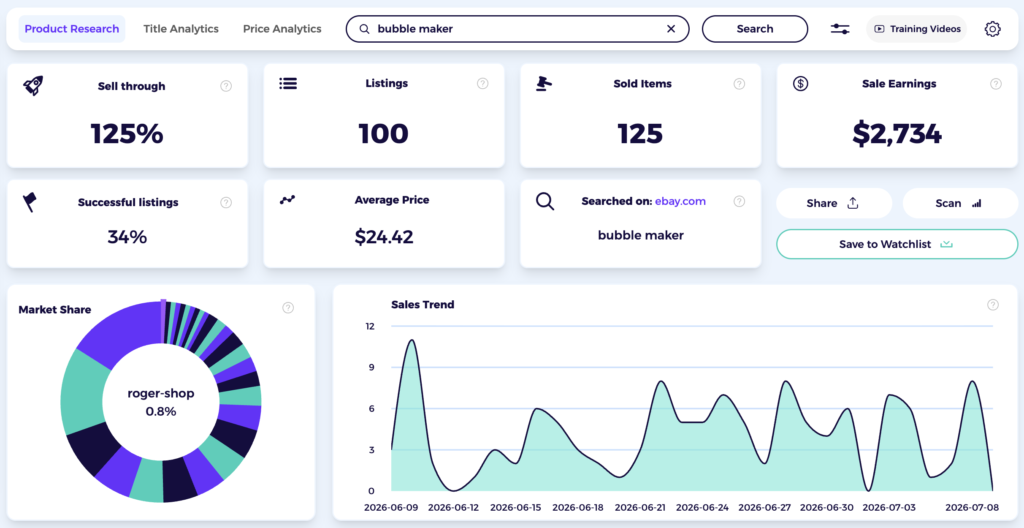
From what our in-house eBay sellers keep seeing, the sellers who stall are almost always the ones who fell for a product they liked rather than one the data supported.
Tip 13: Price Your Item Slightly Below Competition
When buyers sort a results page low-to-high, the listing that just undercuts the field is the one they click first, and a few cents can be the difference between selling today and sitting all week.
This is less a race to the bottom than a way to be the obvious-value pick among near-identical listings, so you undercut the lowest comparable price by a hair rather than gutting your margin.
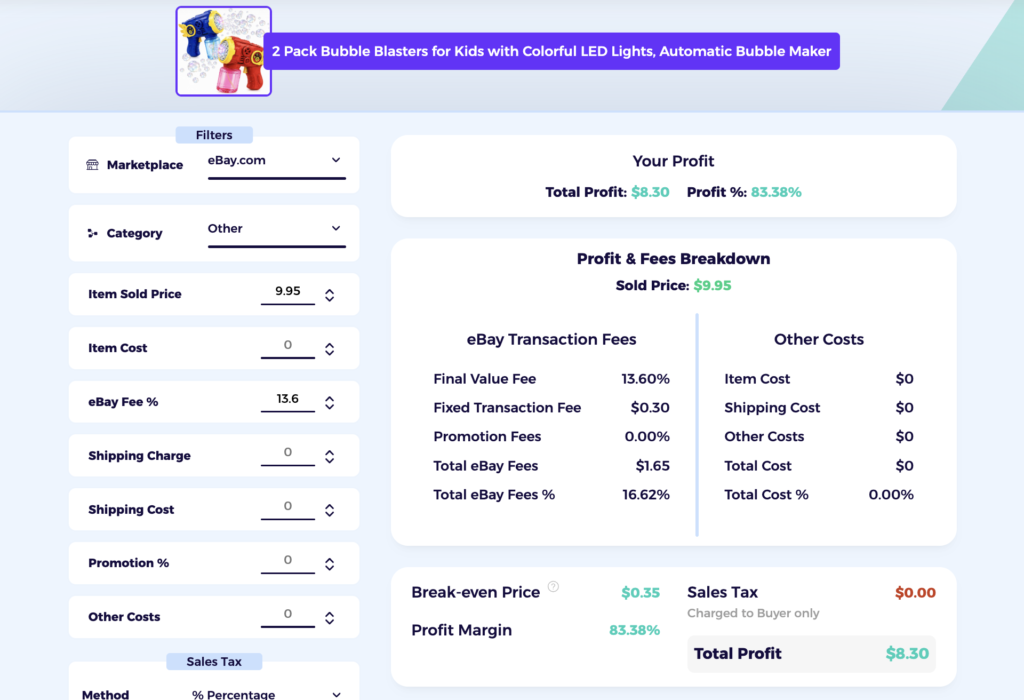
It works best on commodity items where buyers compare on price alone; for anything with a condition or bundle difference, let that difference justify holding firm. Running the sale through an eBay fees calculator from ZIK before you drop the price keeps the speed from eating your profit.
Tip 14: Send Offers to Watchers
A watcher is a buyer who already wants your item and is waiting for a reason, so a small discount is often all it takes to convert an interested browser into a paid order.
From your active listings, you can send offers to the most recent interested buyers in a couple of clicks, and each offer is valid for 96 hours or until the item sells, which creates a gentle deadline.
A five or ten percent nudge is usually plenty, since these people are already halfway to buying, and you can even automate it so every new watcher gets an offer without you working the list by hand.
Because it is one of the highest-converting free moves on the platform, sending offers to watchers belongs in your weekly routine.
Tip 15: Find a Low Competition Niche
Speed depends on more than demand; it also comes down to how many sellers you are fighting for that demand. A product with steady sales and few listings sells far faster than a trendy one buried under thousands of competitors, because there simply are not enough buyers to clear that much supply quickly.
The sweet spot is high demand with low competition, and you find it by weighing an item’s sales volume against how many active listings already exist.
Our in-house sellers keep coming back to one habit here: they would rather own a quiet niche outright than fight for scraps in a crowded one.
Tip 16: Increase Your Number of Listings
More listings mean more chances to be found, plain and simple, and volume is one of the most reliable ways to speed up your overall sales rate even when any single item is slow.
Ten good listings give Best Match ten doors for buyers to walk through instead of one, and they compound as your feedback and history grow.
The key is that quantity only helps when each listing still clears the demand and quality bar, since a hundred listings nobody searches for is just a hundred dead ends. As your catalog grows, leaning on proven-demand research keeps you increasing sales on eBay rather than only increasing clutter.
Tip 17: Think Like a Buyer to Provide Out-of-the-Box Information
The sellers who convert fastest answer the buyer’s question before it is even asked. When you put yourself in the buyer’s chair, you list the things you would want to know, the exact measurements, what is in the box, compatibility, the condition of the corners, and you put them right in the listing.
Every doubt you remove is a reason not to click away to a clearer listing, and it also cuts the messages and returns that slow you down later. This is the difference between a listing that describes an item and one that actually sells it: the second one thinks for the buyer.
Tip 18: Cross-Promote Your eBay Listings
When a buyer is already looking at one of your items, that is the cheapest audience you will ever get, so showing them your related listings turns one sale into two. eBay’s promotions and related-item panels let you surface your own products inside your listings, which lifts your average order value without any new traffic.
It works best when your inventory is themed, since a buyer of one part or accessory is a natural buyer of the matching ones. Building the habit of promoting your eBay store as a whole, not just single items, is what turns scattered listings into a store people browse.
Tip 19: Be Patient
Some things just take time to sell, and mistaking a slow category for a broken listing is what leads sellers to slash good prices out of panic. If your research says the demand is genuine and your listing is clean, giving it a little room before you react is often the smartest move.
That said, patience is not the same as neglect, so a slow stretch is your cue to refresh stale listings, revisit your pricing against fresh sold comps, and tidy your titles.
Knowing which eBay slow sales are a timing problem and which are a demand problem is what separates a calm seller from a frantic one.
These 19 tips are the levers that move the most items, but they are not the entire toolbox. If you sell high-value collectibles, authentication and clear grading photos speed up cautious buyers, and if you ship bulky or heavy items, a well-set calculated shipping profile can be the thing that wins the click.
What Sells Fast on eBay?
The items that sell fastest on eBay are ones with steady, proven demand and manageable competition: everyday consumables, popular electronics and accessories, in-season and trending products, and sought-after collectibles that buyers search for by name.
What those categories share is not a secret, they are things a lot of people want and not too many sellers have flooded. Rather than guess, the real move is to look at what is moving right now and work backward. A few reliable fast-movers to look at first:
- Consumables and everyday essentials: things buyers repurchase and need quickly, from phone accessories to household and pet supplies.
- Trending and seasonal products: items riding a current wave or a moment in the calendar, where demand spikes and buyers act fast.
- Popular tech and parts: phones, accessories, and compatible spares that people search for by exact model.
- Collectibles with named demand: trading cards, sneakers, and niche hobby items that buyers hunt for by a specific keyword.

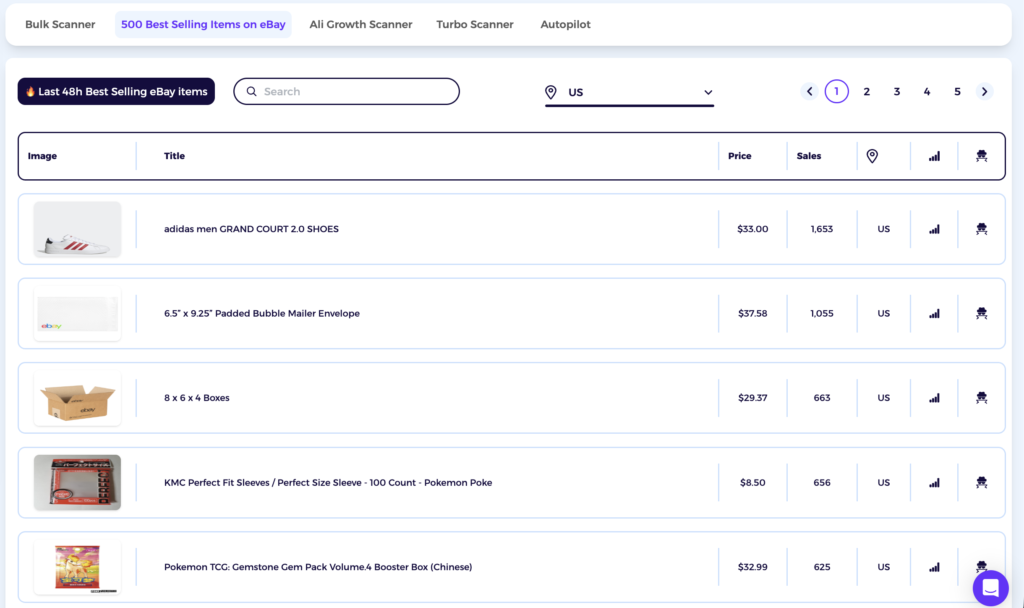
To see what is genuinely selling over the last couple of days instead of guessing, ZIK’s eBay best sellers feed refreshes the current top movers by region every 48 hours. The point is to chase evidence of demand, not your own hunch about what should sell.
What Makes an Item Sell Quickly on eBay?
An item sells quickly when two things line up: enough of the right buyers see it, and enough of them decide to buy once they do. Everything else- price, photos, shipping, feedback- is a lever on visibility, conversion, or the demand underneath both.
Visibility is mostly eBay’s Best Match ranking deciding who gets shown your listing, and conversion is what happens once they land: does the price, the trust, and the friction add up to a purchase or a “keep looking”
You can be brilliant at one and sink on the other, since a listing nobody sees never converts, and a listing everyone sees but nobody trusts just racks up idle views.
The metric that ties it together is sell-through rate, the share of listings for an item that actually sell in a set window, and it is the cleanest read on whether something will sell quickly on eBay.
Demand is the ceiling on all of it. eBay is enormous, with 134 million active buyers and $75 billion in sales in 2024 across 2.3 billion live listings, so the buyers exist, but so does the competition you are ranking against.
The mental model worth keeping is simple: every tip in this guide pulls one of three levers.
- Visibility: getting in front of more of the right buyers through Best Match, item specifics, promotion, and fast handling.
- Conversion: turning a viewer into a buyer with price, photos, trust, free shipping, and offers.
- Demand: choosing items people already want, using product research, sell-through, and low competition.
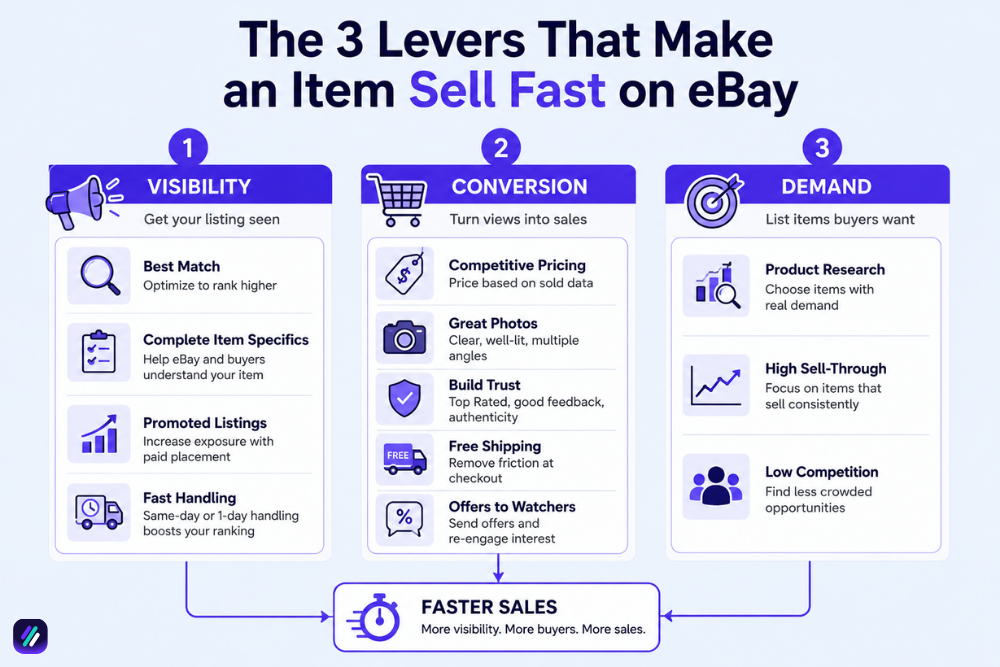
When you know which lever a tactic pulls, you stop guessing and start fixing the one that is actually holding a listing back.
Buy It Now vs Auction: Which Sells Faster?
For most items, Buy It Now sells faster because it lets a buyer purchase the instant they decide, instead of waiting days for an auction to end. Auctions only sell faster for genuinely scarce or in-demand pieces, where competitive bidding compresses the timeline.
Buy It Now, the fixed-price format, is the default most sellers should reach for, and it has been the dominant format on eBay for over a decade for a reason: a commodity item with a known market price does not need an auction; it needs to be available the moment a ready buyer arrives.
Auctions shine in the opposite case, for rare, collectible, or hard-to-price items where two determined bidders pushing each other up can sell it fast and land a higher price than you would have set yourself.
One setting protects your Buy It Now speed. Turning on “Immediate Payment Required” means the item is only marked sold once the buyer actually pays, so a non-paying bidder cannot tie it up. Here is how the two formats compare on what matters for speed:
| Format | Best for | Typical speed | Price ceiling | Key setting |
|---|---|---|---|---|
| Buy It Now | Every day, commodity, and known-price items | Sells the moment a ready buyer arrives, with no waiting | Capped at the price you set | Turn on Immediate Payment Required to block non-paying bidders |
| Auction | Scarce, collectible, or hard-to-price items | Fixed end date, fastest when demand is high and bidding is active | Open-ended, competition can push it higher | Use a short duration and end in peak evening hours |
Choosing well between eBay Buy It Now vs auction per item, rather than by habit, is an easy speed edge most sellers overlook.
Find eBay Items that Sell Fast with ZIK Analytics
Everything fast about eBay traces back to one habit: deciding from genuine sales data instead of from hope. That is the part ZIK Analytics handles for you:
- Use the eBay product research tool to check the sales, sell-through, and competition on any keyword before you list, so you back items that already move.
- Use the eBay competitor research tool to study sellers already moving stock fast in your niche, from their revenue down to their best-selling items.
- Use ZIK’s eBay best sellers feed to see what is genuinely selling across eBay in the last 48 hours, refreshed by region.
So the difference between a listing that sells today and one that sits is mostly the homework you do before it goes live. You can run all three on a $1 trial (7-day) and check your first item against actual demand in minutes.
How to Sell Fast on eBay FAQs
A few quick answers to the questions sellers ask most about moving items faster on eBay.
What is the fastest way to sell something on eBay?
The fastest route is to list an item that already has proven demand as Buy It Now, priced just under recent sold comps, with free shipping and same-day handling. Demand does most of the work, so checking sell-through before you list matters more than any single listing tweak. A fair price on a wanted item with low friction sells in hours, not weeks.
What is the 3 day rule on eBay?
There is no official eBay policy literally called “the 3 day rule,” so treat the phrase with some caution. Sellers usually mean one of two things: the short grace period a buyer gets to pay before a seller can cancel an unpaid order, or the brief early window when a new listing gets a visibility bump in search. Either way, it is seller folklore, not a formal rule you can rely on.
What is the trick to selling on eBay?
There is no single trick, but if one comes close, it is selling what people already want. Most sellers obsess over listing tweaks while ignoring demand, and a great listing for an item nobody searches for still sits. Checking demand first with a tool like the eBay Product Research Tool, then layering on sharp pricing, complete item specifics, and fast shipping, is the order that works. When you get that order right, the rest compounds.
How can I sell something on eBay fast for free?
Plenty of the fastest levers to sell stuff on eBay fast cost nothing. You can price from sold listings, write a keyword-rich title with complete item specifics, offer same-day handling, take clear photos, and send offers to your watchers, all without spending a cent. Free feedback-building on cheap items early also speeds up every later sale. Paid promotion helps, but the free fundamentals move most items on their own.
How do I get my eBay listing to show up higher in search?
Higher placement comes from eBay’s Best Match ranking, which rewards relevance and performance. A clear, keyword-rich title, complete item specifics, competitive price and shipping, fast handling, and a strong feedback record all push you up. Recent sales momentum matters too, so a listing that starts converting climbs further. Promoted Listings can lift visibility on top, but the ranking itself is earned by giving buyers a complete, low-friction listing.